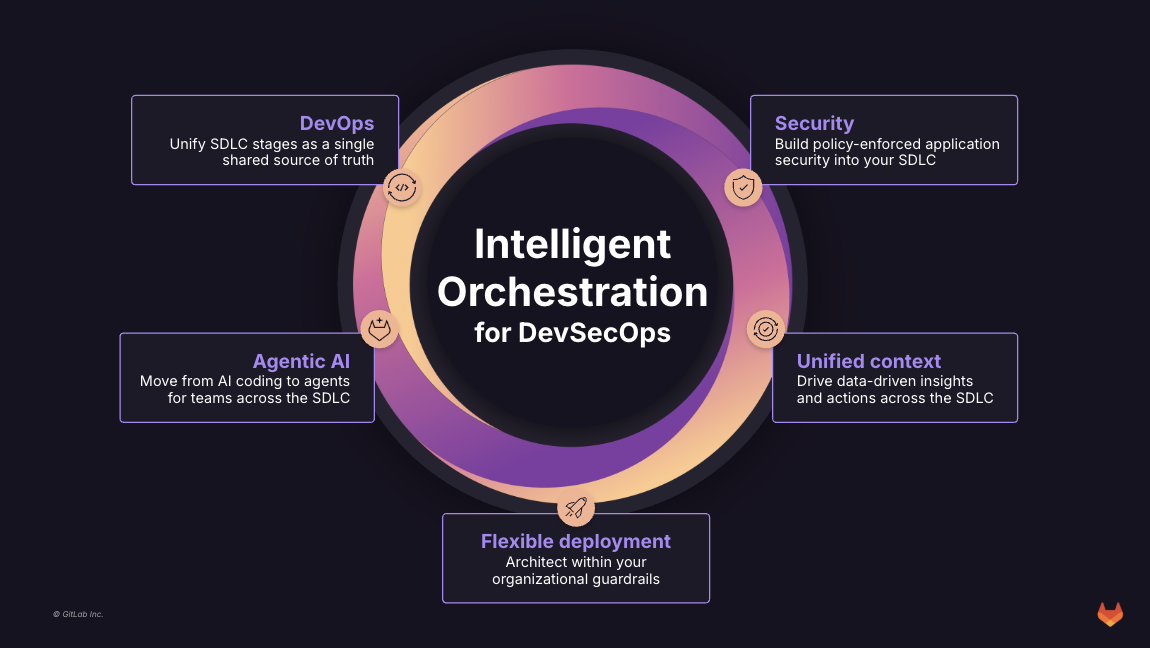
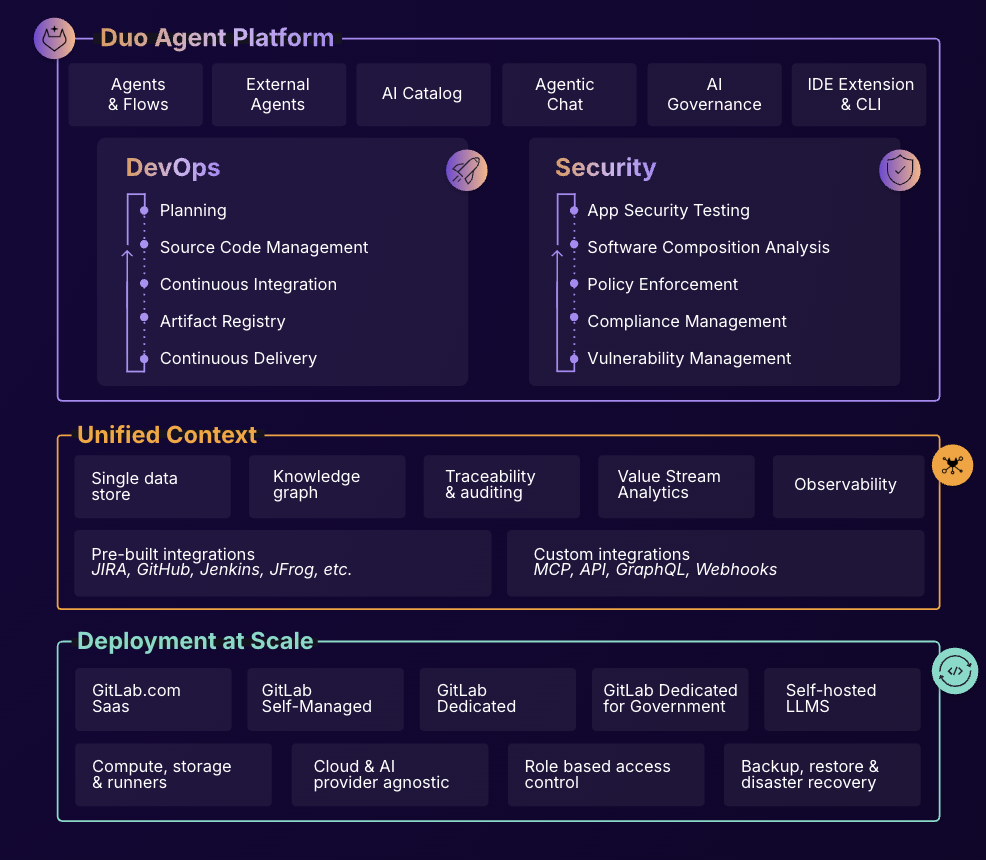
GitLab is an intelligent orchestration platform for DevSecOps, where software teams enable AI at every stage of the software lifecycle to ship faster. The platform enables teams to automate repetitive tasks across planning, building, securing, testing, deploying, and maintaining software.
$0
per month per user
Rally Software
Score7.8 out of 10
N/A
Rally Software headquartered in Boulder, Colorado developed the Rally agile software development / ALM platform which was acquired by CA Technologies and rebranded as CA Agile Central. After CA's acquisition by Broadcom the software was once again rebranded as Rally.
N/A
Pricing
GitLab
Rally Software
Editions & Modules
GitLab Free (self-managed)
$0
GitLab Free
$0
GitLab Premium
$29
per month per user
GitLab Premium (self-managed)
$29
per month per user
GitLab Ultimate
Contact Sales
GitLab Ultimate (self-managed)
Contact Sales
No answers on this topic
Offerings
Pricing Offerings
GitLab
Rally Software
Free Trial
Yes
No
Free/Freemium Version
Yes
No
Premium Consulting/Integration Services
Yes
No
Entry-level Setup Fee
Optional
No setup fee
Additional Details
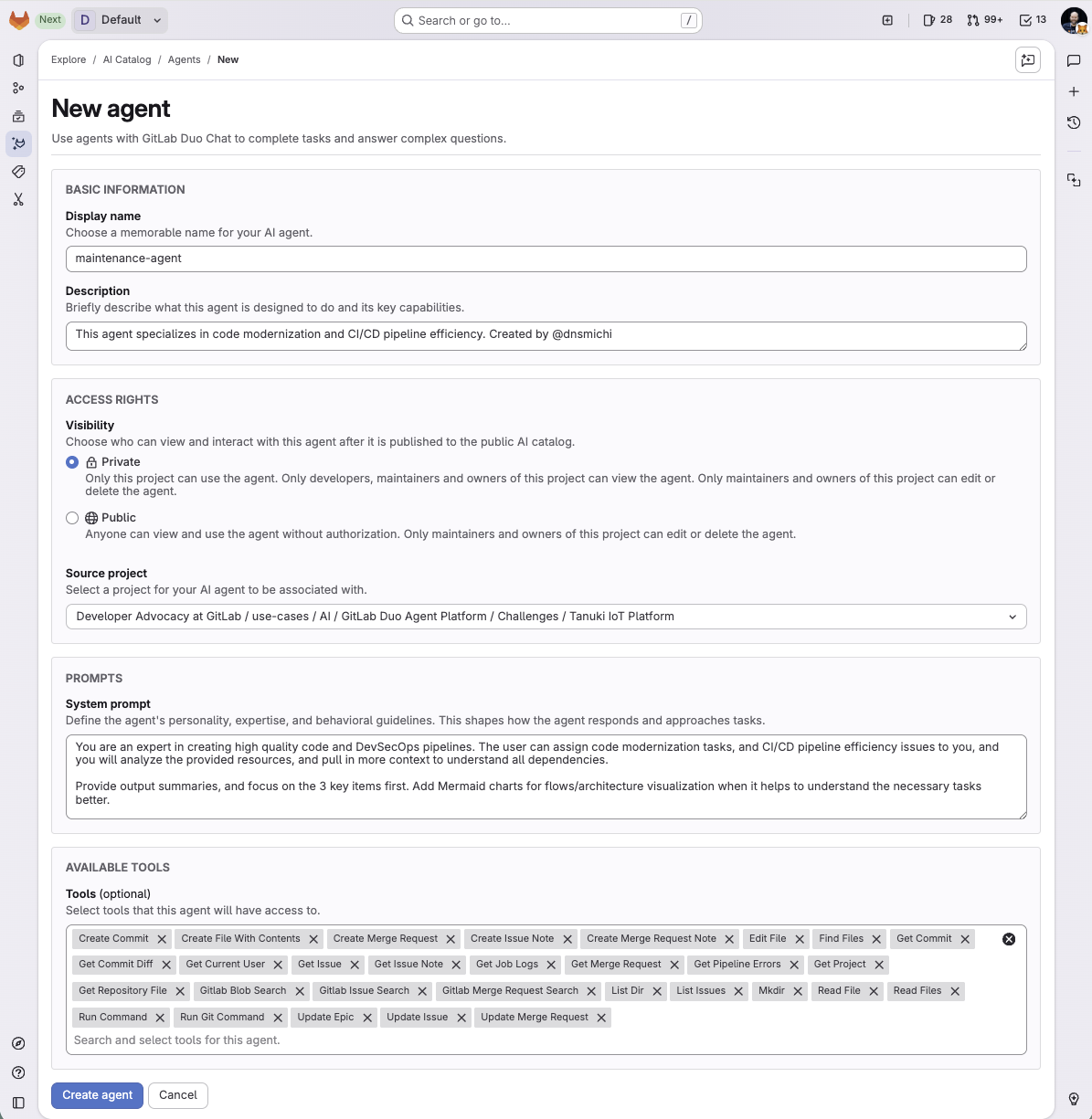
GitLab Credits enable flexible, consumption-based access to agentic AI capabilities in the GitLab platform, allowing you to scale AI adoption at your own pace while maintaining cost predictability. Powered by Duo Agent Platform, GitLab’s agentic AI capabilities help software teams to collaborate at AI speed, without compromising quality and enterprise security.
If usage exceeds monthly allocations and overage terms are accepted, automated on-demand billing activates without service interruption, so your developers never lose access to AI capabilities they need.
Real-time dashboards provide transparency into AI consumption patterns. Software teams can see usage across users, projects, and groups with granular attribution for cost allocation. Automated threshold alerts facilitate proactive planning. Advanced analytics deliver trending, forecasting, and FinOps integration.
In general it's a good product with a huge number of features. It can do CI/CD checks, deployment, repo hosting, integrations etc. A lot of it can be managed from just the UI but also has an ok API. It does tend to release new features semi-often too which is nice. It can have a steep learning curve for certain features so not a starter-friendly vendor, but great for most businesses.
A de minimis incentive was given to thank the reviewer for their time. The incentive was not used to bias or drive a particular response, nor was the incentive contingent on a positive endorsement. TR verified that a representative sample of customers was invited. More Info
Rally Software is well suited for large Agile or scrum teams who do sprints and it helps managing sprints and backlogs. It is well suited for organizations who want visibility into work being done and progress. Suitable for tracking is user stories, defects and release planning. Works well with CI CD too. It would not be suitable for small teams or startups. For teams that don't use agile. Teams who want lightweight tools like Jira. Companies with a limited budget.
A de minimis incentive was given to thank the reviewer for their time. The incentive was not used to bias or drive a particular response, nor was the incentive contingent on a positive endorsement. More Info
A de minimis incentive was given to thank the reviewer for their time. The incentive was not used to bias or drive a particular response, nor was the incentive contingent on a positive endorsement. TR verified that a representative sample of customers was invited. More Info
There are dashboards that provide friendly and useful metrics at the team, program and portfolio levels which help get an easy and quick visual representation of what's going on.
Story management made easier, It offers a quick way of quickly entering a number of user stories without losing the overview, by just typing the title and selecting a few attributes directly in the overview screen.
Sprint management is seamless in CA Agile Central . It allows you to drag stories from the backlog to the sprints and back again. When a story is dragged into an sprint, it automatically checks the velocity for that sprint and indicates how many more story points can be chipped in. No more manual checking needed by scrum master with respect to allocation and team velocity.
Though CA Agile Central has many inbuilt apps, but it also has an App-SDK that allows you to build free app extensions using JavaScript and HTML. So, as per their needs, teams can customize & build various apps & dashboards.
Dashboard is an awesome feature which allows you to select and drag panels with all kinds of graphical information about the current sprints and releases.
It offers tremendous support for scaled Agile & almost all scaling frameworks are supported specifically tuned to SAFe .
CA Agile Central includes several applications but it also integrates well with Jira, Confluence, Jenkins, Eclipse, Subversion, IBM, HP, Salesforce.com and many other products to allow users to organize projects to their specifications. So you can still use Jira at a team level & CA Agile Central at the program & portfolio level for efficient tracking & management.
The custom tags are very helpful in segregating the user stories based on the project needs. Even though it's a very small feature, it is very effective ( you will realize why specifically if you are using Jira).
CA Central Agile enables agile delivery with ease and provides comprehensive features to track time-boxes, Work In Progress items of the forecast increments.
Backlog management is hassle free since you can either drag and drop your user stories to the desired position on the backlog, or change a setting and manually enter priorities as a number.
A de minimis incentive was given to thank the reviewer for their time. The incentive was not used to bias or drive a particular response, nor was the incentive contingent on a positive endorsement. TR verified that a representative sample of customers was invited. More Info
User management is pretty basic and could be better. For example more filters and reports and more ability to do mass updates.
The report generator is very, very basic and is not WYSIWYG. It has limited filters to generate reports. Often a Scrum master will need to export data to Excel or a tool like Crystal Reports to get enhanced reporting capability.
A de minimis incentive was given to thank the reviewer for their time. The incentive was not used to bias or drive a particular response, nor was the incentive contingent on a positive endorsement. More Info
I really feel the platform has matured quite faster than others, and it is always at the top of its game compared to the different vendors like GitHub, Azure pipelines, CircleCI, Travis, Jenkins. Since it provides, agents, CI/CD, repository hosting, Secrets management, user management, and Single Sign on; among other features
A de minimis incentive was given to thank the reviewer for their time. The incentive was not used to bias or drive a particular response, nor was the incentive contingent on a positive endorsement. TR verified that a representative sample of customers was invited. More Info
A de minimis incentive was given to thank the reviewer for their time. The incentive was not used to bias or drive a particular response, nor was the incentive contingent on a positive endorsement. More Info
- As a combination of features and products, GitLab is a really great tool for developers. - Also, it comes with both light and quick changes in a web browser version, as well as pro work in VS Code mode. However, in certain areas, such as large-scale issues/incidents, management can be improved.
A de minimis incentive was given to thank the reviewer for their time. The incentive was not used to bias or drive a particular response, nor was the incentive contingent on a positive endorsement. TR verified that a representative sample of customers was invited. More Info
Great UI, recent refresh was terrific. Great graphs and metrics, inline editing for updates, and a multitude of views on sprint progress make for a great team collaboration experience. There is also an active community and forums so that if you do need help, it is readily available
I've never had experienced outages from GItlab itself, but regarding the code I have deployed to Gitlab, the history helps a lot to trace the cause of the issue or performing a rollback to go back to a working version
A de minimis incentive was given to thank the reviewer for their time. The incentive was not used to bias or drive a particular response, nor was the incentive contingent on a positive endorsement. TR verified that a representative sample of customers was invited. More Info
GItlab reponsiveness is amazing, has never left me IDLE. I've never had issues even with complex projects. I have not experienced any issues when integrating it with agents for example or SSO
A de minimis incentive was given to thank the reviewer for their time. The incentive was not used to bias or drive a particular response, nor was the incentive contingent on a positive endorsement. TR verified that a representative sample of customers was invited. More Info
The screens render relatively quickly but many actions that you would expect to require a single click require multiple clicks and pop-up windows. The extra windows and clicks make the product feel ponderous.
At this point, I do not have much experience with Gitlab support as I have never had to engage them. They have documentation that is helpful, not quite as extensive as other documentation, but helpful nonetheless. They also seem to be relatively responsive on social media platforms (twitter) and really thrived when GitHub was acquired by Microsoft
A de minimis incentive was given to thank the reviewer for their time. The incentive was not used to bias or drive a particular response, nor was the incentive contingent on a positive endorsement. More Info
I've had to use support only one time and my issue was eventually resolved but not because of my ticket--because others complained about the functionality taken away so they brought it back. My ticket was never answered or addressed. So I can't really say much for the support factor for Rally.
A de minimis incentive was given to thank the reviewer for their time. The incentive was not used to bias or drive a particular response, nor was the incentive contingent on a positive endorsement. More Info
It more or less confirmed that we are using it the way they had in mind. We were hoping for a epiphany in terms of how we could use it better.
They also want to be a go to source for agile processes and have an online resource center. It’s not that great but had a couple of nuggets. It hasn’t really helped us too much and we are not too far off from the classical interpretation of agile.
I would recommend training, in particular for organizations that multiple on-going projects. The product seems optimized for larger, more complex teams and getting proper training on how to configure, administer and use the system would be beneficial
Implementation of RALLY services and program satisfaction among various group,... 1) Dev Outcomes: How were our resiliencies, development, learning & practitioners “make them do the work,” but that they ask you to do it “in a way like before. 2) The Ops group: Just wish to make sure any change won't break current production envirements All the stake holders has to be on the same page
A de minimis incentive was given to thank the reviewer for their time. The incentive was not used to bias or drive a particular response, nor was the incentive contingent on a positive endorsement. More Info
GitHub is an inferior product from most points of view. We had to use it and the teams finds no positives about it. Everything is a downgrade from our previous GitLab solution. GitLab CI\CD is vastly superior to workflows, for example doing a manual node is just "when : manual" in GitLab while you have to do clickops in GitHub to achieve the same. No overview of code in branches is a minus when we tried to figure out what our colleagues are trying to merge as it looked off.
A de minimis incentive was given to thank the reviewer for their time. The incentive was not used to bias or drive a particular response, nor was the incentive contingent on a positive endorsement. TR verified that a representative sample of customers was invited. More Info
Rally and Asana have comparable features and are both valuable project management tools, but Asana's user interface is well-organized and highly intuitive. It's easy to add tasks and collaborators, edit due dates, indicate progress on tasks, close out projects, etc. However, Rally's interface is somewhat cluttered and difficult to navigate. My team ended up choosing Asana over Rally due to these concerns.
A de minimis incentive was given to thank the reviewer for their time. The incentive was not used to bias or drive a particular response, nor was the incentive contingent on a positive endorsement. More Info
A de minimis incentive was given to thank the reviewer for their time. The incentive was not used to bias or drive a particular response, nor was the incentive contingent on a positive endorsement. TR verified that a representative sample of customers was invited. More Info
A de minimis incentive was given to thank the reviewer for their time. The incentive was not used to bias or drive a particular response, nor was the incentive contingent on a positive endorsement. TR verified that a representative sample of customers was invited. More Info
it helped organizing many of the processes management use to communicate tasks with engineers, and provided detailed charts on the speed/blockage during any iteration
with time Rally became the main tool we used to track and report tasks/defects in our projects, but frequent service outages made it very hard to continue consider as a reliable solution
too much features is good, but for engineers a few features (User Stories section, iterations, defects, and Kanban boards) are necessary and the rest is just noise
A de minimis incentive was given to thank the reviewer for their time. The incentive was not used to bias or drive a particular response, nor was the incentive contingent on a positive endorsement. More Info