Google App Engine is Google Cloud's platform-as-a-service offering. It features pay-per-use pricing and support for a broad array of programming languages.
$0.05
Per Hour Per Instance
ManageEngine Mobile Device Manager Plus
Score9.5 out of 10
N/A
The ManageEngine Mobile Device Manager Plus application is an enterprise mobile device management (MDM) solution.
$64
per month (50 devices)
Pricing
Google App Engine
ManageEngine Mobile Device Manager Plus
Editions & Modules
Starting Price
$0.05
Per Hour Per Instance
Max Price
$0.30
Per Hour Per Instance
Mobile Device Manager Plus - Cloud
$64
per month 50 devices
Mobile Device Manager Plus - On-Premise
$495
per year 50 devices
Offerings
Pricing Offerings
Google App Engine
ManageEngine Mobile Device Manager Plus
Free Trial
No
No
Free/Freemium Version
Yes
No
Premium Consulting/Integration Services
No
No
Entry-level Setup Fee
No setup fee
No setup fee
Additional Details
—
Pricing for higher volumes available online at ManageEngine's official pricing page.
App Engine is such a good resource for our team both internally and externally. You have complete control over your app, how it runs, when it runs, and more while Google handles the back-end, scaling, orchestration, and so on. If you are serving a tool, system, or web page, it's perfect. If you are serving something back-end, like an automation or ETL workflow, you should be a little considerate or careful with how you are structuring that job. For instance, the Standard environment in Google App Engine will present you with a resource limit for your server calls. If your operations are known to take longer than, say, 10 minutes or so, you may be better off moving to the Flexible environment (which may be a little more expensive but certainly a little more powerful and a little less limited) or even moving that workflow to something like Google Compute Engine or another managed service.
A de minimis incentive was given to thank the reviewer for their time. The incentive was not used to bias or drive a particular response, nor was the incentive contingent on a positive endorsement. More Info
An amazing solution for an organisation of up to 25 devices as they offer a free subscription. You could use this to trial the product at your organisation. The perfect fit for any size of organisation with the software being simple enough for non-technical staff to be able to deploy and manage devices.
A de minimis incentive was given to thank the reviewer for their time. The incentive was not used to bias or drive a particular response, nor was the incentive contingent on a positive endorsement. More Info
Geo tracking: once the mobile app is installed, the phone checks in to our cloud management console and we can ping the location of the device easily.
Lost/stolen device: when a device is lost or stolen, we can make the phone make a sounds to help in finding it or perform a complete wipe to remove any sensitive data.
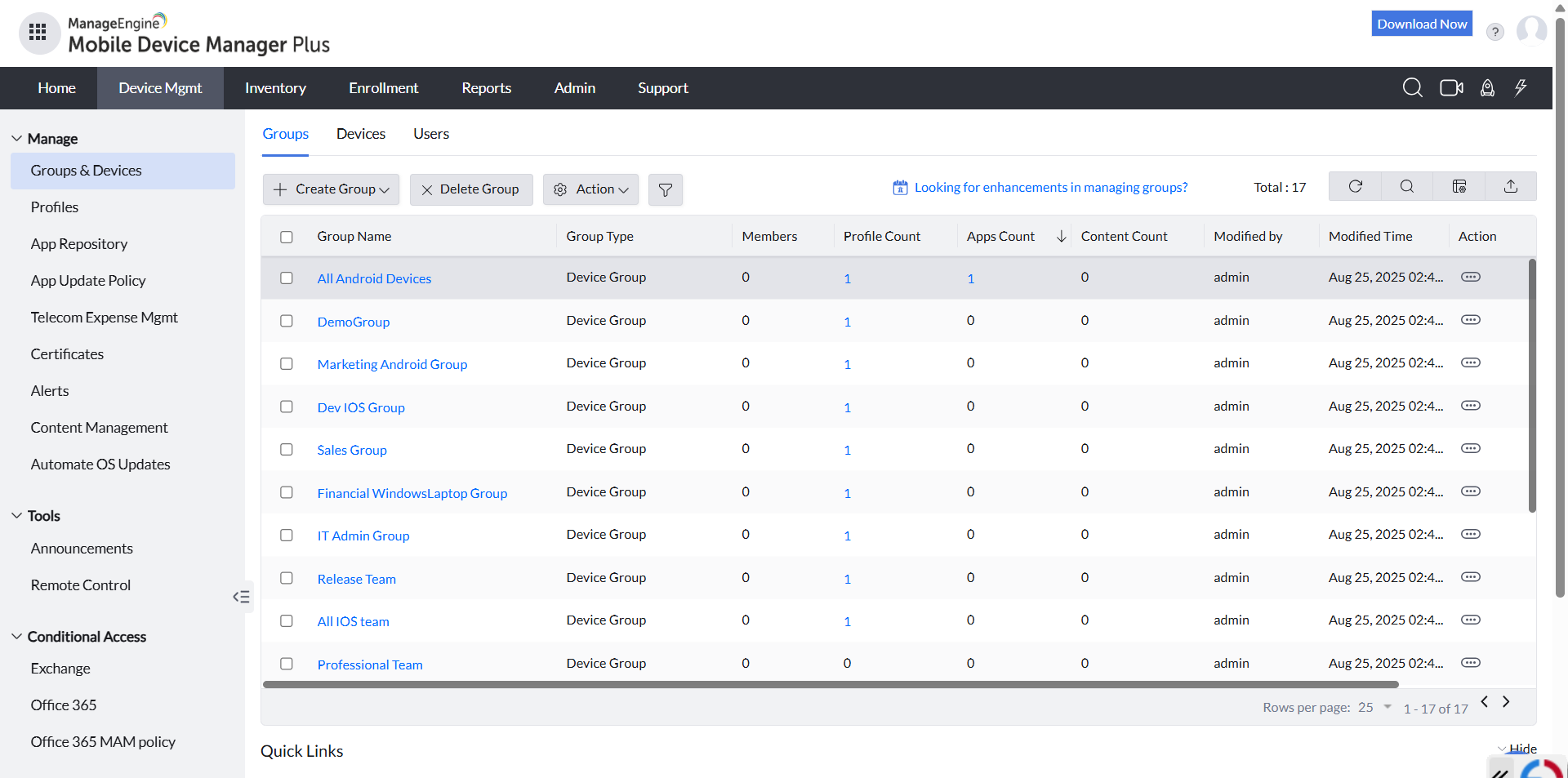
App management: they make it easy to add mobile apps that can automatically be pushed out to all of the managed devices. It is easy to control what apps you want to have immediately installed, apps you want to make available, or apps you want to block.
A de minimis incentive was given to thank the reviewer for their time. The incentive was not used to bias or drive a particular response, nor was the incentive contingent on a positive endorsement. More Info
There is a slight learning curve to getting used to code on Google App Engine.
Google Cloud Datastore is Google's NoSQL database in the cloud that your applications can use. NoSQL databases, by design, cannot give handle complex queries on the data. This means that sometimes you need to think carefully about your data structures - so that you can get the results you need in your code.
Setting up billing is a little annoying. It does not seem to save billing information to your account so you can re-use the same information across different Cloud projects. Each project requires you to re-enter all your billing information (if required)
A de minimis incentive was given to thank the reviewer for their time. The incentive was not used to bias or drive a particular response, nor was the incentive contingent on a positive endorsement. More Info
Documents are sorted by some random order by default, users need to manually select "sort by A-Z", and even by doing so, coming out of documents and back in will reset the order to the random one. Would be amazing if A-Z was default, or if I could find out what this default order was to edit the files accordingly.
Playing audio files from the app is approached as if it was a video: if you come out of the app or lock the screen, the audio will stop. Would be great if it could act like music apps and keep playing with locked screen.
A de minimis incentive was given to thank the reviewer for their time. The incentive was not used to bias or drive a particular response, nor was the incentive contingent on a positive endorsement. More Info
App Engine is a solid choice for deployments to Google Cloud Platform that do not want to move entirely to a Kubernetes-based container architecture using a different Google product. For rapid prototyping of new applications and fairly straightforward web application deployments, we'll continue to leverage the capabilities that App Engine affords us.
A de minimis incentive was given to thank the reviewer for their time. The incentive was not used to bias or drive a particular response, nor was the incentive contingent on a positive endorsement. More Info
A de minimis incentive was given to thank the reviewer for their time. The incentive was not used to bias or drive a particular response, nor was the incentive contingent on a positive endorsement. More Info
I had to revisit the UI after a year of just setting up and forgetting. The UI got some improvements but the amount of navigation we have to go through to setup a new app has increased but also got easier to setup. Gemini now is integrated and make getting answers faster
A de minimis incentive was given to thank the reviewer for their time. The incentive was not used to bias or drive a particular response, nor was the incentive contingent on a positive endorsement. More Info
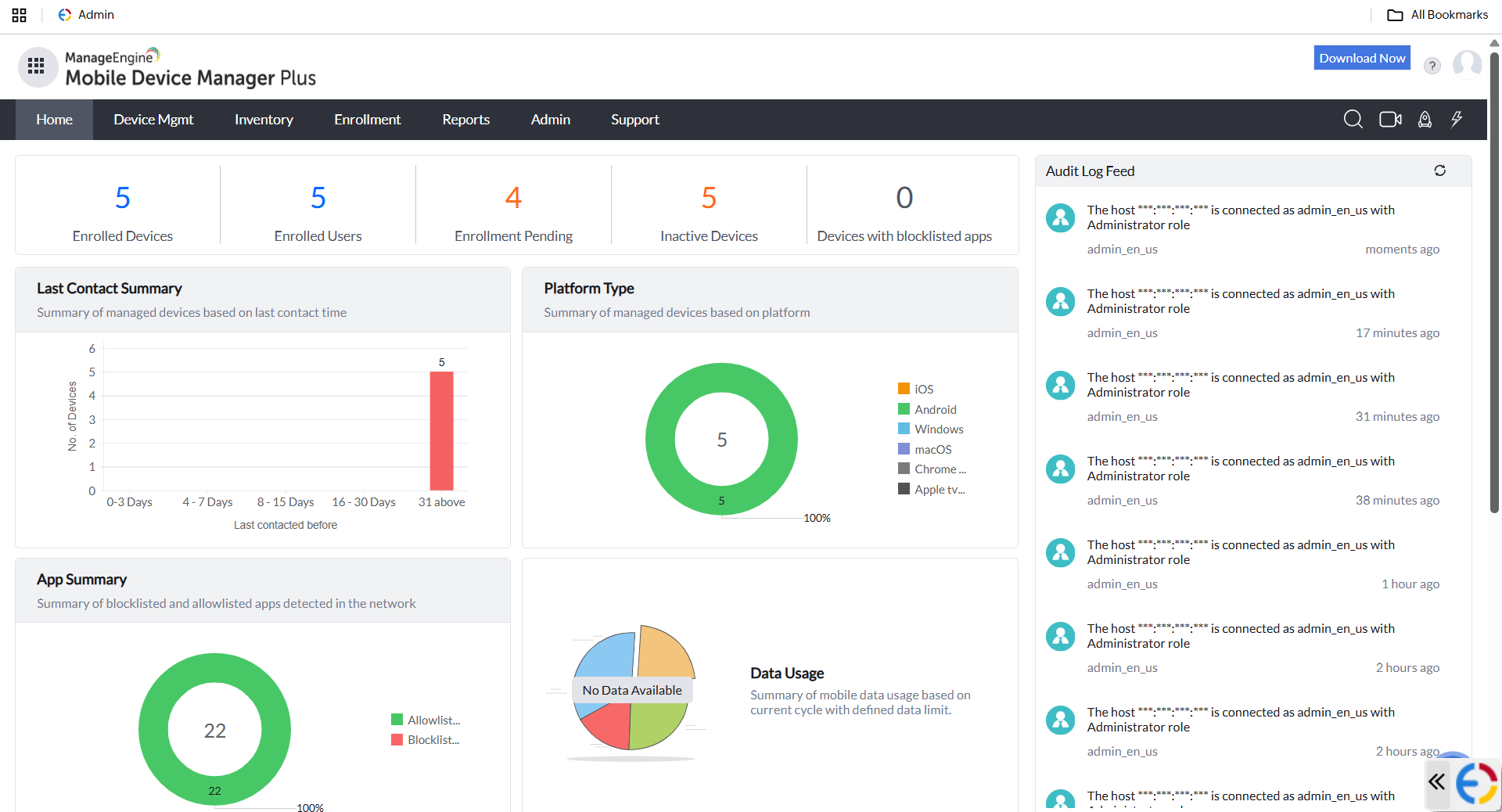
Overall, I like using MDM as the GUI is greatly easier to use. The navigation is very simple, as you can find your way using multiple routes. I like how the opening dashboard shows devices and users, so you can see your numbers grow or shrink.
A de minimis incentive was given to thank the reviewer for their time. The incentive was not used to bias or drive a particular response, nor was the incentive contingent on a positive endorsement. More Info
Good amount of documentation available for Google App Engine and in general there is large developer community around Google App Engine and other products it interacts with. Lastly, Google support is great in general. No issues so far with them.
A de minimis incentive was given to thank the reviewer for their time. The incentive was not used to bias or drive a particular response, nor was the incentive contingent on a positive endorsement. More Info
We were on another much smaller cloud provider and decided to make the switch for several reasons - stability, breadth of services, and security. In reviewing options, GCP provided the best mixtures of meeting our needs while also balancing the overall cost of the service as compared to the other major players in Azure and AWS.
A de minimis incentive was given to thank the reviewer for their time. The incentive was not used to bias or drive a particular response, nor was the incentive contingent on a positive endorsement. More Info
After exploring some MDM system, we choose ManageEngine Mobile Device Manager Plus as the out-of-the-box features and functionalities meet our business needs, reasonable license cost, reputable company, and provide good supports.
Effective integration to other java based frameworks.
Time to market is very quick. Build, test, deploy and use.
The GAE Whitelist for java is an important resource to know what works and what does not. So use it. It would also be nice for Google to expand on items that are allowed on GAE platform.
A de minimis incentive was given to thank the reviewer for their time. The incentive was not used to bias or drive a particular response, nor was the incentive contingent on a positive endorsement. More Info