IBM Db2 Big SQL vs. Informatica Cloud Data Integration vs. MuleSoft Anypoint Platform

Overview
ProductRatingMost Used ByProduct SummaryStarting Price
Db2 Big SQL
Score 9.0 out of 10
N/A
IBM offers Db2 Big SQL, an enterprise grade hybrid ANSI-compliant SQL on Hadoop engine, delivering massively parallel processing (MPP) and advanced data query. Big SQL offers a single database connection or query for disparate sources such as HDFS, RDMS, NoSQL databases, object stores and WebHDFS.N/A
Informatica Cloud Data Integration
Score 8.3 out of 10
N/A
Informatica Cloud Data Integration, for Cloud ETL and ELT, enables users to ingest, integrate and cleanse data within Informatica's cloud-native ETL and ELT solution. Users can link source and target data with thousands of connectors that recognize metadata, to make it easier to run complex integrations.N/A
Anypoint Platform
Score 7.9 out of 10
N/A
The Anypoint Platform developed by MuleSoft and acquired by Salesforce in early 2018 is designed to connect apps, data, and devices anywhere, on-premises or in the cloud. This platform was built to offer out-of-the-box connectors as well as tools that architects and developers can adopt quickly to design, build and manage the entire lifecycle of their APIs, applications, and products.N/A
Pricing
IBM Db2 Big SQLInformatica Cloud Data IntegrationMuleSoft Anypoint Platform
Editions & Modules
No answers on this topic
Offerings
Pricing Offerings
Db2 Big SQLInformatica Cloud Data IntegrationAnypoint Platform
Free Trial
NoYesYes
Free/Freemium Version
NoNoYes
Premium Consulting/Integration Services
NoNoNo
Entry-level Setup FeeNo setup feeNo setup feeNo setup fee
Additional Details
More Pricing Information
Community Pulse
IBM Db2 Big SQLInformatica Cloud Data IntegrationMuleSoft Anypoint Platform
Features
IBM Db2 Big SQLInformatica Cloud Data IntegrationMuleSoft Anypoint Platform
Data Source Connection
Comparison of Data Source Connection features of Product A and Product B
IBM Db2 Big SQL
-
Ratings
Informatica Cloud Data Integration
10.0
2 Ratings
19% above category average
MuleSoft Anypoint Platform
-
Ratings
Connect to traditional data sources00 Ratings10.02 Ratings00 Ratings
Connecto to Big Data and NoSQL00 Ratings10.02 Ratings00 Ratings
Data Transformations
Comparison of Data Transformations features of Product A and Product B
IBM Db2 Big SQL
-
Ratings
Informatica Cloud Data Integration
8.5
2 Ratings
5% above category average
MuleSoft Anypoint Platform
-
Ratings
Simple transformations00 Ratings10.02 Ratings00 Ratings
Complex transformations00 Ratings7.02 Ratings00 Ratings
Data Modeling
Comparison of Data Modeling features of Product A and Product B
IBM Db2 Big SQL
-
Ratings
Informatica Cloud Data Integration
8.3
2 Ratings
6% above category average
MuleSoft Anypoint Platform
-
Ratings
Data model creation00 Ratings9.01 Ratings00 Ratings
Metadata management00 Ratings9.01 Ratings00 Ratings
Business rules and workflow00 Ratings9.01 Ratings00 Ratings
Collaboration00 Ratings7.02 Ratings00 Ratings
Testing and debugging00 Ratings7.02 Ratings00 Ratings
Data Governance
Comparison of Data Governance features of Product A and Product B
IBM Db2 Big SQL
-
Ratings
Informatica Cloud Data Integration
9.0
1 Ratings
12% above category average
MuleSoft Anypoint Platform
-
Ratings
Integration with data quality tools00 Ratings9.01 Ratings00 Ratings
Integration with MDM tools00 Ratings9.01 Ratings00 Ratings
Cloud Data Integration
Comparison of Cloud Data Integration features of Product A and Product B
IBM Db2 Big SQL
-
Ratings
Informatica Cloud Data Integration
-
Ratings
MuleSoft Anypoint Platform
7.0
12 Ratings
13% below category average
Pre-built connectors00 Ratings00 Ratings7.612 Ratings
Connector modification00 Ratings00 Ratings7.312 Ratings
Support for real-time and batch integration00 Ratings00 Ratings6.912 Ratings
Data quality services00 Ratings00 Ratings6.012 Ratings
Data security features00 Ratings00 Ratings6.612 Ratings
Monitoring console00 Ratings00 Ratings7.312 Ratings
Best Alternatives
IBM Db2 Big SQLInformatica Cloud Data IntegrationMuleSoft Anypoint Platform
Small Businesses

No answers on this topic

Skyvia
Skyvia
Score 10.0 out of 10
Make
Make
Score 9.3 out of 10
Medium-sized Companies
Cloudera Manager
Cloudera Manager
Score 9.9 out of 10
IBM InfoSphere Information Server
Score 8.0 out of 10
IBM App Connect
IBM App Connect
Score 9.2 out of 10
Enterprises
IBM Analytics Engine
Score 7.2 out of 10
IBM InfoSphere Information Server
Score 8.0 out of 10
IBM App Connect
IBM App Connect
Score 9.2 out of 10
All AlternativesView all alternativesView all alternativesView all alternatives
User Ratings
IBM Db2 Big SQLInformatica Cloud Data IntegrationMuleSoft Anypoint Platform
Likelihood to Recommend
9.0
(2 ratings)
8.0
(2 ratings)
7.9
(24 ratings)
Likelihood to Renew
-
(0 ratings)
-
(0 ratings)
9.0
(1 ratings)
Usability
8.0
(1 ratings)
6.0
(1 ratings)
7.4
(4 ratings)
Support Rating
8.8
(2 ratings)
-
(0 ratings)
6.8
(4 ratings)
User Testimonials
IBM Db2 Big SQLInformatica Cloud Data IntegrationMuleSoft Anypoint Platform
Likelihood to Recommend
IBM
My recommendation obviously would depend on the application. But I think given the right requirements, IBM DB2 Big SQL is definitely a contender for a database platform. Especially when disparate data and multiple data stores are involved. I like the fact I can use the product to federate my data and make it look like it's all in one place. The engine is high performance and if you desire to use Hadoop, this could be your platform.
Read full review
Informatica
We use it a lot for importing data. We transform the incoming data to match the formatting of our CRM. We also match on existing records to avoid creating duplicates. Informatica handles all of this exceptionally well. Our users are system administrators. The tool is not well-suited for users who do not have a technical background
Read full review
Salesforce
MuleSoft Anypoint Platform is best tool in the market for developing APIs with complex structures communicating with various different types of applications including web applications as well as legacy applications. Also applications including database connectivity for fetching and updating data in the DB tables. I cant think of any scenario which MuleSoft Anypoint Platform could not be used for developing the integrations.
Read full review
Pros
IBM
  • data storage
  • data manipulation
  • data definitions
  • data reliability
Read full review
Informatica
  • Data synchronisation
  • Data replication
  • Data integration
Read full review
Salesforce
  • API Manager provides easy API Policy Governance. You do not have to manage multiple platforms for managing the policies.
  • Supports hybrid Mule EBS environments. You can configure both CouldHub-based and on-premise-based API using Mulesoft API manager in a similar manner.
  • It's very easy to implement API proxy.
  • User friendly UI.
  • Single platform to manage all.
Read full review
Cons
IBM
  • Cloud readiness.
  • Ease of implementation.
Read full review
Informatica
  • There is a moderately steep learning curve
  • Has some idiosyncrasies
  • Can be finicky with date formats
Read full review
Salesforce
  • Has more features than what we really need so we're paying for more than we use. Sort of like paying for an Abrams tank when all we really need is a Toyota Corolla.
  • Not a value product, tends to be expensive.
  • Takes a while for developers to learn to use Mulesoft Anypoint.
Read full review
Usability
IBM
IBM DB2 is a solid service but hasn't seen much innovation over the past decade. It gets the job done and supports our IT operations across digital so it is fair.
Read full review
Informatica
There is a learning curve with Informatica. It is not always intuitive to use. It is best suited for technical users such as system administrators
Read full review
Salesforce
There’s a lot of learning curve at the beginning when it comes to building the code and everything. In terms of usability, I’d say once you get used to it, it’s fine — but it’s not very easy during the initial stages.
Read full review
Support Rating
IBM
IBM did a good job of supporting us during our evaluation and proof of concept. They were able to provide all necessary guidance, answer questions, help us architect it, etc. We were pleased with the support provided by the vendor. I will caveat and say this support was all before the sale, however, we have a ton of IBM products and they provide the same high level of support for all of them. I didn't see this being any different. I give IBM support two thumbs up!
Read full review
Informatica
No answers on this topic
Salesforce
Anypoint Platform support is very responsive. There is also a huge knowledge base and an active online forum where answers to most questions can be found. When needed support engages the engineering group so adequate solutions or workarounds are always provided.
Read full review
Alternatives Considered
IBM
MS SQL Server was ruled out given we didn't feel we could collapse environments. We thought of MS-SQL as more of a one for one replacement for Sybase ASE, i.e., server for server. SAP HANA was evaluated and given a big thumbs up but was rejected because the SQL would have to be rewritten at the time (now they have an accelerator so you don't have to). Also, there was a very low adoption rate within the enterprise. IBM DB2 Big SQL was not selected even though technically it achieved high scores, because we could not find readily available talent and low adoption rate within the enterprise (basically no adoption at the time). We ended up selecting Exadata because of the high adoption rate within the enterprise even though technically HANA and Big SQL were superior in our evaluations.
Read full review
Informatica
It is really easy to comply and understand its features.
Read full review
Salesforce
Once we have moved all of our system integration APIs to the MuleSoft Anypoint Platform, we will need to communicate with a wide variety of external systems. All of our business and service logic is stored in the aforementioned core systems. Anypoint Platform (and all of our APIs) makes it easy to connect to various other platforms. In order to link to these many other systems, connectors and/or components are utilized, and they are simple to configure and integrate.
Read full review
Return on Investment
IBM
  • better data visibility
  • solid reliability for mission critical data
Read full review
Informatica
  • Really greatest than any other conventional application.
Read full review
Salesforce
  • Mulesoft can be used to provide an integration platform to a large number of systems like Salesforce, ODBC, JDBC, SAP, Mongo DB, etc.
  • An excellent option to develop microservices and real-time integrations.
  • Not as robust in handling large data volumes, Informatica is better in that respect.
Read full review
ScreenShots

Anypoint Platform Screenshots

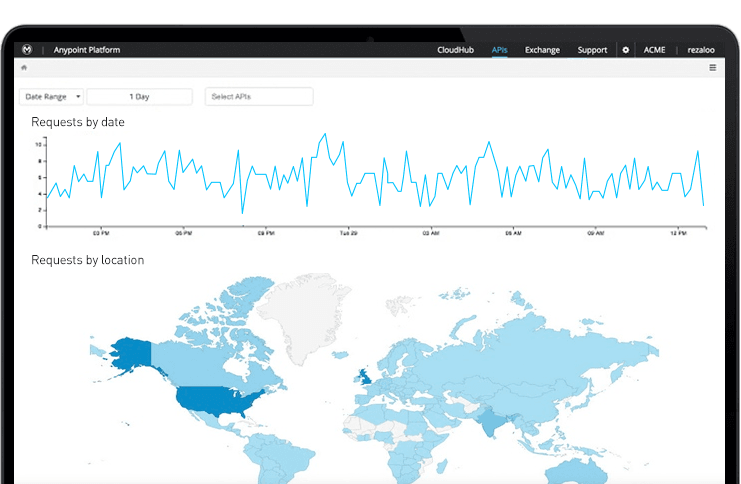
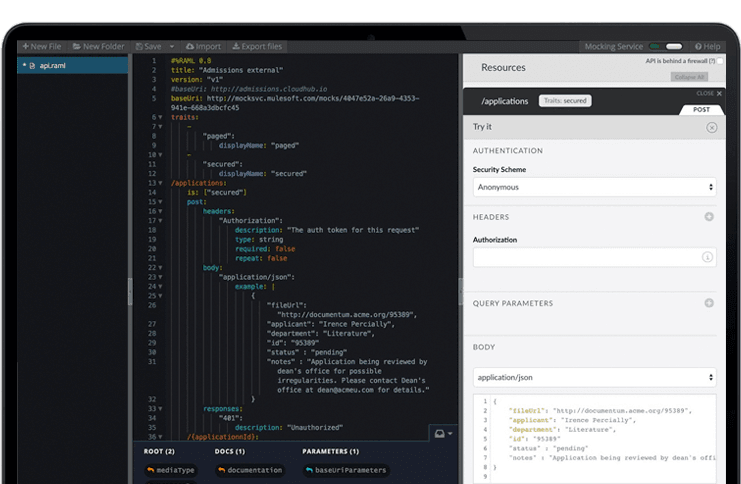
Screenshot of Connect any endpoints using out-of-the-box connectors, dynamic connectivity to API specifications, or by building reusable connectors with Anypoint DevKit™.Screenshot of A reporting suite that provides a real-time view of API consumption trends and operational performance. Analytics provides insight into how your API is being used and informs forward-looking design decisions.Screenshot of A platform to engage with API developers and drive adoption. Share documentation, examples and manage developer access from a single platform.