IBM Maximo Real Estate and Facilities (formerly Tririga) is an integrated workplace management system (IWMS) supporting facilities management, real estate portfolio management, space management, and environmental / energy management.
N/A
ServiceChannel
Score 9.0 out of 10
N/A
ServiceChannel provides facilities managers with a single platform to source, procure, manage, and pay for repair and maintenance services from commercial contractors across their enterprise. The company aims to deliver transparency and data-driven analytics of service quality, across all trades, locations, and contractors, allowing facilities managers drive significant brand equity and ROI for their organizations without outsourcing or investing in new infrastructure. …
It is great for organizations who have complex data or large amounts of data. For an organization that has small amounts of data or very simple processes TRIRIGA might be too much. It can handle small data and processes but the costs of implementing and supporting might be greater than the reward that would be provided. It also has a lot of room to grow. You can utilize existing forms and business objects or you can custom build new ones to fit business needs.
ServiceChannel is well suited for companies that have multiple locations or a few very large buildings. In my experience the system allows one person to manage 150 to 200 small retail locations but when you add restaurants and buildings with lots of equipment then it gets more complex and the number of locations that one person can effectively manage is greatly reduced. You can effectively manager 50 or 30,000+ locations with this system if you have the personal. There are several free or cost-effective programs available if you are only looking to manage a dozen or so locations.
ServiceChannel listens to me the user more than any other product I have ever been involved with. It seems like every few months there are some upgrades and improvements to an already great system.
They have some great folks employed who are very accessible and very knowledgeable in this system, they are eager to help out and jump in, and they are never trying to up-sell me during these times.
I believe they have some of the best practices around for helping out new vendors, who have never been exposed to any CMMS system, they help to ease the fear that contractors/vendors have from the onboarding process thru system training.
In order to get into the back end and manage spaces, there are too many "clicks" and pop up boxes to get to the area that is needed, which causes delays and confusions.
It can be a bit slow when processing requests, pulling up maps.
Trigia holds a lot of information, which is good but it could be easier to get to at times.
Sometimes the functionality of the software is slow.
Example...I insert a WO# into the home search box and it comes up with "nothing found". I return to the home screen and repeat the exact same process and it takes me to my WO. This happens at least 50% of the time.
They just finished up with a system upgrade (I think), and during the 3 week period I could not pull mass approved invoices for my AP department. That was a real hindrance.
I am not particularly fond of the new dashboard format. It's not as easy to move around in. However it's new and I'm sure I will get used to it quick enough.
I give it this rating because it has more than one way to get to most forms but it can be hard to navigate if you don't know the terms TRIRIGA uses. Also being a new developer can bring up issues with not knowing exactly where certain things are found. The documentation doesn't help too much sometimes since the TRIRIGA community is pretty small.
In the almost 7 months I have been working on my current project there has been exactly one unplanned outage. This was in the QA environment during data migration and was caused by a workflow that was circular and self referencing which caused the processing JAVA memory to spike, not resolve and then crash the server.
TRIRIGA does a good job of this, being a server based web application it is like other web based systems so it's not as fast as a client server application or a local system but it is very consistent across locations and for different roles and employees. This does allow consistent use no matter where people are located. It also does a fair job of notifying the user when it is loading with the spinning circle or hour glass. The reports can get fairly complex but native TRIRIGA reports perform well even when they are complex. They can be a little slow if they are fetching 100's of 1000's of rows but this doesn't take more than 10 or so seconds. I have yet to write a native report that takes more than 20 seconds and that 20 second report is getting data from 4 BO's and nets over 130K rows.
The process does seem to take some time and has to go through a preset escalation process. IBM does a good job of communicating through the process, it just seems to take it's natural course.
It is very easy to set up ServiceChannel but the one thing I believe they could make easier is the vendor portion of ServiceChannel. We get a lot of complaints on how difficult it is for them when trying to get set up.
Service Channel bridged the gap for us to issue work orders directly to vendors. Maximo Asset Management did not have a user-friendly way for us to do what Service Channel does on the vendor side. Also, at the time of our selection, Maximo was missing the site portal but has since developed a solution of their own.
TRIRIGA can be split into many servers and is easily scaled over multiple environments. TRIRIGA is also capable of being implemented on multiple operating systems and a wide range of environments with different database management systems. This makes it easy for clients to choose since they can choose vendors they have previous relationships with or are required to use for various reasons.
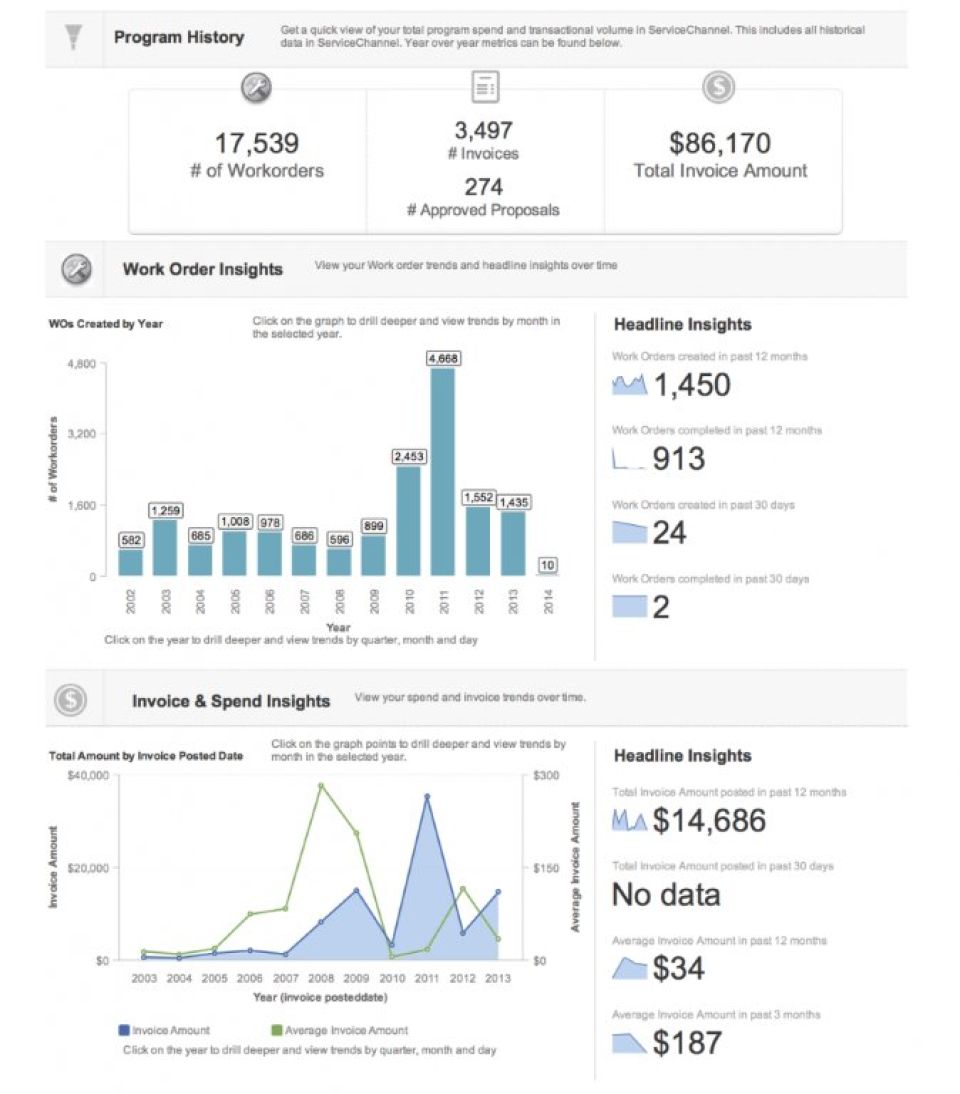
It increased visibility on how much we were spending on HVAC repairs/replacements and allowed us to make changes to reduce costs
Before we were using paper invoices from the vendors, which creates a scenario of losing/missing invoices into AP. Then we start using the Service Channel invoicing and reduce errors to below 1%.
Gives you the capability to add trades and adjust to your needs, so you can get better tracking of specific items.