
IBM Engineering Lifecycle Management vs. SpiraTest
| Product | Rating | Most Used By | Product Summary | Starting Price |
|---|---|---|---|---|
 IBM Engineering Lifecycle Management | Score5 out of 10 | N/A | IBM Engineering Lifecycle Management (ELM) is an integrated suite for managing requirements, engineering work, system and software models, and verification activities across complex product-development programs. It is used by systems engineers, software teams, test organizations, project managers, and compliance teams in industries such as automotive, aerospace and defense, medical devices, and public infrastructure. | N/A |
 SpiraTest | Score8 out of 10 | Mid-Size Companies (51-1,000 employees) | SpiraTest allows customers to manage their software testing and quality assurance activities. It provides requirements management, test management and bug-tracking functionality with integrated reporting. | $130.99 per month 3 concurrent users (minimum) |
| IBM Engineering Lifecycle Management | SpiraTest | |||||||||||||||
|---|---|---|---|---|---|---|---|---|---|---|---|---|---|---|---|---|
| Editions & Modules | No answers on this topic |
| ||||||||||||||
| Offerings |
| |||||||||||||||
| Entry-level Setup Fee | No setup fee | No setup fee | ||||||||||||||
| Additional Details | — | Discount available for annual billing on Cloud solution. 3 concurrent user minimum. Volume concurrent user discount available. | ||||||||||||||
| More Pricing Information | ||||||||||||||||
| IBM Engineering Lifecycle Management | SpiraTest | |
|---|---|---|
| Considered Both Products | No answer on this topic | No answer on this topic |
| Key User Insights | ||
| Would buy again | ||
78% Would buy again 7 Answers | No answers on this topic | |
| Delivers good value for the price | ||
88% Delivers good value for the price 7 Answers | No answers on this topic | |
| Happy with the feature set | ||
89% Happy with the feature set 8 Answers | No answers on this topic | |
| Lived up to sales and marketing promises | ||
100% Lived up to sales and marketing promises 5 Answers | No answers on this topic | |
| Implementation went as expected | ||
86% Implementation went as expected 6 Answers | No answers on this topic | |
| IBM Engineering Lifecycle Management | SpiraTest | |||||||||||||||||||
|---|---|---|---|---|---|---|---|---|---|---|---|---|---|---|---|---|---|---|---|---|
| Test Management |
| |||||||||||||||||||
| IBM Engineering Lifecycle Management | SpiraTest | |
|---|---|---|
| Small Businesses |  Polarion ALM Score10 out of 10 | No answers on this topic |
| Medium-sized Companies |  PTC Windchill RV&S Score2 out of 10 | No answers on this topic |
| Enterprises | Polarion ALM Score10 out of 10 | No answers on this topic |
| All Alternatives | View all alternatives | View all alternatives |
| IBM Engineering Lifecycle Management | SpiraTest | |
|---|---|---|
| Likelihood to Recommend | 3.0 | 8.0 |
| Likelihood to Renew | 8.0 | - |
| Usability | 4.0 | - |
| Support Rating | 5.0 | 9.0 |
| Implementation Rating | 10.0 | - |
| IBM Engineering Lifecycle Management | SpiraTest | |
|---|---|---|
| Likelihood to Recommend |
|
|
| Pros |
|
|
| Cons |
|
|
| Likelihood to Renew |
| No answers on this topic |
| Usability |
| No answers on this topic |
| Support Rating |
|
|
| Implementation Rating |
| No answers on this topic |
| Alternatives Considered |
| Incentivized |
| Return on Investment |
|
|
| ScreenShots | SpiraTest Screenshots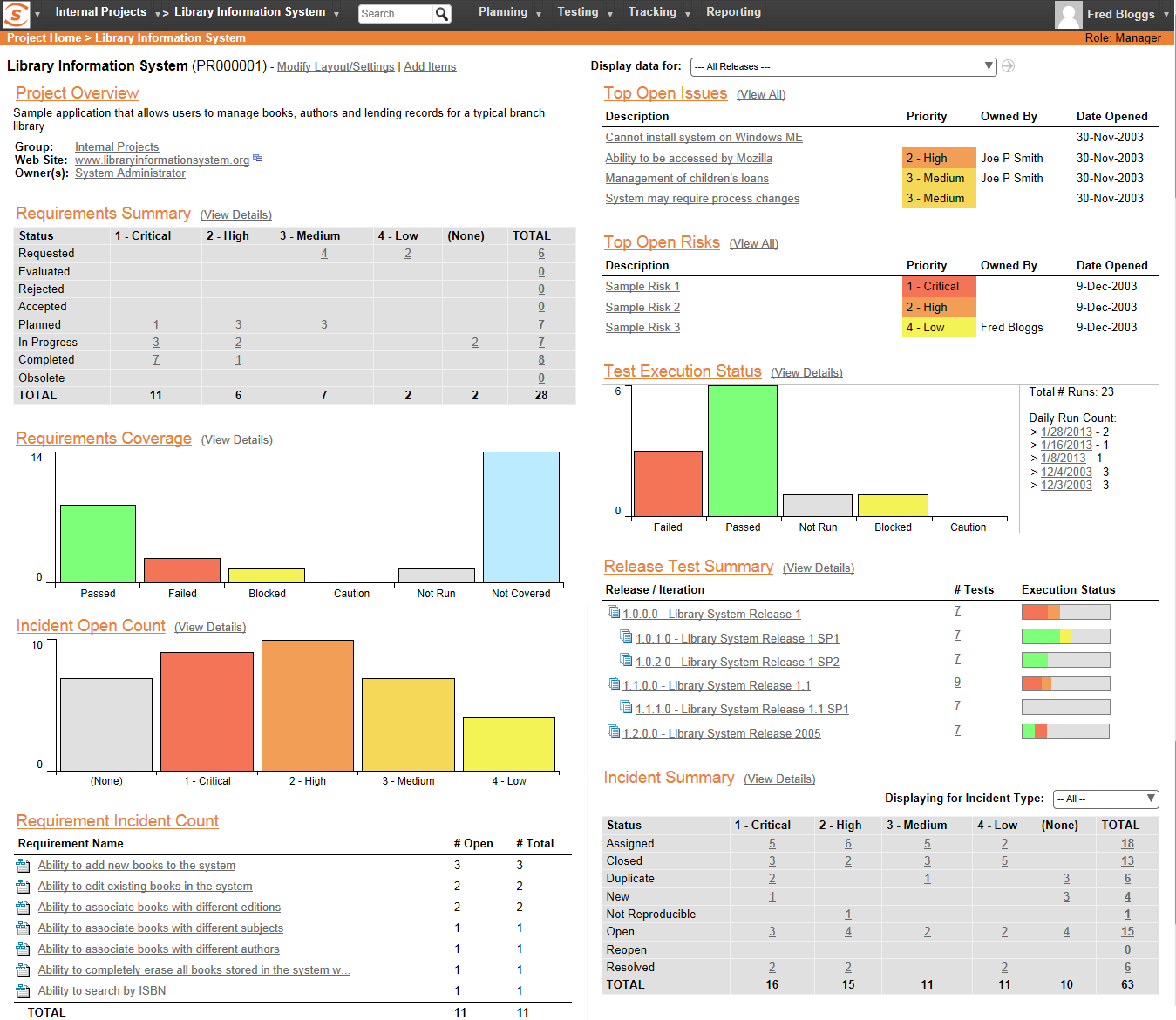    |


