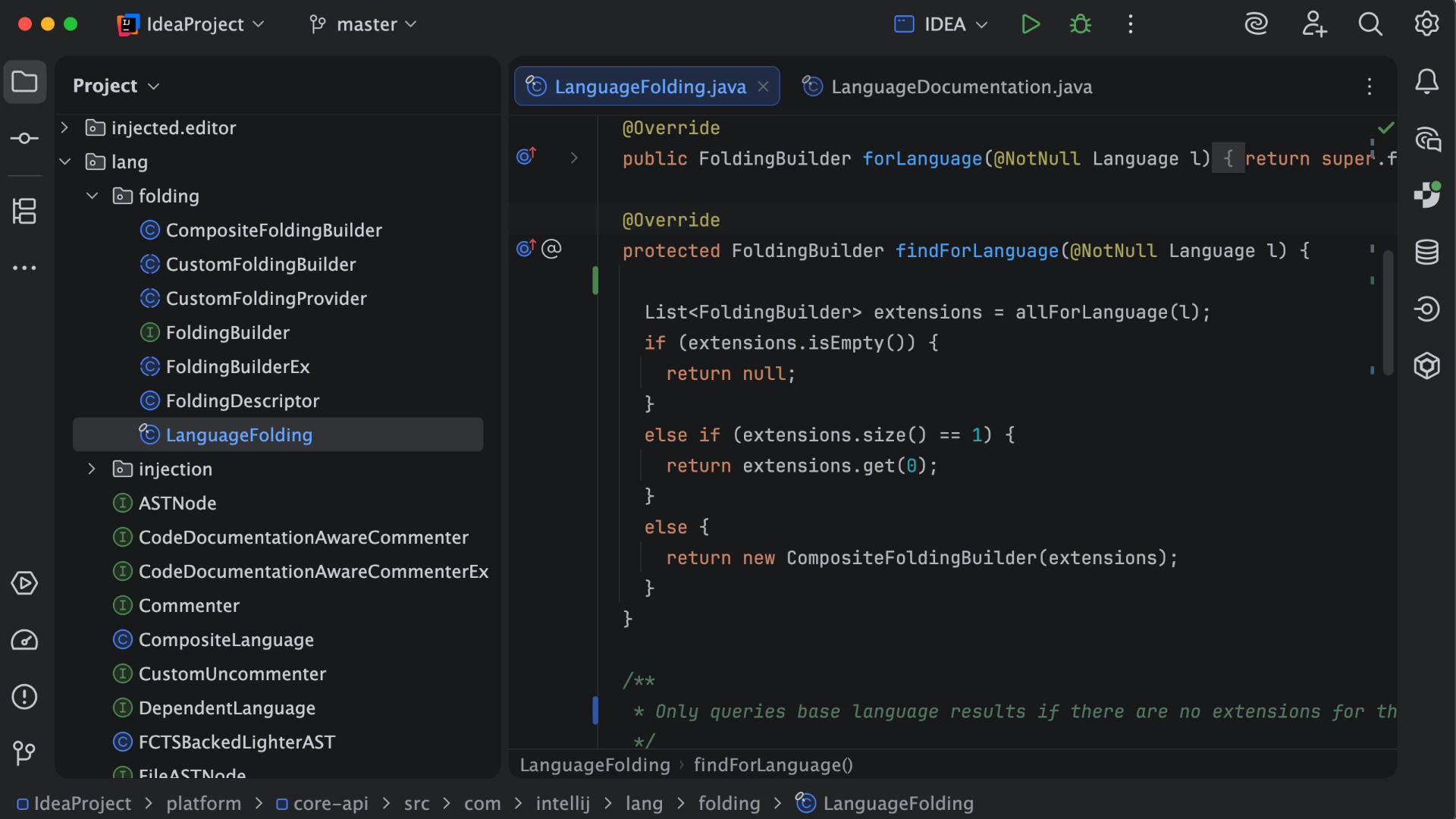
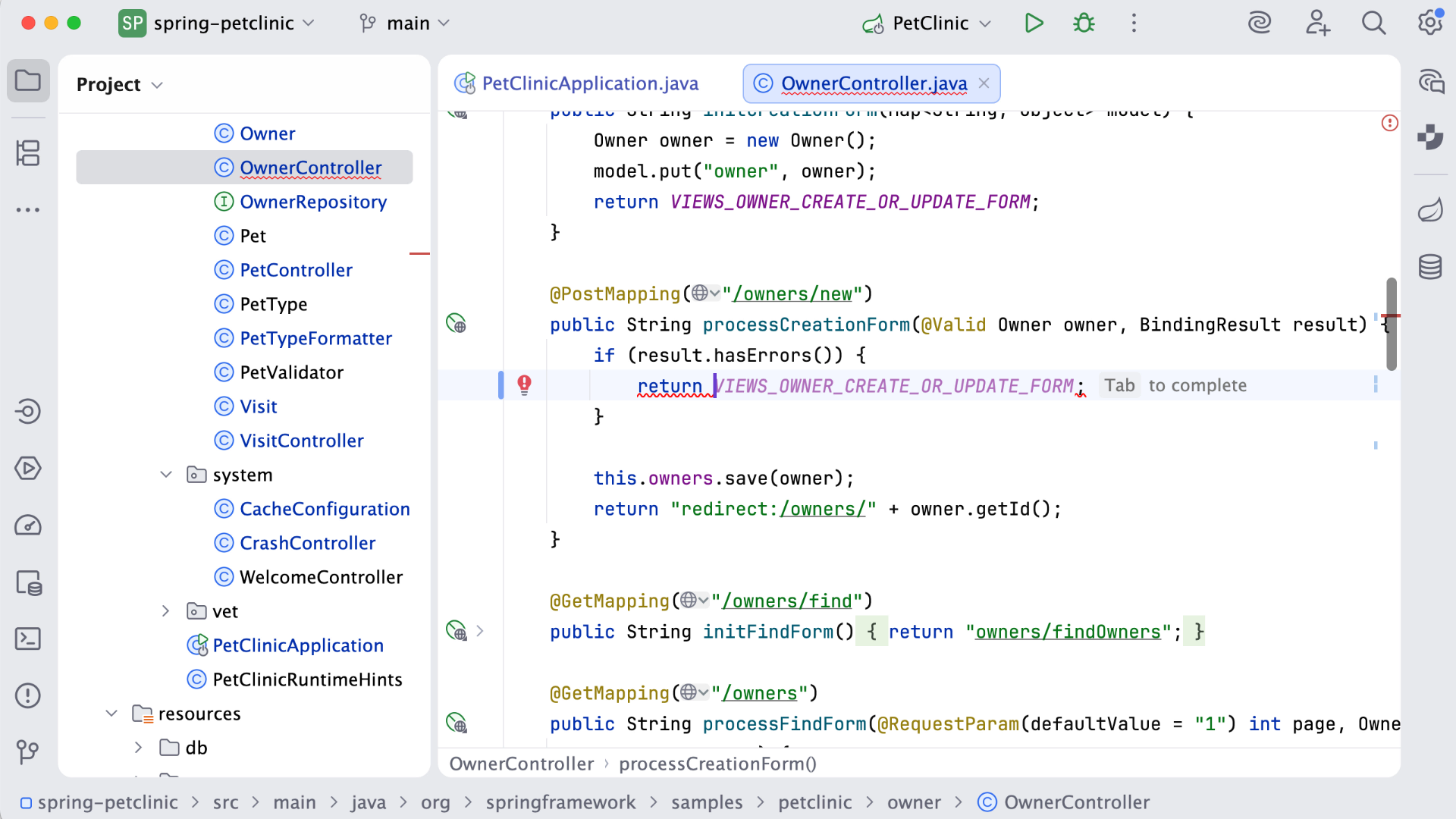
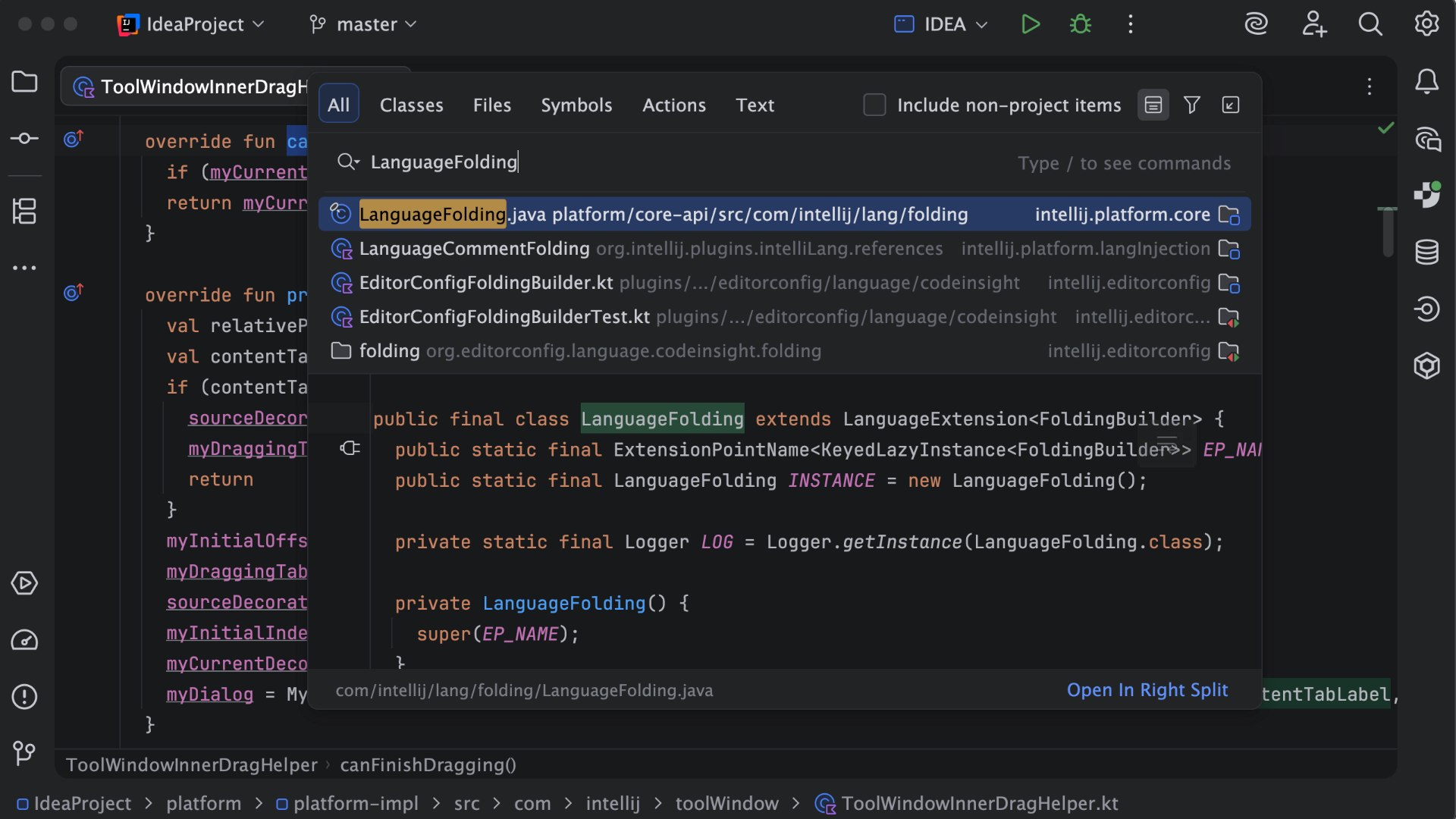
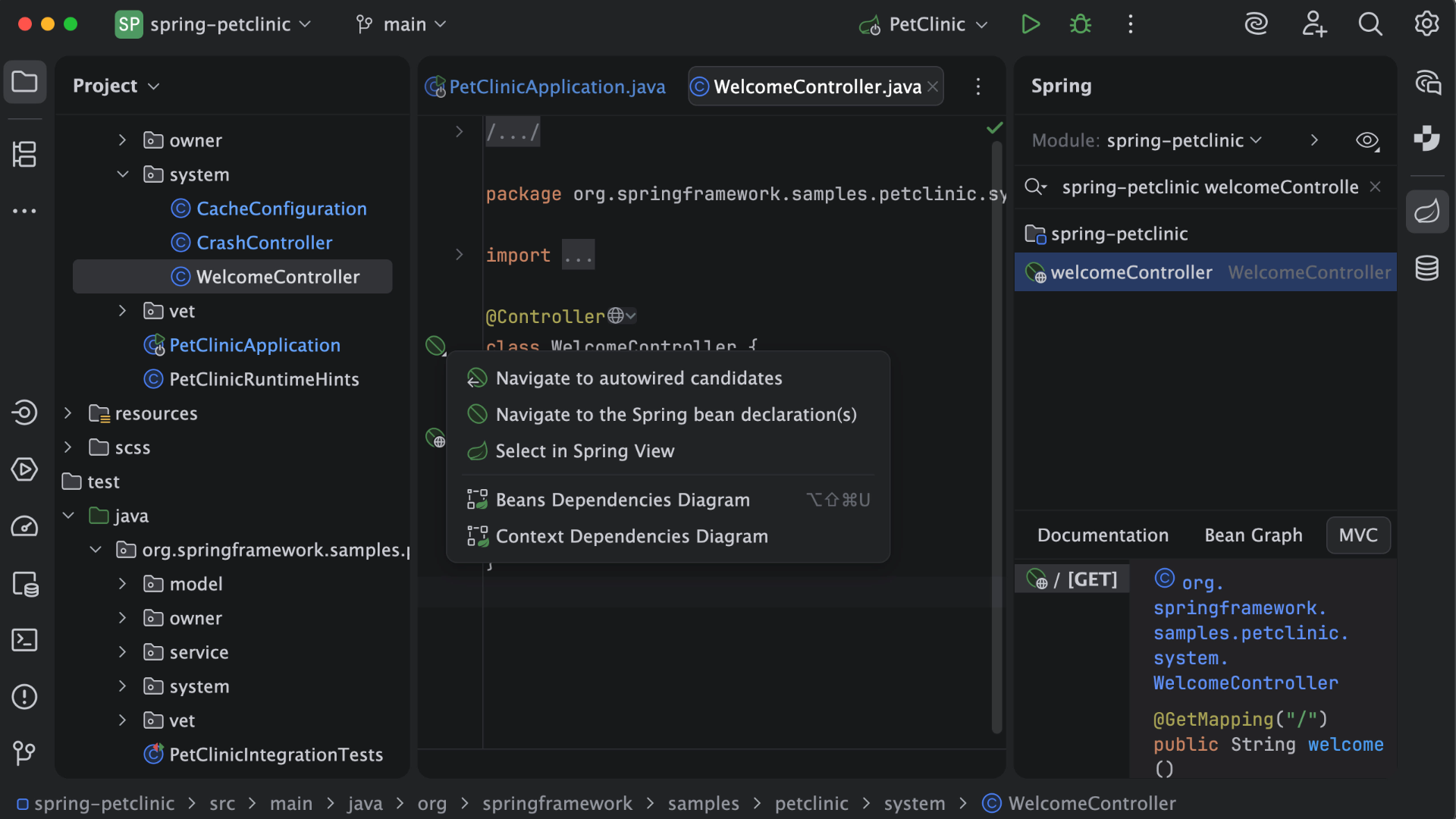
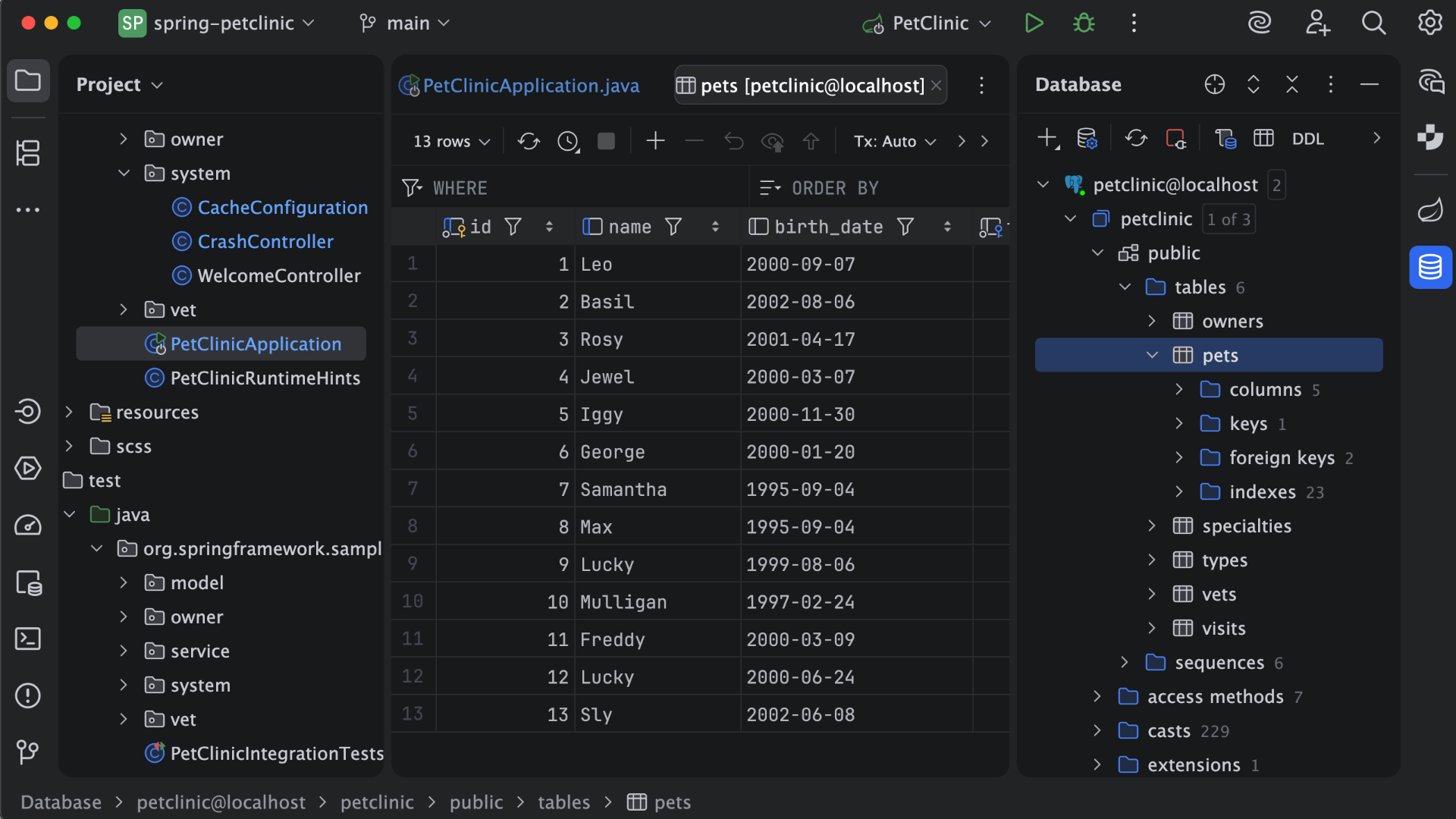
IntelliJ IDEA is an IDE that aims to give Java and Kotlin developers everything they need out of the box, including a smart code editor, built-in developer tools, framework support, database support, web development support, and much more.
$19.90
per month
SourceForge
Score9.9 out of 10
N/A
SourceForge is a B2B software discovery platform, featuring 4000+ categories in its comparison engine that potential buyers can use to compare software by user reviews, features, pricing, integrations, operating system, and deployment.
N/A
Pricing
IntelliJ IDEA
SourceForge
Editions & Modules
For Individual Use (Monthly billing)
$19.90
per month
For Organizations (Monthly billing)
$71.90
per month
For Individual Use (Yearly billing)
$199
per year
For Organizations (Yearly billing)
$719
per year
No answers on this topic
Offerings
Pricing Offerings
IntelliJ IDEA
SourceForge
Free Trial
Yes
No
Free/Freemium Version
Yes
Yes
Premium Consulting/Integration Services
No
No
Entry-level Setup Fee
No setup fee
No setup fee
Additional Details
All Products Pack (For Individual Use) – $299 /1st year, $ 239 /2nd year and $ 179 /3d year onwards
All Products Pack (For Organizations) – $979 / year
This is a superb tool if your project involves a lot of backend development, especially in Java/Spring Boot and Kotlin. The support for the front end is great as well, but some developers may prefer to use the GitHub copilot add-on. I especially love using the GitHub copilot add-on. It may be less appropriate if your project requires heavy use of HotSwaps for backend debugging, as sometimes the support for that can be limited.
A de minimis incentive was given to thank the reviewer for their time. The incentive was not used to bias or drive a particular response, nor was the incentive contingent on a positive endorsement. More Info
I recommend SourceForge to anyone or business that needs both commercial and open source software. This platform has a wide variety of software with many categories that allow easy search for any project, in addition to the fact that searches can be done separately (commercial and open source software) so as not to have mixed results which go with different purpose. In addition to the fact that the community of this platform is quite active and that there are always times to discover new projects that can be useful for a company or individual person.
Unit testing: Fully integrated into IntelliJ IDEA. Your unit tests will run smoothly and efficiently, with excellent debugging tools for when things get tricky.
Spring integration: Our Spring project using Maven works flawlessly in IntelliJ IDEA. I know firsthand that Apache is also easily and readily supported too. The integration is seamless and very easy to set up using IntelliJ IDEA's set up wizard when importing new projects.
Customization: IntelliJ IDEA comes out of the box with a bunch of handy shortcuts, as well as text prediction, syntax error detection, and other tools to help keep your code clean. But even better is that it allows for total customization of shortcuts you can easily create to suit your needs.
A de minimis incentive was given to thank the reviewer for their time. The incentive was not used to bias or drive a particular response, nor was the incentive contingent on a positive endorsement. More Info
A de minimis incentive was given to thank the reviewer for their time. The incentive was not used to bias or drive a particular response, nor was the incentive contingent on a positive endorsement. More Info
The overall design that SourceForge has really leaves a lot to be desired, although the entire platform works perfectly, I think that the design should be much more attractive.
There is currently no feature to save your progress on a review you are writing, so if you are writing a review and the browser is closed for some reason, all progress of the written review will be lost.
VS Code is maturing and has a Scala plugin now. The overall experience with VS Code - for web development at least - is very snappy/fast. IntelliJ feels a bit sluggish in comparison. If that Scala plugin for VS Code is deemed mature enough - we may not bother renewing and resort to the Community Edition if we need it.
A de minimis incentive was given to thank the reviewer for their time. The incentive was not used to bias or drive a particular response, nor was the incentive contingent on a positive endorsement. More Info
Souceforge was very straightforward and easy to manage. The leads worked for us so there is not a lot else to say about why I'd use it again. This isn't some complicated software product, it is a simple inbound marketing channel that is meant to generate leads and help us with brand awareness and it did exactly that.
There is always room for improvement, but I haven't met any IDE that I liked more so far. Even if it did not fit a use case right out of the box, there is always a way to configure how it works to do just that.
A de minimis incentive was given to thank the reviewer for their time. The incentive was not used to bias or drive a particular response, nor was the incentive contingent on a positive endorsement. More Info
SourceForge is super easy to use and very intuitive. And their support team and campaign managers help whenever we need it. Using SourceForge as a user is easy, and administrating a business software listing is easy as well. They also have great documentation.
We've never had any issues or downtime with SourceForge. Since we've been a user, the platform has never been down. Or at least never that I've noticed.
SourceForge loads extremely quickly whether you're using the front end or administrating your product listing on the back end. All pages are snappy to load--no issues with page speed whatsoever.
Customer support is really good in the case of IntelliJ. If you are paying for this product then, the company makes sure that you will get all the services adequately. Regular update patches are provided to improve the IDE. An online bug report makes it easier for the developers to find the solution as fast as possible. The large online community also helps to find the various solutions to the issues.
A de minimis incentive was given to thank the reviewer for their time. The incentive was not used to bias or drive a particular response, nor was the incentive contingent on a positive endorsement. More Info
I hardly ever use the support on SourceForge, as I have not needed it. Their product works well for me. One time I had to email them and they got back to me the same day, but that's my only experience.
When we first signed up, they pair you with a campaign manager who trained us on how to use the product properly. The product is simple so the training was only about 30 minutes and after that we understood all the features and how to make the most of it. Most of the work came with making a custom landing page and building a follow up process for our sales team.
This installs just like any other application - its pretty straight forward. Perhaps licensing could be more challenging - but if you use the cloud licensing they offer its as simple as having engineers login to the application and it just works.
A de minimis incentive was given to thank the reviewer for their time. The incentive was not used to bias or drive a particular response, nor was the incentive contingent on a positive endorsement. More Info
A de minimis incentive was given to thank the reviewer for their time. The incentive was not used to bias or drive a particular response, nor was the incentive contingent on a positive endorsement. More Info
Eclipse is just so old, like a dinosaur, compared to IntelliJ. There are still formats that Eclipse supports better, especially old and/or propriety ones. Still, most of the modern software development needs can be done on IntelliJ, & in a much better way, some of them are not even supported on Eclipse.
A de minimis incentive was given to thank the reviewer for their time. The incentive was not used to bias or drive a particular response, nor was the incentive contingent on a positive endorsement. More Info
G2 has a larger commitment time upfront and for a more expensive rate, which wasn't the best option for our team as we were just exploring the resources that existed out there at the time. We preferred Sourceforge as well due to its subscription service, making it easier to commit from the start.
A de minimis incentive was given to thank the reviewer for their time. The incentive was not used to bias or drive a particular response, nor was the incentive contingent on a positive endorsement. More Info
SourceForge has been plenty scalable for us. Our marketing department is able to edit listings and our executives can also log in to the platform if need be for leads and reporting information. SourceForge offers multiple user access and role permissions, so it's pretty scalable and easy to use for our entire team.
A de minimis incentive was given to thank the reviewer for their time. The incentive was not used to bias or drive a particular response, nor was the incentive contingent on a positive endorsement. More Info