Lyssna (formerly UsabilityHub) is a user research platform used to test digital products with real users and gain insights into their audience. Its tools and features help Lyssna to optimize users' designs and create more engaging user-friendly experiences. Lyssna is a research platform, offering a broad range of testing features including: Five Second Testing - Used to quickly test the effectiveness of landing pages, messaging and designs by showing users a…
$0
3 seats included
UsabilityTools
Score 7.0 out of 10
N/A
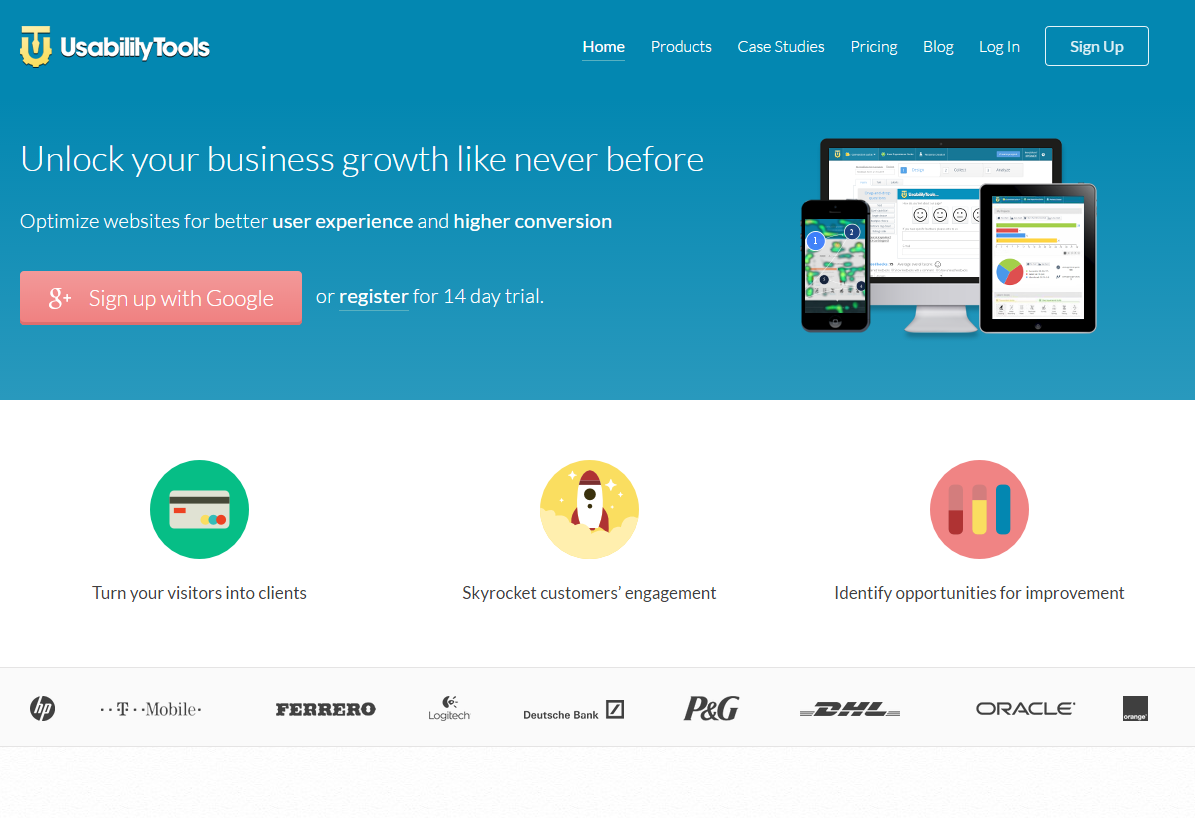
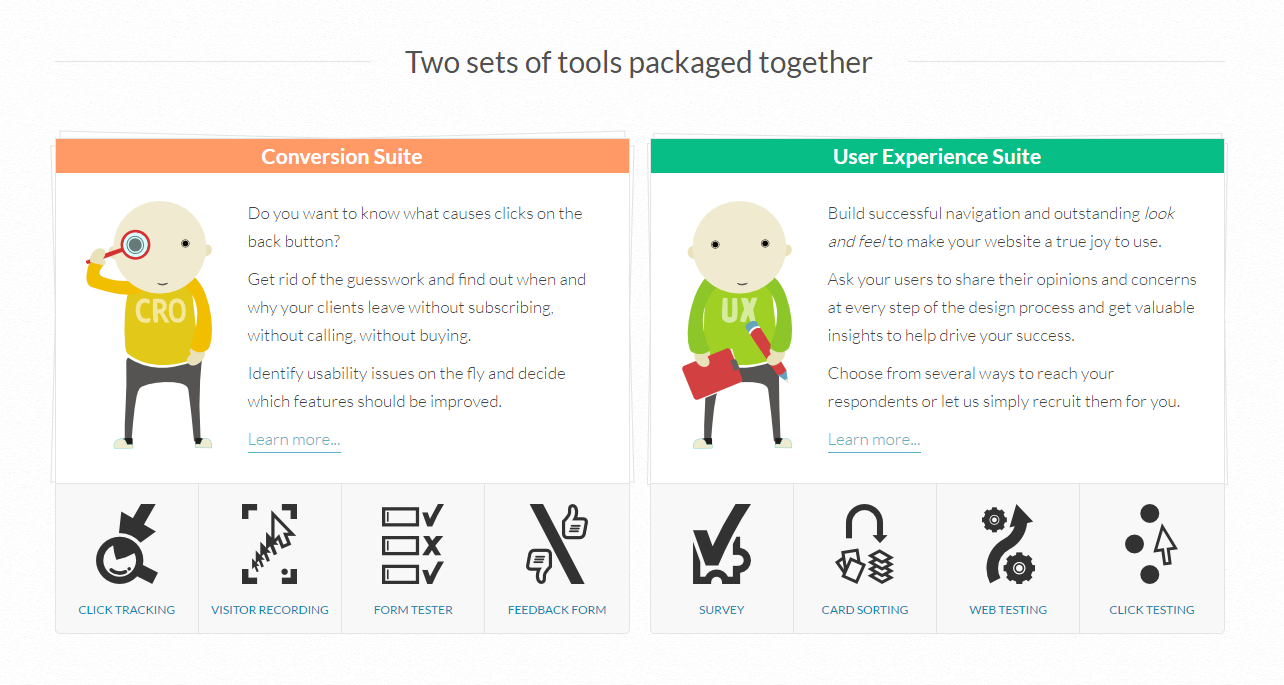
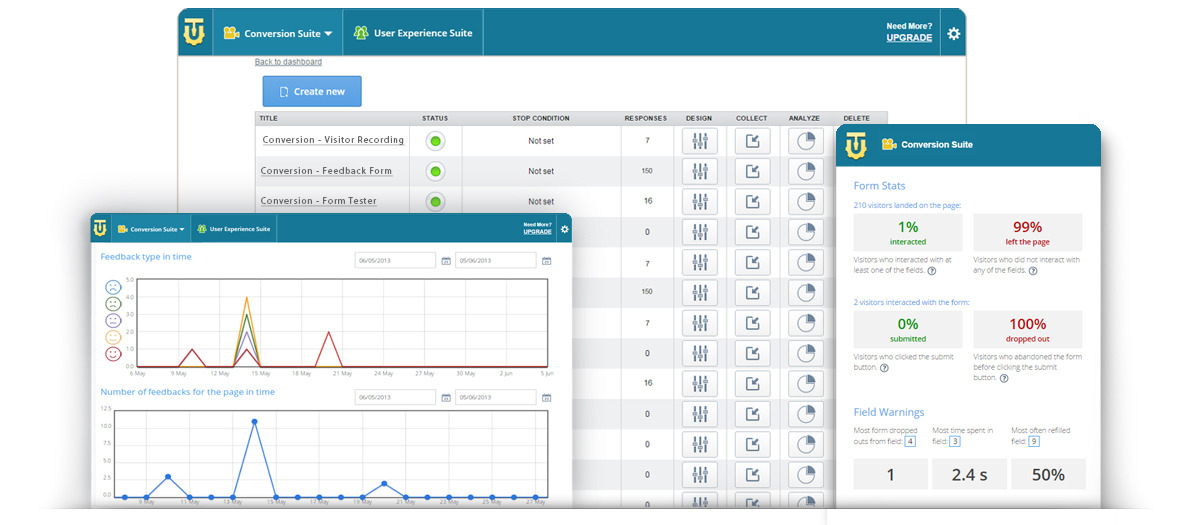
UsabilityTools is a usability testing and website optimization platform. Some key features include: Visitor Recording, Form Testing, Feedback Forms and Click Testing.
N/A
Pricing
Lyssna
UsabilityTools
Editions & Modules
Free
$0
3 seats included
Growth
$199
per month 5 seats included
Enterprise
Contact Sales
custom seats
No answers on this topic
Offerings
Pricing Offerings
Lyssna
UsabilityTools
Free Trial
Yes
Yes
Free/Freemium Version
Yes
No
Premium Consulting/Integration Services
No
No
Entry-level Setup Fee
No setup fee
No setup fee
Additional Details
Discount available for annual plan. Panel responses are priced seperately.
—
More Pricing Information
Community Pulse
Lyssna
UsabilityTools
Considered Both Products
Lyssna
Verified User
Anonymous
Chose Lyssna
Lyssna is certainly the least expensive, most basic and easy to use out of the range of usability tools I have used in the past. Depending on your maturity as a business and the projects that you are doing, this can be a great starting point before scaling up.
Maze has a more comprehensive reporting presentation compared to Usabilityhub. Maze's interface is clean and modern but it lacks a simple intuitive testing set found in UsabilityHub. The terminology of a maze is slightly confusing, flow tests are integrated with only Figma, Xd, …
I've not found any other tools as good as UsabilityHub. I've experienced some tools that have some similar functionalities, but they don't let you add multiple formats of questions in one test (as far as I'm aware.)
Like UsabilityHub, VWO is a testing platform but it tests against a site's users, not a set pool of testers. There is more flexibility for testing with VWO as you could use a WYSIWIG/edit HTML/CSS to make changes to a live site vs. UsabilityHub where'd you have to upload image …
UsabilityHub provides very fast, short responses to specific questions about a static image of a website. This is useful for checking what is most prominent on a page, what they would click on, what they see/read within the first 5 seconds of landing etc. WhatUsersDo is a …
I think it's well suited to any scenario where something requires feedback, whether it's exploratory feedback of current designs or validation that a new design solves a problem & additional feedback can be gathered to make it even better. I'd recommend UsabilityHub to anybody who isn't 100% sure on a design, and if they are, they need to use it to confirm that certainty.
Due to its simplicity and design it is really easy to navigate. You can clearly understand which sections you have completed and which are still left to be done. It is also really easy to change ordering of content etc, which I have found hasn’t been an option in other tools which means it is a really lengthy task of rewriting all of the tasks or questions to get them in the correct order that is desired.
Maze has a more comprehensive reporting presentation compared to Usabilityhub. Maze's interface is clean and modern but it lacks a simple intuitive testing set found in UsabilityHub. The terminology of a Maze is slightly confusing, flow tests are integrated with only Figma, Xd, Invision, Sketch, and Marvel prototypes. The final test interface shown to users is confusing and could have been simpler like UsabilityHub.