Memonic is an organizational tool that competes with Evernote. It allows you to organize content in folders, tags and groups and then share content with others. It's differentiation from Evernote is the emphasis given to sharing and collaboration.
It also, like Evernote, provides a web clipper tool that allows you to save web pages and organize and annotate them.
$28
per year
NetApp Cloud Volumes ONTAP
Score 6.0 out of 10
Enterprise companies (1,001+ employees)
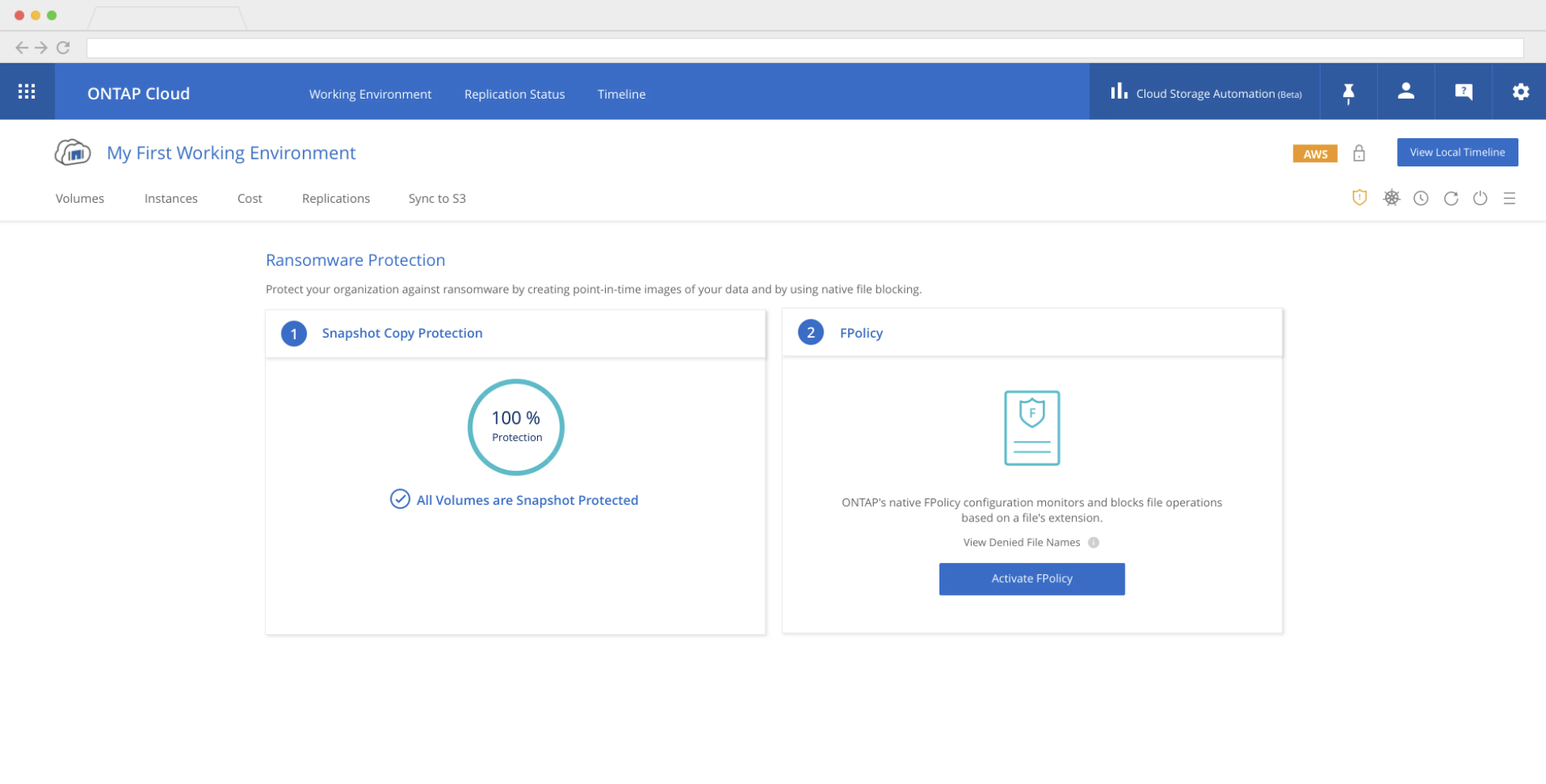
NetApp's Cloud Volumes ONTAP combines data control with enterprise-class storage features for various use cases, including file shares and block-level storage serving NAS and SAN protocols (NFS, SMB / CIFS, and iSCSI), Disaster Recovery (DR), Backup and Archive, DevOps, Databases (SQL, Oracle, NoSQL), or any other enterprise workload.
$0.64
Hourly
VMware Cloud Director
Score 8.5 out of 10
N/A
VMware Cloud Director (formerly vCloud Director) is a cloud service-delivery platform used by cloud providers to operate and manage cloud-service businesses. The vendor states that by using VMware Cloud Director, cloud providers deliver secure, efficient, and elastic cloud resources to thousands of enterprises and IT teams across the world.
N/A
Pricing
Memonic
NetApp Cloud Volumes ONTAP
VMware Cloud Director
Editions & Modules
Premium
$28.00
per year
Explore
$0.64
Hourly
Standard
$1.68
Hourly
Premium
$2.71
Hourly
Bring Your Own License (BYOL)
Purchased from NetApp
No answers on this topic
Offerings
Pricing Offerings
Memonic
NetApp Cloud Volumes ONTAP
VMware Cloud Director
Free Trial
No
Yes
No
Free/Freemium Version
Yes
No
No
Premium Consulting/Integration Services
No
No
No
Entry-level Setup Fee
No setup fee
No setup fee
No setup fee
Additional Details
—
Visit https://cloud.netapp.com/pricing for the pricing breakdown.
There really isn't any other option for a work-alike, particularly if using NetApp as primary storage. For us, the option was to just not have this extra tier, utilizing more storage space for snapshots and leaning more heavily on our separate backup servers. We still use the …
We evaluated AWS Storage Gateway against NetApp Cloud Volumes ONTAP and we found that NetApp Cloud Volumes ONTAP outperformed AWS in the following areas:
It is easier to set up, configure, and implement than AWS.
It has an easier to use and familiar storage volume management …
ScienceLogic SL1 and SolarWinds Storage Resource Monitor (SRM) were the closest competitors to meeting our business objectives. Tivoli Storage Manager was not able to meet the initial requirements. There was a significant overlap of capabilities between ScienceLogic SL1, …
Cost was a huge factor and ease of integration and deployment led us to ultimately choose NetApp Cloud Volumes ONTAP for our tertiary backup design. For our lightweight applications, we chose NetApp Cloud Volumes ONTAP because we were able to kill two birds with one product and …
Another option was own scripting or maintaining the end users in the backend (vcenter). This costs to much time to maintain (scripting) and has a big change of a Security breach. It was not an option for us either way.
Hyper-V is built on a Windows platform that includes services not needed for the virtual environment adding overhead. With vCloud I'm not required to maintain a host OS or it's updates. The requirement to maintain storage devices is no longer needed with vCloud as well.
vCloud Director is definitely my favorite as far as cloud managers. The only thing that compares is Cisco UCS Director, but it has slightly different functionality and purpose. I understand why a lot of clients still go with vCloud Director even though VMware intends to sunset …
The Memonic tool is a very powerful application that is hugely used by students, research scholars, journalists,s and corporate employees. It helps to jot down important points or a summary which makes a user brief the task with other people. Software is easy to use and has a basic touch. Content can be stored and shared easily.
It is well suited to store lower-tier data in the cloud to free up space on primary storage. For our use, it is really only currently viable for things like snapshots and backups. Other organizations may find it useful for secondary-tier archival storage as well. At this point, I don't really trust any cloud solution as primary storage for anything. This may change in the future, but for backups and such, it is a nice option.
For a CSP it's the best choice. For internal uses, even in presence of different business units, it's not so easy and flexible to manage. It assures a high level of multitenancy, often not needed for internal purposes. But it could be used in this case, just not created for these purposes. Network management is great.
ScienceLogic SL1 and SolarWinds Storage Resource Monitor (SRM) were the closest competitors to meeting our business objectives. Tivoli Storage Manager was not able to meet the initial requirements. There was a significant overlap of capabilities between ScienceLogic SL1, SolarWinds SRM, and NetApp Cloud Volumes ONTAP. The latter provided a more positive and cohesive experience for our administrators and executives.
Another option was own scripting or maintaining the end users in the backend (vcenter). This costs to much time to maintain (scripting) and has a big change of a Security breach. It was not an option for us either way.