Microsoft System Center vs. Motadata ServiceOps

Overview
ProductRatingMost Used ByProduct SummaryStarting Price
Microsoft System Center
Score 8.3 out of 10
N/A
Microsoft System Center is an enterprise-grade IT Operations Management (ITOM) suite designed for the centralized administration of data center infrastructure, virtualized environments, and hybrid cloud workloads. The platform provides unified management across heterogeneous environments, including support for Windows Server, Linux, and Azure Stack HCI. System Center is Microsoft's ITOM stack for organizations that maintain a significant on-premise footprint, vs the company's Azure-based…
$1,323
Motadata ServiceOps
Score 8.8 out of 10
Mid-Size Companies (51-1,000 employees)
Motadata ServiceOps is an ITIL v4-aligned IT Service Management platform from Mindarray Systems Pvt. Ltd. It unifies service desk, IT asset management, and patch and package management into one platform with a shared CMDB, so teams run incidents, assets, and patching without stitching together separate tools. What It Does ServiceOps is built on Motadata's proprietary Deep Learning Framework for IT Operations (DFIT), the same framework behind Motadata ObserveOps. AI is…N/A
Pricing
Microsoft System CenterMotadata ServiceOps
Editions & Modules
Standard Edition
$1323
Datacenter Edition
$3607
No answers on this topic
Offerings
Pricing Offerings
Microsoft System CenterMotadata ServiceOps
Free Trial
NoYes
Free/Freemium Version
NoNo
Premium Consulting/Integration Services
NoNo
Entry-level Setup FeeNo setup feeOptional
Additional Details
More Pricing Information
Community Pulse
Microsoft System CenterMotadata ServiceOps
Considered Both Products
Microsoft System Center
Chose Microsoft System Center
SCCM is often considered superior to Intune because it is more predictable and transparent in day-to-day operations. Errors in SCCM are clearer and easier to troubleshoot, whereas Intune issues can feel vague and harder to diagnose. SCCM also offers rich, built-in features such …
Chose Microsoft System Center
Microsoft System Center really integrated with our windows system better than any other 3rd party product which obviously you would expect to a certain extent. Our main reason to procuring System Center (apart form the options)was licensing costs. We already had a Microsoft …
Chose Microsoft System Center
It has more intuitive features and business ready monitoring capabilities
Chose Microsoft System Center
None. We are a Microsoft business, and this is THE tool for imaging, packaging, remote support, and antivirus management. Microsoft's tool is the best for managing its software, systems, and antivirus clients. I will say that Microsoft Intune, the cloud platform, can be used …
Chose Microsoft System Center
The capability of SCOM as far as monitoring Windows systems is concerned is far greater than any monitoring product out there as both are a Microsoft product so integration and discoveries work well and fast.
Chose Microsoft System Center
Veeam Backup & Replication
Chose Microsoft System Center
The versatility of the suite of application provided by the Microsoft experience center was way above the other competitors , it helped gained leverage over the other products in the market . That why we made the decision of choosing Microsoft system center as a infrastructure …
Chose Microsoft System Center
We use Azure, we have lisences, so we have no needs any other cost.
And also, we want to save backup data in Azure.
Veritas ask additional cost reagurally and have to rebuild bakcup environment.
Chose Microsoft System Center
Because Datadog was too small, we decided quickly to use Microsoft System Center. We use a lot of other Microsoft products so that discussion was quickly set internally.
Chose Microsoft System Center
We have used Ghost from Symantec (licensed), FOG and Clonezilla which are freeware products. All three products had their pros and cons. The two freeware products were functional but did lack some polish, and Ghost was a good product for imaging of desktop computers. All did …
Chose Microsoft System Center
We previously used a mix of FOG and Clonezilla to image machines. The biggest issues with these products is that changing one piece of the image required you to rebuild the entire image itself. These pieces of software also did not allow you to manage applications and Windows …
Chose Microsoft System Center
We are using Microsoft products for a long time, so the overall confidence played a part in the decision, the feature set and licensing cost was also very high when compared with above products, so we decided to use System Center for our environment, so far it has solved many …
Chose Microsoft System Center
We selected it simply because it is less expensive than the competition, but yet just as good. We saw no reason to go outside the walls of Microsoft for this task. We are satisfied with the product.
Chose Microsoft System Center
This was used to monitor uor non-Windows systems and was cumbersome. Their licensing was per device with how many agents you needed; however, with System Center Operations Manager, their billing was a lot easier for their product.
Chose Microsoft System Center
All comparative features are way expensive and complex to configure in all other competitors. Value to money and ease of deployment for Microsoft based environment
Chose Microsoft System Center
Microsoft System Center has more options. Microsoft System Center has the ability to image PCs as well as remotely connect to PCs, and software installation and patching where Symantec Ghost Solution Suite didn't handle all of these options as well. We haven't looked at many …
Chose Microsoft System Center
Much better UI for system center. Also, Tivoli was discontinued, so it was an easy decision. Altiris was acquired by Symantec but was unreliable and painful. It's UI was unresponsive and generally outdated. It wouldn't clean up old packages and would hog GB of disk space, …
Chose Microsoft System Center
SCOM is better than OMi for Windows-based servers monitoring.
You need to know how to use Visual Studio to customize the management pack.
Dynatrace is way better for all Application Performance Manager.
Chose Microsoft System Center
It has its similarities between the two from a ticketing standpoint but as a primarily Microsoft shop it is nice to have a product that was created to play along with other tools that we are using such as SCCM. We like Jira for the project management tools and Cherwell for …
Chose Microsoft System Center
It is an excellent product for monitoring features like Exchange, Active Directory, DNS. Monitors are custom designed and can be adjusted to any system. Great monitors can be created even when monitoring open-source systems.
Chose Microsoft System Center
It is used to monitor network device health status, similar to SCOM. Microsoft SCOM is far superior, however.
Chose Microsoft System Center
This is our first solution and we have been using it for many years.
Chose Microsoft System Center
How SCEP stacks up against some of the other AV solutions/products is that it does a pretty good job overall (not the best in the industry) at detecting/removing malware, which is the main focus for a product like this. It is also easy to use on the end-user side, which can't …
Motadata ServiceOps
Features
Microsoft System CenterMotadata ServiceOps
Incident and problem management
Comparison of Incident and problem management features of Product A and Product B
Microsoft System Center
-
Ratings
Motadata ServiceOps
8.9
Ratings
8% above category average
Organize and prioritize service tickets00 Ratings9.10 Ratings
Service restoration00 Ratings9.10 Ratings
Self-service tools00 Ratings9.10 Ratings
Subscription-based notifications00 Ratings8.20 Ratings
ITSM collaboration and documentation00 Ratings9.10 Ratings
ITSM reports and dashboards00 Ratings9.10 Ratings
ITSM asset management
Comparison of ITSM asset management features of Product A and Product B
Microsoft System Center
-
Ratings
Motadata ServiceOps
9.1
Ratings
10% above category average
Configuration mangement00 Ratings9.10 Ratings
Asset management dashboard00 Ratings9.10 Ratings
Policy and contract enforcement00 Ratings9.10 Ratings
Change management
Comparison of Change management features of Product A and Product B
Microsoft System Center
-
Ratings
Motadata ServiceOps
8.6
Ratings
0% above category average
Change requests repository00 Ratings9.10 Ratings
Service-level management00 Ratings8.20 Ratings
Best Alternatives
Microsoft System CenterMotadata ServiceOps
Small Businesses

No answers on this topic

Agiloft Service Desk (discontinued)
Score 9.0 out of 10
Medium-sized Companies

No answers on this topic

Agiloft Service Desk (discontinued)
Score 9.0 out of 10
Enterprises

No answers on this topic

ManageEngine ServiceDesk Plus
Score 9.3 out of 10
All AlternativesView all alternativesView all alternatives
User Ratings
Microsoft System CenterMotadata ServiceOps
Likelihood to Recommend
9.3
(0 ratings)
9.1
(0 ratings)
Likelihood to Renew
7.0
(0 ratings)
-
(0 ratings)
Usability
8.4
(0 ratings)
9.1
(0 ratings)
Support Rating
9.0
(0 ratings)
9.1
(0 ratings)
Implementation Rating
8.0
(0 ratings)
-
(0 ratings)
User Testimonials
Microsoft System CenterMotadata ServiceOps
Likelihood to Recommend
We used a product before that was designed to prevent users making changes and saving files to the desktop computer. This required a renewal of the license. By using SCCM in our environment we were able to discontinue using that product because SCCM allows us to completely restore a machine back to the original configuration. We have taught our users to save their individual work on either a network drive or a cloud drive. By doing this, if we do a re-image of their machine they have lost no data, and it makes for a faster resolution. In some instances having a computer in our SCCM environment it can become cumbersome when creating new users for very specific purposes. It can be done by creating new organizational units and applying new policies but when in a pinch it can be frustrating. For the most part we have tried to make "new" purpose images and groups to at least accommodate a quick install.
Read full review
Well suited if a service desk is needed and you need to manage IT admins. It helps to sell IT services and deliver them to the clients more efficiently.
Read full review
Pros
  • Allows us to visualize our systems in a single interface and see the status of health as well as relevant performance metrics.
  • A flexible and powerful interface with active alerting covering domain controllers, SQL servers, etc...
  • Allows you to customize your views and workspaces for specific tasks and needs.
  • Reporting is powerful and flexible.
Read full review
  • Balancing the workload
  • Process automation
  • Asset discovery
  • Contract and SLA management
  • Get Single Pane Glass View
  • Root Cause Analysis with context
  • Reduce outages and improve performance
Read full review
Cons
  • One of the biggest drawbacks to SCOM is the sheer scope and complexity of the system. This can be a pro and a con. The system is very customizable, what you put into it is what you'll get out of it. That said, the learning curve is fairly steep. An organization needs to be committed to putting time and resources into SCOM to get the most out of it. I've heard stories from colleagues of several different companies that invested in SCOM and then abandoned it due to the excessive time and care required.
  • SCOM is expensive. Not only is the enterprise licensing costly, SCOM requires it's own servers, operational and warehouse databases to be maintained.
  • The OOB SCOM reports are a bit clunky and feel outdated.
Read full review
  • Machine learning
  • AI chat-bot
  • Parch management
  • Multi Language Support is missing
Read full review
Likelihood to Renew
Microsoft System Center Operations Manager is tightly integrated to Microsoft Windows servers os monitoring with great product support.
Read full review
No answers on this topic
Usability
It is not user-friendly for the most part. With IT infrastructure, sometimes it cannot handle excess requests. Every few months, you will need an upgrade in terms of server resources to keep up with incoming alerts and requests. This does not happen all of the time, but it does happen when there are too many requests.
Read full review
Very easy to use. GUI is self explanatory. We normally do not have to tech new users on how to use the system, they can simply start working because e of the simplicity.
Read full review
Support Rating
There is a fair amount of documentation out there to help you when you have questions or run into issues with this product as well as tutorials on some of the more common tasks. Between the documentation and the overall ease of use we haven't had to deal with direct Microsoft support for this product.
Read full review
The support is superb - fast and ready to help. The team is really motivated to help not just to close the ticket. It is one of the best IT related support experience s ever.
Read full review
Implementation Rating
Easy to install with intuitive interactive interface during the installation process a and integration to MS SQL was smooth
Read full review
No answers on this topic
Alternatives Considered
None. We are a Microsoft business, and this is THE tool for imaging, packaging, remote support, and antivirus management. Microsoft's tool is the best for managing its software, systems, and antivirus clients. I will say that Microsoft Intune, the cloud platform, can be used for those with heavy 365 usage, but for us, that does not meet our current company needs.
Read full review
Motadata has a way better support from vendor and local partners. And Motadata is a one comprehensive absolutions not a bunch of modules connected together.
Read full review
Return on Investment
  • The positive impact it has had on ROI is that it has been a solid AV product in our environment, meaning it has worked well when running on client computers. It doesn't use a lot of system resources on the client-side, so that helps end-users productivity of not being slowed down.
  • It has been good for the end-user, since they really don't need to take additional training or consult user manuals, in how to use the product.
Read full review
  • Increase the effectivness of IT staff
  • Keeping IT assets under control
  • 50% reduction in MTTR
  • Enhanced network availability and uptime by 20%
Read full review
ScreenShots

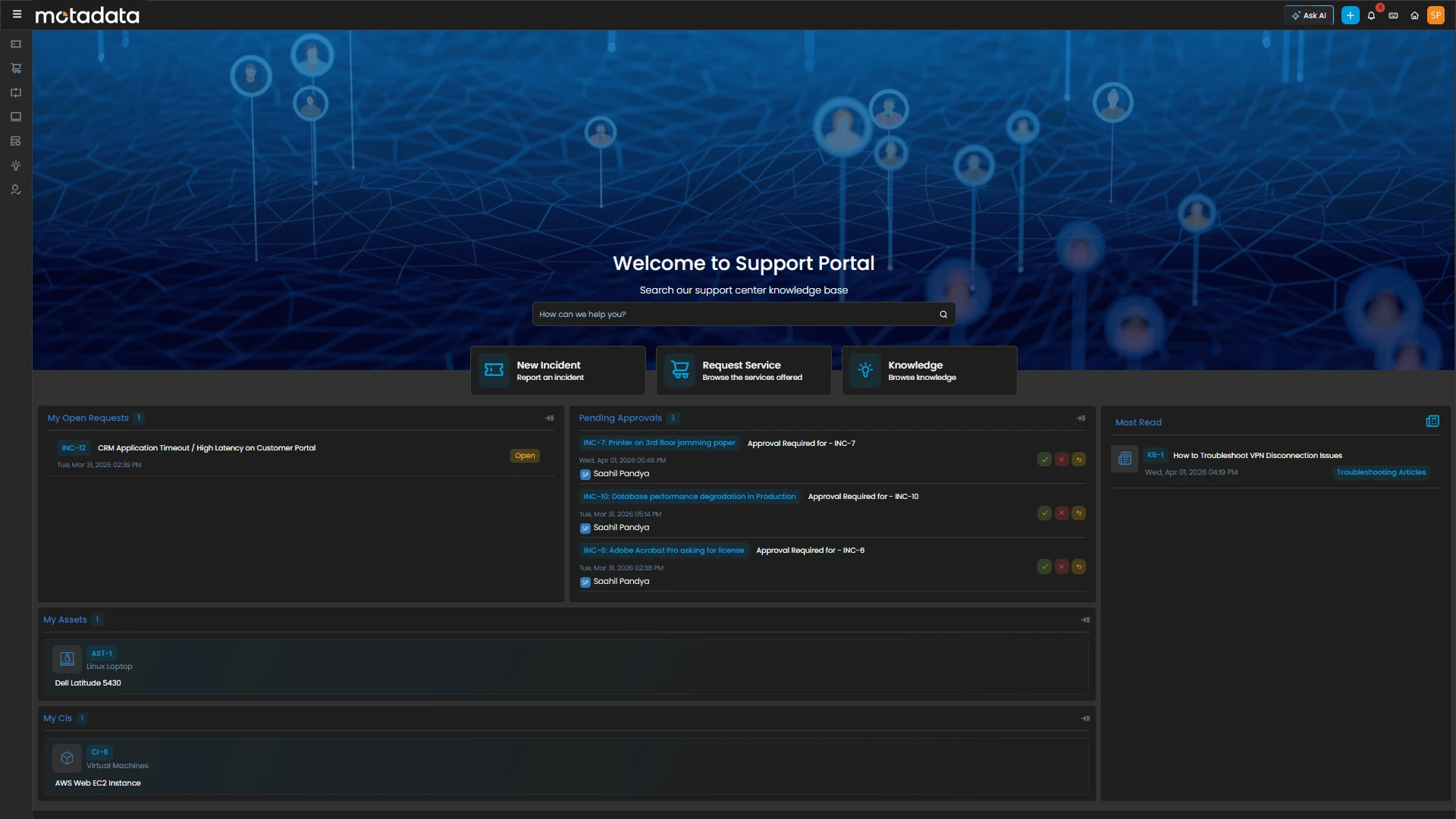
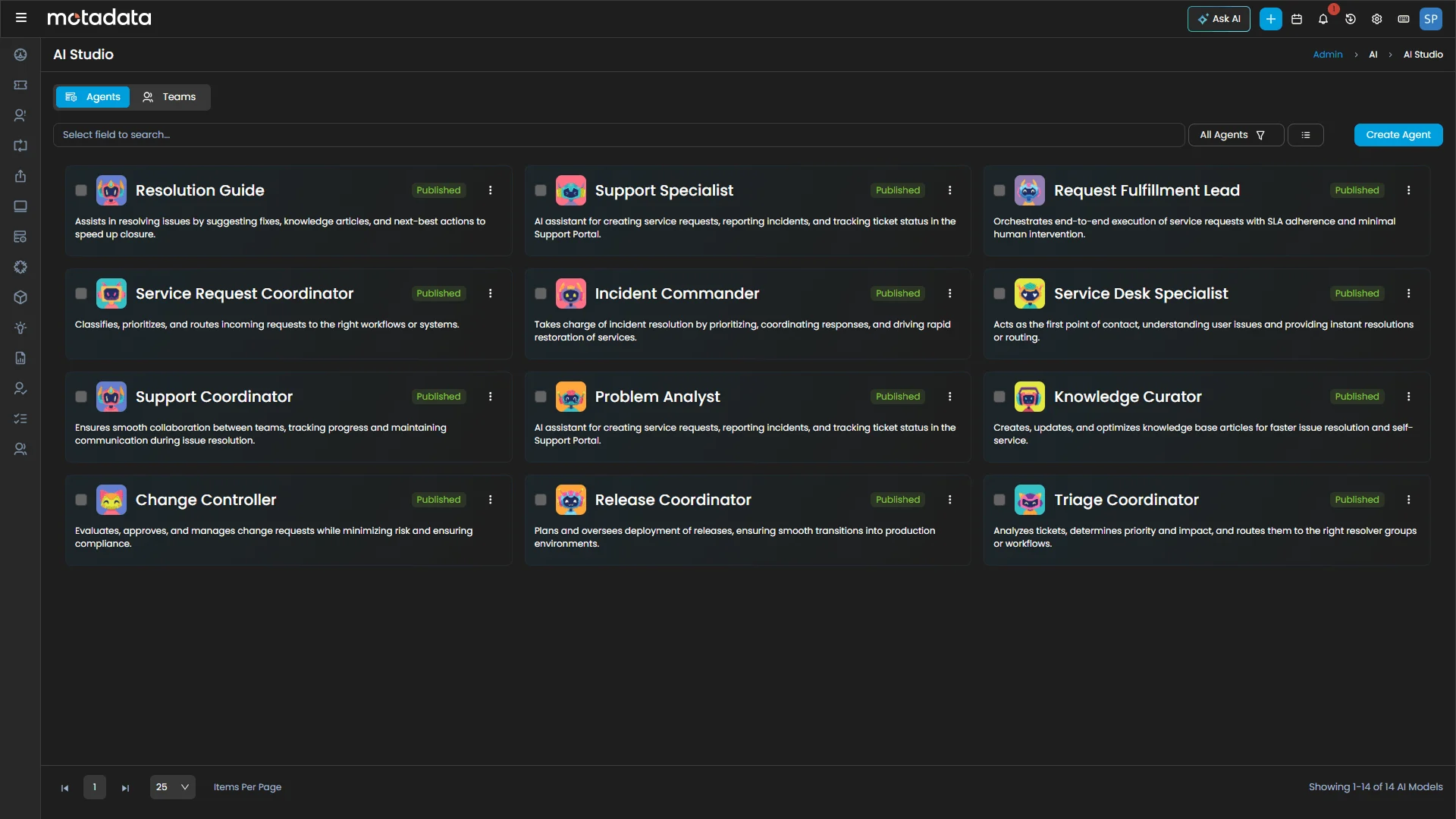
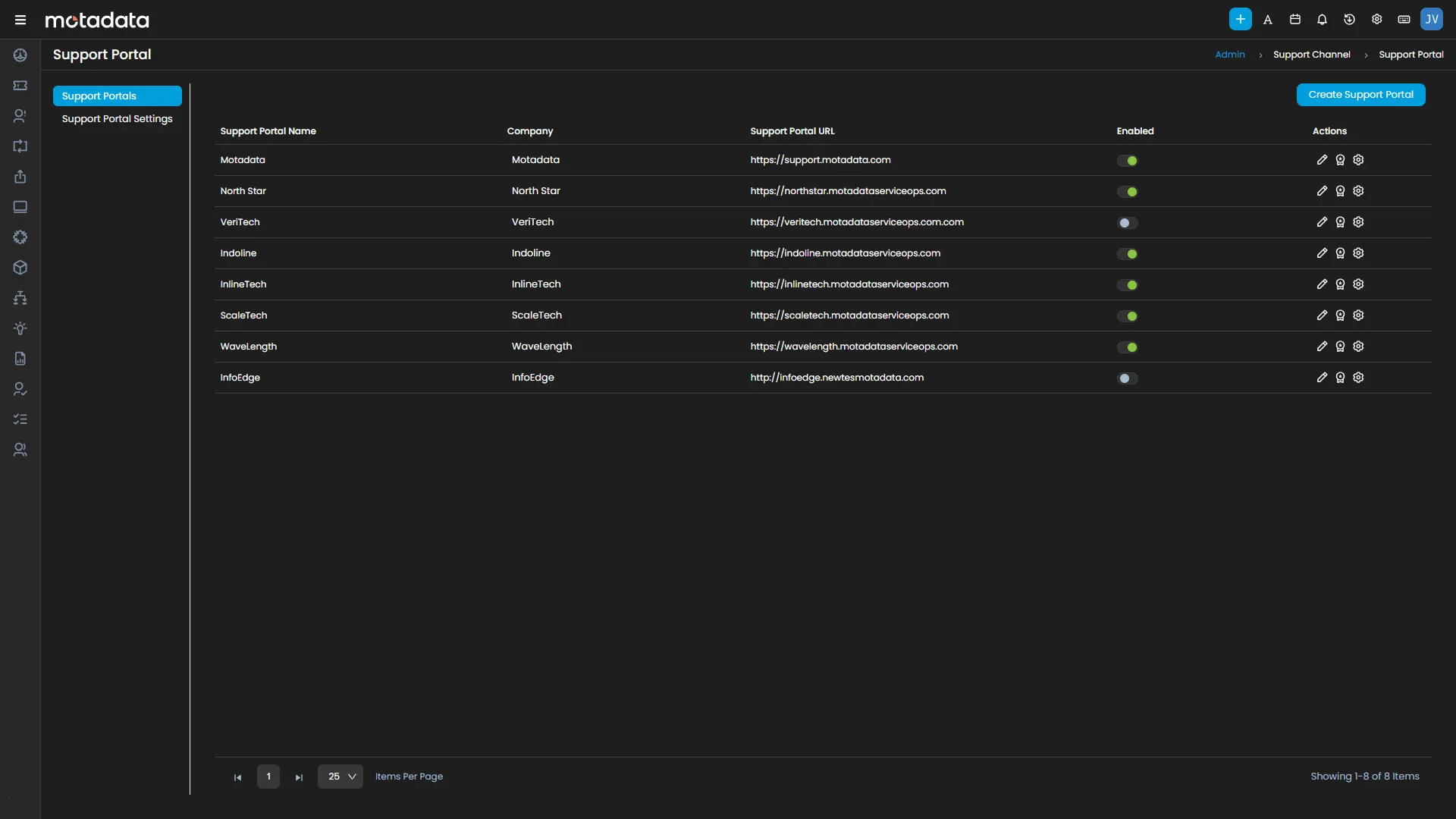
Motadata ServiceOps Screenshots

Screenshot of Service ManagementScreenshot of IT Asset & Configuration ManagementScreenshot of Patch & Deployment ManagementScreenshot of Agentic AI & OrchestrationScreenshot of MSP for ServiceOps