
MongoDB vs. Redash
| Product | Rating | Most Used By | Product Summary | Starting Price |
|---|---|---|---|---|
 MongoDB | Score8.8 out of 10 | N/A | MongoDB is an open source document-oriented database system. It is part of the NoSQL family of database systems. Instead of storing data in tables as is done in a "classical" relational database, MongoDB stores structured data as JSON-like documents with dynamic schemas (MongoDB calls the format BSON), making the integration of data in certain types of applications easier and faster. | $0.10 million reads |
 Redash | Score8.7 out of 10 | N/A | Redash is a data visualization tool designed to allow users to connect and query any data sources, build dashboards to visualize data and share them with a company. Databricks acquired Redash in June 2020. | N/A |
| MongoDB | Redash | |||||||||||||||
|---|---|---|---|---|---|---|---|---|---|---|---|---|---|---|---|---|
| Editions & Modules |
| No answers on this topic | ||||||||||||||
| Offerings |
| |||||||||||||||
| Entry-level Setup Fee | No setup fee | No setup fee | ||||||||||||||
| Additional Details | Fully managed, global cloud database on AWS, Azure, and GCP | — | ||||||||||||||
| More Pricing Information | ||||||||||||||||
| MongoDB | Redash | |
|---|---|---|
| Considered Both Products | No answer on this topic | No answer on this topic |
| Key User Insights | ||
| Would buy again | ||
100% Would buy again 12 Answers | No answers on this topic | |
| Delivers good value for the price | ||
100% Delivers good value for the price 12 Answers | No answers on this topic | |
| Happy with the feature set | ||
100% Happy with the feature set 12 Answers | No answers on this topic | |
| Lived up to sales and marketing promises | ||
100% Lived up to sales and marketing promises 9 Answers | No answers on this topic | |
| Implementation went as expected | ||
100% Implementation went as expected 12 Answers | No answers on this topic | |
| MongoDB | Redash | |||||||||||||||||||||||||
|---|---|---|---|---|---|---|---|---|---|---|---|---|---|---|---|---|---|---|---|---|---|---|---|---|---|---|
| NoSQL Databases |
| |||||||||||||||||||||||||
| BI Standard Reporting |
| |||||||||||||||||||||||||
| Ad-hoc Reporting |
| |||||||||||||||||||||||||
| Report Output and Scheduling |
| |||||||||||||||||||||||||
| Data Discovery and Visualization |
| |||||||||||||||||||||||||
| MongoDB | Redash | |
|---|---|---|
| Small Businesses |  IBM Cloudant Score7.4 out of 10 |  Chartio (discontinued) Score7.5 out of 10 |
| Medium-sized Companies | IBM Cloudant Score7.4 out of 10 |  Jet Reports Score9.5 out of 10 |
| Enterprises | IBM Cloudant Score7.4 out of 10 |  Kibana Score8.4 out of 10 |
| All Alternatives | View all alternatives | View all alternatives |
| MongoDB | Redash | |
|---|---|---|
| Likelihood to Recommend | 10.0 | 8.8 |
| Likelihood to Renew | 10.0 | - |
| Usability | 10.0 | - |
| Availability | 9.0 | - |
| Support Rating | 9.6 | - |
| Implementation Rating | 8.4 | - |
| MongoDB | Redash | |
|---|---|---|
| Likelihood to Recommend |
|
|
| Pros |
|
|
| Cons |
|
|
| Likelihood to Renew |
| No answers on this topic |
| Usability |
| No answers on this topic |
| Support Rating |
| No answers on this topic |
| Implementation Rating |
| No answers on this topic |
| Alternatives Considered |
|
|
| Return on Investment |
|
|
| ScreenShots | MongoDB Screenshots     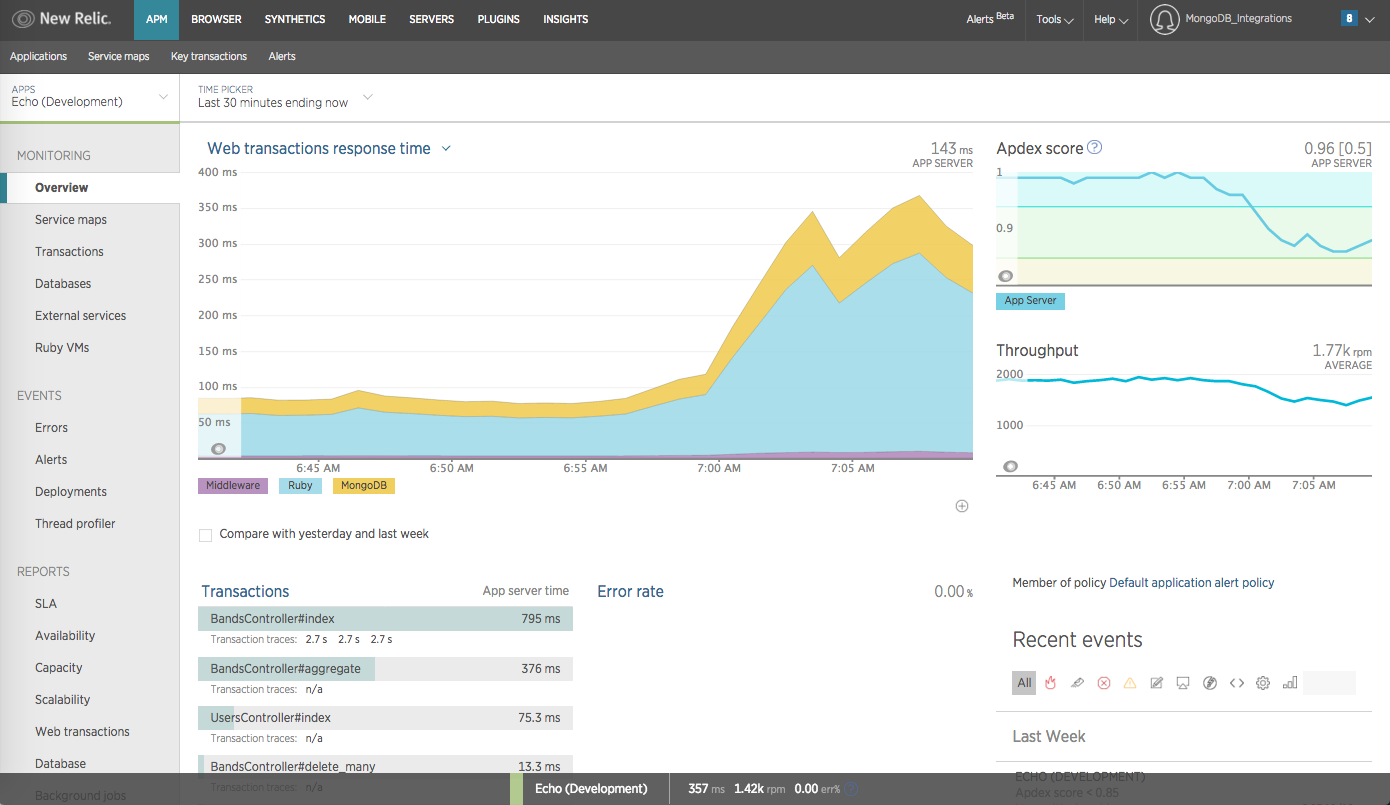 |


