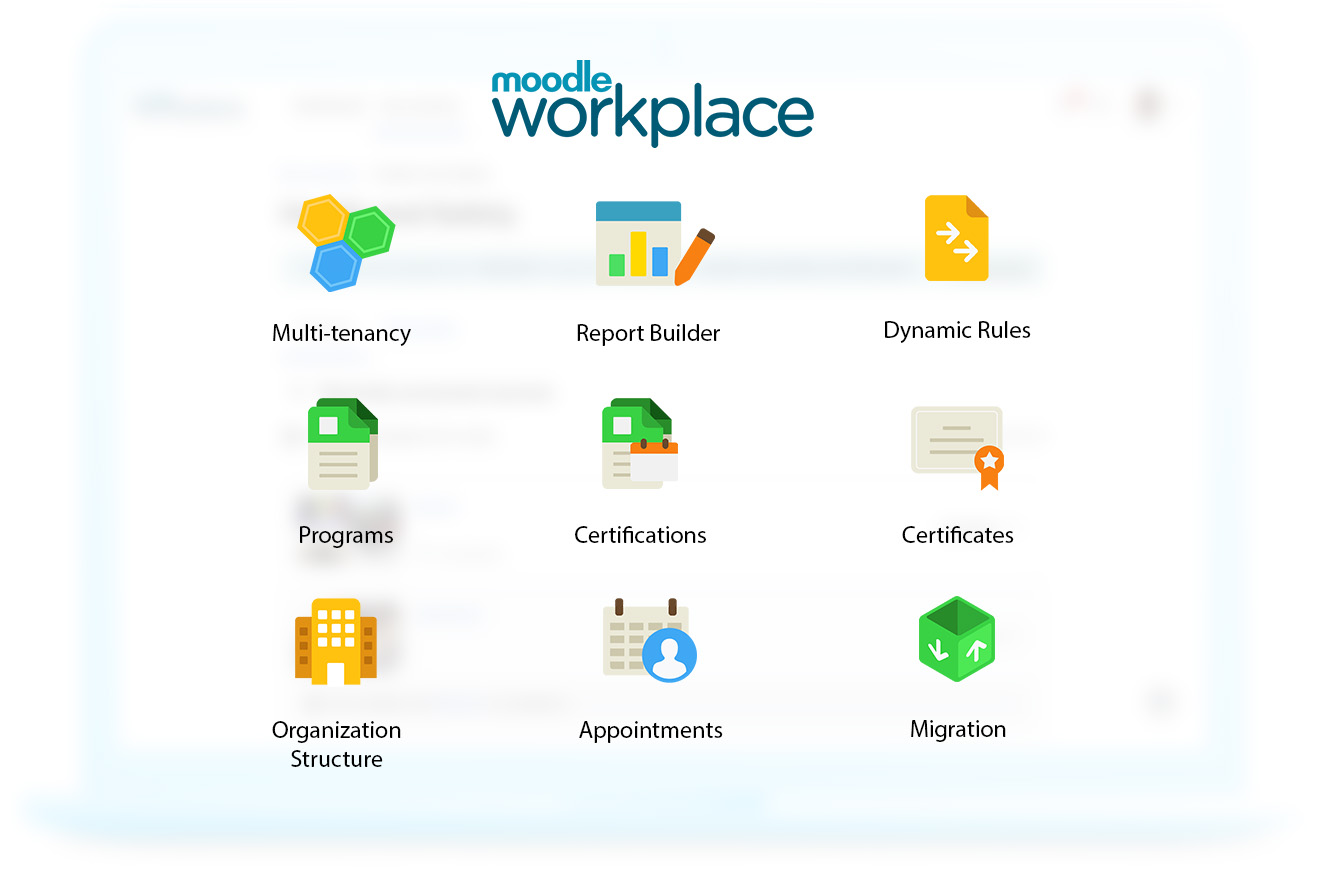
Moodle is an open source learning management system with hundreds of millions of users around the globe and translated into over 100 languages, used by organizations to support their education and training needs.
N/A
Renaissance Accelerated Reader
Score9.9 out of 10
N/A
Renaissance Accelerated Reader® is designed to save educators time by empowering them with Learnalytics® to make differentiating independent and close reading practice effortless – all while maintaining the flexibility necessary to fit within existing classroom routines. Students are engaged in reading self-selected authentic books and articles.
Short comprehension quizzes and built-in close reading practice activities, combined with automatic and educator feedback, keep students…
Moodle is great for any environment where a class or other learning activity needs to be completed in an asynchronous manner. It can be used to post information, create interactive threads for discussion, issue quiz and exam work with grading, track and grade progress, and keep track of attendance. It is an overall wonderful solution for managing asynchronous learning.
I have found Renaissance Accelerated Reader to be well-suited for elementary readers. I don't have experience using it with high school students; however, I know that for our elementary readers, there are no shortages of tests available. Our students can read trade books, articles within the program, or even stories from our textbooks and take tests on them
A de minimis incentive was given to thank the reviewer for their time. The incentive was not used to bias or drive a particular response, nor was the incentive contingent on a positive endorsement. More Info
Automatically calculating ZPD ranges. Student level ranges are automatically calculated within the system to ensure that students are correctly choosing the most appropriate books for them.
Easy goal setting. Whether you want to set a blanket goal based on 20 minutes per day of reading time for the class, or you want to individually set goals up to an hour a day, AR makes it very easy to manage and set goals for your entire classroom. Goals can be adjusted as needed easily as well.
Comprehension monitoring through testing. I can easily see which students are struggling on comprehension through AR book quizzes. From student scores, I can either motivate students who are rushing through books to slow down and take time to thoroughly read, or I can help students who are possibly struggling to read harder books with specific strategies that will benefit them the most. Without the testing feature of AR, I would have a lot more work to check how students are doing on their independent reading.
Data that is easy to understand and share with students. From either running a report on the entire class or school to just a specific student, AR makes data tracking easy. I can share reports with students and have detailed discussions about their progress towards meeting their goals or steps to take to overcome reading challenges they are currently having.
A de minimis incentive was given to thank the reviewer for their time. The incentive was not used to bias or drive a particular response, nor was the incentive contingent on a positive endorsement. More Info
The interface is not very intuitive. You must know what you are looking for in order to navigate effectively.
Although installation of Moodle is easy, it is a little more difficult to configure it with your other Learning tools. As an example, LDAP synchronization is a little difficult.
The interface is a little dated, even though new releases keep coming out (which is great!) none of them really add value to the appearance of the platform.
A de minimis incentive was given to thank the reviewer for their time. The incentive was not used to bias or drive a particular response, nor was the incentive contingent on a positive endorsement. More Info
Lately, Accelerated Reader has been adding "New Reports" which would help single class users such as a teacher with one class. But for a person with administrative rights, it creates a bit of a hassle to get the information needed at times.
Cost - Accelerated Reader is expensive. For the price paid, I feel Renaissance should include some features instead of having additional fees paid.
A de minimis incentive was given to thank the reviewer for their time. The incentive was not used to bias or drive a particular response, nor was the incentive contingent on a positive endorsement. More Info
We use it because it is what have committed to back in 2011. Perhaps Moodle will evolve and advance in a positive way that will alleviate most of our user-based gripes? Perhaps it will not appear to be as cost effective given the need for a certain level of engineering and support staff to maintain it at a future level of sustainability? It's hard to say. As an enterprise scale critical application, we like it, but don't love it. Our instructors don't particularly like it at all.
[Renaissance] Accelerated Reader is a great way to track student progress, motivate students to read, and measure their comprehension. Accelerated reader gives both teachers and students immediate feedback. There are countless options of books for students and can help increase student interest in books and improve students' reading ability.
A de minimis incentive was given to thank the reviewer for their time. The incentive was not used to bias or drive a particular response, nor was the incentive contingent on a positive endorsement. More Info
Moodle can be used on a tablet, on a mobile phone, and on a PC. It is easy to navigate for learners and figure out for administrators. The learners can easily complete tasks and the administrators can easily track completion. The last thing about Moodle that one may not realize is that it somewhat resembles Facebook in its layout. This means that users are already familiar with the interface and therefore they are more comfortable using it.
A de minimis incentive was given to thank the reviewer for their time. The incentive was not used to bias or drive a particular response, nor was the incentive contingent on a positive endorsement. More Info
I give Renaissance Accelerated Reader a great 10 in usability rating. I give this rating because overall the program is very easy to use and for the most part easy to understand. I am currently in my first year working in the library and with the teachers using the Renaissance Accelerated Reader program so there is still much to learn, but it has been an overall great experience so far. All of the data is easy to read and there is so much information to look over in case anything is missed or not understood. I have so far been very happy with the Renaissance Accelerated Reader program and what it has done for the students.
Yes, Moodle is always available. We are self-hosted and Moodle is always up and available. The only time that it is not available is when we are upgrading it each semester. It is then down for just a few planned hours. That is in-between semesters and we let the faculty and students know. We do it on a Friday evening and it is back up within a few hours.
A de minimis incentive was given to thank the reviewer for their time. The incentive was not used to bias or drive a particular response, nor was the incentive contingent on a positive endorsement. More Info
Moodle is an excellent LMS in relationship to any other one that I have seen or used. The pages load quickly and the reports complete in a reasonable time frame. Moodle has taken on Respondus, StudyMate, BigBlueButton, Turning Tech, Turnitin2, Certificates, Attendance, Tegrity, Questionnaire, Virtual Programming Lab, and Badges. All of these programs work right in with Moodle and do not cause any issues. Instructors may also use Camtasia and Snagit software as well as using webcams, downloading videos from the Internet, adding into books, or any of the many other areas within Moodle. Our instructors use the grade books without many problems and really don't ask questions much anymore. We upgrade Moodle every semester and are currently on 2.9+. Our instructors have basically learned to use most of the resources and activities.
A de minimis incentive was given to thank the reviewer for their time. The incentive was not used to bias or drive a particular response, nor was the incentive contingent on a positive endorsement. More Info
A de minimis incentive was given to thank the reviewer for their time. The incentive was not used to bias or drive a particular response, nor was the incentive contingent on a positive endorsement. More Info
Moodle is open source, and must be evaluated in that context, but one also has to provide a fair comparison to competing products with commercial backing. Support varies depending on the component of Moodle. Bug reports in Moodle Core that affect security or stability are dealt with promptly. Functionality requests or features not working smoothly may or may not be addressed, depending on whether the functionality desired matches the "vision" of Moodle HQ. The user community provides excellent support for initial installation and configuration, but more complex questions may go unanswered, unless they are noticed by someone who happens to know the answer. The support forum feature at the Moodle site (the same feature used within Moodle itself) does not provide granular subscription to topic discussions, apparently by design, and Moodle HQ seems resistant to changing this feature.
A de minimis incentive was given to thank the reviewer for their time. The incentive was not used to bias or drive a particular response, nor was the incentive contingent on a positive endorsement. More Info
Renaissance Reader has a great support team, and generally, they are quick to respond when needed. The live chat tool is a life-saver when trying to get your problems solved in real-time. They also have a lot of online support articles that ensure that you can get your questions answered without necessarily having to use the live chat during the school day.
A de minimis incentive was given to thank the reviewer for their time. The incentive was not used to bias or drive a particular response, nor was the incentive contingent on a positive endorsement. More Info
Find a partner who will work with you during the implementation process. Be sure to provide ample training for veteran users on the changes and for newbies on the overall product.
A de minimis incentive was given to thank the reviewer for their time. The incentive was not used to bias or drive a particular response, nor was the incentive contingent on a positive endorsement. More Info
Extensive training on Ren Place is necessary. There are a myriad of reports that we need help understanding. I have joined Ren Royals and have learned a lot from that support piece.
A de minimis incentive was given to thank the reviewer for their time. The incentive was not used to bias or drive a particular response, nor was the incentive contingent on a positive endorsement. More Info
Blackboard has clear advantages in rubric management, and offers a content management system of its own. The largest barrier is cost for smaller or financially-disadvantaged organizations. However, as in any IT project, adequate resources must be made for even "free" software.
A de minimis incentive was given to thank the reviewer for their time. The incentive was not used to bias or drive a particular response, nor was the incentive contingent on a positive endorsement. More Info
I have not used any of the products listed. However, AR has been my choice of product. My school system choice this product because it interfaces well with all other reading and testing programs that have been purchased. It is an excellent product, but that is a given since it was developed by a teacher to address a problem that all educators deal with (How do you help a struggling reader best?). AR is the answer for me.
Well, I administer Moodle for a dozen of our divisions and there is a wide range of flexibility between offerings. I have course instructors who use every module i their course, chock full of videos, pictures, links to web tools for synchronous sessions within the asynchronous course. I also have others who are content with a syllabus, a few pdfs, links to podcast lectures and a few simple assignments. No matter if your organization is big or small, or if your requirements are strict for credentialing or non-existent (for internal know-how), Moodle can accommodate you.
A de minimis incentive was given to thank the reviewer for their time. The incentive was not used to bias or drive a particular response, nor was the incentive contingent on a positive endorsement. More Info
While it certainly takes more time to develop an online training vs a face-to-face we can offer the same content over and over again and meet a larger audience. There's no way we could have offered these trainings face-to-face to the same size audience. Economically it's just not feasible. Moodle allows us to share multiple trainings on a variety of topics over extended periods of time in a cost effective way.
The impact on early interventionists is still being evaluated, but we do know that early interventionist now have more ways to access professional development than in the past. The ability to customize the registration page has allowed us to track which agencies in Virginia are having their staff participate and we can see which topics are favored above others.
Other LMS's were far too costly. Aside from the monthly hosting fees (less than $200 a year), and the time it took to do the initial install and setup, Moodle is free. Once it's setup the only elearning costs are related to the development and creation of each training and then the setup of training on Moodle. This allows us to devote more time and money to the development and creation of more courses vs. the management of the system.
Minimal tech support for the users is required and most requests are limited to lost/userid passwords. The course designer is able to manage tech support needs for the users because so few requests are received.
A de minimis incentive was given to thank the reviewer for their time. The incentive was not used to bias or drive a particular response, nor was the incentive contingent on a positive endorsement. More Info
The goal of AR is for kids to enjoy books, spread their wings, and experience a variety of literature & genres. Children need copious amounts of reading to become good readers. Incorporating Renaissance Accelerated Reader 360 into our day sets a purpose for reading and holds children accountable.
Renaissance Accelerated Reader 360 is research based. The single biggest predictor of academic success is time spent reading. This program allows for that.
Renaissance Accelerated Reader 360 allows for scaffolding of reading material to get the kids into more challenging material. This program allows children to be successful and build on their strengths.
Renaissance Accelerated Reader 360 empowers students to take ownership in the learning process. It gives them a voice.
Renaissance Accelerated Reader 360 is a program that lets students practice and apply skills and strategies learned during mini lessons and strategy-group instruction.
A de minimis incentive was given to thank the reviewer for their time. The incentive was not used to bias or drive a particular response, nor was the incentive contingent on a positive endorsement. More Info