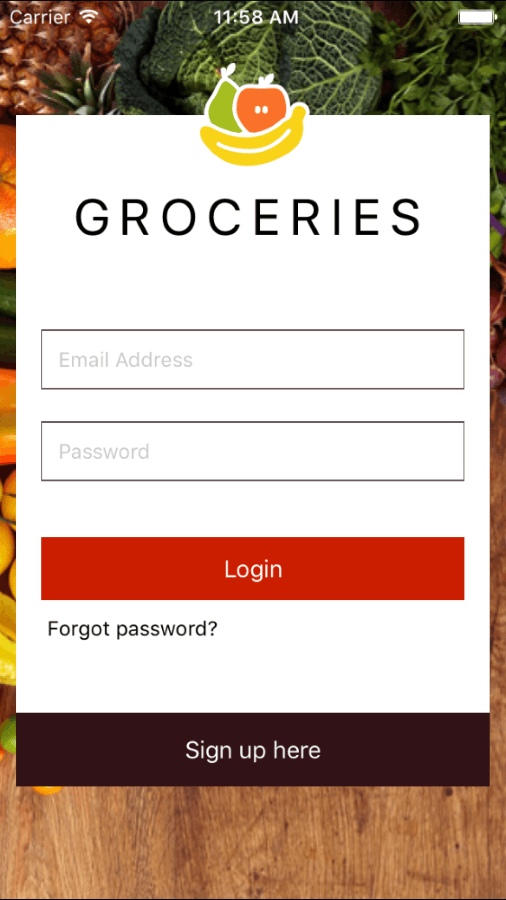
NativeScript is an open source framework that allows
you to create native iOS and Android apps, with one codebase, using the web
skills you already have (JavaScript and CSS) and the libraries you already
love.
N/A
GraalVM
Score 9.1 out of 10
N/A
GraalVM is a universal virtual machine for running applications written in JavaScript, Python, Ruby, R, JVM-based languages like Java, Scala, Groovy, Kotlin, Clojure, and LLVM-based languages such as C and C++.
GraalVM removes the isolation between programming languages and enables interoperability in a shared runtime. It can run either standalone or in the context of OpenJDK, Node.js or Oracle Database.
Oracle's GraalVM Enterprise is a multilingual virtual machine, which Oracle states…
N/A
Oracle Java SE
Score 8.0 out of 10
N/A
Oracle Java SE is a programming language and gives customers enterprise features that minimize the costs of deployment and maintenance of their Java-based IT environment.
N/A
Pricing
NativeScript
GraalVM
Oracle Java SE
Editions & Modules
No answers on this topic
No answers on this topic
No answers on this topic
Offerings
Pricing Offerings
NativeScript
GraalVM
Oracle Java SE
Free Trial
Yes
Yes
No
Free/Freemium Version
Yes
Yes
No
Premium Consulting/Integration Services
No
Yes
No
Entry-level Setup Fee
No setup fee
Optional
No setup fee
Additional Details
The NativeScript framework and CLI are completely free and open source. NativeScript Sidekick is a free download to improve developer productivity with optional paid tiers for power users.
GraalVM Enterprise is an entitlement with Java SE Subscription at no additional cost.
—
More Pricing Information
Community Pulse
NativeScript
GraalVM
Oracle Java SE
Considered Multiple Products
NativeScript
No answer on this topic
GraalVM
Verified User
Engineer
Chose GraalVM
Compiling to native code is probably the only reason for me so far.
Software Engineering Manager - Edge and Cloud Native Productline
Chose GraalVM
GraalVM provides a solution with better customer support and better technical solutions for application compilation and runtime. It's faster cold startup time aids mission-critical applications and helps the overall suite of applications. With this we can use multiple …
GraalVM allowed language interoperability compared to the other two. Corretto is no better than the default HotSpot JVM in our case and is also lacking in modern versions. Oracle Java has JDK 15 but it doesn't have language interoperability or AOT. GraalVM just hit that nice …
GraalVM allows for better language interop between languages compared to JNI, and also supports other languages for scripting like Python, Ruby and others. This means seemless modding capability compared to the normal JDK and other things.
Oracle GraalVM has been selected due to its ability to perform ahead-of time compilation by compiling JAVA code to native image which helps in scaling up the performance of the application startup and execution time, thus consuming low memory and CPU cycles. Also, supporting …
GraalVM by far has proved to be the most reliable and advanced virtual machine supporting dual compilation (Static as well as Dynamic). Java Code is compiled by an ahead-of-time compiler to a native image that supports JVM based languages (Java, Scala, etc.) as well as other …
We have opted for GraalVM due to its ability to integrate and interoperability with major languages (such as Java, JavaScript, Ruby, Python, LLVM based languages like C and C++, and several other dynamic languages) popular in the IT industry. Due to its compatibility with Java …
The advantages of GraalVM over other products are as follows:
1. All the languages share the same VM and its capabilities. Provides language-independent tooling interoperability optimization.
2. It has a very reduced memory footprint.
GraalVM has the ability to compile Java applications ahead of time into a native binary. This will result in instant startup of the application and consuming significantly less memory compared to traditional JIT (Just in Time) compilation setup. Though JIT is preferable for …
GraalVM can run faster than the traditionally used Java SE. Companies like Twitter are using GraalVM as against using JAVA SE to scale up their production values and save money. It has a Graal compiler and polyglot feature missing in Java SE, which is a mix and match of …
I gotta be honest, after a PoC period, we choose to rewrite the whole application in a different cross-platform app. Our developers had to invest a lot of time and effort to debug a lot of plugin-related issues, which we needed to utilize the android mobile phone capabilities. QR reader, special visualizations, and fine-tuning were really hard and often resulted in writing native Android code instead of using the shared Angular code. In the end, we think that writing a standalone Android app and an Angular app would have been a better alternative, as the shared code base was so unreliable that it did not save us any time.
Its well fit for the environment where applications are written in programming languages supported by GraalVM. It's [a] very powerful and reliable, high-performer Java Virtual Machine that provides the Java Development kit i.e JDK that has the ability to compile the Java apps ahead of time. Maintenance of this tool is simple and it [increases] the efficiency of the product since it requires few resources.
Oracle Java SE is well suited to long-running applications (e.g. servers). Java Swing (UI toolkit) is now rather outdated, lacking support for modern UI features. JavaFX, the potential replacement for Swing, has now been separated out of Java core. Ideally, there would be a path to migrate a large application incrementally from Swing to JavaFX, but due to different threading models and other aspects, it is difficult. At this point, it is probably better to use an embedded web browser (e.g. JxBrowser) to provide a modern UI in HTML/Javascript and keep just the business logic in Java.
True native app. The app uses native components and that is quite noticeable in the overall performance of the app. NativeScript is also awesome in the way we can access the native APIs, so we are never really constrained by the framework. If we need, we can just dive into the native APIs without leaving our environment and language (JS).
Cross-platform. Builds for Android and iOS. It deals with the platforms differences very well.
Support for Vue.js. Even though it is just a community effort, the NativeScript-Vue plugin is the best alternative to build native Apps with Vue.js. That was a major factor to go with NativeScript.
Commercial Licensing in 2019. Oracle will charge commercial organizations using Java SE for upgrading to the latest bug fixes and updates. Organizations will now need to either limit their implementation of Java SE or may need to drop it altogether.
Slow Performance. Due to the all of the abstraction of the JVM, Java SE programs take much more resources to compile and run compared to Python.
Poor UI appearance on all of the major GUI libraries (Swing, SWT, etc.). Through Android Studio, it is easy to get a native look/feel for Java apps, but when it comes to desktops, the UI is far from acceptable (does not mimic the native OS's look/feel at all).
The hybrid is ok but native is better for performance and the right use case I want to go for is the performance without dealing with too many development tools.
Oracle Java SE provides the new features along with timely security patches. New features like Record patterns and pattern matching for switches are very useful. With every new release of Java, it is getting better. Sequenced collections are also an interesting feature added to Java. With all these new features, backward compatibility is also maintained.
The community support is excellent. They have a slack community as well as a discourse forum forum.nativescript.org Both of these offer community driven support. The forum is more for a threaded discussion. The slack community is more for a quick talk.
Like all Oracle tools, you can find a lot of documentation and also write down your questions in a forum. Sadly I don't see too many users so far but I hope it'll keep increasing and in a short period we will have more information and ofc issues fixed. So far, everything I needed I could find easily.
Java is such a mature product at this point that there is little support from the vendor that is needed. Various sources on the internet, and especially StackOverflow, provide a wealth of knowledge and advice. Areas that may benefit from support is when dealing with complex multithreading issues and security libraries.
Ionic Ionic is an excellent Angular-based framework for mobile, and it does give a lot of access to the native device api's. However, the technology is based on Cordova, which means the apps being built are just webviews, with html, css and JS all running on the UI thread, and potentially creating very slow experiences for users. NativeScript is a truly native solution, and so provides a faster user experience. ReactNative We evaluate ReactNative, and found it much the same as NativeScript. The main difference is that your JS is all written with React, while NativeScript lets you choose between normal JS, Angular, and Vue. For our team, Angular was the most appropriate choice.
GraalVM is at the top when it comes to executing Java applications in terms of speed. With its amazing fast ahead of its time compiler it helps in reducing the startup time of the applications. Also, the overall performance of the product is increased and reduces the latency as well. It supports multiple languages such as Groovy, Ruby, Javascript, R, Python, Scala, Java, Clojure, and many more.
Chose to go with Java instead of Python or C++ due to the expertise on the ground with the technology, for its ease of integration with our heterogeneous setup of production servers, and for the third party library support which we've found was able to address some challenging aspects of our business problem.
The poor quality of NativeScript documentation has the potential to weigh heavily on development timelines, budgets, and QA resources in a NEGATIVE manner.
The poor interoperability of NativeScript plugins can significantly increase development time.
The need to seek out professional instruction to learn how to use NativeScript effectively may become a burden on your budget.
The number of breaking changes between versions of NativeScript, may cause your development efforts to lag further behind the most recent releases of NativeScript and your other chosen environments than you are accustomed to.
NativeScript still does not support the latest major version of Angular. Any significant changes to the other environment components of your systems may hold you back even further while NativeScript plays catch-up.
Financial: Increased Java container count on the same hardware.
Performance: Decreased cold start time for container startup.
Training: Adopting GraalVM has a learning curve. This requires investment in time and resources. The benefits come through re-evaluating our current deployments for optimization.
The different versions make it harder to work with other companies where some use newer versions while some use older versions, costing time to make them compatible.
Licenses are getting to be costly, forcing us to consider OpenJDK as an alternative.
New features take time to learn. When someone starts using them, everyone has to take time to learn.