
Neo4j vs. Percona Server for MongoDB
Neo4j vs. Percona Server for MongoDB
| Product | Rating | Most Used By | Product Summary | Starting Price |
|---|---|---|---|---|
 Neo4j | N/A | Neo4j is an open source embeddable graph database developed by Neo Technologies based in San Mateo, California with an office in Sweden. | $65 per month | |
 Percona Server for MongoDB | N/A | Percona Server for MongoDB is a free and open-source drop-in replacement for MongoDB Community Edition. It combines all the features and benefits of MongoDB Community Edition with enterprise-class features from Percona. Built on the MongoDB Community Edition, Percona Server for MongoDB provides flexible data structure, native high availability, easy scalability, and developer-friendly syntax. It also includes an in-memory engine, hot backups, LDAP authentication, database auditing, and log… | N/A |
| Neo4j | Percona Server for MongoDB | |||||||||||||||
|---|---|---|---|---|---|---|---|---|---|---|---|---|---|---|---|---|
| Editions & Modules |
| No answers on this topic | ||||||||||||||
| Offerings |
| |||||||||||||||
| Entry-level Setup Fee | No setup fee | Optional | ||||||||||||||
| Additional Details | — | Free and open-source | ||||||||||||||
| More Pricing Information | ||||||||||||||||
| Neo4j | Percona Server for MongoDB |
|---|
| Neo4j | Percona Server for MongoDB | |
|---|---|---|
| Small Businesses |  IBM Cloudant Score 7.4 out of 10 | IBM Cloudant Score 7.4 out of 10 |
| Medium-sized Companies | IBM Cloudant Score 7.4 out of 10 | IBM Cloudant Score 7.4 out of 10 |
| Enterprises | IBM Cloudant Score 7.4 out of 10 | IBM Cloudant Score 7.4 out of 10 |
| All Alternatives | View all alternatives | View all alternatives |
| Neo4j | Percona Server for MongoDB | |
|---|---|---|
| Likelihood to Recommend | 2.1 (9 ratings) | 8.0 (1 ratings) |
| Usability | 6.0 (1 ratings) | 7.0 (1 ratings) |
| Support Rating | - (0 ratings) | 8.0 (1 ratings) |
| Neo4j | Percona Server for MongoDB | |
|---|---|---|
| Likelihood to Recommend | Neo Technologies
| Percona
 Jose Manuel Ortega Software Engineer && Security researcher |
| Pros | Neo Technologies
 Anudeep Palanki Application Developer | Percona
Jose Manuel Ortega Software Engineer && Security researcher |
| Cons | Neo Technologies
 Rahul Chaudhary Software Engineer | Percona
Jose Manuel Ortega Software Engineer && Security researcher |
| Usability | Neo Technologies
| Percona
Jose Manuel Ortega Software Engineer && Security researcher |
| Support Rating | Neo Technologies No answers on this topic | Percona
Jose Manuel Ortega Software Engineer && Security researcher |
| Alternatives Considered | Neo Technologies
 Nitin Pasumarthy Software Engineer | Data Visualization | Percona
Jose Manuel Ortega Software Engineer && Security researcher |
| Return on Investment | Neo Technologies
| Percona
Jose Manuel Ortega Software Engineer && Security researcher |
| ScreenShots | Percona Server for MongoDB Screenshots 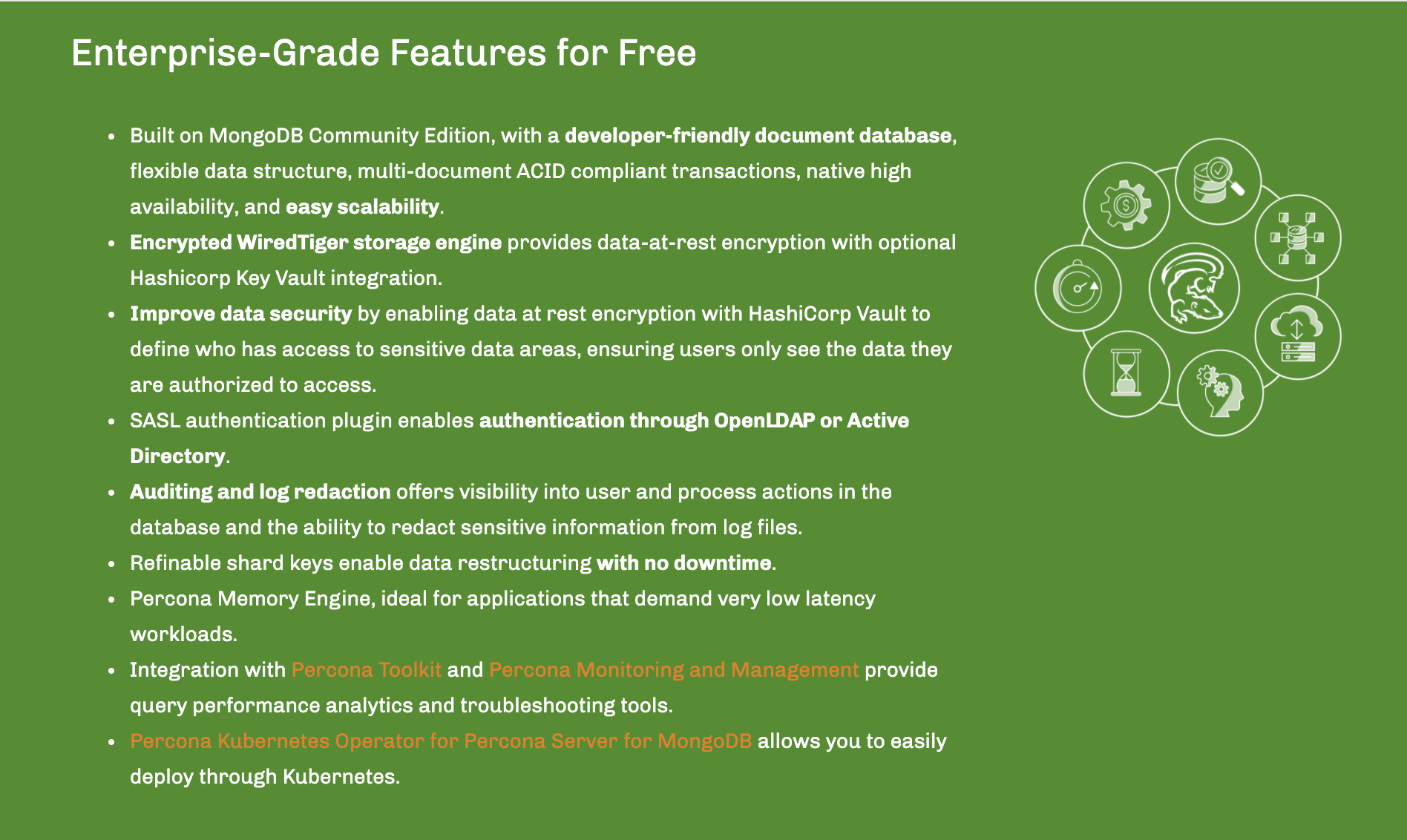  |