OpenShift is Red Hat's Cloud Computing Platform as a Service (PaaS) offering. OpenShift is an application platform in the cloud where application developers and teams can build, test, deploy, and run their applications.
$0.08
per hour
Rapise
Score8 out of 10
Mid-Size Companies (51-1,000 employees)
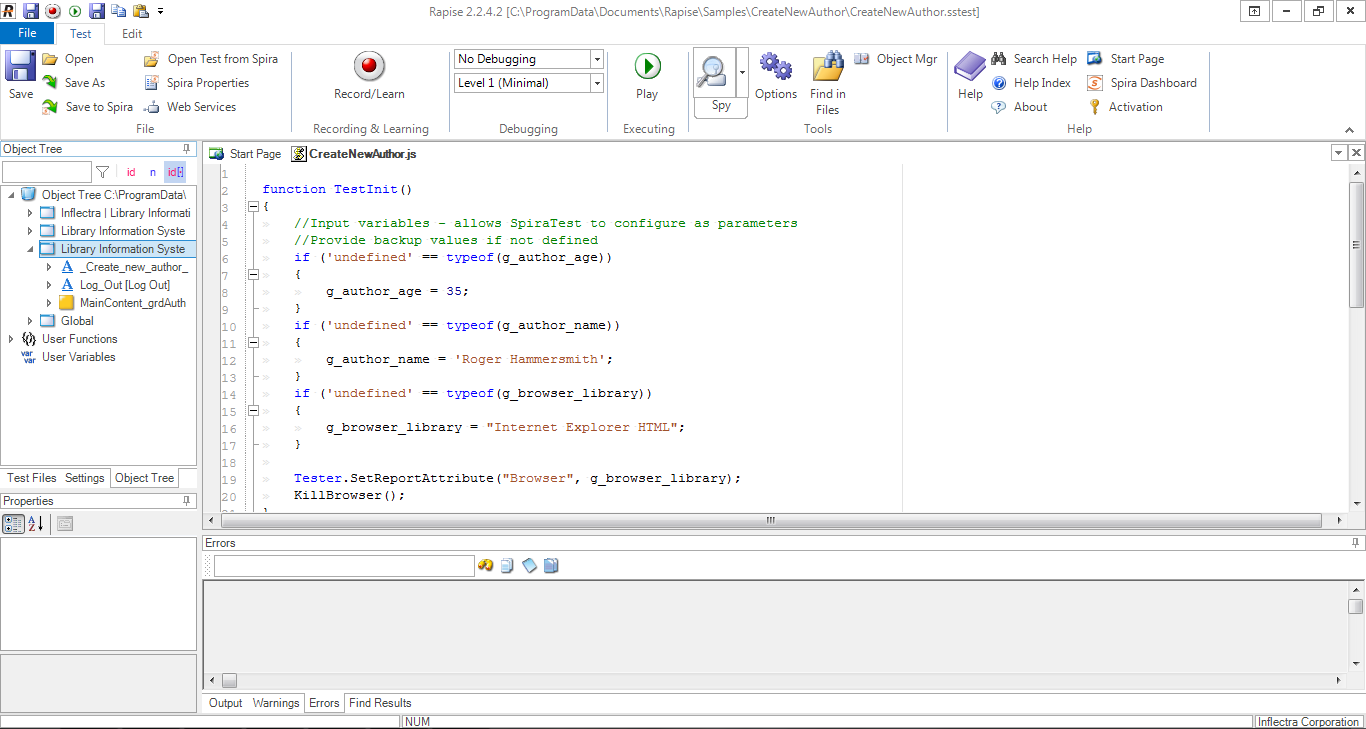
Rapise is a software testing platform that allows users to regression test web, desktop and mobile applications. Some key features include: Playback of Tests, Test Script Editing and Data Driven Testing.
$324
per month (1 license)
Pricing
Red Hat OpenShift
Rapise
Editions & Modules
No answers on this topic
No answers on this topic
Offerings
Pricing Offerings
Red Hat OpenShift
Rapise
Free Trial
Yes
Yes
Free/Freemium Version
Yes
No
Premium Consulting/Integration Services
No
No
Entry-level Setup Fee
No setup fee
No setup fee
Additional Details
—
Discount available for annual billing (up to 10%).
Red Hat OpenShift, despite its complexity and overhead, remains the most complete and enterprise-ready Kubernetes platform available. It excels in research projects like ours, where we need robust CI/CD, GPU scheduling, and tight integration with tools like Jupyter, OpenDataHub, and Quiskit. Its security, scalability, and operator ecosystem make it ideal for experimental and production-grade AI workloads. However, for simpler general hosting tasks—such as serving static websites or lightweight backend services—we find traditional VMs, Docker, or LXD more practical and resource-efficient. Red Hat OpenShift shines in complex, container-native workflows, but can be overkill for basic infrastructure needs.
A de minimis incentive was given to thank the reviewer for their time. The incentive was not used to bias or drive a particular response, nor was the incentive contingent on a positive endorsement. More Info
The appropriate scenario to use Rapise is when we have a project that is considered from medium onwards, since Rapise will help us to define, develop and implement the testing phase in a reliable and efficient way. Also with Rapise we will not have to worry about the platform that we are using since it has great versatility and flexibility.
A de minimis incentive was given to thank the reviewer for their time. The incentive was not used to bias or drive a particular response, nor was the incentive contingent on a positive endorsement. More Info
We had a few microservices that dealt with notifications and alerts. We used OpenShift to deploy these microservices, which handle and deliver notifications using publish-subscribe models.
We had to expose an API to consumers via MTLS, which was implemented using Server secret integration in OpenShift. We were then able to deploy the APIs on OpenShift with API security.
We integrated Splunk with OpenShift to view the logs of our applications and gain real-time insights into usage, as well as provide high availability.
A de minimis incentive was given to thank the reviewer for their time. The incentive was not used to bias or drive a particular response, nor was the incentive contingent on a positive endorsement. TR verified that a representative sample of customers was invited. More Info
I wouldn't necessarily say there is look everyday technology transform. I can see a trend wherein Red Hat OpenShift is adopting all the new technology trends and helping their customers align with their priorities and the emerging technology trends. I wouldn't call out various scope for development every day. There is scope for development. It is all how the organizations adopt it and how they deliver it to their customers. I don't want to call out there is scope for development. It's happening. It is a never ending process.
At the moment, I don't have anything to call out. We are experiencing Red Hat OpenShift and we can see every day they're coming up with new features as and when they come up with new features, we want to experience it more and more. We are looking for opportunities wherein this can be leveraged to help our users and partners.
A de minimis incentive was given to thank the reviewer for their time. The incentive was not used to bias or drive a particular response, nor was the incentive contingent on a positive endorsement. TR verified that a representative sample of customers was invited. More Info
For tests that require specific approaches it is necessary to have advanced knowledge of programming in javascrip, which sometimes the QA team does not have experience
Sometimes I have noticed that when using object dragging errors occur intermittently
The integration with some tools (Dynamics) is only with the basic functions from my point of view
A de minimis incentive was given to thank the reviewer for their time. The incentive was not used to bias or drive a particular response, nor was the incentive contingent on a positive endorsement. More Info
This is the current strategy for the company, most of the products in the organisation are aligning to Openshift and various use cases it support. Also lot of applications are being developed for AI use case, openshift.AI provides opportunity to host and leverage the AI capabilities for these applications
A de minimis incentive was given to thank the reviewer for their time. The incentive was not used to bias or drive a particular response, nor was the incentive contingent on a positive endorsement. TR verified that a representative sample of customers was invited. More Info
As I said before, the obserability is one of the weakest point of OpenShift and that has a lot to do with usability. The Kibana console is not fully integrated with OpenShift console and you have to switch from tab to tab to use it. Same with Prometheus, Jaeger and Grafan, it's a "simple" integration but if you want to do complex queries or dashboards you have to go to the specific console
A de minimis incentive was given to thank the reviewer for their time. The incentive was not used to bias or drive a particular response, nor was the incentive contingent on a positive endorsement. More Info
Redhat openshift is generally reliable and available platform, it ensures high availability for most the situations. in fact the product where we put openshift in a box, we ensure that the availability is also happening at node and network level and also at storage level, so some of the factors that are outside of Openshift realm are also working in HA manner.
A de minimis incentive was given to thank the reviewer for their time. The incentive was not used to bias or drive a particular response, nor was the incentive contingent on a positive endorsement. TR verified that a representative sample of customers was invited. More Info
Overall, this platform is beneficial. The only downsides we have encountered have been with pods that occasionally hang. This results in resources being dedicated to dead or zombie pods. Over time, these wasted resources occasionally cause us issues, and we have had difficulty monitoring these pods. However, this issue does not overshadow the benefits we get from Openshift.
A de minimis incentive was given to thank the reviewer for their time. The incentive was not used to bias or drive a particular response, nor was the incentive contingent on a positive endorsement. TR verified that a representative sample of customers was invited. More Info
Their customer support team is good and quick to respond. On a couple of occassions, they have helped us in solving some issues which we were finding a tad difficult to comprehend. On a rare occasion, the response was a bit slow but maybe it was because of the festival season. Overall a good experience on this front.
A de minimis incentive was given to thank the reviewer for their time. The incentive was not used to bias or drive a particular response, nor was the incentive contingent on a positive endorsement. More Info
I was not involved in the in person training, so i can not answer this question, but the team in my org worked directly with Openshift and able to get the in person training done easily, i did not hear problem or complain in this space, so i hope things happen seamlessly without any issue.
A de minimis incentive was given to thank the reviewer for their time. The incentive was not used to bias or drive a particular response, nor was the incentive contingent on a positive endorsement. TR verified that a representative sample of customers was invited. More Info
We went thru the training material on RH webesite, i think its very descriptive and the handson lab sesssions are very useful. It would be good to create more short duration videos covering one single aspect of openshift, this wll keep the interest and also it breaks down the complexity to reasonable chunks.
A de minimis incentive was given to thank the reviewer for their time. The incentive was not used to bias or drive a particular response, nor was the incentive contingent on a positive endorsement. TR verified that a representative sample of customers was invited. More Info
The Tanzu Platform seemed overly complicated, and the frequent changes to the portfolio as well as the messaging made us uneasy. We also decided it would not be wise to tie our application platform to a specific infrastructure provider, as Tanzu cannot be deployed on anything other than vSphere. SUSE Rancher seemed good overall, but ultimately felt closer to a DIY approach versus the comprehensive package that Red Hat OpenShift provides.
A de minimis incentive was given to thank the reviewer for their time. The incentive was not used to bias or drive a particular response, nor was the incentive contingent on a positive endorsement. More Info
It's easy to understand what are being billed and what's included in each type of subscription. Same with the support (Std or Premium) you know exactly what to expect when you need to use it. The "core" unit approach on the subscription made really simple to scale and carry the workloads from one site to another.
A de minimis incentive was given to thank the reviewer for their time. The incentive was not used to bias or drive a particular response, nor was the incentive contingent on a positive endorsement. More Info
This is a great platform to deployment container applications designed for multiple use cases. Its reasonably scalable platform, that can host multiple instances of applications, which can seamlessly handle the node and pod failure, if they are configured properly. There should be some scalability best practices guide would be very useful
A de minimis incentive was given to thank the reviewer for their time. The incentive was not used to bias or drive a particular response, nor was the incentive contingent on a positive endorsement. TR verified that a representative sample of customers was invited. More Info
That is a complicated question and one that's not easy for me to answer. There's a lot of factors that go into all of the stuff that we just don't have an easy way of measuring. And we realize that while we're implementing Red Hat OpenShift, we've tried to start measuring some of that stuff, but we don't have a baseline to go on. So it's hard to say. What I can tell you is general experience with the platform has been extremely positive from the development aspect. Teams have been very, very happy with the speed at which they're able to do stuff. They've been happy with that. The way it works in one environment is exactly the way it works in the next environment because we don't have configuration drift, that type of thing, and has had very positive impacts. But we didn't have a baseline to start with. So I can't talk about getting there faster or anything like that.
A de minimis incentive was given to thank the reviewer for their time. The incentive was not used to bias or drive a particular response, nor was the incentive contingent on a positive endorsement. More Info
The primary objective of the institution is a service to the public, so everything that improves response times to the public helps us to achieve it.
As a department in charge of the development of systems and applications, our objective is fulfilled by delivering quality products and tools such as Rapise help us greatly
The return on investment can be more than justified by fulfilling the primary objectives
A de minimis incentive was given to thank the reviewer for their time. The incentive was not used to bias or drive a particular response, nor was the incentive contingent on a positive endorsement. More Info