Microsoft Power BI vs. Predicte.com

Overview
ProductRatingMost Used ByProduct SummaryStarting Price
Microsoft Power BI
Score 8.5 out of 10
N/A
Microsoft Power BI is a visualization and data discovery tool from Microsoft. It allows users to convert data into visuals and graphics, visually explore and analyze data, collaborate on interactive dashboards and reports, and scale across their organization with built-in governance and security.
$168
per year per user
Predicte.com
Score 0.0 out of 10
Small Businesses (1-50 employees)
Predicte offers real-time predicive insights from product, sales, and client data. By unifying disparate data sources within its Data Platform (Analytics), Predicte empowers distributors, wholesalers and manufacturers to forecast sales with greater accuracy, detect churn risks before they escalate, and deliver tailored recommendations. The platform’s analytics framework helps teams optimize product usage, enhance sales performance, and continuously improve client outcomes through its…N/A
Pricing
Microsoft Power BIPredicte.com
Editions & Modules
Power BI Pro
$14
per month (billed annually) per user
Power BI Premium
$24
per month (billed annually) per user
No answers on this topic
Offerings
Pricing Offerings
Microsoft Power BIPredicte.com
Free Trial
YesNo
Free/Freemium Version
YesNo
Premium Consulting/Integration Services
NoNo
Entry-level Setup FeeNo setup feeRequired
Additional DetailsPower BI Desktop is the data exploration and report authoring experience for Power BI, and is available as a free download.
More Pricing Information
Community Pulse
Microsoft Power BIPredicte.com
Features
Microsoft Power BIPredicte.com
BI Standard Reporting
Comparison of BI Standard Reporting features of Product A and Product B
Microsoft Power BI
8.2
198 Ratings
0% above category average
Predicte.com
-
Ratings
Pixel Perfect reports8.2169 Ratings00 Ratings
Customizable dashboards8.7197 Ratings00 Ratings
Report Formatting Templates7.8180 Ratings00 Ratings
Ad-hoc Reporting
Comparison of Ad-hoc Reporting features of Product A and Product B
Microsoft Power BI
7.9
196 Ratings
2% below category average
Predicte.com
-
Ratings
Drill-down analysis8.3193 Ratings00 Ratings
Formatting capabilities7.7193 Ratings00 Ratings
Integration with R or other statistical packages7.4143 Ratings00 Ratings
Report sharing and collaboration8.3191 Ratings00 Ratings
Report Output and Scheduling
Comparison of Report Output and Scheduling features of Product A and Product B
Microsoft Power BI
8.0
189 Ratings
3% below category average
Predicte.com
-
Ratings
Publish to Web8.1179 Ratings00 Ratings
Publish to PDF7.9174 Ratings00 Ratings
Report Versioning7.7145 Ratings00 Ratings
Report Delivery Scheduling8.3148 Ratings00 Ratings
Delivery to Remote Servers7.9111 Ratings00 Ratings
Data Discovery and Visualization
Comparison of Data Discovery and Visualization features of Product A and Product B
Microsoft Power BI
7.7
189 Ratings
4% below category average
Predicte.com
-
Ratings
Pre-built visualization formats (heatmaps, scatter plots etc.)8.3183 Ratings00 Ratings
Location Analytics / Geographic Visualization8.1168 Ratings00 Ratings
Predictive Analytics7.3138 Ratings00 Ratings
Pattern Recognition and Data Mining7.339 Ratings00 Ratings
Access Control and Security
Comparison of Access Control and Security features of Product A and Product B
Microsoft Power BI
8.4
180 Ratings
1% below category average
Predicte.com
-
Ratings
Multi-User Support (named login)8.7169 Ratings00 Ratings
Role-Based Security Model8.2148 Ratings00 Ratings
Multiple Access Permission Levels (Create, Read, Delete)8.2160 Ratings00 Ratings
Report-Level Access Control8.249 Ratings00 Ratings
Single Sign-On (SSO)8.6141 Ratings00 Ratings
Mobile Capabilities
Comparison of Mobile Capabilities features of Product A and Product B
Microsoft Power BI
7.9
162 Ratings
1% above category average
Predicte.com
-
Ratings
Responsive Design for Web Access7.6152 Ratings00 Ratings
Mobile Application7.5133 Ratings00 Ratings
Dashboard / Report / Visualization Interactivity on Mobile7.9155 Ratings00 Ratings
Application Program Interfaces (APIs) / Embedding
Comparison of Application Program Interfaces (APIs) / Embedding features of Product A and Product B
Microsoft Power BI
7.6
116 Ratings
2% below category average
Predicte.com
-
Ratings
REST API7.9104 Ratings00 Ratings
Javascript API7.585 Ratings00 Ratings
iFrames8.055 Ratings00 Ratings
Java API6.869 Ratings00 Ratings
Themeable User Interface (UI)7.491 Ratings00 Ratings
Customizable Platform (Open Source)8.444 Ratings00 Ratings
Best Alternatives
Microsoft Power BIPredicte.com
Small Businesses
Yellowfin
Yellowfin
Score 8.6 out of 10
Mediafly
Mediafly
Score 7.7 out of 10
Medium-sized Companies
Reveal
Reveal
Score 10.0 out of 10
Clari
Clari
Score 8.6 out of 10
Enterprises
Kyvos Semantic Layer
Score 9.5 out of 10
Clari
Clari
Score 8.6 out of 10
All AlternativesView all alternativesView all alternatives
User Ratings
Microsoft Power BIPredicte.com
Likelihood to Recommend
8.5
(197 ratings)
-
(0 ratings)
Likelihood to Renew
9.5
(3 ratings)
-
(0 ratings)
Usability
8.3
(113 ratings)
-
(0 ratings)
Support Rating
10.0
(52 ratings)
-
(0 ratings)
Implementation Rating
9.0
(1 ratings)
-
(0 ratings)
User Testimonials
Microsoft Power BIPredicte.com
Likelihood to Recommend
Microsoft
Has significantly improved collation of data and visualisation especially with business across Europe. Has given me the ability to see the Site availability at the click of a button to see which Site is in the "money" and seize opportunities based on Market data
Read full review
Predicte.com
No answers on this topic
Pros
Microsoft
  • Options for data source connections are immense. Not just which sources, but your options for *how* the data is brought in.
  • Constant updates (this is both good and bad at times).
  • User friendliness. I can get the data connections set up and draft some quick visuals, then release to the target audience and let them expand on it how they want to.
Read full review
Predicte.com
No answers on this topic
Cons
Microsoft
  • It would be easier for users could Microsoft Power BI and Excel used the same programming languages.
  • Would like to see the online version of Microsoft Power BI be as powerful as the desktop version.
  • Publishing a Microsoft Power BI file online and then having to save the file is somewhat redundant.
  • Would like to export each page or chart as an image.
Read full review
Predicte.com
No answers on this topic
Likelihood to Renew
Microsoft
Microsoft Power BI is an excellent and scalable tool. It has a learning curve, but once you get past that, the sky is the limit and you can build from the most simple to the most complex dashboards. I have built everything from simple reports with only a few data points to complex reports with many pages and advanced filtering.
Read full review
Predicte.com
No answers on this topic
Usability
Microsoft
Automating reporting has reduced manual data processing by 50-70%, freeing up analysts for higher-value tasks. A finance team that previously spent 20+ hours per week on Excel-based reports now does it in minutes with Microsoft Power BI's automated Real-time dashboards have shortened decision cycles by 30-40%, enabling leadership to react quickly to sales trends, operational bottlenecks, and customer behavior.
Read full review
Predicte.com
No answers on this topic
Support Rating
Microsoft
It is a fantastic tool, you can do almost everything related with data and reports, it is a perfect substitutive of Power Point and Excel with a high evolution and flexibility, and also it is very friendly and easy to share. I think all companies should have Power BI (or other BI tool) in their software package and if they are in the MS Suite, for sure Power BI should be the one due to all the benefits of the MS ecosystem.
Read full review
Predicte.com
No answers on this topic
Implementation Rating
Microsoft
It was integrated with our erp easily and was accessible on cloud.
Read full review
Predicte.com
No answers on this topic
Alternatives Considered
Microsoft
Microsoft Power BI is free. If I didn't want to create a custom platform (i.e. my organization insisted on an existing platform that I *had* to use), I'd use Microsoft Power BI. For any start-up or SMB, I'd just use Claude & Grok to build it quickly, also for free. Would not pay for Tableau or Sigma anymore. Not worth it at all.
Read full review
Predicte.com
No answers on this topic
Return on Investment
Microsoft
  • Power BI usage reduced the effort of analytical reports creation by about 80%
  • Empowered all the level of employee to be more vigilant of the data and business insights, gained the profit of 8% overall.
  • AI-powered predictive analytics improved forecasting accuracy by 17%, that topped the overall sales.
Read full review
Predicte.com
No answers on this topic
ScreenShots

Microsoft Power BI Screenshots

Screenshot of Microsoft Power BI - Turns insights into impact for business usersScreenshot of Power BI integrates easily with Microsoft 365Screenshot of Microsoft Power BI - AI-Powered CapabilitiesScreenshot of Microsoft Power BI - Copilot can be used to create reportsScreenshot of Microsoft Power BI - Data HubScreenshot of Microsoft Power BI - Scales as organizational needs grow

Predicte.com Screenshots

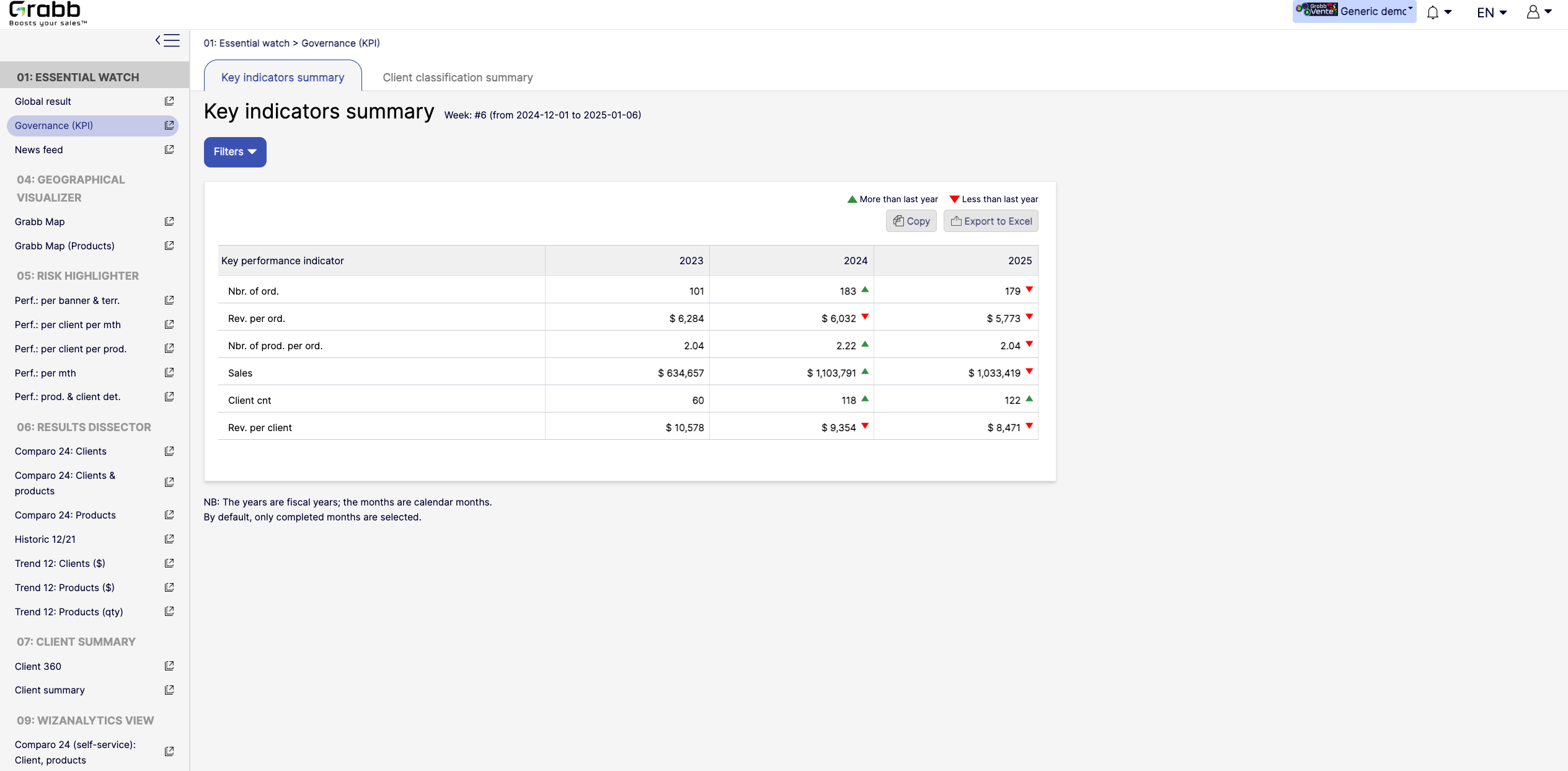
Screenshot of the dashboard for executives and managers, with various performance metrics:

High‐Level KPIs: Summarizes top metrics (e.g., total sales, revenue per client, average products per order) all in one table, making it easier to spot whether the company is trending up or down.
Year‐to‐Year Comparison: Displays data for each fiscal year, with green/red arrows to show improvement or decline since the previous year.
Immediate Visibility of Trends: Simplifies strategic decision‐making by illustrating whether overall performance is improving or if corrective measures are needed.
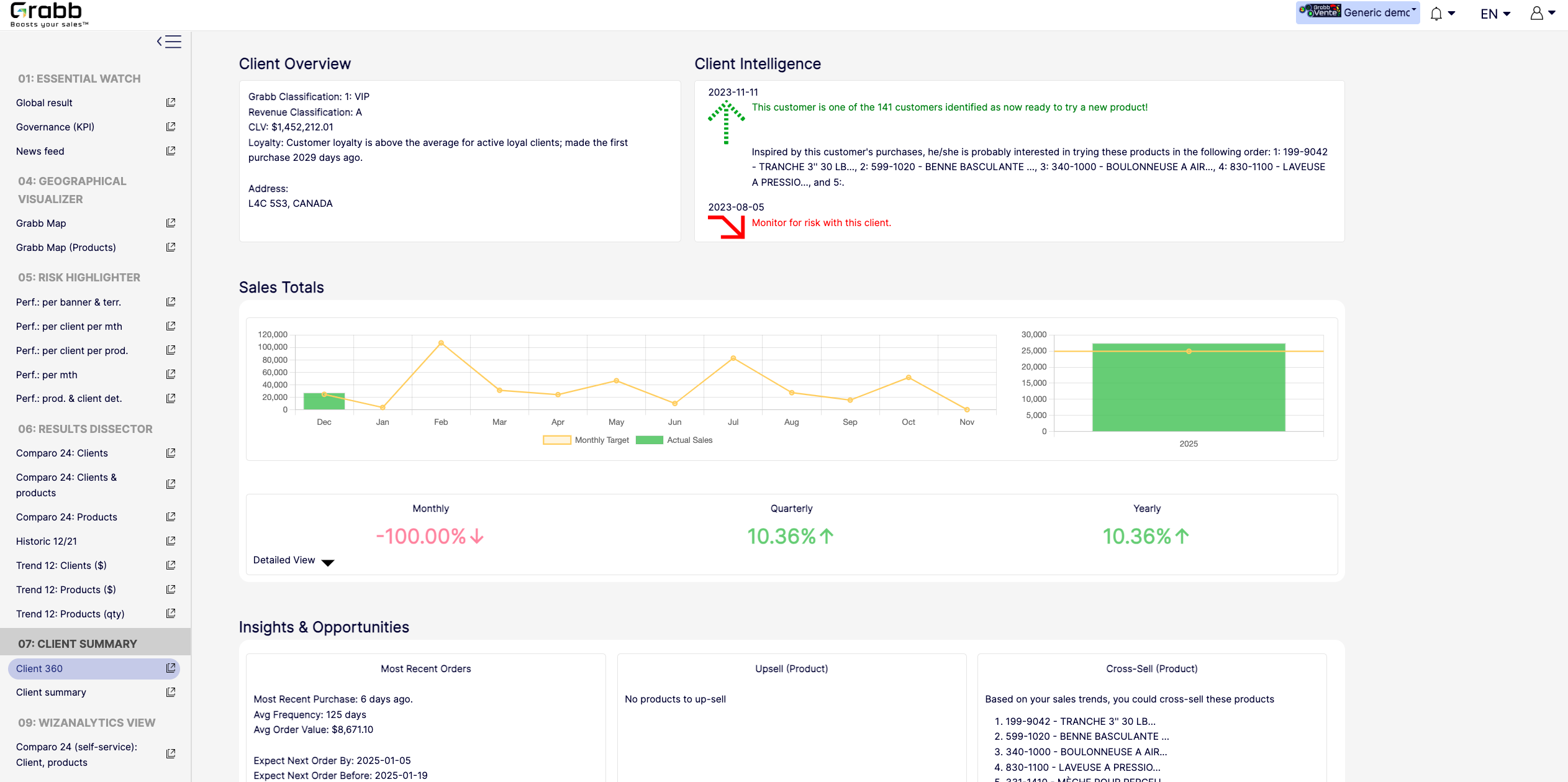
It’s a quick, executive‐friendly scoreboard of the organization’s health, ensuring leaders have the clarity to plan next steps.Screenshot of an at‐a‐glance understanding of a single client’s status, loyalty level, buying behavior, and next best actions that includes data about up‐selling, cross‐selling, and churn risk is often siloed or not immediately visible. This provides:

A Centralized Client Snapshot: Shows the client’s classification (e.g., VIP), revenue category, and CLV, ensuring everyone quickly sees the client’s overall value.
Predictive Intelligence: Highlights whether the client is “ready to try a new product,” or if there’s any “monitor for risk” alert, taking the guesswork out of deciding the next sales move.
Sales Trend & Graphs: Displays monthly, quarterly, and yearly sales to pinpoint performance patterns and quickly identify dips/spikes.
Upsell/Cross‐Sell Suggestions: Automatically suggests which products the client is most likely to buy next, helping reps act on potential revenue opportunities immediately.
Insights & Opportunities: Offers quick reference points such as “Most Recent Purchase,” average order value, frequency, and predicted next order date so you can plan proactive outreach.
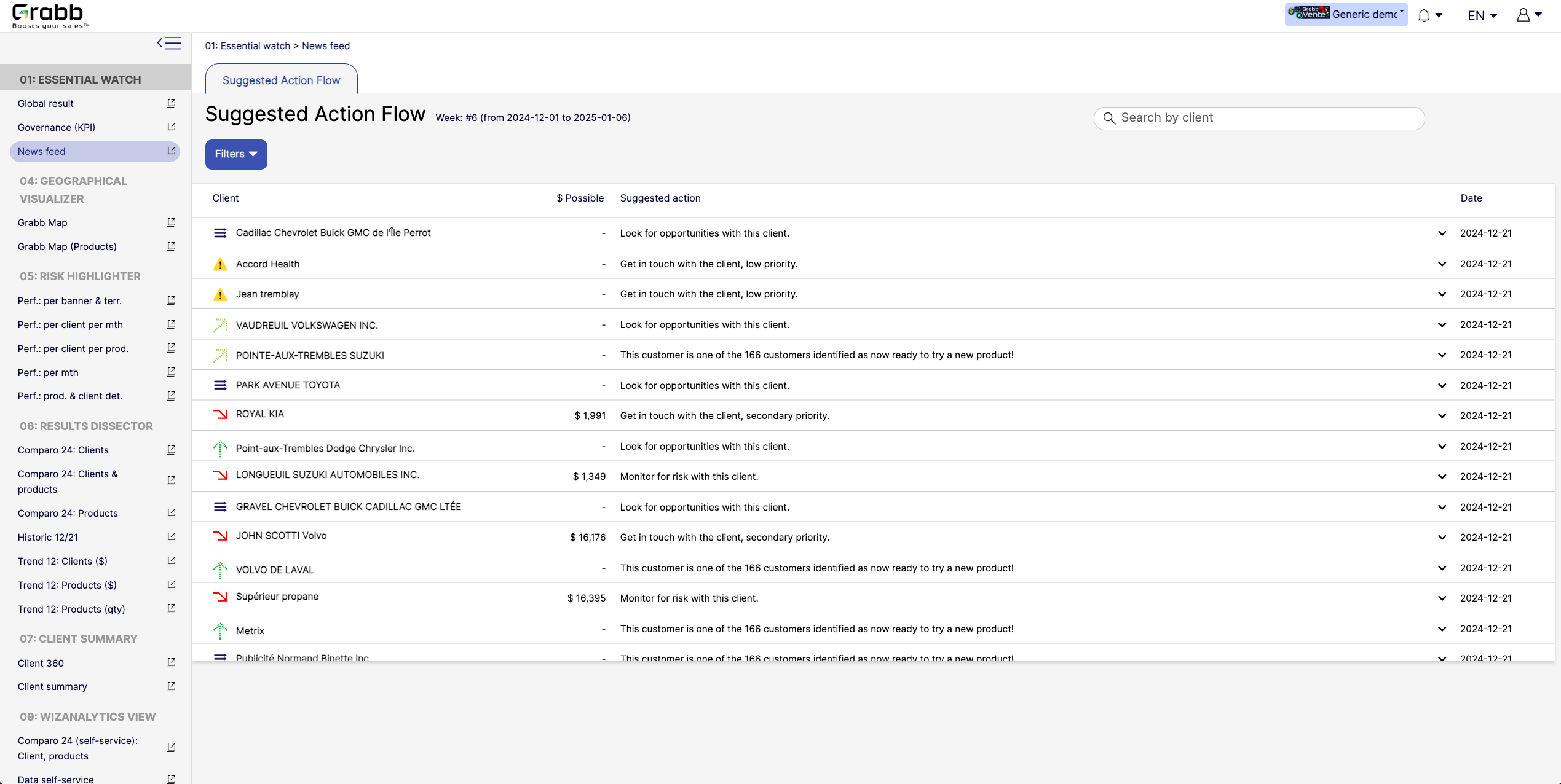
This holistic view enables data‐driven decisions—whether to focus on strengthening loyalty, pitching new products, or preventing churn.Screenshot of A visualization for sales reps and managers, providing:

Prioritized Recommandations: Provides a dynamic feed of next best actions—whether it’s “Look for opportunities with this client” or “Monitor for risk,” ensuring no lead or account slips through the cracks.
Opportunity & Risk Indicators: Quickly flags which clients are “ready to try a new product” versus those at higher risk, so teams can focus their energy where it matters most.
Estimated Upside ($ Possible): In some cases, the screen shows potential revenue if successful, helping reps evaluate the ROI of their outreach efforts.
Search & Filter Capabilities: Salespeople can easily locate a specific client in the list and see suggested actions, which speeds up daily planning and follow‐ups.
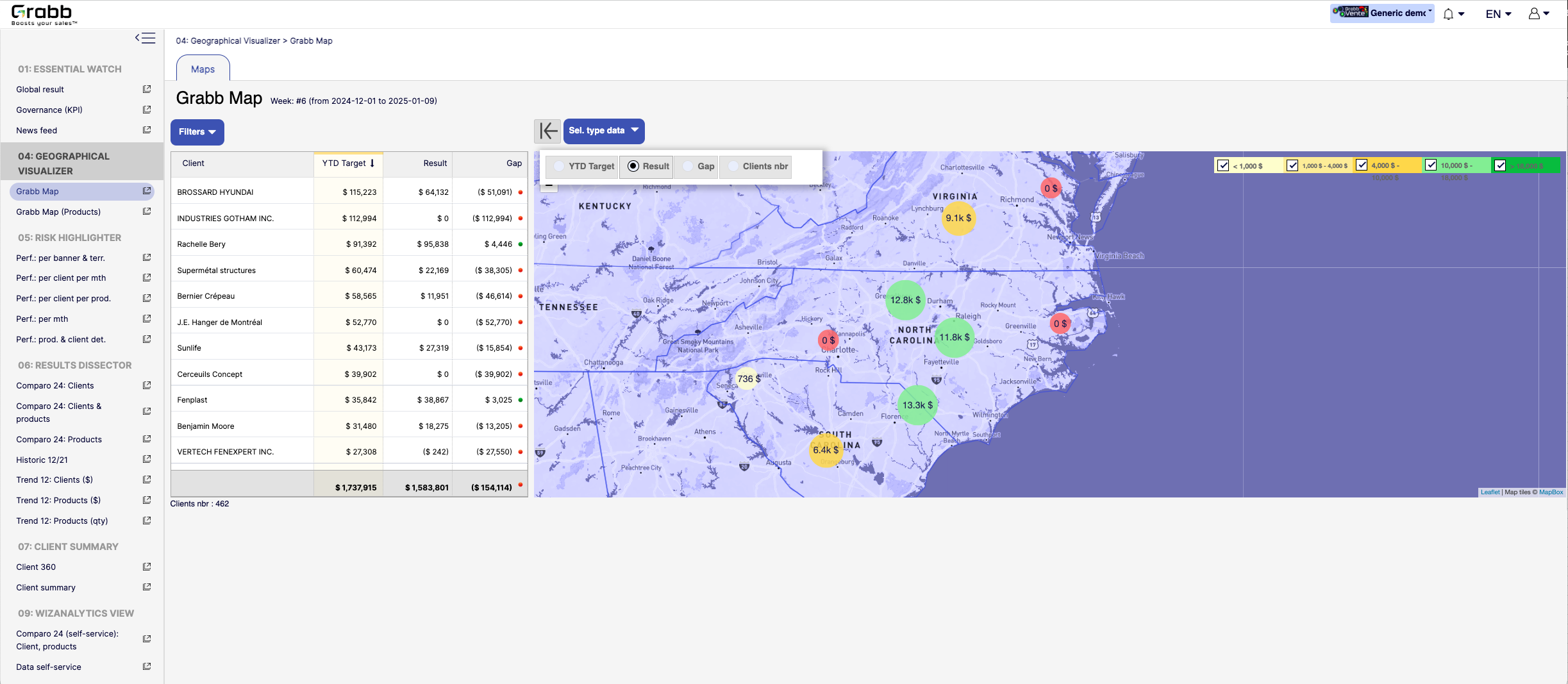
By centralizing these recommended “next steps,” the Suggested Action Flow turns raw data into a practical to‐do list—making each sales call or client interaction more purposeful and timely.Screenshot of a visualization for sales teams that helps them understand how their performance is distributed across different territories or locations. Without geographic context, managers can overlook local trends, regional opportunities, or problem areas.

Solution Provided:

Interactive Territory Overview: Displays each client’s Year‐to‐Date (YTD) target, actual results, and any gap in a color‐coded map, quickly revealing where the biggest mismatches lie.
Client‐Level Details: The list alongside the map allows you to see real‐time data—such as current gap amount or sales performance—sorted by region or client.
Visual Clustering: Bubbles on the map show consolidated sales amounts or gaps for clusters of clients, making it easier to spot hot‐spots or underperforming zones.
Target & Result Comparison: By toggling between metrics (e.g., “YTD Target,” “Result,” “Gap,” “Clients nbr”), managers can instantly pivot the view to see how the team is tracking.
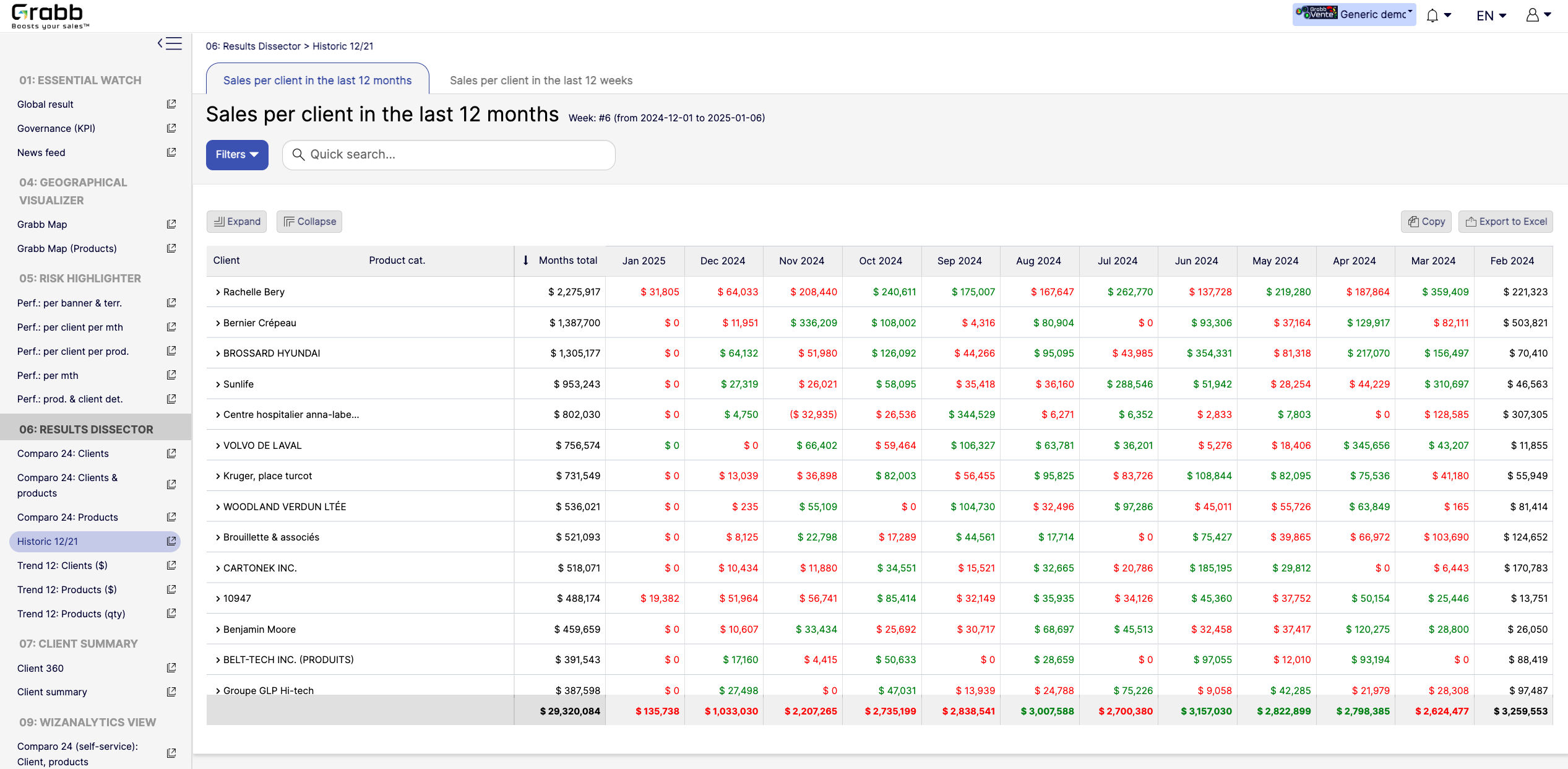
With this map‐based dashboard, leaders can optimize travel routes, allocate resources effectively, and prioritize outreach in areas where the potential impact is greatest.Screenshot of monthly sales trends at the individual‐client level. The visualization provides:

Month‐by‐Month Breakdown: Lists each client with color‐coded monthly sales (green and red), allowing you to see exactly when sales surge or drop off.
Total and Monthly Views: A “Months total” column plus each month’s figure helps you quickly gauge each client’s cumulative performance versus their monthly fluctuations.
Trend Spotting & Seasonality: By laying out 12 consecutive months, it becomes easier to see recurring patterns—helpful for forecasting, inventory planning, and targeted campaigns.
Actionable Insights: Identify which clients need re‐engagement (red cells or big drops) and which clients might be ready for expansion (consistently green or strong increases).
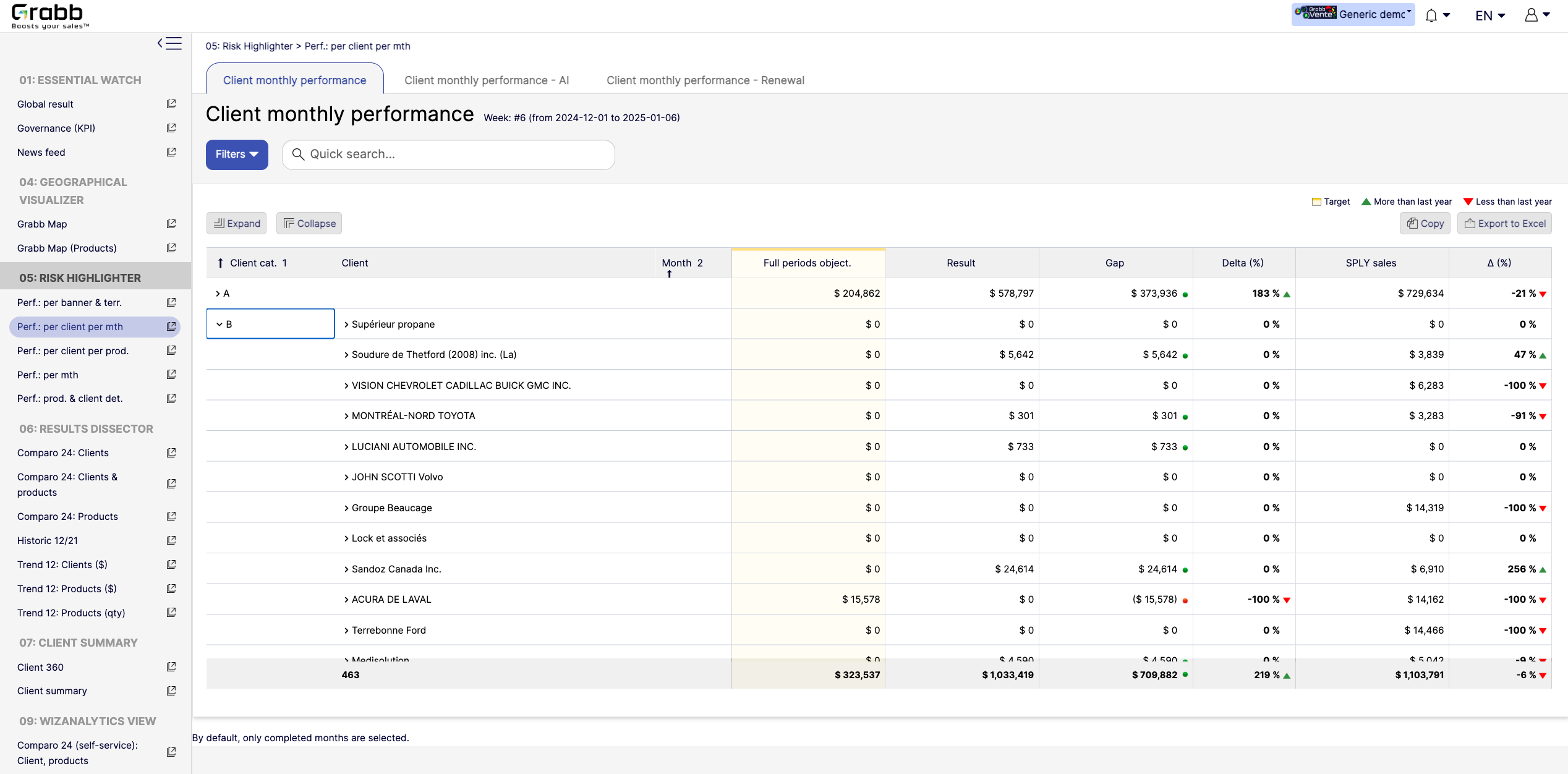
By visualizing an entire year in detail, sales teams can preemptively address potential downturns and capitalize on positive trends.Screenshot of a visualization tracking how each client performs on a month‐to‐month basis, and across accounts. This information provides:

Side‐by‐Side Comparisons: Displays each client’s monthly objectives versus actual results, so sales teams see immediately whether targets are met or missed.
Delta & Gap Analysis: Automatically calculates the variance between the goal and real outcomes—highlighting where shortfalls or over‐performance exist.
Year‐Over‐Year Comparison: “More than last year” or “Less than last year” labels provide quick trend context, guiding strategy for retention or growth.
Easy Filtering & Sorting: Users can filter by client category or name, then expand or collapse details to focus only on accounts that need attention.
With this screen, managers can prioritize which clients need immediate support and which are on track—using precise data rather than guesswork.