Red Hat Enterprise Linux (RHEL) vs. VMmanager

Overview
ProductRatingMost Used ByProduct SummaryStarting Price
Red Hat Enterprise Linux (RHEL)
Score 9.0 out of 10
N/A
Red Hat Enterprise Linux is a Linux distribution mainly used in commercial data centers.N/A
VMmanager
Score 9.3 out of 10
Small Businesses (1-50 employees)
VMmanager automatically creates KVM / LXD based virtual machines. It provides flexible features to control and manage virtual infrastructure. The free version of VMmanager comes without any feature limits for 30 days. Modern interface. VMmanager boasts interface and smart UX that makes it easy to solve any task. Stability and security. VMmanager gets new security updates every week. The…N/A
Pricing
Red Hat Enterprise Linux (RHEL)VMmanager
Editions & Modules
No answers on this topic
Offerings
Pricing Offerings
Red Hat Enterprise Linux (RHEL)VMmanager
Free Trial
NoYes
Free/Freemium Version
NoNo
Premium Consulting/Integration Services
NoYes
Entry-level Setup FeeNo setup feeNo setup fee
Additional DetailsTrial version It has the same settings and functions as the full version except for the following limitations: — Valid for 30 days — By default, it includes 5 servers and 100 virtual machines (can be expanded to any value for free in your account)
More Pricing Information
Community Pulse
Red Hat Enterprise Linux (RHEL)VMmanager
Features
Red Hat Enterprise Linux (RHEL)VMmanager
Operating System
Comparison of Operating System features of Product A and Product B
Red Hat Enterprise Linux (RHEL)
8.2
3 Ratings
3% below category average
VMmanager
-
Ratings
File Management6.02 Ratings00 Ratings
Software Application Management9.03 Ratings00 Ratings
System Update Frequency8.33 Ratings00 Ratings
Operating System Security9.33 Ratings00 Ratings
Best Alternatives
Red Hat Enterprise Linux (RHEL)VMmanager
Small Businesses
Ubuntu
Ubuntu
Score 8.5 out of 10
Hyper-V
Hyper-V
Score 8.3 out of 10
Medium-sized Companies
Ubuntu
Ubuntu
Score 8.5 out of 10
Red Hat OpenShift
Red Hat OpenShift
Score 9.2 out of 10
Enterprises
Ubuntu
Ubuntu
Score 8.5 out of 10
Red Hat OpenShift
Red Hat OpenShift
Score 9.2 out of 10
All AlternativesView all alternativesView all alternatives
User Ratings
Red Hat Enterprise Linux (RHEL)VMmanager
Likelihood to Recommend
9.2
(187 ratings)
9.0
(1 ratings)
Likelihood to Renew
9.1
(3 ratings)
-
(0 ratings)
Usability
8.7
(79 ratings)
-
(0 ratings)
Availability
8.2
(1 ratings)
-
(0 ratings)
Performance
7.3
(1 ratings)
-
(0 ratings)
Support Rating
8.2
(9 ratings)
-
(0 ratings)
Implementation Rating
9.1
(2 ratings)
-
(0 ratings)
Configurability
10.0
(1 ratings)
-
(0 ratings)
Product Scalability
7.3
(1 ratings)
-
(0 ratings)
User Testimonials
Red Hat Enterprise Linux (RHEL)VMmanager
Likelihood to Recommend
Red Hat
Red Hat Enterprise Linux (RHEL) is best suited for its stability, fast reboot time, and minimal resource requirements which reduce overall cost. The patch time for Red Hat Enterprise Linux (RHEL) is also extremely fast which benefits application up time. For environments or applications that require many changes, for a Red Hat Enterprise Linux (RHEL) support person that is not well trained and experienced in Red Hat Enterprise Linux (RHEL), this can be challenging.
Read full review
ISPsystem
VMmanager has the capability for easy and effective business data quality and also its function is easy to manage and use. VMmanager features are easy to manipulate and have excellent capabilities for project data management and stable functionalities for easy data migration and have useful reports creation platform than other platforms.
Read full review
Pros
Red Hat
  • Virtualization, like the operating system level task. I see this product is very good and it blends very well with the middleware components like all the JBoss and other things. And other than that, either you install it or a virtual machine or physical servers, it works seamlessly anywhere. And if you want to go further, like Red Hat OpenShift or those things also work very nice with it.
Read full review
ISPsystem
  • Amazing documents solutions.
  • Has simple management in various business.
  • Best capabilities on features.
Read full review
Cons
Red Hat
  • In the LEAP process. The upgrading process, which I'm hearing, like I said it before, prior that I was on rail seven, eight, and nine. Trying to get all of that to rail nine and stay current. The LEAP process from seven to eight is a little bit less than desired. I've talked to some people that from once you get on eight from eight to nine to nine to 10 is a breeze. So I'm looking forward to that.
Read full review
ISPsystem
  • Professional user are required to set features.
  • Powerful machines are required to all users.
  • New users may need guides to set features.
Read full review
Likelihood to Renew
Red Hat
We find RHEL to be a superior OS with stable operations and long life. It is also easier to use and fix then most other OS's.
Read full review
ISPsystem
No answers on this topic
Usability
Red Hat
The Red Hat Enterprise Linux (RHEL) distro is the simplest enterprise version of Red Hat that is enterprise supported and when you deploy as many VMs as we do, it is vital to have that enterprise support. On top of the enterprise support, having access to a commercially supported backbone for updates and upgrades is a huge plus.
Read full review
ISPsystem
No answers on this topic
Reliability and Availability
Red Hat
Product support and regular patches.
Read full review
ISPsystem
No answers on this topic
Performance
Red Hat
As with any OS enhanced testing will need to be done prior to application integration.
Read full review
ISPsystem
No answers on this topic
Support Rating
Red Hat
Red Hat support has really come a long way in the last 10 years, The general support is great, and the specialized product support teams are extremely knowledgeable about their specific products. Response time is good and you never need to escalate.
Read full review
ISPsystem
No answers on this topic
Implementation Rating
Red Hat
Don't be afraid of it, its easy to install and configure for the tasks needed.
Read full review
ISPsystem
No answers on this topic
Alternatives Considered
Red Hat
So we in our company have used Ubuntu as well. Sometimes we have to use that because a certain application installer requires that we use that operating system, but we really don't prefer it just because it doesn't come with the same Add-on features that make Red Hat Enterprise Linux (RHEL) really great, like Red Hat Insights or Red Hat satellite, things like that. They come package with it. So that would be the main one. I've also used things like FreeBSD, but I think that's just too old at this point to care.
Read full review
ISPsystem
No answers on this topic
Scalability
Red Hat
Operational ease of use backed by support
Read full review
ISPsystem
No answers on this topic
Return on Investment
Red Hat
  • RHEL provides a good base OS and additional tool sets for various deployments.
  • We are able to use Satellite to manage hundreds of OS's behind our corporate firewall. No other OS provides the level that RHEL does.
  • It is a known good quantity. Their support for the OS is amazing.
Read full review
ISPsystem
  • Powerful integration features.
  • Data insights collection is easy.
  • Data processing and best business operations.
Read full review
ScreenShots

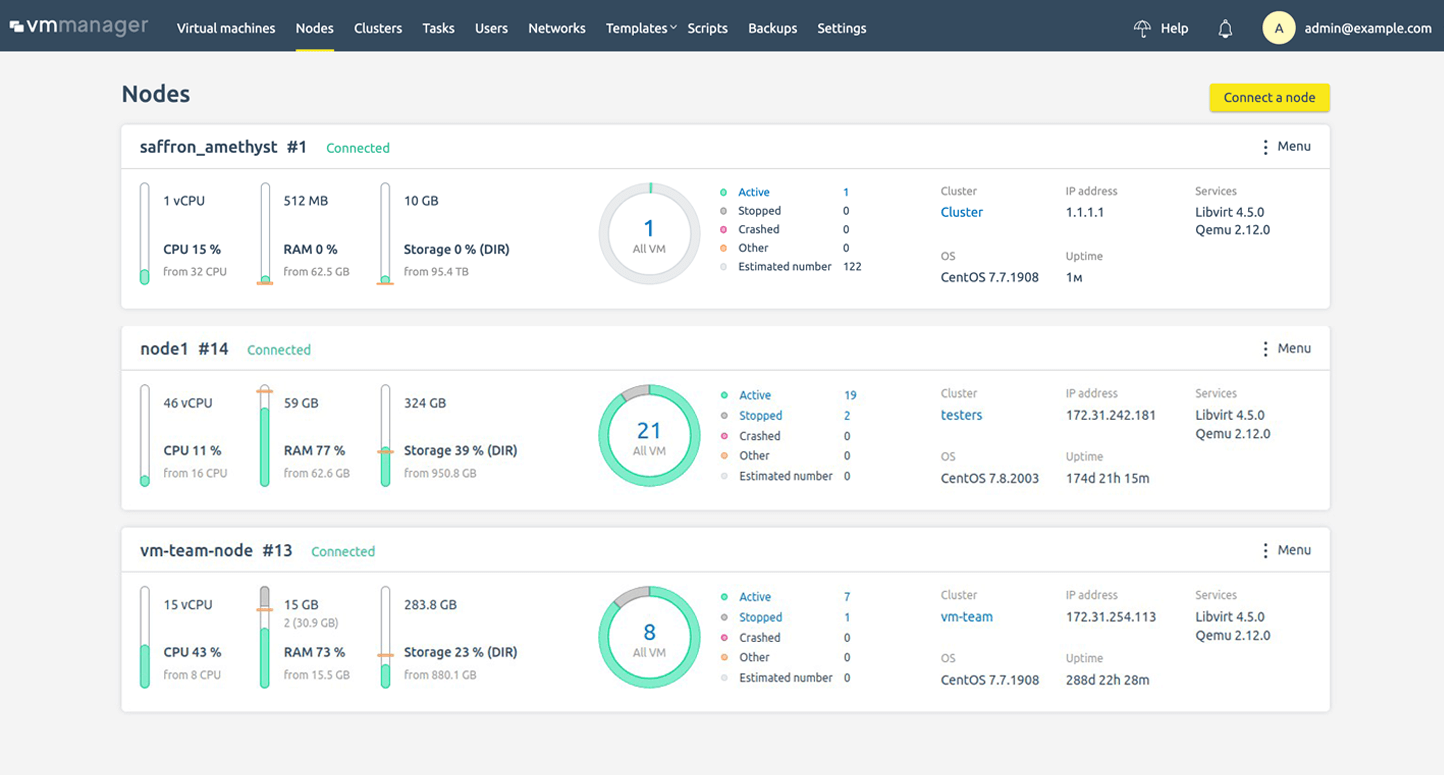
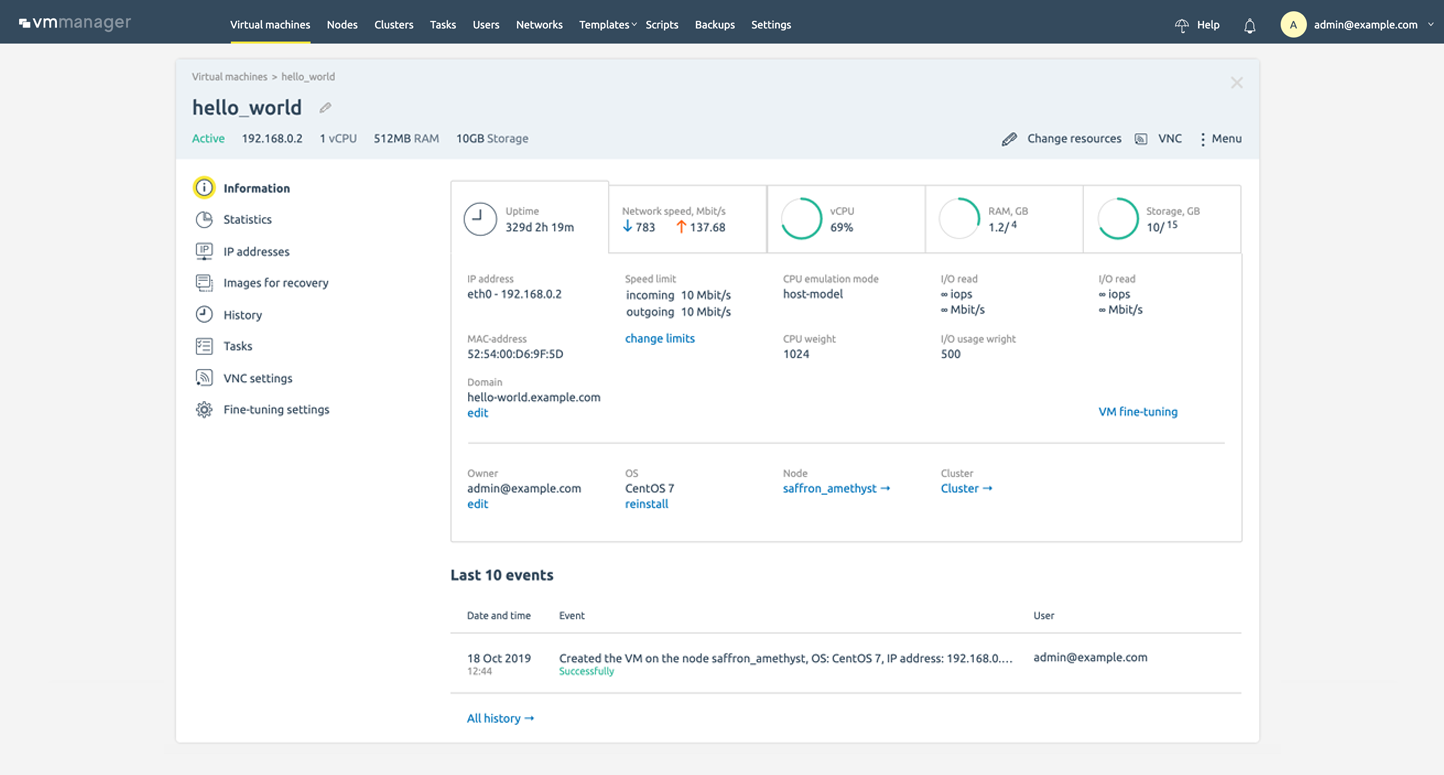
VMmanager Screenshots

Screenshot of Virtual MachinesScreenshot of TasksScreenshot of VMmanager dashboardScreenshot of List of nodesScreenshot of List of clustersScreenshot of Virtual machine card