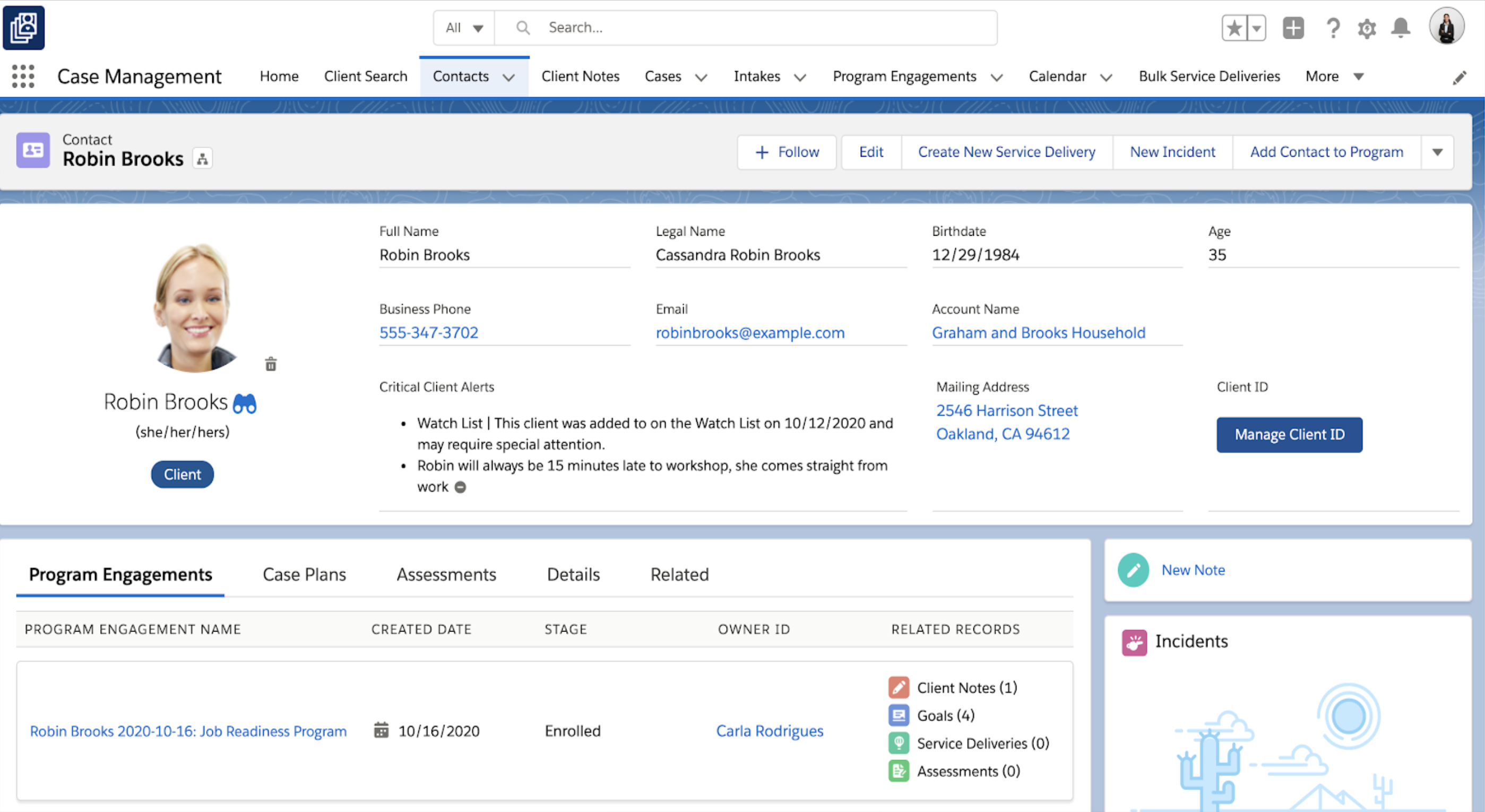
Salesforce for Nonprofits, the Salesforce.org Nonprofit Cloud, is a nonprofit constituent relationship management platform from Salesforce, which supports constituent engagement, fundraising, and grants. Nonprofit editions contain Salesforce Lightning Edition along with the former Nonprofit Success Pack (NPSP) combined.
$36
per month per user
Virtuous CRM
Score6.6 out of 10
Mid-Size Companies (51-1,000 employees)
Virtuous Software, headquartered in Phoenix offers a nonprofit CRM, fundraising, volunteer, and marketing tools used to create more responsive donor experiences and grow giving. The CRM unifies fundraising, marketing, and donor development activities.
N/A
Pricing
Agentforce 360 for Nonprofits
Virtuous CRM
Editions & Modules
Sales Cloud - EE
$36
per month per user
Sales + Service Cloud - EE
$48
per month (billed annually) per user
Nonprofit Cloud - EE
$60
per month (billed annually) per user
Nonprofit Cloud - UE
Contact
Starter (under 5K contacts)
Contact Sales
Up to 5 users and includes 1,000 supporter records
Platform (5K-30k contacts)
Contact Sales
Unlimited users and includes your first 5,000 supporter records
Enterprise (30k-Millions)
Contact Sales
Unlimited users and (potentially) unlimited supporters
Offerings
Pricing Offerings
Agentforce 360 for Nonprofits
Virtuous CRM
Free Trial
No
Yes
Free/Freemium Version
No
No
Premium Consulting/Integration Services
No
Yes
Entry-level Setup Fee
No setup fee
Required
Additional Details
—
—
More Pricing Information
Community Pulse
Agentforce 360 for Nonprofits
Virtuous CRM
Considered Both Products
Salesforce
No answer on this topic
Virtuous Software, LLC.
Verified User
Chose Virtuous CRM
I think the way to look at a CRM is really based on what provides the easiest user experience for you and your team. These days, they all do basically the same thing. Nothing about Virtuous stands out as significantly unique compared to the others. So if you like it, use it... …
A de minimis incentive was given to thank the reviewer for their time. The incentive was not used to bias or drive a particular response, nor was the incentive contingent on a positive endorsement. More Info
I’d say it’s very well suited for organizations looking to move toward AI integrations and make more data-driven decisions. As I mentioned, I’ve also used the competing product from Blackbaud, which is a very closed system — you can’t really pull out the data. Salesforce, on the other hand, has a big advantage with its APIs, allowing you to extract data, store it in Data Cloud, and do much more with it. However, if your requirements aren’t clearly defined or if there’s heavy customization involved, the implementation can get messy. So I wouldn’t recommend using Salesforce Nonprofit Cloud in cases where the requirements and structure aren’t clearly laid out.
A de minimis incentive was given to thank the reviewer for their time. The incentive was not used to bias or drive a particular response, nor was the incentive contingent on a positive endorsement. More Info
Virtuous is a great tool for fundraisers and nonprofit organizations that want to keep all their donor records, gift transactions, donation landing pages, and reporting in one platform. It may not be well suited, though, for for-profit businesses, organizations, and agencies.
A de minimis incentive was given to thank the reviewer for their time. The incentive was not used to bias or drive a particular response, nor was the incentive contingent on a positive endorsement. More Info
A de minimis incentive was given to thank the reviewer for their time. The incentive was not used to bias or drive a particular response, nor was the incentive contingent on a positive endorsement. TR verified that a representative sample of customers was invited. More Info
A de minimis incentive was given to thank the reviewer for their time. The incentive was not used to bias or drive a particular response, nor was the incentive contingent on a positive endorsement. More Info
Organizations that are new to Salesforce need to be prepared for report building and other configurations. Customization is a great feature, but it can be overwhelming if not impossible for a brand new user.
Salesforce Trailhead is robust but can be confusing and overwhelming.
I'm currently comfortable with only using Salesforce CMS or any iteration on a desktop.
A de minimis incentive was given to thank the reviewer for their time. The incentive was not used to bias or drive a particular response, nor was the incentive contingent on a positive endorsement. More Info
Virtuous only keeps track of contacts on forms for a given period of time, not the lifetime of when the form was deployed.
Virtuous Customer Support can sometimes lag, and you end up waiting days for a response to your inquiry or issue.
Virtuous reporting, while very detailed and segmented, can sometimes be a little overwhelming, and the terminology does not always translate to what you are looking to accomplish with your reporting outcomes.
A de minimis incentive was given to thank the reviewer for their time. The incentive was not used to bias or drive a particular response, nor was the incentive contingent on a positive endorsement. More Info
A de minimis incentive was given to thank the reviewer for their time. The incentive was not used to bias or drive a particular response, nor was the incentive contingent on a positive endorsement. More Info
Salesforce CMS is very intuitive and easy to use. I have not found where it glitches or crashes out. You can tell where data is "supposed to live" and it you aren't sure, there is an easy search function. Support is made readily available.
A de minimis incentive was given to thank the reviewer for their time. The incentive was not used to bias or drive a particular response, nor was the incentive contingent on a positive endorsement. More Info
In my experience, Virtuous CRM has great self-marketing, talented salespeople, and a half-baked CRM that shows glimmers of competence but the actual experience is more akin the the scene in the Simpson’s when Sideshow Bob keeps stepping on rakes.
A de minimis incentive was given to thank the reviewer for their time. The incentive was not used to bias or drive a particular response, nor was the incentive contingent on a positive endorsement. More Info
I have never had bad conversations with any support people with Salesforce but we also have not used them very much. I put it a little less because we are struggling to switch to lightning (some of our custom features do not migrate well) and it feels like the help and support for a little organization is not incredibly helpful unless we want to spend a lot of money.
A de minimis incentive was given to thank the reviewer for their time. The incentive was not used to bias or drive a particular response, nor was the incentive contingent on a positive endorsement. More Info
As a cloud native organization with no previous Microsoft infrastructure, Salesforce was a more logical and effective option for us. The suite of products was also far more comprehensive and required less customization. We were able to adopt a "configure not code" approach to our development of systems to support our mission that lowered the cost of upgrades.
A de minimis incentive was given to thank the reviewer for their time. The incentive was not used to bias or drive a particular response, nor was the incentive contingent on a positive endorsement. More Info
In my experience, the sales pitch and demos are slick, but upon actual use there is a quick realization that no small or medium charity should touch this software with a 10-ft pole. In my opinion, if you have a large org with lots of cash, and a dedicated database manager who is tech-literate, you can make this work. HubSpot is by far my favorite but lacks the nonprofit features needed to truly manage donor relationships and portfolios.
A de minimis incentive was given to thank the reviewer for their time. The incentive was not used to bias or drive a particular response, nor was the incentive contingent on a positive endorsement. More Info
A de minimis incentive was given to thank the reviewer for their time. The incentive was not used to bias or drive a particular response, nor was the incentive contingent on a positive endorsement. More Info
A de minimis incentive was given to thank the reviewer for their time. The incentive was not used to bias or drive a particular response, nor was the incentive contingent on a positive endorsement. More Info