Tricentis qTest (formerly QASymphony) provides enterprise-level agile testing tools giving businesses visibility and control needed to ensure application quality in fast-paced development environments. Tricentis and QASymphony merged in summer 2018.
$1,200
per year per user
Visual Studio Test Professional
Score7 out of 10
N/A
An add-on for the Visual Studio IDE, Visual Studio Test Professional subscription helps teams drive quality and speed. It includes test case management and collaboration features that streamline quality control and support continuous delivery.
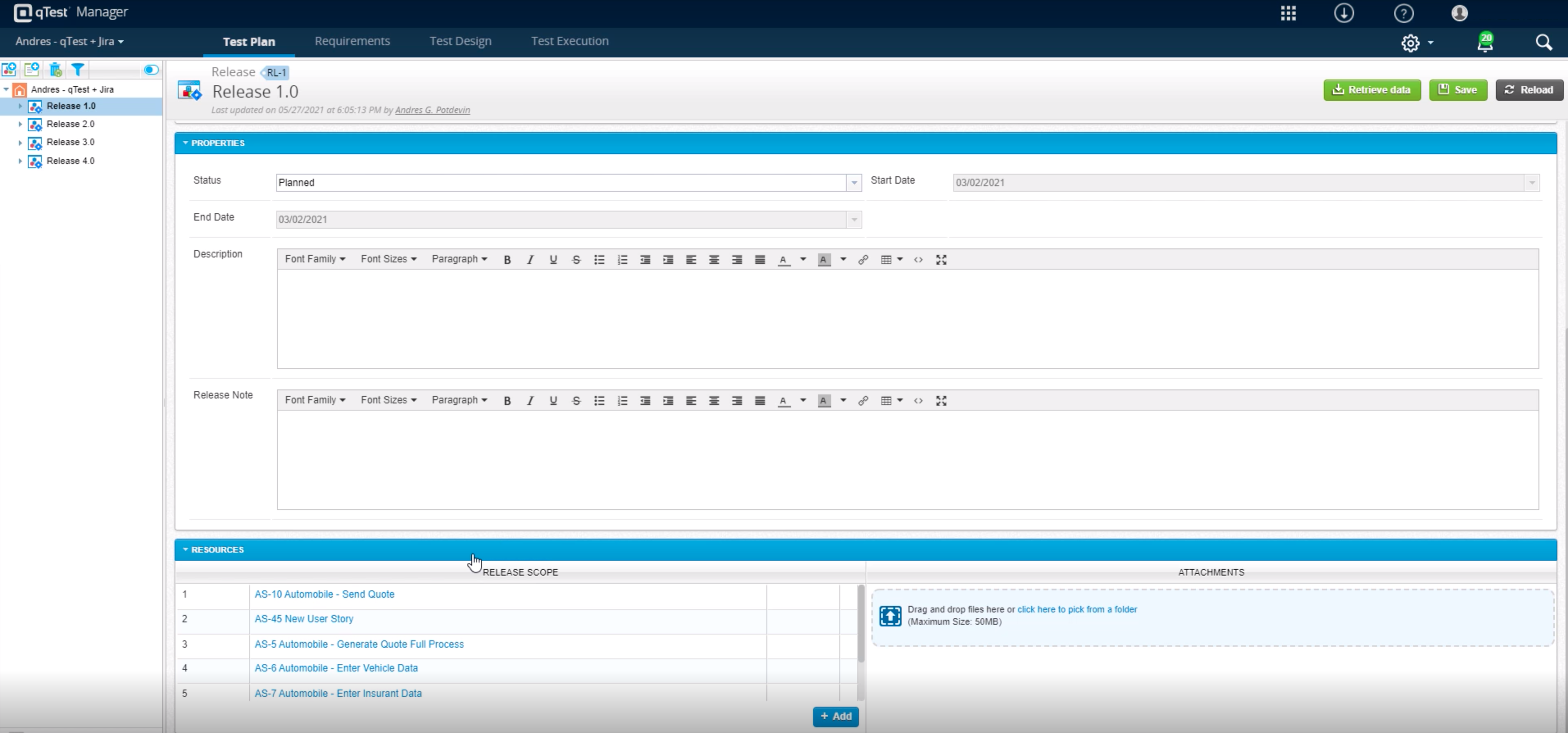
Tricentis qTest integrates seamlessly with Jira, making it ideal for teams that manage user stories and defects in Jira while keeping test cases and execution in qTest. When paired with automation tools like tosca, Selenium, or WebdriverIO, qTest is excellent for aggregating both manual and automated test results in one place.
A de minimis incentive was given to thank the reviewer for their time. The incentive was not used to bias or drive a particular response, nor was the incentive contingent on a positive endorsement. More Info
It would be well suited if we used it with Azure DevOps as we can effortlessly integrate the test cases and even stories or tasks to stay on track with our work. Those test cases can even be reused across multiple projects. Using any other third-party tools, such as Jira, can be less appropriate, as it's not a Microsoft tool, and its capabilities will be limited.
A de minimis incentive was given to thank the reviewer for their time. The incentive was not used to bias or drive a particular response, nor was the incentive contingent on a positive endorsement. More Info
Tricentis qTest manages test cases very well and keeps step by step by details of each and every scenarios
Tricentis qTest provides all the details related to functionality in a single place which saves time and efforts of QA
QA doesnt require much knowledge for test case execution as every details are there in Tricentis qTest test cases which saves the time of knowledge transfer
A de minimis incentive was given to thank the reviewer for their time. The incentive was not used to bias or drive a particular response, nor was the incentive contingent on a positive endorsement. More Info
A de minimis incentive was given to thank the reviewer for their time. The incentive was not used to bias or drive a particular response, nor was the incentive contingent on a positive endorsement. More Info
We can add some more integration features with JIRA so the users can directly mark the test as executed from JIRA itself when functional testing is done.
Tricentis qTest can provide some features like sending reminders for retesting if there are failed test cases marked while testing to keep Tricentis qTest up to date.
A de minimis incentive was given to thank the reviewer for their time. The incentive was not used to bias or drive a particular response, nor was the incentive contingent on a positive endorsement. TR verified that a representative sample of customers was invited. More Info
The user community of the Visual Studio Test product is weak. For instant problems with this product, it is necessary to quickly reach the source of the error.
Licence fees need to be more reasonable. License prices need to be reduced so that they can easily compete with free testing tools.
A de minimis incentive was given to thank the reviewer for their time. The incentive was not used to bias or drive a particular response, nor was the incentive contingent on a positive endorsement. More Info
A de minimis incentive was given to thank the reviewer for their time. The incentive was not used to bias or drive a particular response, nor was the incentive contingent on a positive endorsement. TR verified that a representative sample of customers was invited. More Info
It successfully balances deep enterprise functionality with a clean and modern interface. One of its strongest points is the intuitive, folder based navigation, which makes organizing test case and cycles feel natural. Learning curve is relatively shallow for the new team members to become productive without extensive onboarding. Also the deep integration with JIRA is a significant boost to its usability.
A de minimis incentive was given to thank the reviewer for their time. The incentive was not used to bias or drive a particular response, nor was the incentive contingent on a positive endorsement. More Info
It is very usable if you are familiar with Visual Studio to begin with. If you are new to the interface, it can be a long ramp up period for Testers not used to the GUI. There is always the web option which seems to be more intuitive for many Testers.
A de minimis incentive was given to thank the reviewer for their time. The incentive was not used to bias or drive a particular response, nor was the incentive contingent on a positive endorsement. More Info
A de minimis incentive was given to thank the reviewer for their time. The incentive was not used to bias or drive a particular response, nor was the incentive contingent on a positive endorsement. TR verified that a representative sample of customers was invited. More Info
Visual Studio Test Professional is backed up by the full support of the Microsoft Corporation. That means twenty-four/seven customer support by quality, highly-trained professionals who understand every possible issue that you have experienced before. They are nice, efficient, and highly professional. I recommend them.
A de minimis incentive was given to thank the reviewer for their time. The incentive was not used to bias or drive a particular response, nor was the incentive contingent on a positive endorsement. More Info
A de minimis incentive was given to thank the reviewer for their time. The incentive was not used to bias or drive a particular response, nor was the incentive contingent on a positive endorsement. TR verified that a representative sample of customers was invited. More Info
All of them offer formidable solutions in the test management realm, but each one caters to different niche and need. qTest distinguishes itself with its deep integration capabilities, especially with Agile and DevOps tools, enabling streamlined CI/CD process. Its modern, user-centric interface contrasts with ALM's more dated appearance and complex setup. While TestRail provides a clean user experience and caters to a broad spectrum of business, qTest's scalability, from SMBs to large enterprises, stands out. PractiTest's cloud-based solution is geared towards mid-sized companies, but qTest's flexibility, advanced analytics, and robust reporting grant teams actionable insights. qTest' approach to a more holistic test management closely aligning with modern software development practices
A de minimis incentive was given to thank the reviewer for their time. The incentive was not used to bias or drive a particular response, nor was the incentive contingent on a positive endorsement. More Info
The visual Studio Test tool is faster than other tools. Since the development and testing processes are in one tool, it is more profitable in terms of cost. It is more inconvenient to write a test case in DevOps.
One of the positive ROIs of Visual Studios is the fact that it makes producing our work at a quick rate, things like Intellisense make our work get produced at a much higher rate which is good for our return of investment.
Testing by the developers has increased by 23%, we now take the time to actually test our product before we send it to our QA people.
I am not aware of any negative ROI aspects to our company that have been found.
A de minimis incentive was given to thank the reviewer for their time. The incentive was not used to bias or drive a particular response, nor was the incentive contingent on a positive endorsement. More Info