
TrustRadius: an HG Insights company

Responsive

Score8.9 out of 10

59 Reviews and Ratings

What is Responsive?

Responsive (formerly RFPIO), headquartered in Beaverton, offers their proposal management and automation software, featuring import and export, proposal knowledgebase and answer library, evaluation intake forms, and project management tools (e.g. Gantt chart) associated to proposal tracking.

Read more details.

Media

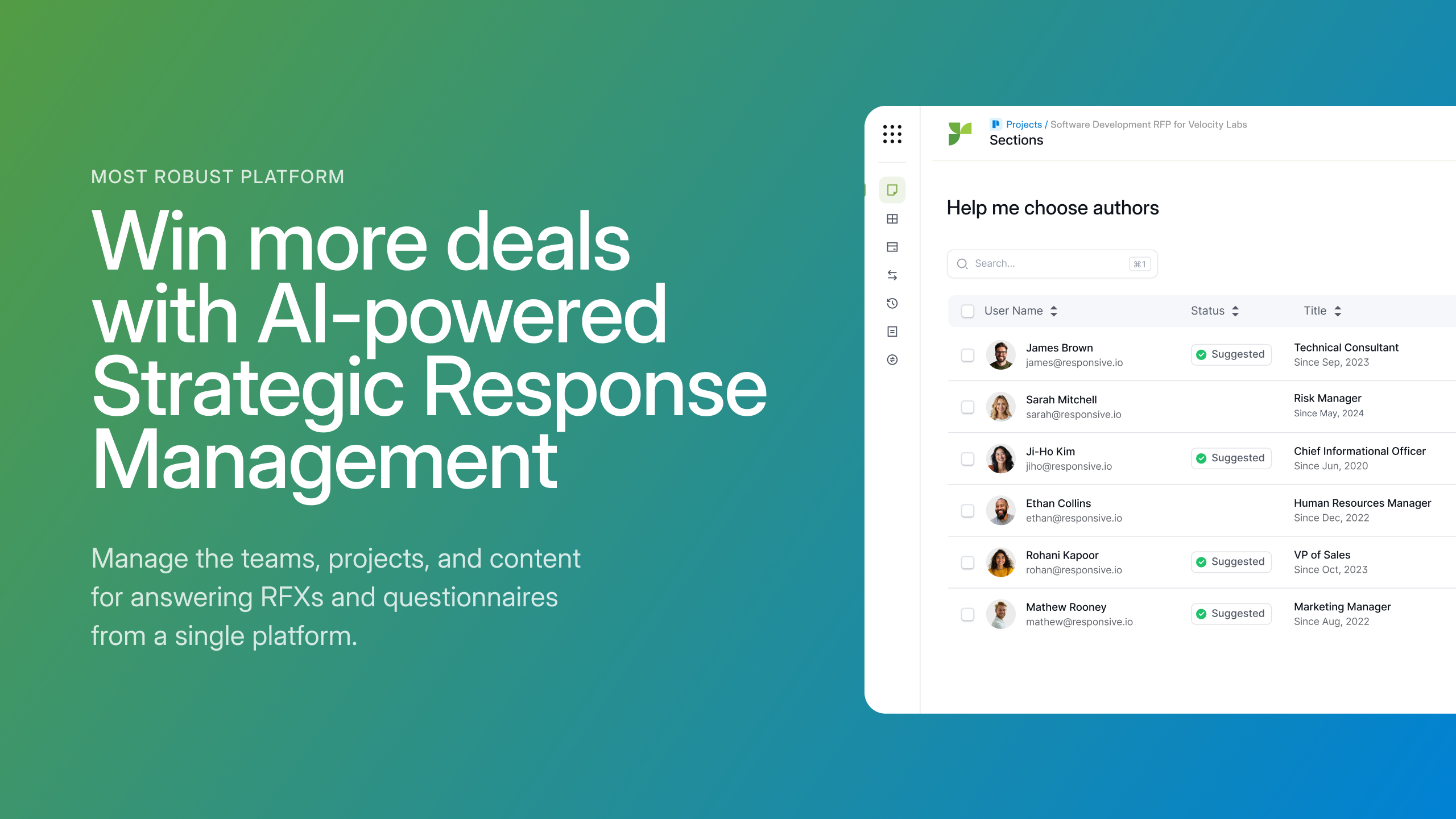
Screenshot of a view of the platform
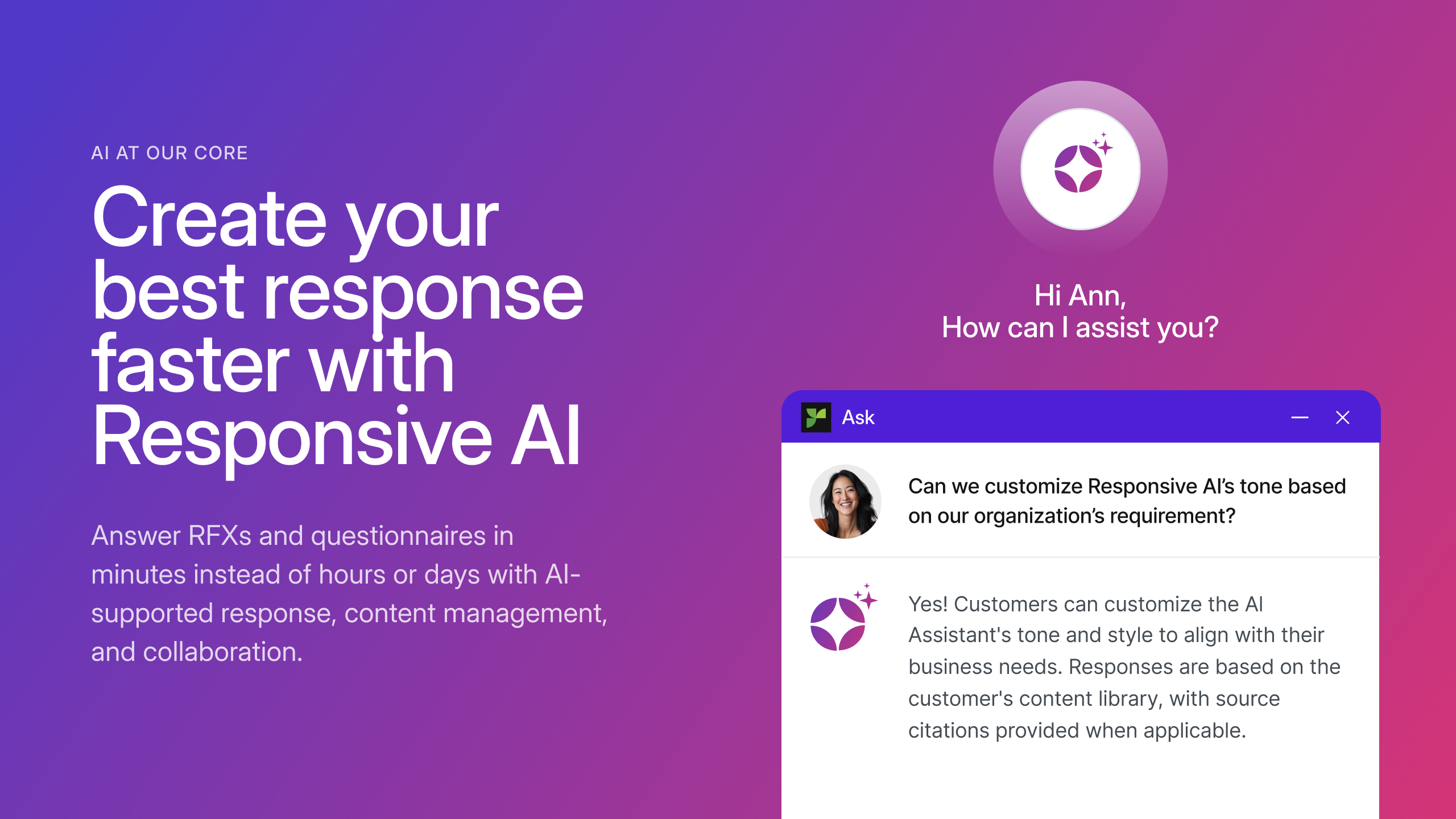
Screenshot of an AI generated response
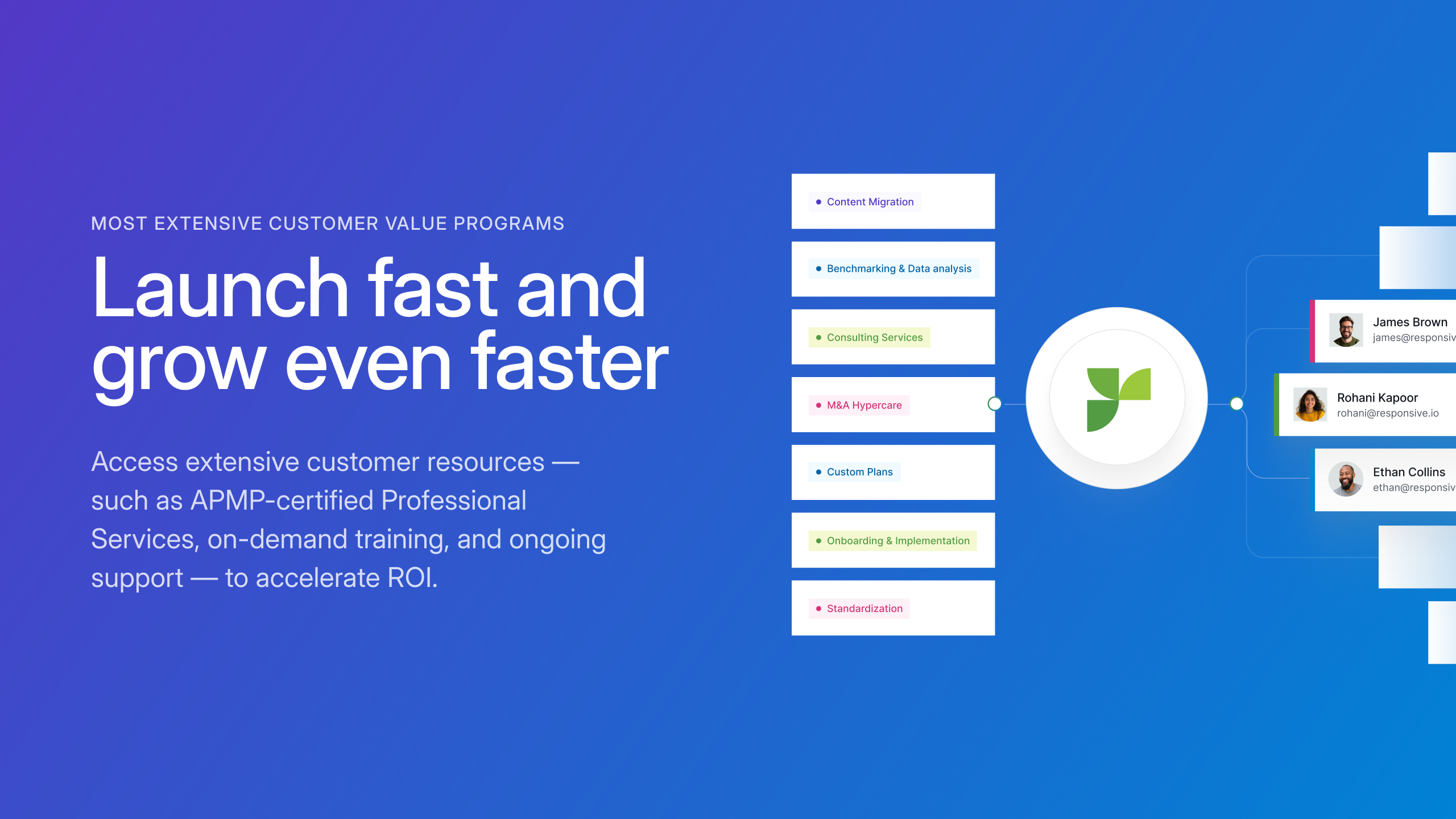
Screenshot of some of the available customer resources
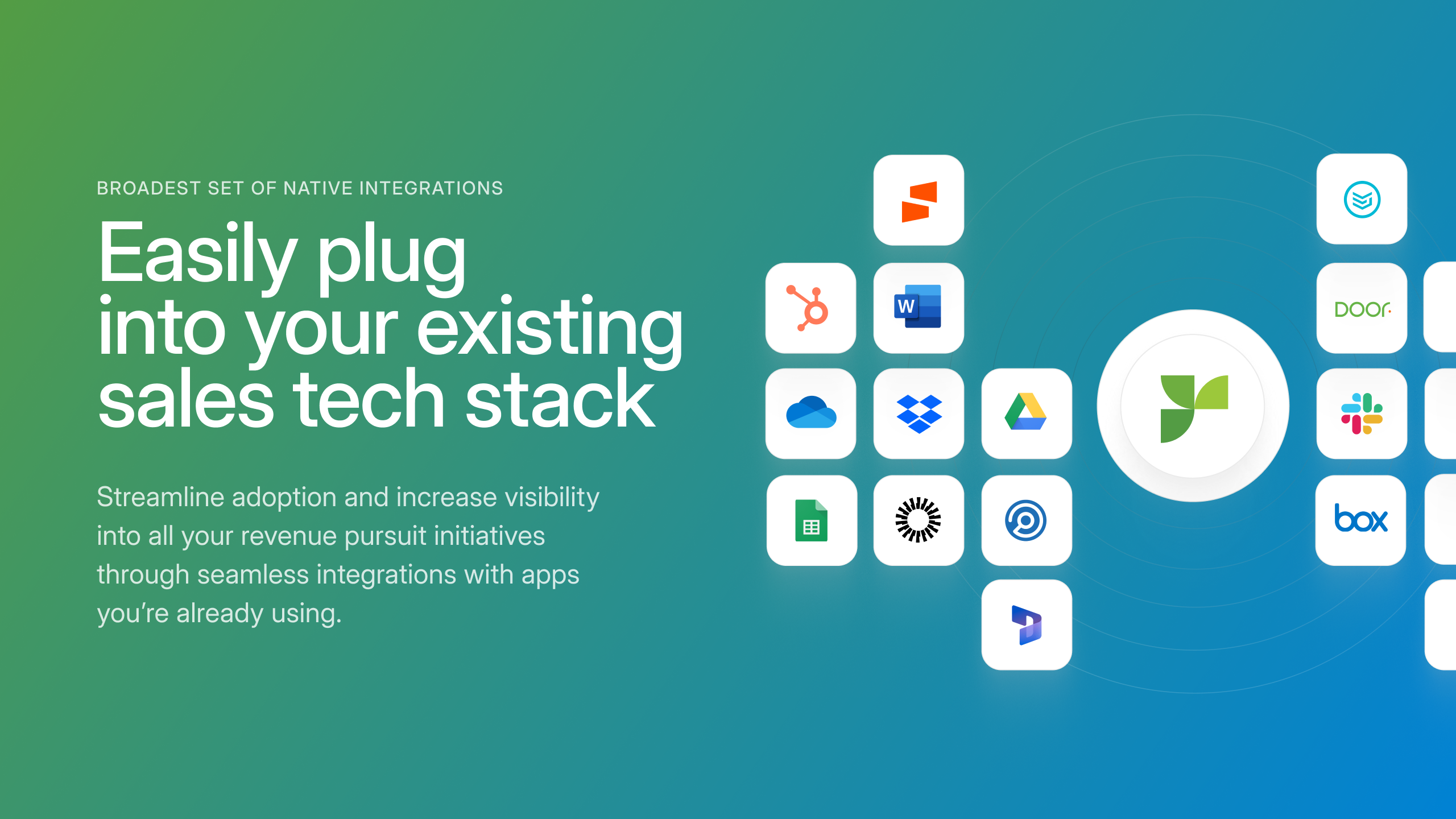
Screenshot of some of the available integrations
Screenshot of a promotional flyer
Screenshot of an example of the AI augmented content management feature

1 / 6

Screenshot of a view of the platform

Pros

  • Streamlines Request for Proposal (RFP) and questionnaire processes
  • AI assistance generates accurate drafts and insightful responses to complex queries
  • Robust content library enables reusability of answers and documentation

Cons

  • AI output can be overly verbose, requiring refinement for conciseness
  • Cost structure of AI features raises concerns and impacts perceived value
  • Difficulties in accurately measuring direct ROI due to lack of standard reporting

Responsive is a great tool.

Use Cases and Deployment Scope

We use it for 2 primary purposes. The first use case is to respond to RFP questionnaires from potential clients, focusing on providing high-quality, accurate responses and reducing the time spent answering duplicate questions that are part of most major RFPs (including product capabilities, security details, and general company information). As an account executive, I use this tool primarily in this way. The second use case is to answer questions from customers or current clients who need additional details about our product functionality or security posture. The AI assistant you can ask questions of does a great job of retrieving the necessary information and citing its sources.

Pros

  • Provide thoughtful responses to common RFP questions.
  • Always cites its sources and provides a "confidence or similarity" score so that you can tell if it's worth having a human review it further.
  • Enables us to collaborate and assign questions to members of other teams, such as procurement and IT.

Cons

  • The flag system for unanswered questions is not optimized. I think it should automatically determine whether a question is answered based on the length of the response.
  • The AI question is accurate, but it seems generally weaker than what is included in the RFP tool. It sometimes returns answers like "no information found" when it should have the necessary context to answer.
  • It would be nice to be integrated with the tools our clients use to issue RFPs, rather than requiring a manual import/export.

Return on Investment

  • Increased time savings for reps and proposal team.
  • Better visibility into what is winning us RFP's vs not.
  • Increased accuracy in our responses.
  • Mitigate risk of unanswered questions or team's dropping the ball on their section.

Other Software Used

Salesforce Marketing Cloud Social Studio (discontinued), ZoomInfo Engage, Outreach

Responsive for the win.

Use Cases and Deployment Scope

When I first started at Invicti, we had 1 resource, a giant Google Sheet, a 5-day SLA for answering RFPs, and no real way to track status, progress, or metrics. We purchased Responsive about a year after I joined. Today, we still have 1 resource but are able to answer over 500 RFPs per year, with an average completion time of 1.2 days. We hold QBRs with the business and cover volume metrics, completion trends, and win rate, as well as insights and trends seen throughout the quarter. Those insights have informed many of our product roadmap decisions. And, it all started with Responsive.

Pros

  • Streamlined our Intake process.
  • Speed to completion with AI Assist.
  • Insights metrics delivered to the business.

Cons

  • Continue to hone the AI feature, it's good and helpful, but real wordy.
  • Continue enhancing the Portal import feature; the ability to export documents would be a great addition.
  • Translation feature for Trust Center.

Return on Investment

  • We went from 5 days time to complete to 1.2 days time to complete.
  • Single source of truth that's trusted across the organization.
  • The most positive impact is trust. With the reporting, no one wonders what's happening; it's all very transparent, no more throwing it into a black hole and hoping it comes back correct.

Alternatives Considered

Loopio

Responsive its AI tools are a GAME CHANGER

Use Cases and Deployment Scope

I work in Customer Success and I get questions on processes so I use Responsive AI tool to make sure my responses are accurate as per company policies.

Pros

  • Searching for RFP questions and answers
  • AI tool is great to review policy related questions, example finding out data center location for a Canadian client.
  • I use AI tool to also find out DB backup frequency and it gives me an accurate response as per previously submitted RFP responses and published documentation.

Cons

  • The Ask AI assistant can suggest alternative question to ask if/when there are no results to be found. Sometimes the user fails to ask it the right question/prompt.

Return on Investment

  • Huge time savings to responding to client questions about processes and other publicly available resources using AI.
  • Saving time to find the links or even brainstorming scenarios with AI.

RFPIO Makes Proposal Managers' Lives Easier Every Day

Use Cases and Deployment Scope

Responsive is our primary response management tool for multiple divisions. We use it for both project management and content management. Responsive allows us to respond to RFPs, RFIs, and security questionnaires, collaborate across departments, and accurately track project progress. Responsive's content management capabilities allow us to split our content and only see things that are relevant to the division we work in, as well as manage a set of content applicable to all users. Responsive saves time on multiple fronts, and routinely allows additional internal and external resources to jump into a project without extensive training for collaboration and additional support.

Pros

  • Makes it easy to respond to RFPs, RFIs, etc. and security questionnaires.
  • Manage response content, check with content owners, and regularly review to ensure accuracy
  • Allows for team members to collaborate across departments, divisions, and locations - seamlessly

Cons

  • Honestly, there are very few things I would criticize Responsive for. They are always seeking feedback and suggestions for changes and improvements, and then making them.

Return on Investment

  • Greater ability to leverage data across divisions
  • Faster response times for RFXs
  • Clearer view of all active projects
  • Stronger content library with more accurate content

Alternatives Considered

Qvidian RFP & Proposal Automation and Loopio

Responsive is wonderful

Use Cases and Deployment Scope

Leading complex RFP projects. With a full suite of solutions that Accruent has to offer, Responsive is integral to completing complex RFPs and Security questionnaires. It is used as the central project management platform and the reusable library is a game-changer. All SMEs involved in completing an RFP use Responsive.

Pros

  • Easy to navigate
  • Suggested answers from library are typically accurate
  • Smooth experience

Cons

  • I never trusted the AI tool, but haven't actually used
  • .
  • .

Return on Investment

  • Time saved

Alternatives Considered

Loopio

Other Software Used

Gainsight CS