Absolute Visibility is an adaptive endpoint security solution. It provides users with a persistent connection to all of their endpoints and the data they contain.
The vendor says, by maintaining a two-way connection with each device, users have the insight they need to assess risk and apply remote security measures so they can protect each endpoint and the sensitive data it contains. This insight is delivered through a cloud-based console that requires no additional IT…
N/A
Ivanti Autonomous Endpoint Management
Score 7.6 out of 10
N/A
Ivanti Autonomous Endpoint Management (AEM) is an enterprise endpoint-operations solution built on the Ivanti Neurons platform. It combines unified endpoint management (UEM)—centralized management of desktops, mobile devices, and other endpoints—with digital employee experience monitoring, asset discovery, security controls, and automated remediation. Ivanti positions AEM as a broader solution layer that brings UEM, digital employee experience, and security capabilities together rather than as a…
As far as patching, Ivanti Neurons for Patch Management is better in terms of the homepage displaying our current deployments. As far as pricing goes, it looks like it will be cheaper as well pretty soon. Tanium is better in terms of automation and, from what we have seen, …
I do think it is well worth the cost and consideration, especially if you are using it on devices containing electronic medical records, personal health information or personal privacy information or devices that contain proprietary information, critical business information or other information that needs to be securely protected. It can also be used to track a device (individual) as well if that is your goal. We use it as an extra precaution to track our mental health clinicians that do home visits. It allows us to keep track of their whereabouts, in case an issue arises at a client's home. We are able to send someone out to check or assist, alert emergency services or send law enforcement if a situation should arise.
There is no direct replacement for the on-prem Ivanti [Unified Endpoint Manager (formerly LANDESK Management Suite)] solution. Ivanti has a companion product called Neurons, but that is in additional cost, and requires configuration with your on-prem [Unified Endpoint Manager] instance to perform basic functions. If cloud-based is a requirement for your organization, this is likely a dealbreaker. You can implement [Unified Endpoint Manager] in a cloud instance such as AWS, but the support for this appears limited. If on-prem is not an issue for you, this is a great tool for device management. It has robust features, impressive inventory, massive customization options, and excellent vendor support. If Patch Management is a problem in your company right now, this is the first product I would evaluate.
I tracked a stolen computer all the way to Africa from USA and disabled it.
I set up geofences with alerts. As soon as a computer got a wifi connection outside of our fences it would email me its current location.
Absolute's persistent technology was helpful. -Even when a pawn shop would attempt to "wipe" a device before getting it online, as soon as it got online it notified me of the OS re-installation and current location. We could call authorities and they could recover the device for us. And they were happy it made their job easier and deterred the pawn shop from reselling stolen devices.
Patch(Security) is done really well. You can use roll out projects or built-in automation as well as the use of groups and scopes to design pilot and other use cases.
It takes a solid inventory of what you have of your endpoints and can do an agentless scan as well if you need to collect data that way as well.
Provisioning is rather simple and even allows you to use other products' software for the image or the built-in if you wish to do so.
Software distribution works well and has a lot flexibility built into the module.
I do not know where I would consider this product to be deficient in functionality, difficult to use or any major changes that needed to be addressed.
I wish the pricing of this product was a little lower, but I do think it is well worth the cost and consideration, especially if you are using it on devices containing electronic medical records, personal health information or personal privacy information.
The Core product's UI is very much in need of a refresh, but it doesn't get the love because most customers choose the cloud product, which looks entirely different.
Splunk integration does not work well and requires a lot of manual intervention. The Splunk MIApp doesn't work out of the box, at all.
There is no longer a mobile app for system management. It existed once upon a time, but is strangely missing in a platform that is all about mobile management.
MobileIron's interface is intuitive and easy to pick up. The alternative options out in the market aren't nearly as easy to use. Also MobileIron's customer support is top notch. No matter the issue I bring up an answer has been found. And if an answer can't be found at that moment, the engineer always gets back to me later once he's able to do some research.
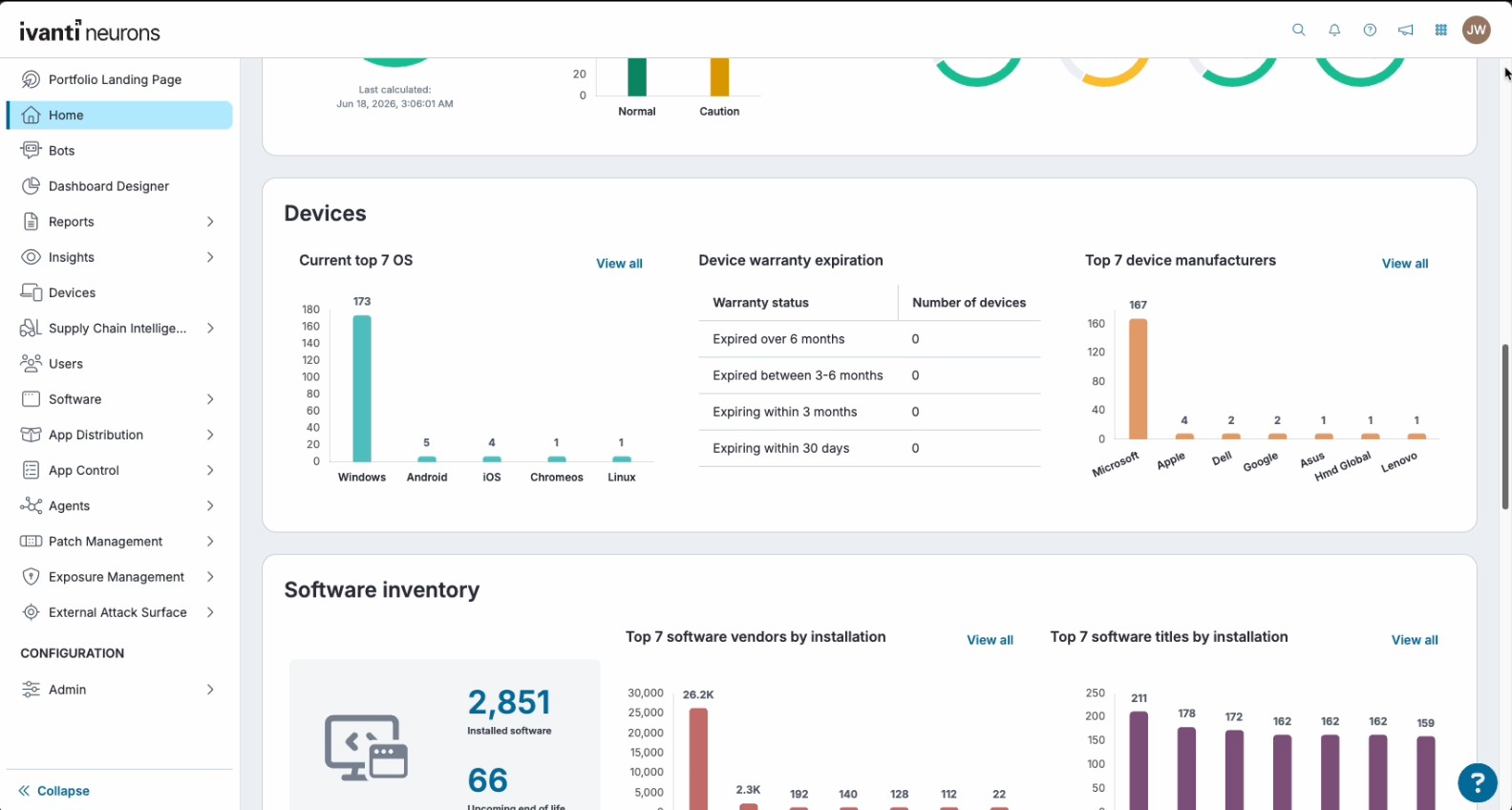
It's relatively straightforward as far as using it. We can create roles in it and have some of our junior engineers still do the patching. Also, creating rules and exclusions, once shown, can be done by most of our engineers. We also like the interface on the home page that shows the current progress of our patch deployments
TRM\TAM support has been generally very good. Getting reported bug fixes, design changes, UX problems resolved has been a pain. It is often difficult to get problems escalated beyond the TRM\TAM level. Support is fantastic when you can get it, getting it can often require more work than it should, and that is probably our biggest issue.
It is online based, after learning content you can take a test and if you don't pass you get two other chances to pass. Once you pass the test you can print out your certification or save it
I have only used Absolute Data and Device Security (DDS). It was recommended by my Dell sales rep. After reviewing the product info, and loading a demo, it became clear that this is what was needed to add to our existing security to protect us from information loss due to a data breach on our portable devices. I presented this solution to the appropriate departments, and they agreed that this was something well worth the investment.
We've evaluated a number of other MDM solutions before finally deciding on MobileIron as our choice. These included AirWatch, Good, Citrix and IBM. None came close to the cost price point offered by MobileIron providing the same solutions. The initial setup/configuration was provided for free and training classes were exceptional. Other vendors did not offer the same level of support provided by MobileIron.
The installation of MobileIron was for security compliance so we could containerize email on BYOD devices and also control who got email on company phones (to prevent hourly workers from working on emails after hours). MobileIron met this need nicely.
MobileIron allowed us to utilize device certificates to prevent unauthorized devices from joining wireless networks in our company.
MobileIron allows our sales staff to get emails on the road and many users rely on the functionality and ease of the phone for general mail communication.