Chose Aerospike
Aerospike is much more performant than MongoDB, however there is much greater community adoption and support for mongo

| Product | Rating | Most Used By | Product Summary | Starting Price |
|---|---|---|---|---|
 Aerospike | N/A | The Aerospike Real-time Data Platform aims to enable organizations to act instantly across billions of transactions while reducing server footprint up to 80%. The vendor states Aerospike multi-cloud platform powers real-time applications with predictable sub-millisecond performance up to petabyte scale with five-nines uptime with globally distributed, consistent data. Aerospike boasts customers such as Airtel, Experian, European Central Bank, Nielsen, PayPal, Snap, Verizon Media and Wayfair. | N/A | |
 CouchDB | N/A | Apache CouchDB is an HTTP + JSON document database with Map Reduce views and bi-directional replication. The Couch Replication Protocol is implemented in a variety of projects and products that span computing environments from globally distributed server-clusters, over mobile phones to web browsers. | N/A | |
 MongoDB | N/A | MongoDB is an open source document-oriented database system. It is part of the NoSQL family of database systems. Instead of storing data in tables as is done in a "classical" relational database, MongoDB stores structured data as JSON-like documents with dynamic schemas (MongoDB calls the format BSON), making the integration of data in certain types of applications easier and faster. | $0.10 million reads |
| Aerospike | Apache CouchDB | MongoDB | ||||||||||||||||||||||
|---|---|---|---|---|---|---|---|---|---|---|---|---|---|---|---|---|---|---|---|---|---|---|---|---|
| Editions & Modules | No answers on this topic | No answers on this topic |
| |||||||||||||||||||||
| Offerings |
| |||||||||||||||||||||||
| Entry-level Setup Fee | No setup fee | No setup fee | No setup fee | |||||||||||||||||||||
| Additional Details | — | — | Fully managed, global cloud database on AWS, Azure, and GCP | |||||||||||||||||||||
| More Pricing Information | ||||||||||||||||||||||||
| Aerospike | Apache CouchDB | MongoDB | |
|---|---|---|---|
| Considered Multiple Products |  Aerospike  Anson Abraham Data Lord Chose Aerospike |  CouchDB  LeVar Berry Chairman & CEO Chose Apache CouchDB  Sean Lang Developer Chose Apache CouchDB  Johanes Siregar Risk Insight Product Chose Apache CouchDB Compared to MongoDB, CouchDB's Map-Reduce paradigm poses a steeper learning curve for SQL users. However, CouchDB's master-master replication is an advantage of implementing a load-balanced solution. Even though, currently, CouchDB has strong community support, as an open …  Dave Lundberg CTO & Co-founder Chose Apache CouchDB It has been 5+ years since we chose CouchDB. We looked an MongoDB, Cassandra, and probably some others. At the end of the day, the performance, power potential, and simplicity of CouchDB made it a simple choice for our needs. No one should use just because we did. As I said … |  MongoDB  Ronald Melendez Desarrollador de software Chose MongoDB MongoDB is probably the most famous NoSQL database of the moment. it has become one of the most promising startups. Some companies that currently use MongoDB are Foursquare or eBay. This type of database is designed to perform queries and aggregations on large amounts of data. …  Jon Kern Manager Strategic Products Chose MongoDB I only briefly looked at CouchDB after I already began using MongoDB. Naturally, I have used many relational SQL databases. Since MongoDB did everything I needed, I saw no need to look around for alternatives.  Jeff Sherard Senior Leader Chose MongoDB MongoDB was the most full-featured NoSQL database we evaluated - that offered atomic transactions at a document level, built-in HA & DR, open source, robust queries, and enterprise level support. Other platforms had specific parts of what we were looking for - MongoDB had it all.  Arnold Daniels Freelance web developer Chose MongoDB  VenkataRamaRao Surapaneni Sr. SQL Server DBA / MySQL DBA / MongoDB DBA Chose MongoDB Cassandra, CouchDB were master less technology platforms. MongoDB single master per shard is well suited for many business models |
| Aerospike | Apache CouchDB | MongoDB | |||||||||||||||||||||||||||||||
|---|---|---|---|---|---|---|---|---|---|---|---|---|---|---|---|---|---|---|---|---|---|---|---|---|---|---|---|---|---|---|---|---|---|
| NoSQL Databases |
|
| Aerospike | Apache CouchDB | MongoDB | |
|---|---|---|---|
| Small Businesses |  IBM Cloudant Score 7.4 out of 10 | IBM Cloudant Score 7.4 out of 10 | IBM Cloudant Score 7.4 out of 10 |
| Medium-sized Companies | IBM Cloudant Score 7.4 out of 10 | IBM Cloudant Score 7.4 out of 10 | IBM Cloudant Score 7.4 out of 10 |
| Enterprises | IBM Cloudant Score 7.4 out of 10 | IBM Cloudant Score 7.4 out of 10 | IBM Cloudant Score 7.4 out of 10 |
| All Alternatives | View all alternatives | View all alternatives | View all alternatives |
| Aerospike | Apache CouchDB | MongoDB | |
|---|---|---|---|
| Likelihood to Recommend | 9.0 (4 ratings) | 9.0 (10 ratings) | 10.0 (79 ratings) |
| Likelihood to Renew | 8.0 (1 ratings) | 9.0 (9 ratings) | 10.0 (67 ratings) |
| Usability | 7.0 (3 ratings) | 8.0 (1 ratings) | 10.0 (15 ratings) |
| Availability | - (0 ratings) | - (0 ratings) | 9.0 (1 ratings) |
| Support Rating | 8.9 (2 ratings) | - (0 ratings) | 9.6 (13 ratings) |
| Implementation Rating | - (0 ratings) | 9.0 (1 ratings) | 8.4 (2 ratings) |
| Aerospike | Apache CouchDB | MongoDB | |
|---|---|---|---|
| Likelihood to Recommend | Aerospike Inc
 Savan Solanki Senior Software Engineer | Apache
| MongoDB
 Kendal Droddy Senior System Engineer |
| Pros | Aerospike Inc
| Apache
Sean Lang Developer | MongoDB
Ronald Melendez Desarrollador de software |
| Cons | Aerospike Inc
Anson Abraham Data Lord | Apache
Johanes Siregar Risk Insight Product | MongoDB
 Joshua Weaver Developer |
| Likelihood to Renew | Aerospike Inc
Anson Abraham Data Lord | Apache
 Josh Stapp Sr. Software Engineer | MongoDB
Jon Kern Manager Strategic Products |
| Usability | Aerospike Inc
| Apache
 victor pease solano General Manager | MongoDB
 Jose Manuel Ortega Software Engineer && Security researcher |
| Support Rating | Aerospike Inc
Savan Solanki Senior Software Engineer | Apache No answers on this topic | MongoDB
 Mehmet Fatih Onal Technical Architect |
| Implementation Rating | Aerospike Inc No answers on this topic | Apache
victor pease solano General Manager | MongoDB
 Tom Maiaroto Sr. Platform Developer / UX Designer / Optimization Engineer |
| Alternatives Considered | Aerospike Inc
| Apache
Dave Lundberg CTO & Co-founder | MongoDB
 Oleg Chumin Java Software Engineer |
| Return on Investment | Aerospike Inc
| Apache
LeVar Berry Chairman & CEO | MongoDB
Jeff Sherard Senior Leader |
| ScreenShots | MongoDB Screenshots     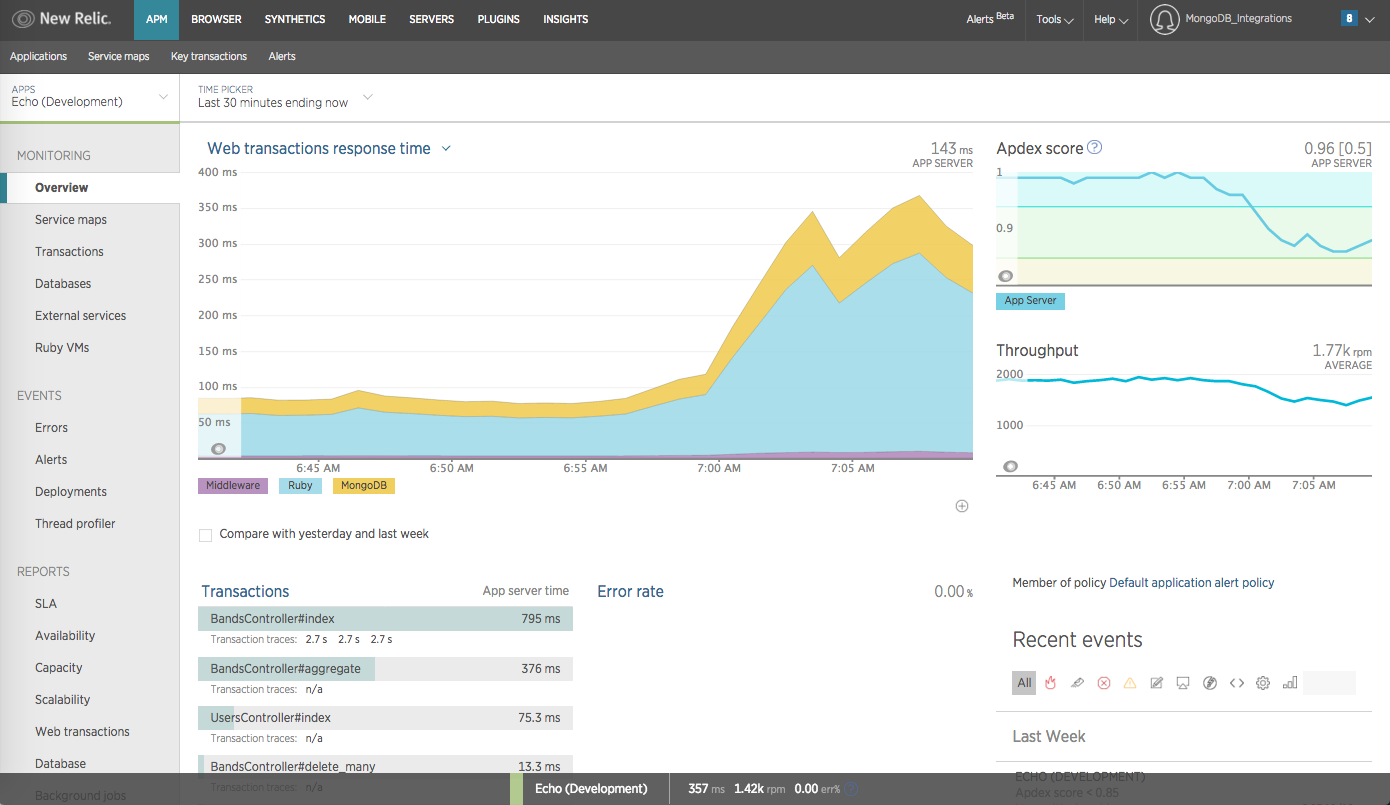 |