
Chose Drupal
Altis DXP vs. Drupal vs. Umbraco CMS
Altis DXP vs. Drupal vs. Umbraco CMS
| Product | Rating | Most Used By | Product Summary | Starting Price |
|---|---|---|---|---|
 Altis DXP | Enterprise companies (1,001+ employees) | Human Made headquartered in Matlock is a Wordpress development agency which now offers Altis, a digital experience platform designed to combine CMS and CX functionality. | N/A | |
 Drupal | N/A | Drupal is a free, open-source content management system written in PHP that competes primarily with Joomla and Plone. The standard release of Drupal, known as Drupal core, contains basic features such as account and menu management, RSS feeds, page layout customization, and system administration. | N/A | |
 Umbraco CMS | N/A | Umbraco is an open-source .NET Core CMS with over 700,000 active installs worldwide and with more than 200,000 active community members. It was first released on February 16th, 2005, and is still to this day an open-source project backed by a commercial company. To ensure Umbraco is always running the latest technology, the company has aligned with Microsoft's .NET release schedule to always have the Umbraco CMS… | $0 |
| Altis DXP | Drupal | Umbraco CMS | ||||||||||||||||||||||
|---|---|---|---|---|---|---|---|---|---|---|---|---|---|---|---|---|---|---|---|---|---|---|---|---|
| Editions & Modules | No answers on this topic | No answers on this topic |
| |||||||||||||||||||||
| Offerings |
| |||||||||||||||||||||||
| Entry-level Setup Fee | Optional | No setup fee | No setup fee | |||||||||||||||||||||
| Additional Details | — | — | The Umbraco CMS and all of its core features are the same across all plans. | |||||||||||||||||||||
| More Pricing Information | ||||||||||||||||||||||||
| Altis DXP | Drupal | Umbraco CMS | |
|---|---|---|---|
| Considered Multiple Products | Altis DXP No answer on this topic |  Drupal  Alex Lada Tech Director Chose Drupal |  Umbraco CMS Alex Lada Tech Director Chose Umbraco CMS Umbraco provides the best bang-for-the-buck CMS option on a .NET platform for those that cannot afford Sitecore. It is much friendlier to use than Ektron, is free to use, has commercial grade plugins that are not overly expensive, and provides the functionality that most …  Filip Witkowski Web Developer Chose Umbraco CMS There is not really an alternative when it comes to CMS based on ASP.Net (MVC4 with Razor). There are a few frameworks, like Booststrap; however framework is not content management system. I will compare it to Drupal, because the second one is well known. Against Drupal, … |
| Altis DXP | Drupal | Umbraco CMS | |||||||||||||||||||||||||||||||||||
|---|---|---|---|---|---|---|---|---|---|---|---|---|---|---|---|---|---|---|---|---|---|---|---|---|---|---|---|---|---|---|---|---|---|---|---|---|---|
| Security |
| ||||||||||||||||||||||||||||||||||||
| Platform & Infrastructure |
| ||||||||||||||||||||||||||||||||||||
| Web Content Creation |
| ||||||||||||||||||||||||||||||||||||
| Web Content Management |
|
| Altis DXP | Drupal | Umbraco CMS | |
|---|---|---|---|
| Small Businesses |  Bloomreach - The Agentic Platform for Personalization Score 8.9 out of 10 |  ManageWP Score 10.0 out of 10 | ManageWP Score 10.0 out of 10 |
| Medium-sized Companies |  RWS Tridion Sites Score 9.0 out of 10 | RWS Tridion Sites Score 9.0 out of 10 | RWS Tridion Sites Score 9.0 out of 10 |
| Enterprises | RWS Tridion Sites Score 9.0 out of 10 | RWS Tridion Sites Score 9.0 out of 10 | RWS Tridion Sites Score 9.0 out of 10 |
| All Alternatives | View all alternatives | View all alternatives | View all alternatives |
| Altis DXP | Drupal | Umbraco CMS | |
|---|---|---|---|
| Likelihood to Recommend | - (0 ratings) | 6.0 (84 ratings) | 6.0 (12 ratings) |
| Likelihood to Renew | - (0 ratings) | 1.0 (19 ratings) | - (0 ratings) |
| Usability | - (0 ratings) | 6.6 (18 ratings) | 8.0 (2 ratings) |
| Availability | - (0 ratings) | 9.7 (3 ratings) | 7.0 (1 ratings) |
| Performance | - (0 ratings) | 8.9 (2 ratings) | 3.0 (1 ratings) |
| Support Rating | - (0 ratings) | 1.0 (5 ratings) | 2.0 (1 ratings) |
| In-Person Training | - (0 ratings) | 8.0 (1 ratings) | - (0 ratings) |
| Online Training | - (0 ratings) | 6.0 (2 ratings) | 3.0 (1 ratings) |
| Implementation Rating | - (0 ratings) | 5.1 (4 ratings) | 7.0 (1 ratings) |
| Ease of integration | - (0 ratings) | 9.0 (1 ratings) | - (0 ratings) |
| Product Scalability | - (0 ratings) | 8.0 (2 ratings) | 4.0 (1 ratings) |
| Altis DXP | Drupal | Umbraco CMS | |
|---|---|---|---|
| Likelihood to Recommend | Human Made No answers on this topic | Open Source
 Paul Nielsen Volunteer Web Developer | Umbraco
 Debbie Marshall Operations Manager |
| Pros | Human Made No answers on this topic | Open Source
| Umbraco
Filip Witkowski Web Developer |
| Cons | Human Made No answers on this topic | Open Source
| Umbraco
 Jason Kelly Data Manager |
| Likelihood to Renew | Human Made No answers on this topic | Open Source
 Eric Batson Learning and Development Specialist | Umbraco No answers on this topic |
| Usability | Human Made No answers on this topic | Open Source
| Umbraco
|
| Reliability and Availability | Human Made No answers on this topic | Open Source
 Peter Wolanin Principal Engineer | Umbraco
 Matthew Hardesty Founder |
| Performance | Human Made No answers on this topic | Open Source
 Michael Sypes Programmer Analyst | Umbraco
Matthew Hardesty Founder |
| Support Rating | Human Made No answers on this topic | Open Source
Michael Sypes Programmer Analyst | Umbraco
Matthew Hardesty Founder |
| In-Person Training | Human Made No answers on this topic | Open Source
Eric Batson Learning and Development Specialist | Umbraco No answers on this topic |
| Online Training | Human Made No answers on this topic | Open Source
Eric Batson Learning and Development Specialist | Umbraco
Matthew Hardesty Founder |
| Implementation Rating | Human Made No answers on this topic | Open Source
Michael Sypes Programmer Analyst | Umbraco
Matthew Hardesty Founder |
| Alternatives Considered | Human Made No answers on this topic | Open Source
 Dustin Day Director of UX development, social media and SEO/SEM | Umbraco |
| Scalability | Human Made No answers on this topic | Open Source
Michael Sypes Programmer Analyst | Umbraco
Matthew Hardesty Founder |
| Return on Investment | Human Made No answers on this topic | Open Source
 Sohail Lajevardi Drupal Front-end Engineer | Umbraco
Debbie Marshall Operations Manager |
| ScreenShots | Umbraco CMS Screenshots    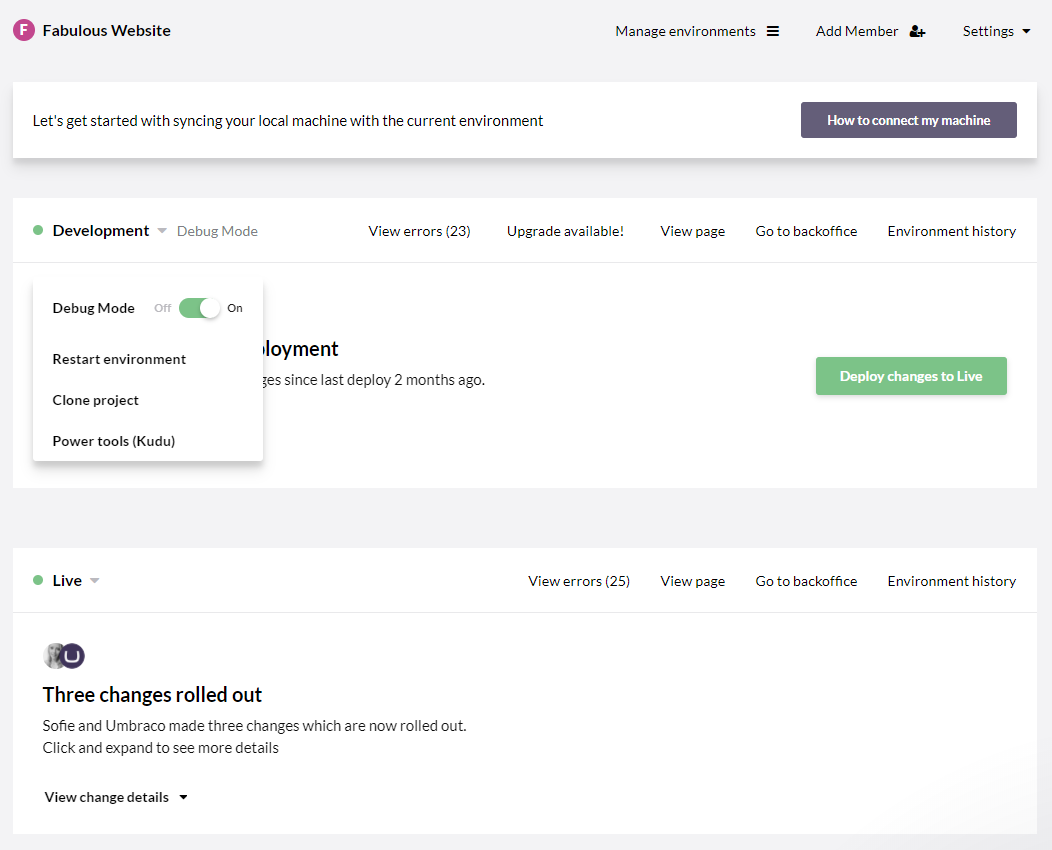 |