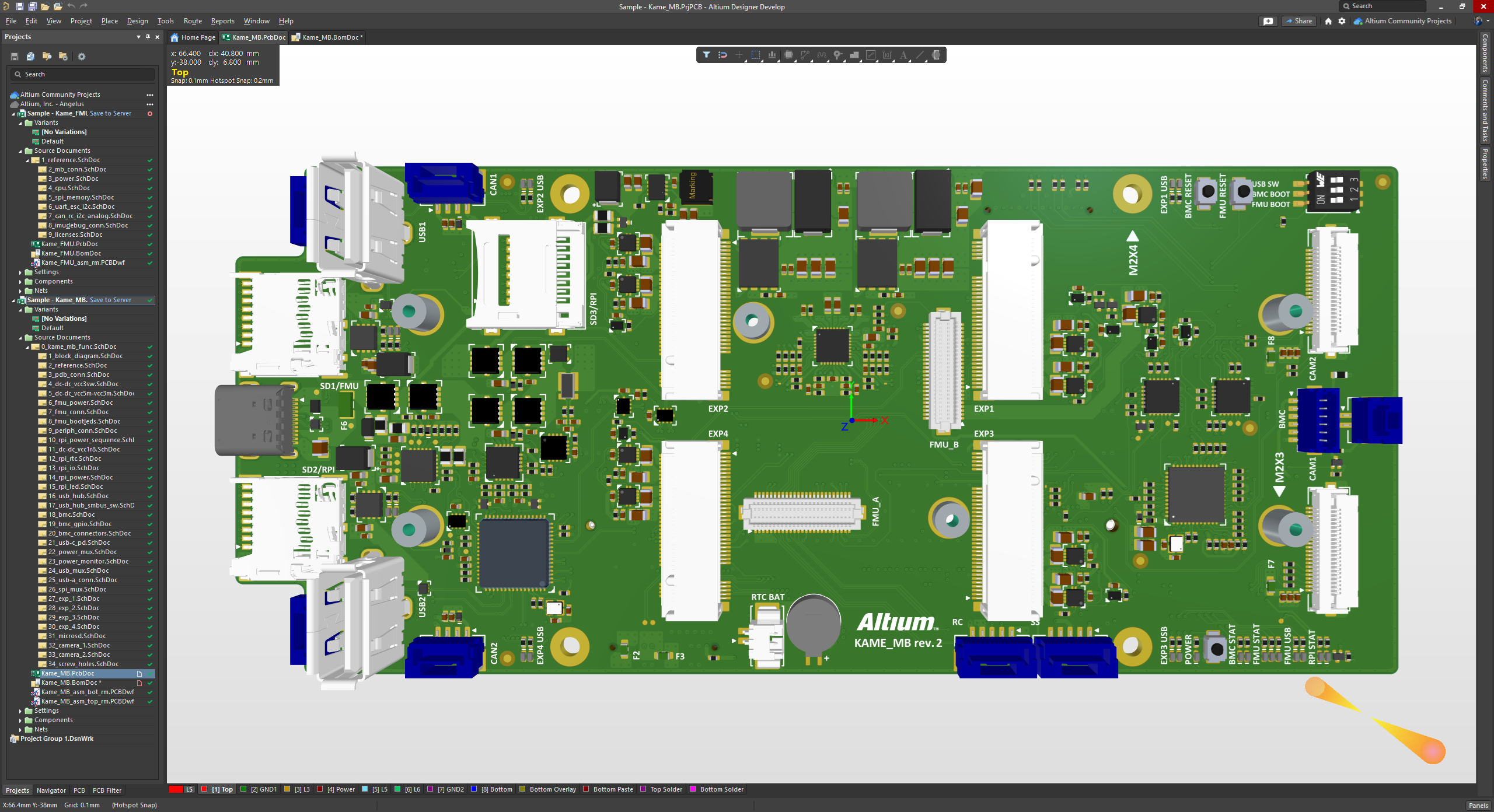
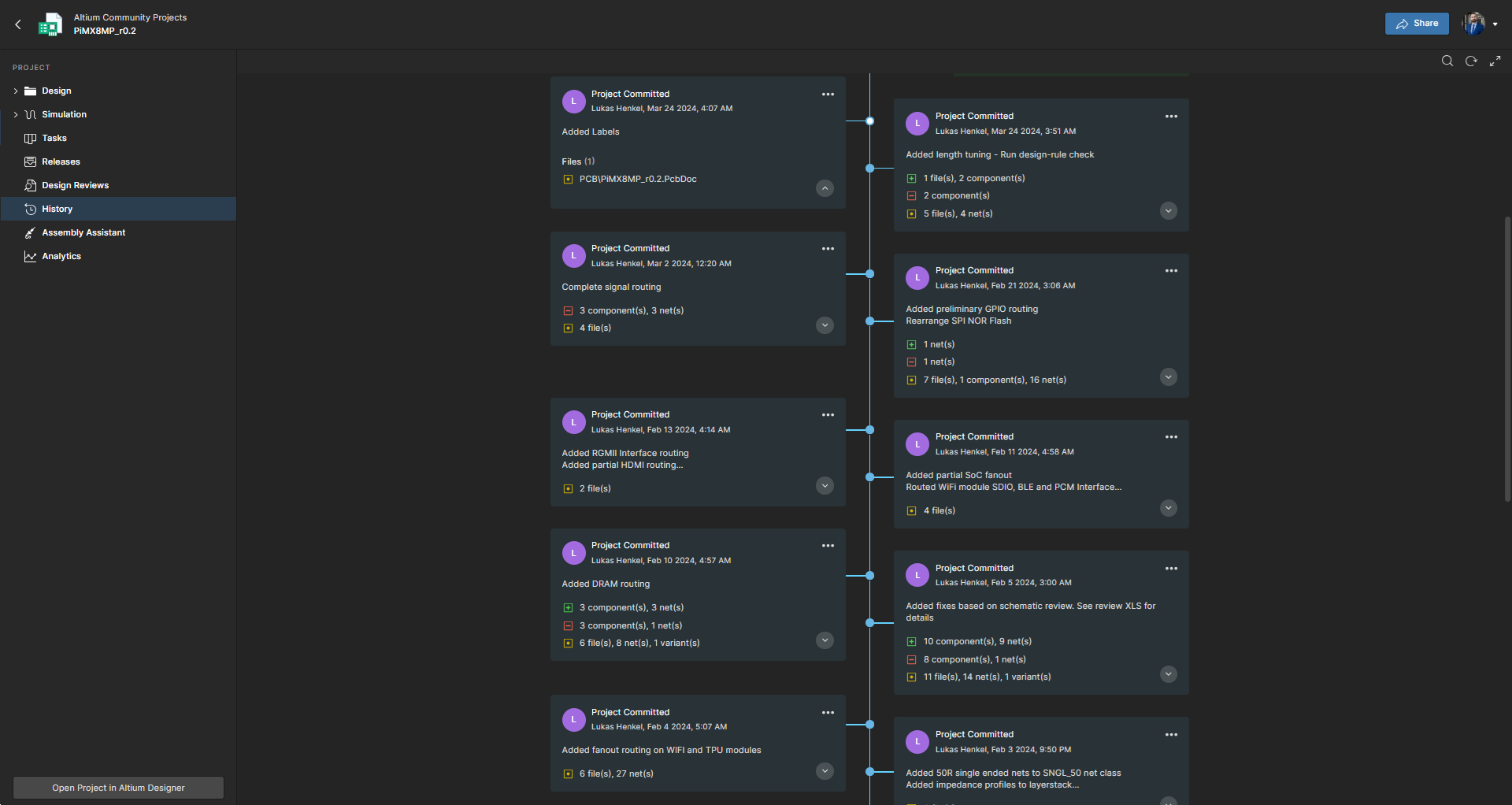
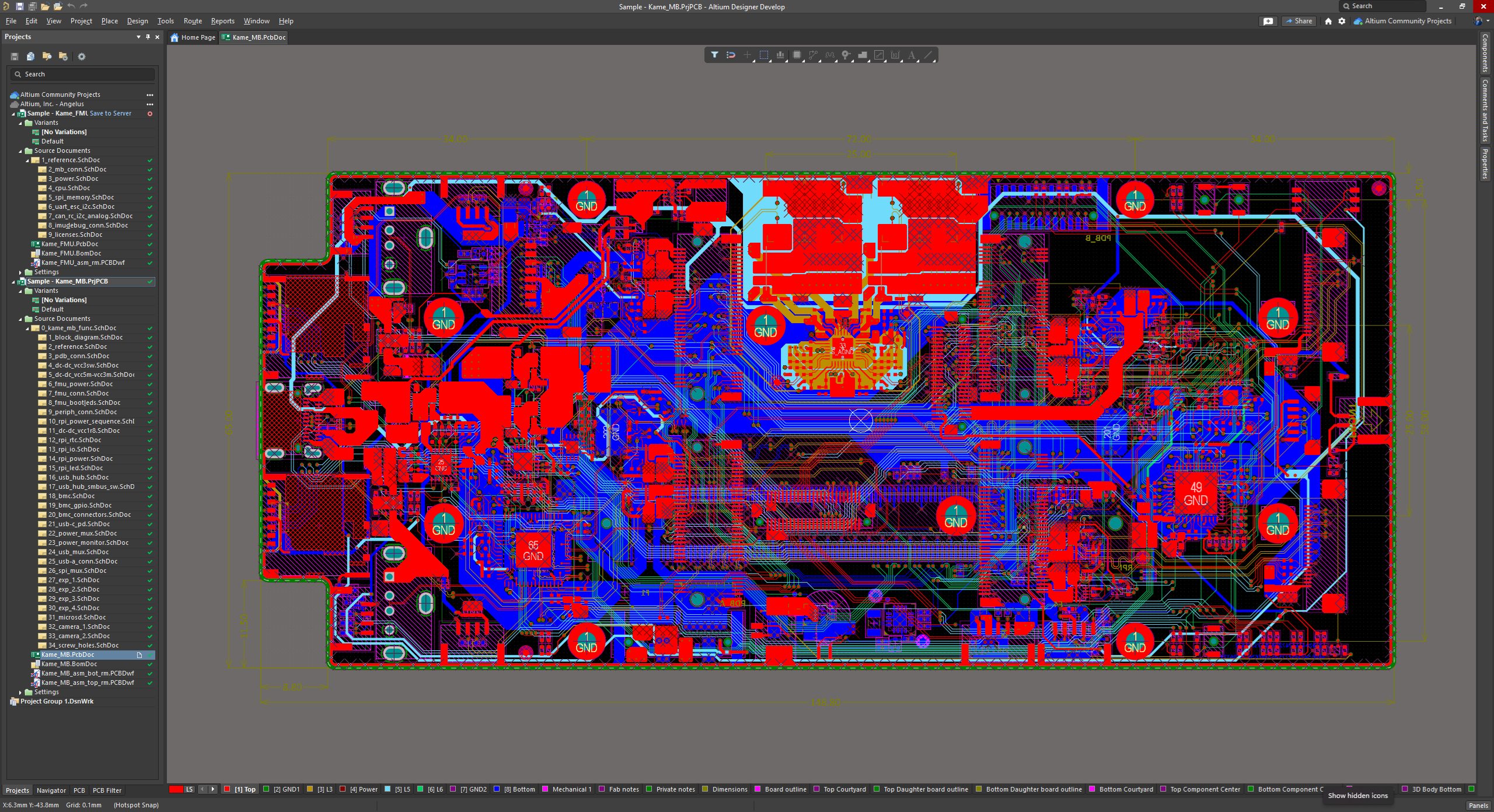
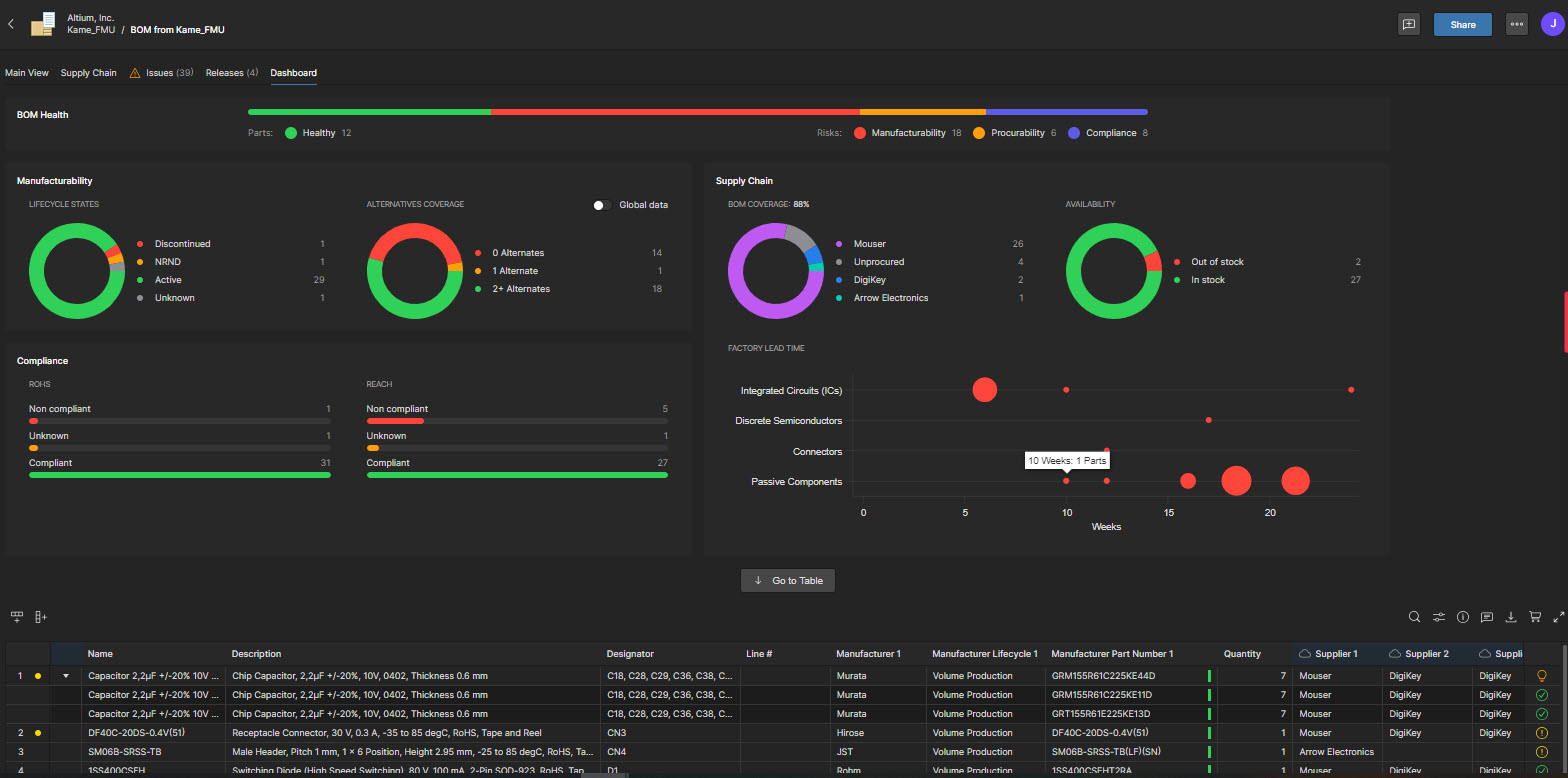
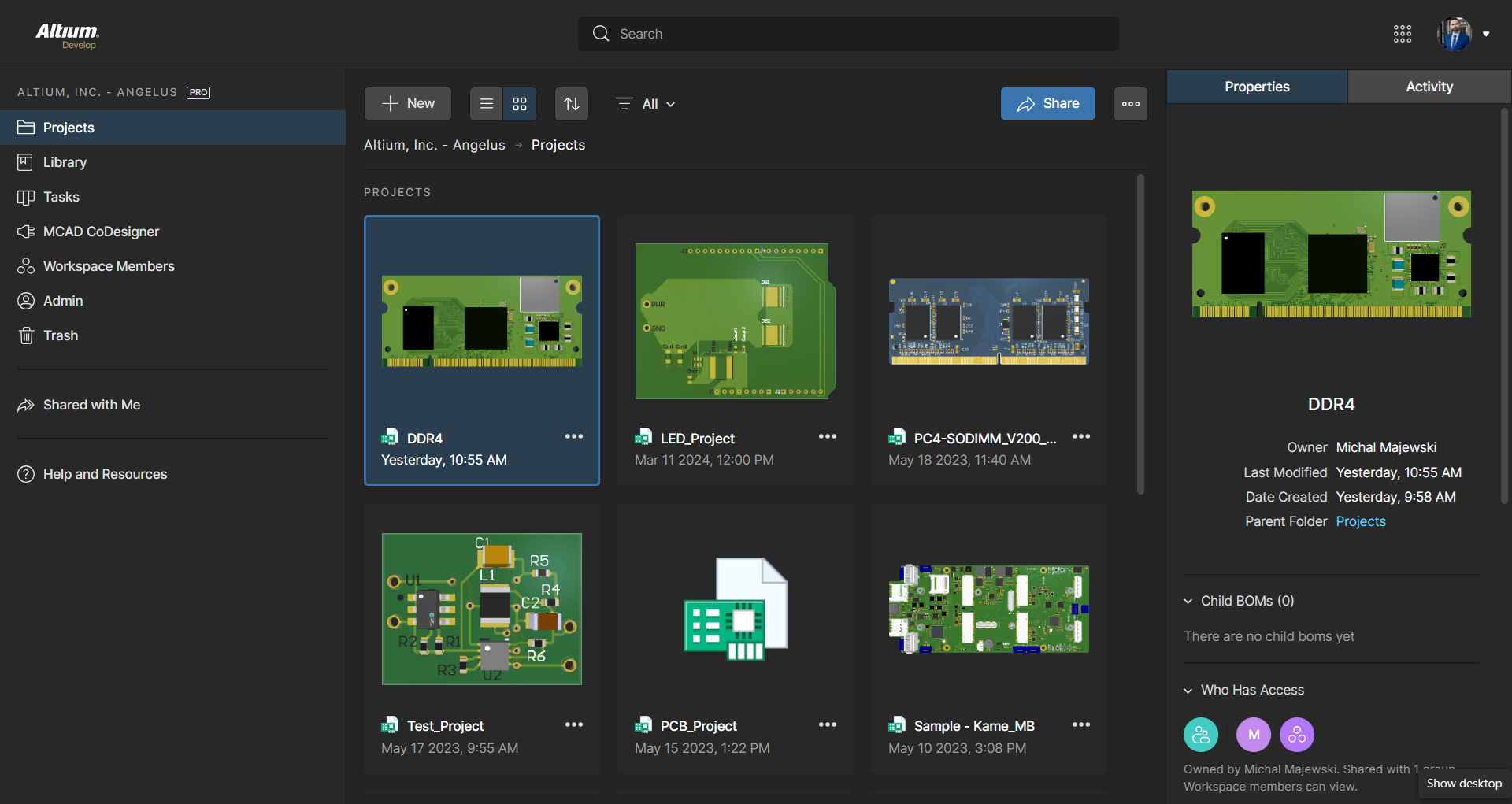
Altium Develop is a platform that unifies multidisciplinary teams across engineering, sourcing, and manufacturing to support seamless co-creation. It provides real-time visibility into designs, requirements, and supply chain data, enabling contributors to work together concurrently rather than in silos.
$995
per year per seat
Enovia
Score 7.0 out of 10
N/A
Dassault Systèmes S.A. is a French company and a world leader in the production of 3D design software, 3D digital mock-up and product lifecycle management (PLM) solutions.
$15
per month
Solid Edge
Score 8.2 out of 10
N/A
Solid Edge is a software solutions for product development — 3D design, simulation, manufacturing, data management, and cloud collaboration. Solid Edge aims to combine the speed and simplicity of direct modeling with the flexibility and control of parametric design.
It's the most approachable "professional" package for small to medium-sized businesses, given the price point. It's fairly mature feature-wise and has improved stability enough over the last 5 years that it no longer constantly crashes. But it feels like there's a push to constantly increase prices until it's no longer an obvious choice. That, coupled with the insistence on subscription models and the terrible user experience when on poorly connected mobile data plans, means it's still my CAD package of choice, but I'm now a reluctant user rather than a fan.
Very well suited for direct integration with CAD packages (Solidworks/ Auto desk Inventor or AutoCAD) and version control of CAD Model/Assemblies and Drawing files) and creating parts and document objects directly into Enovia and controlling their lifecycle from CAD Interface. Similarly, Enovia's Engineering central is already equipped with Industry standard ECR/ECO process which needs little customization for implementing Engineering Change management process. The hardest part in Enovia is controlling the disposition of released material for the downstream process in other ERP systems. For example, if a released material has gone for production or purchasing in ERP system/MRP system then dispositioning that material with Major revision (which may need manufacturing to stop the production due to faulty design) have no direct control to stop the downstream activities. Most cases its manual process to communicate with ERP team to for taking action. Similarly, revision of Documents (material Spec for example) linked to thousands of parts required special process (some time needs to schedule in the weekend).
It has very good user interface in classic or ordered environment.
In 2D or drafting, you can give any Geometric tolerancing and symbols to any dimension. There is a wide range of options available.
You can convert any files in step file (.stp) and can open it in other designing applications easily.
After converting 3D drawings in 2D you can make changes in 2D drawing by converting it in the draft. You can also add details like cross-sections and detailed view.
You can directly make threads without creating holes.
It is difficult to create new components while reusing existing footprints/symbols. For example, reuse a 1206 package footprint, create a variant for resistors with an appropriate 3D model, and then a variant for capacitors with an appropriate 3D model.
The software's overall responsiveness seems slow, and it does not update properly in all instances. For example, clicking a component in the schematic will not always show its properties; it usually shows the properties of the last selected component. Clicking the blank space in the schematic first, then selecting the component, seems to load some of the correct data. But the 3D model in the properties view would still show the last EDITED part.
Saving components to the server would not always register correctly, requiring the component editor to be closed 'without saving' to close the part out, even though no changes were made since the last save to the server.
It is unclear where a list of footprints/symbols can be managed. For example, deleting a deprecated footprint so that it does not appear as a valid option in the future.
BOM part choice data has an NRFND component selected as in use, causing the status to be yellow. There is no apparent way to select a different manufacturer part as the 'in use' part to resolve the warning.
Updating from the library does not pull the most up-to-date symbol/footprint data for a given component. So far, there does not appear to be a way to do this, even though the component itself has been updated to use the correct references. This may be related to the general delays and consistency/reliability issues with the online link.
When a part/assembly has been released in Enovia and gone for production or downstream processing, Enovia doesn't have much control, hence, Enovia should come up with an easy controlling mechanism for various disposition of parts and seamless communication with an ERP or downstream process.
If a document is linked to thousands of materials then revising this document takes long time gets floated to the BOMs where the previous document versions are used. So, Enovia should have an efficient way to replace the floating process or another efficient mechanism for document revision processing.
Being used to 2-key and 3-key commands from the keyboard, it would be nice if this was more robust in Solid Edge. The capability of programming keystroke commands exists in Solid Edge, but it would be more user friendly in that regard.
Editing hatches can be a challenge.
I'm not a fan of the ribbon bar, but that seems to be a feature across software platforms in Windows.
ALTIUM DESIGNER is the reference tool in the electronic circuit design sector, its use is widespread worldwide. Although there are other alternatives, some of them free do not rival ALTIUM DESIGNER in terms of features and reliability. It is also very practical to request quotes with ALTIUM DESIGNER BOM reports since all suppliers are accustomed to using the tool.
I originally chose Altium Develop for its superior usability. All operations being handled in one cohesive platform greatly improves efficiency. When handling many different designs, project setup and component creation eat into every project's productivity. Templates, defaults and design reuse all speed up design. I hold back from a higher rating because development focus on those usability features seems to have stagnated a bit. Simple missing features requested seem to remain missing. New collaboration features, simulation and sourcing features are released, but I just want to be able to draw dashed lines! I think this reflects a general focus on the 10% of datacenter/AI/smartphone customers over the 90% of 2-4 layer designs. The lack of information available during the platform transition gave me significant pause before buying in as well.
As mentioned previously, Siemens Solid Edge is not the most user-friendly of products at all. It requires intense training to make sure that the basics are understood, and after that, there are numerous other training interventions needed to be able to perform expert-level CAD functions. The GUI is not intuitive, as many other packages are, and the features built-in are not well defined. The process to use many of these features is counter-intuitive and requires a mind-shift.
I have been involved with support and training of Solid Edge for 24 years. Given that I based my business model on support, and have been successful for all these years, I know excellent support. Siemens support for Solid Edge, "GTAC", is the definition of support for a product in every aspect.
In terms of collaborative work, Altium 365 is the easiest to use since KiCad nor OrCAD have sophisticated infrastructure for team members to interact with each other. By allowing features such as organizations and version control, Altium 365 is by far the best product for collaborative work. Additionally, electronics parts management and creation is better in Altium 365 than the other products. Actions such as importing schematic libraries, creating bills of materials, and conducting simulations are simply better in Altium 365.
FreeCAD is often better than Solid Edge 2021 when converting files, but I hope this changes with 2023 NX is overall more powerful, but that is to be expected (and you cant add it above because it is too short for whatever reason).
Easy learning curve for the users- Very user-friendly Interface for Engineering central make the users happy and easy to learn the BOM creation and Engineering change management process.
Time-saving - Seamless Creation and revision process of objects saves a huge amount of time compared to other systems.
Easy to copy existing business data and modify them as required.
It took about 20 hours of use to get the basics of Synchronous Technology, and with just a basic competency I was able to make useful changes to the design. One of those changes was impossible to do our other CAD program.
My use lately has mostly been on personal time and self-driven, so learning other aspects and features of Solid Edge has been slower. Creating a drawing for a part required a few hours to learn and do the first time, but luckily there were YouTube videos for examples. With practice, I would expect the time to reflect what it takes in SolidWorks (about 30 minutes).