
PRABHAT MISHRA
Senior Devops Engineer
Chose Apache Airflow
Airflow was best suited in my use case for designing the ETL pipelines in a scripted manner for workflows & the UI was very good & easy to use.

| Product | Rating | Most Used By | Product Summary | Starting Price |
|---|---|---|---|---|
 Apache Airflow | N/A | Apache Airflow is an open source tool that can be used to programmatically author, schedule and monitor data pipelines using Python and SQL. | N/A | |
 AWS Batch | N/A | With AWS Batch, users package the code for batch jobs, specify dependencies, and submit batch jobs using the AWS Management Console, CLIs, or SDKs. AWS Batch allows users to specify execution parameters and job dependencies, and facilitates integration with a broad range of popular batch computing workflow engines and languages (e.g., Pegasus WMS, Luigi, Nextflow, Metaflow, Apache Airflow, and AWS Step Functions). | N/A | |
 JAMS | N/A | JAMS is a centralized workload automation and job scheduling solution that runs, monitors, and manages jobs and workflows. Reliably orchestrate the critical IT processes that run your business from a single pane of glass. | $9,996 per year |
| Apache Airflow | AWS Batch | JAMS | ||||||||||||||||||||||
|---|---|---|---|---|---|---|---|---|---|---|---|---|---|---|---|---|---|---|---|---|---|---|---|---|
| Editions & Modules | No answers on this topic | No answers on this topic |
| |||||||||||||||||||||
| Offerings |
| |||||||||||||||||||||||
| Entry-level Setup Fee | No setup fee | No setup fee | No setup fee | |||||||||||||||||||||
| Additional Details | — | — | - Core: For small teams getting started with automation. Core Integrations: PowerShell, SQL, Azure Data Factory, Python, 20+ others. - Advanced: Comprehensive solution for large-scale operations. Core Integrations: SAP, JDE, Ellucian Banner, Informatica, Mainframe and Power Systems. | |||||||||||||||||||||
| More Pricing Information | ||||||||||||||||||||||||
| Apache Airflow | AWS Batch | JAMS | |
|---|---|---|---|
| Considered Multiple Products | Apache Airflow PRABHAT MISHRA Senior Devops Engineer Chose Apache Airflow Airflow was best suited in my use case for designing the ETL pipelines in a scripted manner for workflows & the UI was very good & easy to use. |  AWS Batch No answer on this topic | JAMS No answer on this topic |
| Apache Airflow | AWS Batch | JAMS | |||||||||||||||||||||||||||
|---|---|---|---|---|---|---|---|---|---|---|---|---|---|---|---|---|---|---|---|---|---|---|---|---|---|---|---|---|---|
| Workload Automation |
|
| Apache Airflow | AWS Batch | JAMS | |
|---|---|---|---|
| Small Businesses | No answers on this topic | No answers on this topic | No answers on this topic |
| Medium-sized Companies |  ActiveBatch Workload Automation Score 7.5 out of 10 | Apache Airflow Score 8.7 out of 10 | Apache Airflow Score 8.7 out of 10 |
| Enterprises |  Redwood RunMyJobs Score 9.6 out of 10 | Redwood RunMyJobs Score 9.6 out of 10 | Redwood RunMyJobs Score 9.6 out of 10 |
| All Alternatives | View all alternatives | View all alternatives | View all alternatives |
| Apache Airflow | AWS Batch | JAMS | |
|---|---|---|---|
| Likelihood to Recommend | 8.8 (12 ratings) | 5.0 (7 ratings) | 8.3 (56 ratings) |
| Likelihood to Renew | - (0 ratings) | - (0 ratings) | 9.0 (10 ratings) |
| Usability | 8.2 (3 ratings) | 8.0 (1 ratings) | 8.6 (9 ratings) |
| Availability | - (0 ratings) | - (0 ratings) | 9.0 (5 ratings) |
| Performance | - (0 ratings) | - (0 ratings) | 9.0 (5 ratings) |
| Support Rating | - (0 ratings) | - (0 ratings) | 8.7 (55 ratings) |
| In-Person Training | - (0 ratings) | - (0 ratings) | 7.3 (1 ratings) |
| Implementation Rating | - (0 ratings) | - (0 ratings) | 8.2 (8 ratings) |
| Configurability | - (0 ratings) | - (0 ratings) | 8.1 (4 ratings) |
| Contract Terms and Pricing Model | - (0 ratings) | - (0 ratings) | 6.4 (2 ratings) |
| Ease of integration | - (0 ratings) | - (0 ratings) | 9.0 (3 ratings) |
| Product Scalability | - (0 ratings) | - (0 ratings) | 8.2 (54 ratings) |
| Professional Services | - (0 ratings) | - (0 ratings) | 9.0 (3 ratings) |
| Vendor post-sale | - (0 ratings) | - (0 ratings) | 9.0 (4 ratings) |
| Vendor pre-sale | - (0 ratings) | - (0 ratings) | 9.0 (4 ratings) |
| Apache Airflow | AWS Batch | JAMS | |
|---|---|---|---|
| Likelihood to Recommend | Apache
 Raghwendra Singh SDE 4 | Amazon AWS
| JAMS Software
|
| Pros | Apache
Raghwendra Singh SDE 4 | Amazon AWS
 Madhav Pujara Software Enginner | JAMS Software
|
| Cons | Apache
| Amazon AWS
| JAMS Software
|
| Likelihood to Renew | Apache No answers on this topic | Amazon AWS No answers on this topic | JAMS Software
|
| Usability | Apache
| Amazon AWS
Madhav Pujara Software Enginner | JAMS Software
 Jayvie Britanico Technical Support Engineer |
| Reliability and Availability | Apache No answers on this topic | Amazon AWS No answers on this topic | JAMS Software
Jayvie Britanico Technical Support Engineer |
| Performance | Apache No answers on this topic | Amazon AWS No answers on this topic | JAMS Software
Jayvie Britanico Technical Support Engineer |
| Support Rating | Apache No answers on this topic | Amazon AWS No answers on this topic | JAMS Software
|
| In-Person Training | Apache No answers on this topic | Amazon AWS No answers on this topic | JAMS Software
|
| Implementation Rating | Apache No answers on this topic | Amazon AWS No answers on this topic | JAMS Software
|
| Alternatives Considered | Apache
| Amazon AWS
PRABHAT MISHRA Senior Devops Engineer | JAMS Software
 Jeff Ewing Server Specialist |
| Contract Terms and Pricing Model | Apache No answers on this topic | Amazon AWS No answers on this topic | JAMS Software
|
| Scalability | Apache No answers on this topic | Amazon AWS No answers on this topic | JAMS Software
|
| Professional Services | Apache No answers on this topic | Amazon AWS No answers on this topic | JAMS Software
|
| Return on Investment | Apache
 Alok Pabalkar Co-Founder & CTO | Amazon AWS
| JAMS Software
|
| ScreenShots | JAMS Screenshots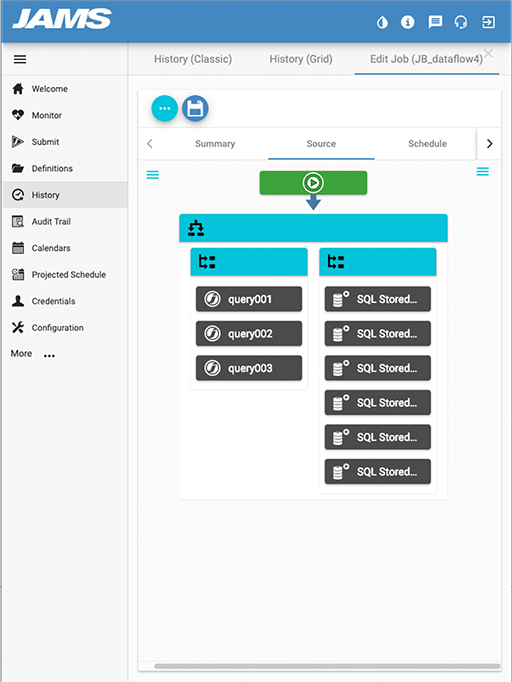     |