
Apica vs. Geckoboard
| Product | Rating | Most Used By | Product Summary | Starting Price |
|---|---|---|---|---|
 Apica | Score7 out of 10 | N/A | Apica is an observability cost optimization provider helping IT teams gain complete control over their telemetry data economics. Apica Ascent processes all observability data types including metrics, logs, traces, and events while optimizing observability costs. | N/A |
 Geckoboard | Score9 out of 10 | Mid-Size Companies (51-1,000 employees) | Geckoboard enables users to create real time dashboards using data from over 80 cloud services. It integrates with other products such as: AWeber, Basecamp, Campaign Monitor and HubSpot. | $35 per month |
| Apica | Geckoboard | |||||||||||||||
|---|---|---|---|---|---|---|---|---|---|---|---|---|---|---|---|---|
| Editions & Modules | No answers on this topic |
| ||||||||||||||
| Offerings |
| |||||||||||||||
| Entry-level Setup Fee | No setup fee | No setup fee | ||||||||||||||
| Additional Details | — | — | ||||||||||||||
| More Pricing Information | ||||||||||||||||
| Apica | Geckoboard | |
|---|---|---|
| Considered Both Products | No answer on this topic | No answer on this topic |
| Key User Insights | ||
| Would buy again | ||
91% Would buy again 10 Answers | No answers on this topic | |
| Delivers good value for the price | ||
100% Delivers good value for the price 10 Answers | No answers on this topic | |
| Happy with the feature set | ||
91% Happy with the feature set 10 Answers | No answers on this topic | |
| Lived up to sales and marketing promises | ||
100% Lived up to sales and marketing promises 7 Answers | No answers on this topic | |
| Implementation went as expected | ||
88% Implementation went as expected 7 Answers | No answers on this topic | |
| Apica | Geckoboard | ||||||||||||||||||||||
|---|---|---|---|---|---|---|---|---|---|---|---|---|---|---|---|---|---|---|---|---|---|---|---|
| BI Standard Reporting |
| ||||||||||||||||||||||
| Ad-hoc Reporting |
| ||||||||||||||||||||||
| Report Output and Scheduling |
| ||||||||||||||||||||||
| Data Discovery and Visualization |
| ||||||||||||||||||||||
| Access Control and Security |
| ||||||||||||||||||||||
| Mobile Capabilities |
| ||||||||||||||||||||||
| Application Program Interfaces (APIs) / Embedding |
| ||||||||||||||||||||||
| Apica | Geckoboard | |
|---|---|---|
| Small Businesses | No answers on this topic |  Cyfe Score4 out of 10 |
| Medium-sized Companies |  Logz.io Score8.3 out of 10 |  Qlik Cloud Analytics (Qlik Sense) Score8.1 out of 10 |
| Enterprises |  NetBrain Technologies Score8.8 out of 10 |  Sisense Score6.9 out of 10 |
| All Alternatives | View all alternatives | View all alternatives |
| Apica | Geckoboard | |
|---|---|---|
| Likelihood to Recommend | 8.2 | 9.0 |
| Likelihood to Renew | 8.0 | 8.0 |
| Usability | 9.1 | 9.0 |
| Availability | 9.1 | - |
| Performance | 9.1 | - |
| Support Rating | 9.1 | 8.0 |
| In-Person Training | 8.2 | - |
| Online Training | 8.2 | - |
| Implementation Rating | 9.1 | - |
| Data Sharing and Collaboration | - | 8.0 |
| Data Sources | - | 9.0 |
| Ease of integration | 9.1 | - |
| Product Scalability | 9.1 | - |
| Vendor post-sale | 9.1 | - |
| Vendor pre-sale | 9.1 | - |
| Apica | Geckoboard | |
|---|---|---|
| Likelihood to Recommend |
|
|
| Pros |
|
|
| Cons |
|
|
| Likelihood to Renew |
|
|
| Usability |
|
|
| Support Rating |
|
|
| Implementation Rating |
| No answers on this topic |
| Alternatives Considered |
|
|
| Return on Investment |
|
|
| ScreenShots | Geckoboard Screenshots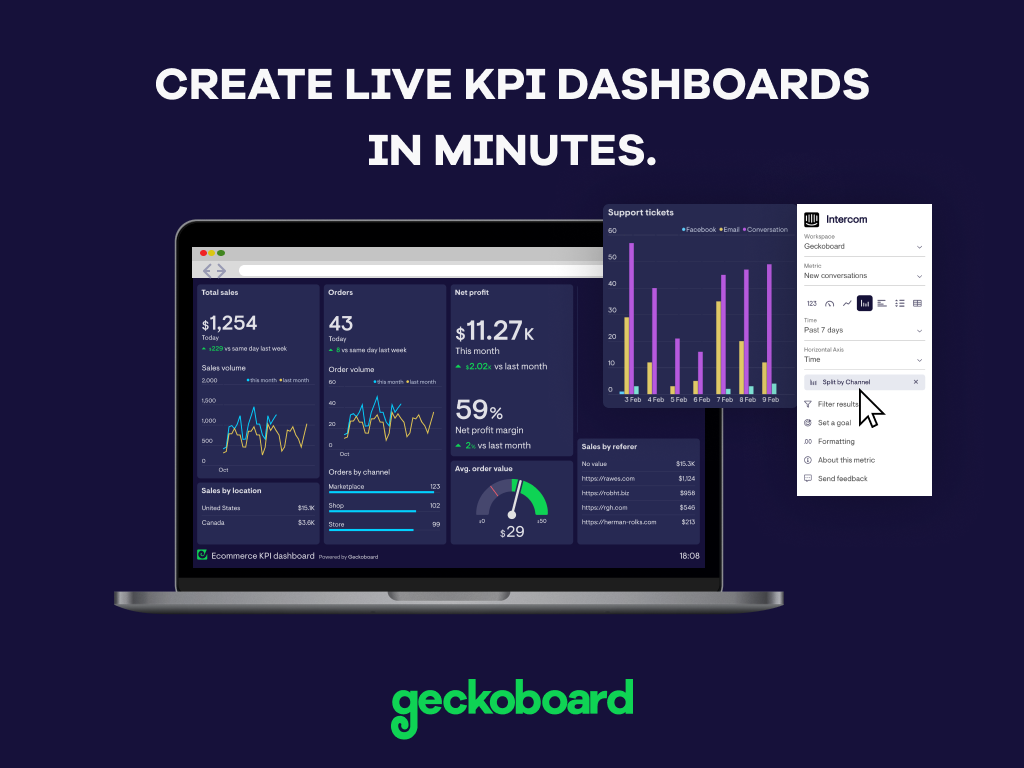     |



