Apify is a full-stack web scraping and automation platform that helps anyone get value from the web. At its core is Apify Store, a marketplace where developers build, publish, and monetize automation tools called Actors. Actors are serverless cloud programs that extract data, automate web tasks, and run AI agents. Developers build them using JavaScript, Python, or tools like Crawlee, Apify's open-source web scraping library. Build an Actor once, publish it to Store, and…
$29
per month
Anypoint Platform
Score 7.9 out of 10
N/A
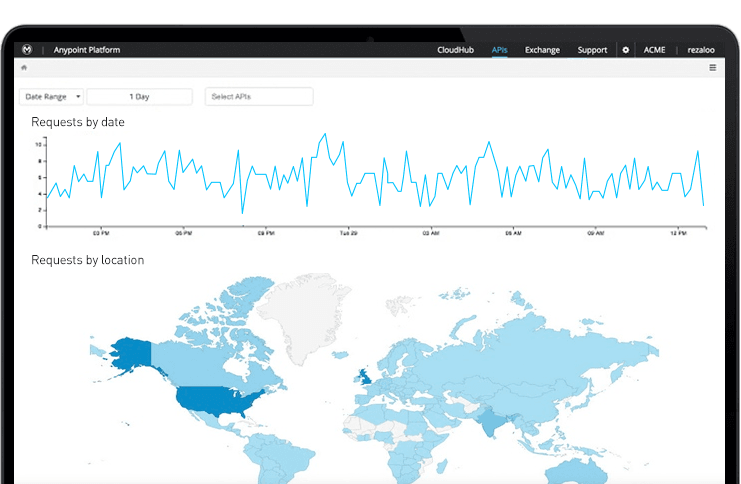
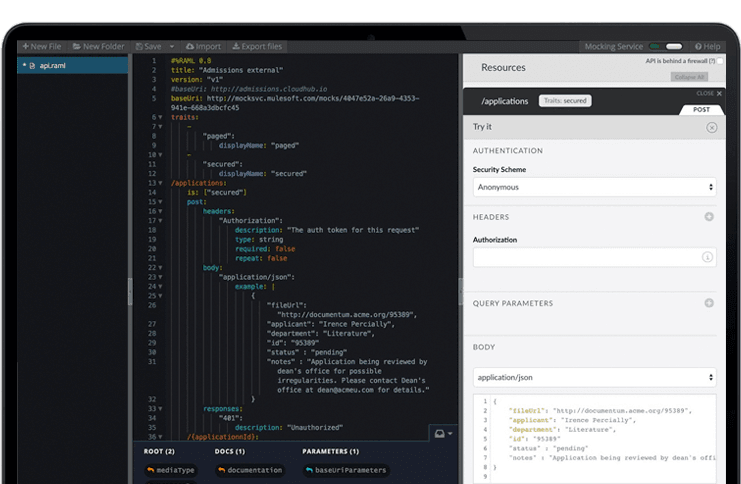
The Anypoint Platform developed by MuleSoft and acquired by Salesforce in early 2018 is designed to
connect apps, data, and devices anywhere, on-premises or in the cloud. This platform was built to
offer out-of-the-box connectors as well as tools that architects and developers can adopt quickly to
design, build and manage the entire lifecycle of their APIs, applications, and products.
N/A
SSIS
Score 7.6 out of 10
N/A
Microsoft's SQL Server Integration Services (SSIS) is a data integration solution.
N/A
Pricing
Apify
MuleSoft Anypoint Platform
SQL Server Integration Services (SSIS)
Editions & Modules
Starter Plan
$29
per month
Scale Plan
$199
per month
Business Plan
$999
per month
Apify for Enterprise
Custom
Fully-customized web scraping and automation solution for any scale.
No answers on this topic
No answers on this topic
Offerings
Pricing Offerings
Apify
Anypoint Platform
SSIS
Free Trial
No
Yes
No
Free/Freemium Version
Yes
Yes
No
Premium Consulting/Integration Services
Yes
No
No
Entry-level Setup Fee
Optional
No setup fee
No setup fee
Additional Details
The lowest-priced plan that has all the features needed and is recommended as a starting point. If users exceed the platform usage credits for a plan, a notification is sent, and the excess usage will be added to the next invoice or the user can upgrade to a higher plan.
Fivetran, Stitch, and Etleap are all 1000x more modern than SSIS and 100x less aggravating. While those tools are mainly used to sync data rather than transform it, the ELT model works much better than the ETL model in most situations.
I used other platforms such as n8n and make.com, and Apify seems more reliable because it is built for real developers. It gives much more independence than other platforms. Maybe in terms of storage and processing speed needs to be improvement for AI-generated content.
MuleSoft Anypoint Platform is best tool in the market for developing APIs with complex structures communicating with various different types of applications including web applications as well as legacy applications. Also applications including database connectivity for fetching and updating data in the DB tables. I cant think of any scenario which MuleSoft Anypoint Platform could not be used for developing the integrations.
As I mentioned earlier SQL Server Integration Services is suitable if you want to manage data from different applications. It really helps in fetching the data and generating reports. Its automation make it very easy and time efficient. It works well with large database as well. But it doesn't work well with real time data, it will take some time to gather the real time data. I would not recommend using it in a real time/fast-paced environment.
I love how intuitive the interface is. Even without deep coding knowledge, I can set up workflows quickly. The ready‑made actors are extremely helpful and cover most of my use cases.
Apify makes it incredibly easy to automate repetitive web tasks. The platform is stable, the actors run smoothly, and the logs give me full visibility into every step.
Apify offers impressive flexibility — from custom actors to API integrations and scheduling options. It scales well even with large workloads, and the performance has been consistent.
Some actors are very expensive and offer limited value - $120 / month before event charges? That's insane. The monthly price also isn't listed in the main search screen, so you need to go in manually to each actor to ascertain how much it really costs
Some actors often break after a while and you need to start searching for new ones... but I guess that's the price for relying on 3rd party actors in your marketplace
The review/quality process isn't great to navigate when looking for a new tool.
Has more features than what we really need so we're paying for more than we use. Sort of like paying for an Abrams tank when all we really need is a Toyota Corolla.
Not a value product, tends to be expensive.
Takes a while for developers to learn to use Mulesoft Anypoint.
Connection managers for online data sources can be tricky to configure.
Performance tuning is an art form and trialing different data flow task options can be cumbersome. SSIS can do a better job of providing performance data including historical for monitoring.
Mapping destination using OLE DB command is difficult as destination columns are unnamed.
Excel or flat file connections are limited by version and type.
It's the best because you can just load in a limited amount of money and limit your financial exposure to using a tool like this. so renewing isn't a big consideration... i know that i'm going to need the tool in the future and i'll load it with money accordingly when im ready.
Some features should be revised or improved, some tools (using it with Visual Studio) of the toolbox should be less schematic and somewhat more flexible. Using for example, the CSV data import is still very old-fashioned and if the data format changes it requires a bit of manual labor to accept the new data structure
Very very easy to use, subscriber in a heartbeat. Most of the apps available you may need to explore a bit, but generally you’ll be able to find what you’re looking for and it will get the job done. The ability to choose what you want to do with it and for independent providers being able to place their apps in the marketplace makes it strong
There’s a lot of learning curve at the beginning when it comes to building the code and everything. In terms of usability, I’d say once you get used to it, it’s fine — but it’s not very easy during the initial stages.
SSIS is a great tool for most ETL needs. It has the 90% (or more) use cases covered and even in many of the use cases where it is not ideal SSIS can be extended via a .NET language to do the job well in a supportable way for almost any performance workload.
SQL Server Integration Services performance is dependent directly upon the resources provided to the system. In our environment, we allocated 6 nodes of 4 CPUs, 64GB each, running in parallel. Unfortunately, we had to ramp-up to such a robust environment to get the performance to where we needed it. Most of the reports are completed in a reasonable timeframe. However, in the case of slow running reports, it is often difficult if not impossible to cancel the report without killing the report instance or stopping the service.
Anypoint Platform support is very responsive. There is also a huge knowledge base and an active online forum where answers to most questions can be found. When needed support engages the engineering group so adequate solutions or workarounds are always provided.
The support, when necessary, is excellent. But beyond that, it is very rarely necessary because the user community is so large, vibrant and knowledgable, a simple Google query or forum question can answer almost everything you want to know. You can also get prewritten script tasks with a variety of functionality that saves a lot of time.
The implementation may be different in each case, it is important to properly analyze all the existing infrastructure to understand the kind of work needed, the type of software used and the compatibility between these, the features that you want to exploit, to understand what is possible and which ones require integration with third-party tools
Apify does its own thing and delivers value based on its core features, but I still rate Apify as my number one platform for finding and using web scrapers. In terms of how it stacks, I use Apify alongside Bright Data for web research workflows.
Once we have moved all of our system integration APIs to the MuleSoft Anypoint Platform, we will need to communicate with a wide variety of external systems. All of our business and service logic is stored in the aforementioned core systems. Anypoint Platform (and all of our APIs) makes it easy to connect to various other platforms. In order to link to these many other systems, connectors and/or components are utilized, and they are simple to configure and integrate.
I think SQL Server Integration Services is better suited for on-premises data movement and ADF is more suited for the cloud. Though ADF has more connectors, SQL Server Integration Services is more robust and has better functionality just because it has been around much longer
Without this, we would have to manually update a spreadsheet of our SQL Server inventory
We would also have poor alerting; if an instance was down we wouldn't know until it was reported by a user
We only have one other person who uses SQL Server Integration Services , he's the expert. It would fall to me without him and I would not enjoy being responsible for it.