Appian is a low-code development and business process management platform. It features drag-and-drop design for app building, automated work processes, unified data management, and cloud-based deployment.
$0
Appy Pie
Score 8.0 out of 10
N/A
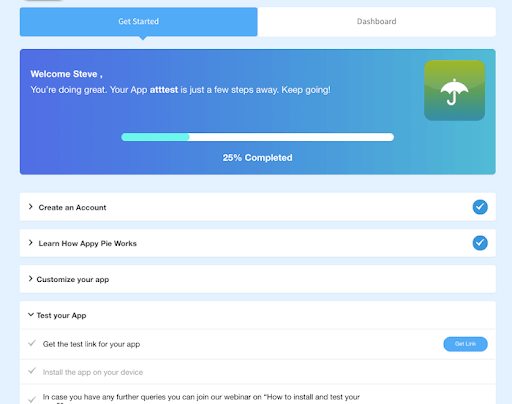
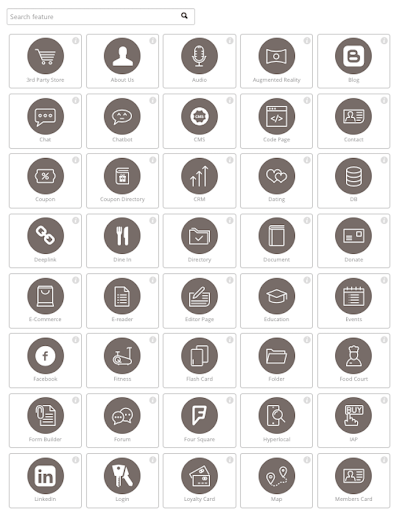
Appy Pie is a diversified no-code development platform. It offers app and web development, helpdesk support, chatbot building, design features, and integration that are helpful when starting, running, or growing a business.
$16
per app/per month
Layer2 Cloud Connector
Score 7.0 out of 10
N/A
The Layer2 Cloud Connector can integrate data and sync documents between 100+ corporate data sources without programming. It is used to connect services and apps on-premises or cloud-based, such as Microsoft Office 365, SharePoint, Dynamics, Azure, SQL/ERP/CRM, and more for migration, backup, or permanent two-way synchronization.
$491
per installation
Pricing
Appian
Appy Pie
Layer2 Cloud Connector
Editions & Modules
Appian Community Edition
$0
Application - Input-Only
$2
per month per user
Application - Infrequent
$9
per month per user
Application - Standard
$75
per month per user
Platform
Custom Quote Priced per user with unlimited apps.
minimum 100 users, no maximum
Unlimited
Custom Quote Priced per development with unlimited apps.
unlimited
Platform
Custom Quote Priced per user with unlimited apps.
Minimum 100, no maximum
Unlimited
Custom Quote Priced per development with unlimited apps.
Unlimited
Basic
$16
per app/per month
Gold
$36
per app/per month
Platinum
$60
per app/per month
Personal Edition
$491.00
per installation
Professional Edition
$1226.00
per installation
Offerings
Pricing Offerings
Appian
Appy Pie
Layer2 Cloud Connector
Free Trial
Yes
Yes
Yes
Free/Freemium Version
Yes
No
No
Premium Consulting/Integration Services
Yes
Yes
Yes
Entry-level Setup Fee
No setup fee
No setup fee
$185 Setup Support
Additional Details
—
—
—
More Pricing Information
Community Pulse
Appian
Appy Pie
Layer2 Cloud Connector
Features
Appian
Appy Pie
Layer2 Cloud Connector
Low-Code Development
Comparison of Low-Code Development features of Product A and Product B
Appian
9.1
75 Ratings
8% above category average
Appy Pie
9.0
1 Ratings
7% above category average
Layer2 Cloud Connector
-
Ratings
Visual Modeling
8.873 Ratings
9.01 Ratings
00 Ratings
Drag-and-drop Interfaces
8.972 Ratings
10.01 Ratings
00 Ratings
Platform Security
9.271 Ratings
8.01 Ratings
00 Ratings
Platform User Management
8.872 Ratings
00 Ratings
00 Ratings
Reusability
9.575 Ratings
00 Ratings
00 Ratings
Platform Scalability
9.573 Ratings
9.01 Ratings
00 Ratings
Data Source Connection
Comparison of Data Source Connection features of Product A and Product B
Appian
-
Ratings
Appy Pie
-
Ratings
Layer2 Cloud Connector
6.0
1 Ratings
32% below category average
Connect to traditional data sources
00 Ratings
00 Ratings
6.01 Ratings
Data Transformations
Comparison of Data Transformations features of Product A and Product B
Appian
-
Ratings
Appy Pie
-
Ratings
Layer2 Cloud Connector
5.5
1 Ratings
39% below category average
Simple transformations
00 Ratings
00 Ratings
4.01 Ratings
Complex transformations
00 Ratings
00 Ratings
7.01 Ratings
Data Governance
Comparison of Data Governance features of Product A and Product B
Appian works great for automating manual processes and integrating multiple systems through its toolset. It gives great flexibility for establishing rules for approvals, routings, escalations, and the like. Because of the low code toolset, it's very easy to deploy and make changes as needed as processes evolve and as the organization learns to utilize the system better. Minimal maintenance is required to support the applications build on the platform. Some of the automated testing integration with tools like Jenkins is limited so that may be an issue for some.
Based on my personal experience, this application is well-suited for noncoders who are busy setting up their businesses and since coders are expensive for the company in the initial days as in for startups, this application goes hand in hand and is quick and robust along with its amazing features like drag and drop and just the cloud storage facility.
We had a scenario where our clients have thousands of external party vendors/committees who regularly sync SharePoint data. Managing thousands of external parties can never be possible without using a Layer2 cloud connector. We managed the local network sharing and SharePoint integration by using the Layer2 connector. Layer2 is convenient with a large amount of data as the per-user license is high.
Allows at a glance workflow documentation which assists in the need we have for information readiation.
Drag and drop interface for workflow development greatly speeds our apps time to market.
Using the advanced features of Appian, we are able to create working sites in a fraction of the time it would take to do so using "traditional" development.
Search issues when type ahead and database search are used in the same field.
Buttons implementation where user is require[d] to click on the button description - if clicks on the button outside that text - button will not work.
Problems with using certain off-the-shelf performance tools like WebLoad or Neoload. That is because of different dynamic variables being used internally in Appian - which these tools are unable to correlate. We are still investigating using other tools like Jmeter to overcome dynamic correlation problem for performance testing.
The application requires to be run on fast processing computers/laptops
This is a good application that isn't much known among non-coders, it needs to be marketed so that boosts this app developer to add more advanced features
We recently renewed our license with Appian. We are convinced that its flexibility, relative ease of use, the support they provide, there mobile advancements and their general willingness and desire to see us succeed all contributed to our reason to renew our agreement with Appian
Appian is a low code environment, because of this, a very good visual interface is required. Appian is providing a feature-rich dashboard [that] we can use for building the dashboards and other interfaces. Appian also provides patches and releases to enhance these features. A developer can start off development just by going through a basic course from the Appian learning community.
Like I said in previous questions, the no-code application has basic and easy features that are literally a no-brainer and even a person with zero knowledge of coding can do wonders with this as his/her tool. Apart from that, the application is cost-effective while time and money are two key things to be taken care of as a startup owner, this app came hand in hand with me
Appian is one of the leading low code business automation platforms that support RPA, decision rules, case management, workflow automation, and machine learning all in a single bundle. But it is also harder to implement and replace the traditional business process.
I have been using this for some time now and the website of the no-code application is all self-explanatory that is the reason I never have reached to the support team anytime, but before using this application I have gone through the reviews and read the positive response and I believe it has still gotten stronger since then.
As analyst I participated in a developer boot camp. At times it was hard to keep up but most of the time it made sense. Trainer took the time to explain and slowed pace down to answer questions etc.
Appian has enormously transformed and keeps on updating the product every quarter to meet the latest needs of the world with new innovations & technologies being integrated within the platform. What gives more pleasure than a product that keeps on continuous[ly] improv[ing]?
Webflow has quite a lot of complexity in comparison to the no-code app which instead is user-friendly. There are more issues with application getting hung in between working but that isn't a bigger problem in the no-code app. Apart from that, the no-code app has blocks that can be used to edit/add/delete which are literally a no-brainer.
We had also used Microsoft One Drive as a syncing tool but it requires Office365 for managing and syncing data across thousands of vendors which was not practically possible to manage users on Office 365. Layer2 resolved this issue by having 3 user licenses and they are enough to periodically sync all external parties' data with our SharePoint online.
I believe it has negatively impacted our release dates. There may have been a misunderstanding as to the learning curve, even though it is "low code."
The look and feel of the applications created using Appian have uniformity and it's easier to have "reuse" between applications.
There is less developer control when it comes to features. I think this mainly has to do with the amount of plugins available. I would think there should be many more available plugins. But again, our use case is probably different than most others.