Axway's Amplify is a universal API management platform that unifies what tools are already in place to get digital products where they can be seen and used. Users can publish, validate, and govern APIs.
N/A
IBM API Connect
Score 8.8 out of 10
N/A
IBM API Connect is a scalable API solution that helps organizations implement a robust API strategy by creating, exposing, managing and monetizing an entire API ecosystem across multiple clouds. As businesses embrace their digital transformation journey, APIs become critical to unlock the value of business data and assets. With increasing adoption of APIs, consistency and governance are needed across the enterprise. API Connect aims to help businesses…
N/A
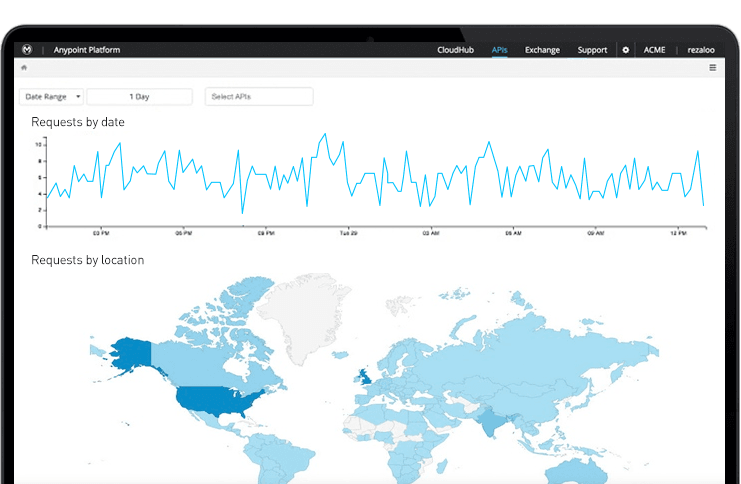
Anypoint Platform
Score 7.8 out of 10
N/A
The Anypoint Platform developed by MuleSoft and acquired by Salesforce in early 2018 is designed to
connect apps, data, and devices anywhere, on-premises or in the cloud. This platform was built to
offer out-of-the-box connectors as well as tools that architects and developers can adopt quickly to
design, build and manage the entire lifecycle of their APIs, applications, and products.
I use crashplan for my personal PC at home. I think both products have their pluses and minuses. Both products allow you to backup your selected data to the cloud. Crashplan doesn't easily allow for file sharing (Crashplan isn't really a collaboration tool as much as it is a …
IBM API Connect can in some use cases, especially when customer requirements are highly security centric, provide a more robust approach to managing access, performance, and trust, in the IT estate. In many cases it boils down to customer preference and to some extent if the …
Our decision to adopt IBM API Connect was driven by its comprehensive end-to-end API lifecycle management, which proved to be exceptionally well-suited to our B2B, Open Banking, and multi-fintech integration requirements. When compared with other solutions, API Connect stood …
Prior to adopting IBM API Connect, there were two main competitors, MuleSoft. Although in the integration capabilities MuleSoft seemed to have an advantage, and regarding developer experience, IBM API Connect had a set of enterprise features for the API management.
Mulesoft seemed to take a lot longer to implement and reach any real ROI attribution. For the other competitors, I'd say they are easier to administrate, but this isn't as important to us as a business user. It was easier to explore APIs with IBM than it was with others.
There were multiple product we read and then shortlist were taken as POC against IBM API Connect. -Google Apigee : is good but in cross cloud there are concerns. Also, feature of reading & identifying the target system certificate was not available there.
It was organizational boundaries to use IBM API Connect but we have learnt so many think on this technology. Obviously, We have more experience on this it;s easy for us to configure and maintain the system.
IBM API Connect have more feature compared to other solutions like from one platform we can create APIs on the API Manager, we can publish the APIs to the products/portal server, we can secure the APIs using IBM DataPower Gateway, we can socalize the APIs using developer …
We use IBM Cloud, which works well with our hybrid cloud deployment. As a large firm, we are able to scale as required once the initial setup is complete.
I’ve also used IBM ACE. MuleSoft is a very versatile integration platform, and it also comes with a variety of automation tools. As a package, it’s one of the best options because all those functionalities are included as part of the license.
I’ve used a lot of other integration tools, and in comparison, Salesforce performs quite well. Since this platform is also integrated within Salesforce — and we use Salesforce heavily — it manages and functions very effectively.
AWS is a very good tool but still evolving and offers a small set of API management features. The main reason why we chose MuleSoft Anypoint Platform API Manager is because it is well suited with the APIs developed in Mule ESB.
Once we have moved all of our system integration APIs to the MuleSoft Anypoint Platform, we will need to communicate with a wide variety of external systems. All of our business and service logic is stored in the aforementioned core systems. Anypoint Platform (and all of our …
Overall a better experience in pricing negotiation with the Sales team. The breadth of services offered by Mulesoft was really important and the expertise offered by our consulting partner influenced the decision. The overall deployment was completed well within the timelines. …
Once we use [MuleSoft] Anypoint Platform to host all our system integration APIS, we need to exchange data with a lot of different resources. Those listed systems are our main systems that hold all business and logic behind our service. The integration from Anypoint Platform …
We selected Mulesoft for speed of implementation. We did not have the luxury of time and needed a solution that can be learned and implemented within weeks so we can take advantage of newly formed partnerships. The training that was provided to use during our pre-sales and …
We believe Anypoint Platform is best in breed and has features that match nearly any other iPaaS offering. It also allows for accomplishing much more challenging and complex integrations due to the ability to connect to nearly any system, use custom connectors, and embed …
The main problem with this software is the different connector type that is used for different protocols except for a different SAP connector. There is only one connector called SAP. It will be great if there will have a different connectors like idoc, RFC, proxy, etc.
Anypoint has tons of capabilities baked in one platform, and other competitors like Built.io or Workato may not have all those like Anypoint Exchange. However where these products shine are in usability, as it's ridiculously easy to build integrations using Built.io. I was …
Anypoint Platform is really very easy to adopt for application integration. Simple UI and easy data weave language allows user to focus on business portion only. The API management and deployment of application are hassle free. We have selected Anypoint platform because it is …
Dell Boomi is kind of similar in drag and drop implementation. However, it doesn't have as many connectors (shapes in Dell Boomi). Moreover, it also doesn't have deployment stuff on its own.
Informatica is way behind Dell Boomi and Anypoint Platform, but users are still using it …
Compared to Dell Boomi the API management suite of Mulesoft is much mature, however if its only about the integration , then i would always go for Dell Boomi, as there is no infrastructure setup that needs to be done from the developer's end.
The main reason why we chose Anypoint API Manager is because it is well suited with the APIs developed in Mule ESB. AWS, on the other hand, is a very good tool but still evolving and offers a small set of API management features.
API led architecture focus with a decent API ecosystem for developer collaboration, policy management and declarative implementation. Batch processing, visualization, Anypoint MQ and ObjectStore leave a lot to be explored. Multiple deployment models make it worth considering.
It enables customers to expose their APIs in a very simple and fast way. It can be used by non-expert developers. It is compliant with all major connection and data representation world standard.
We provide options to customers to choose from the best tools. Customers are the decision makers. Personally, because of open-source and large community base, MuleSoft is the repo in the market.
It is a powerful tool with smart intelligence. The drag and drop feature makes my work easy. The tool has great connecting support which is the best reason to use the tool on a daily basis. Powerful functionality with designing and implementing APIs. Hosted on public IP.
A large enterprise needs to manage hundreds of APIs across various departments. Its full lifecycle API management, security features, and advanced analytics provide robust tools for handling extensive and diverse API ecosystems. A company operates in both cloud and on-premise environments and requires seamless data integration. Its hybrid integration capabilities and pre-built connectors facilitate smooth data flow between cloud and on-premise systems. An organization needs to streamline and secure data exchange with multiple trading partners. It offers comprehensive B2B integration tools, supporting various protocols and providing efficient partner management.
Overall, it can be stated that IBM API Connect has many benefits and can easily manage complicated integrations. The platform performs best in large environments, especially where microservices and processing of multiple API dependencies are required. On average, we have processed thousands of API calls within a second with good response time.
MuleSoft Anypoint Platform is best tool in the market for developing APIs with complex structures communicating with various different types of applications including web applications as well as legacy applications. Also applications including database connectivity for fetching and updating data in the DB tables. I cant think of any scenario which MuleSoft Anypoint Platform could not be used for developing the integrations.
Provides wide range of popular connectors like salesforce, netsuite, sftp and many more. A user can easily integrate with those services using specific connector.
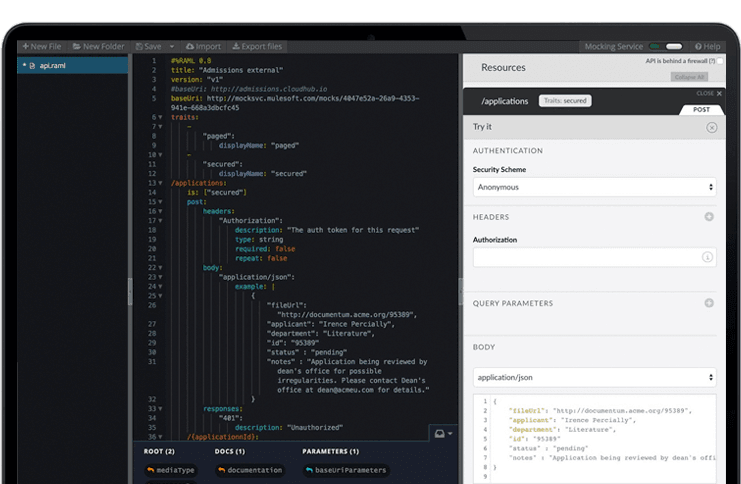
Support API development using RAML and desing tool. The platform is very good in data type classification.
Cloud deployment and post deployment monitoring is easy. A user can configure application worker as per need. Alert and notifications are real time.
I would appreciate it if it backed up more than just Desktop, Favorites and Documents by default. I'm not sure if this was something chosen by my employer, but it would be nice if the whole profile folder was backed up by default, so my pictures, music, and videos folders were included.
That being stated, every thing you own will have both positive and negative aspects to its use. It can be perplexing at times, particularly when navigating between different functions.
However, based on my usage of this application up until this point, I've discovered that the only time it lags is when it's downloading updates. Otherwise, it's excellent to utilise for all other customs.
Has more features than what we really need so we're paying for more than we use. Sort of like paying for an Abrams tank when all we really need is a Toyota Corolla.
Not a value product, tends to be expensive.
Takes a while for developers to learn to use Mulesoft Anypoint.
It offers a wide range of powerful tools for API management, data integration, B2B integration, and more. Strong security features and compliance support add significant value. Flexibility to integrate across various environments (cloud and on-premise) enhances usability for diverse infrastructures.
IBM API Connect may be less appropriate for small-scale projects with minimal API management requirements, where simpler and more cost-effective solutions suffice. Organizations lacking the necessary technical expertise or resources to harness its full potential may face implementation challenges. In static environments with infrequent API changes or limited developer engagement, the platform's comprehensive features may be excessive for the task at hand.
There’s a lot of learning curve at the beginning when it comes to building the code and everything. In terms of usability, I’d say once you get used to it, it’s fine — but it’s not very easy during the initial stages.
Anypoint Platform support is very responsive. There is also a huge knowledge base and an active online forum where answers to most questions can be found. When needed support engages the engineering group so adequate solutions or workarounds are always provided.
I use CrashPlan for my personal PC at home. I think both products have their pluses and minuses. Both products allow you to backup your selected data to the cloud. CrashPlan doesn't easily allow for file sharing (CrashPlan isn't really a collaboration tool as much as it is a backup tool). Both products have easy restore options. However Syncplicity automatically restoring certain data when syncing with a new PC is very handy and a feature that CrashPlan doesn't offer
Our decision to adopt IBM API Connect was driven by its comprehensive end-to-end API lifecycle management, which proved to be exceptionally well-suited to our B2B, Open Banking, and multi-fintech integration requirements. When compared with other solutions, API Connect stood out for its ability to externalize and govern APIs at scale, while offering enterprise-grade capabilities critical for our regulated environment. IBM App Connect serves as our internal integration middleware, focused on backend orchestration and data transformation. IBM watsonx acts as a complementary AI and data platform for exposing intelligent services especially with the code assistant functionality, it is API Connect that provides the crucial layer for external API exposure, management, and monetization. IBM DataPower is an incredibly secure and performant runtime, and lacks key enterprise features such as developer engagement, full API governance, and analytics. API Connect fills that gap seamlessly, offering a unified, secure, and scalable API management experience.
Once we have moved all of our system integration APIs to the MuleSoft Anypoint Platform, we will need to communicate with a wide variety of external systems. All of our business and service logic is stored in the aforementioned core systems. Anypoint Platform (and all of our APIs) makes it easy to connect to various other platforms. In order to link to these many other systems, connectors and/or components are utilized, and they are simple to configure and integrate.