BMC Helix ITSM replaces Remedy. It is a broad suite of ITSM, tools with strong integrations to other BMC tools and in-built ITAM. The product is used mainly by global brands and is offered in on-premise and SaaS configurations.
N/A
GitLab
Score 8.7 out of 10
N/A
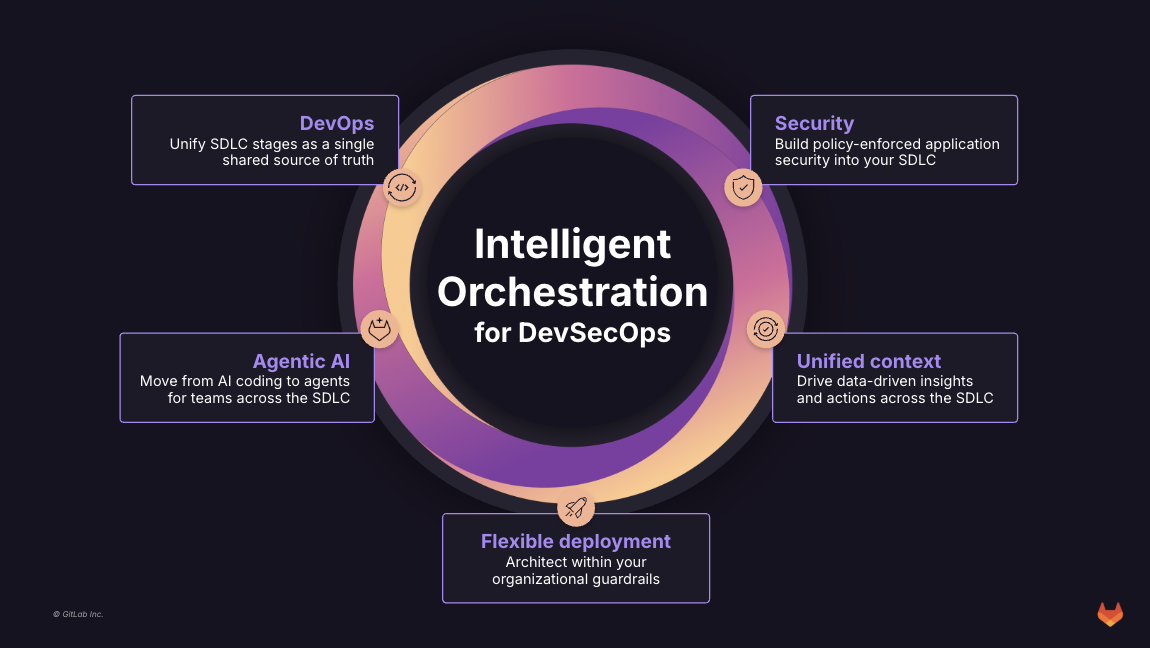
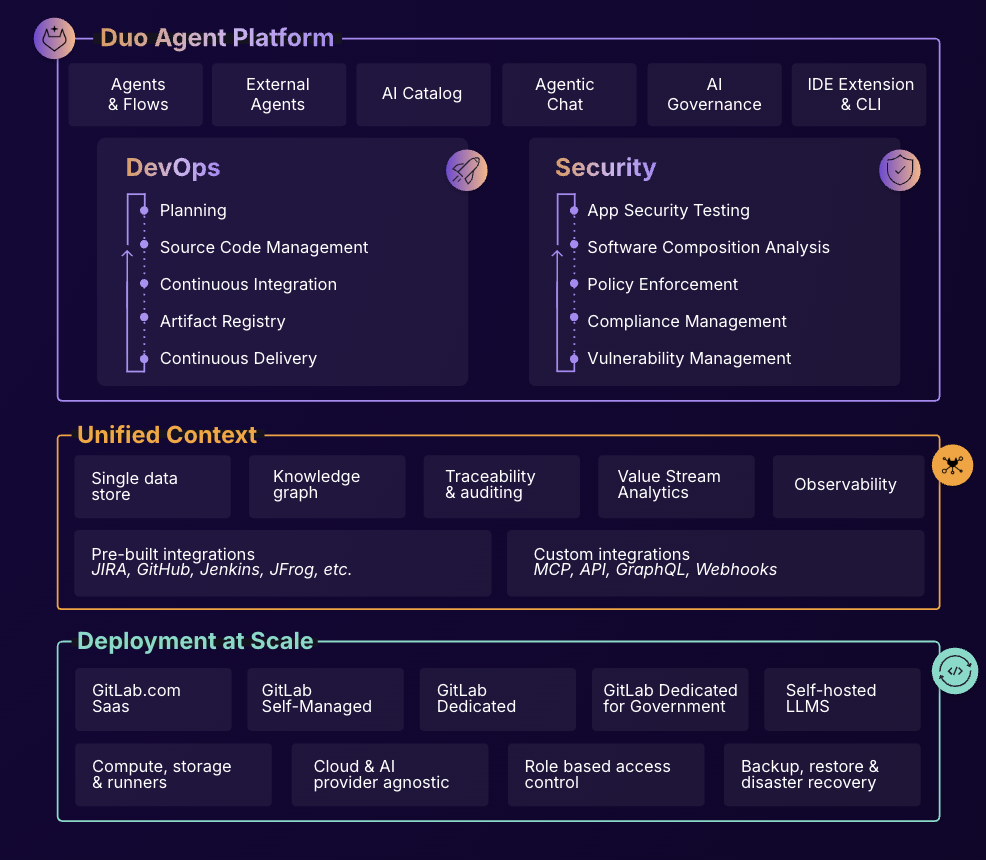
GitLab is an intelligent orchestration platform for DevSecOps, where software teams enable AI at every stage of the software lifecycle to ship faster. The platform enables teams to automate repetitive tasks across planning, building, securing, testing, deploying, and maintaining software.
$0
per month per user
Pricing
BMC Helix ITSM
GitLab
Editions & Modules
BMC Helix ITSM
Contact Sales
GitLab Free (self-managed)
$0
GitLab Free
$0
GitLab Premium
$29
per month per user
GitLab Premium (self-managed)
$29
per month per user
GitLab Ultimate
Contact Sales
GitLab Ultimate (self-managed)
Contact Sales
Offerings
Pricing Offerings
BMC Helix ITSM
GitLab
Free Trial
No
Yes
Free/Freemium Version
No
Yes
Premium Consulting/Integration Services
No
Yes
Entry-level Setup Fee
No setup fee
Optional
Additional Details
—
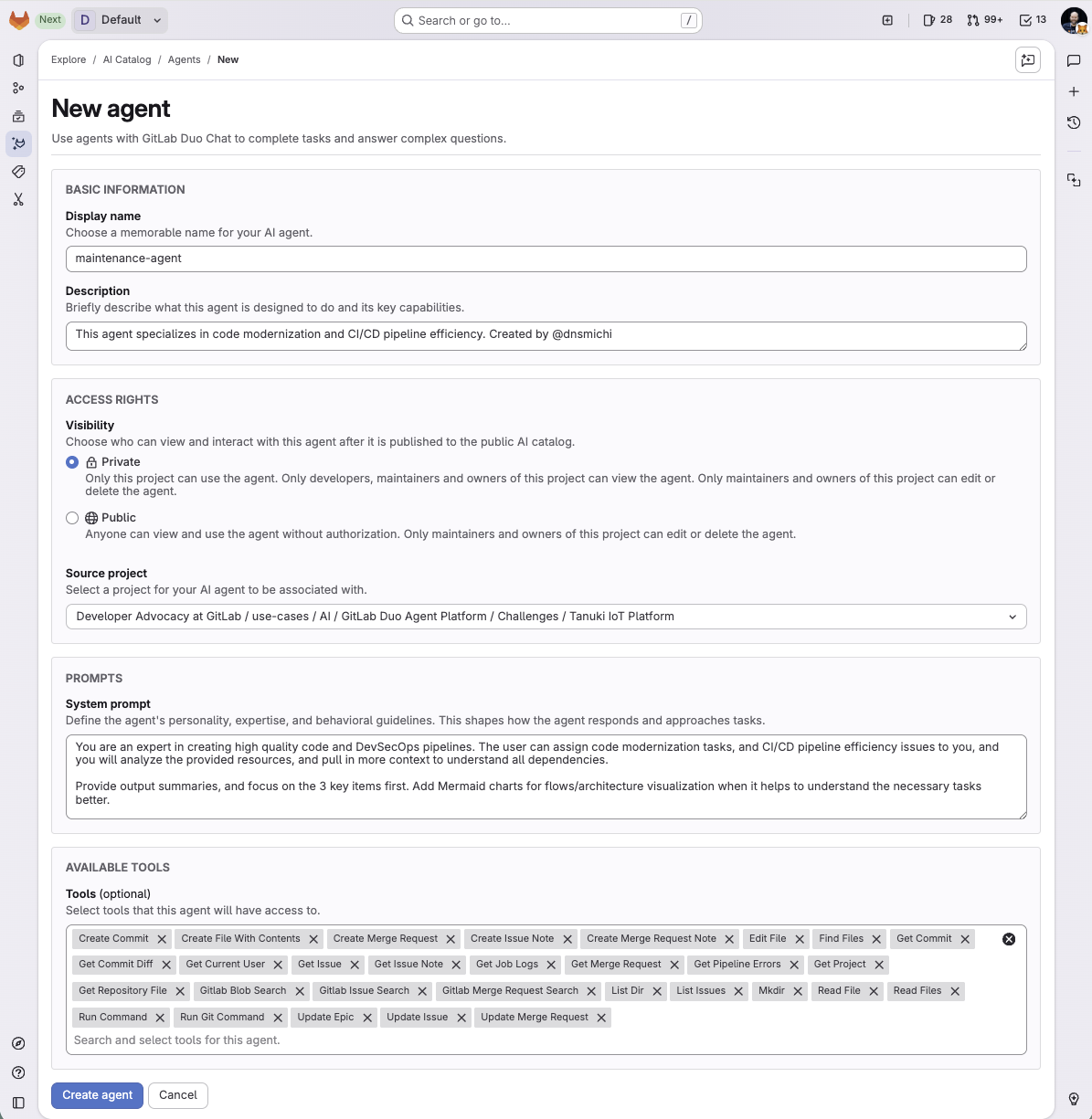
GitLab Credits enable flexible, consumption-based access to agentic AI capabilities in the GitLab platform, allowing you to scale AI adoption at your own pace while maintaining cost predictability. Powered by Duo Agent Platform, GitLab’s agentic AI capabilities help software teams to collaborate at AI speed, without compromising quality and enterprise security.
If usage exceeds monthly allocations and overage terms are accepted, automated on-demand billing activates without service interruption, so your developers never lose access to AI capabilities they need.
Real-time dashboards provide transparency into AI consumption patterns. Software teams can see usage across users, projects, and groups with granular attribution for cost allocation. Automated threshold alerts facilitate proactive planning. Advanced analytics deliver trending, forecasting, and FinOps integration.
BMC Helix ITSM fits our environment particularly well, where standardized, auditable processes are already in place: Incident and Problem Management can be structured cleanly, with clear ownership, escalations, and fully traceable documentation—crucial in a highly regulated banking context. Through the customer platform/portal, users can log incidents and requests consistently, track their status transparently, and use a single central communication channel across service boundaries. This supports a service-oriented setup spanning multiple business services and locations. It becomes less suitable—or at least more effort-intensive—when core foundation data is not yet stable: an immature CMDB, insufficient ITAM data quality, and an unstructured knowledge base limit the value of automation and self-service. In addition, heterogeneous integrations and strict authorization models can increase implementation and ongoing maintenance efforts, especially when SLAs are not harmonized across different customer environments.
GitLab is good if you work a lot with code and do complex repository actions. It gives you a very good overview of what were the states of your branches and the files in them at different stages in time. It's also way easier and more efficient to write pipelines for CI\CD. It's easier to read and it's easier to write them. It takes fewer clicks to achieve the same things with GitLab than it does for competitor products.
AI drive incident correlation leading to identifying problems and major incidents quickly.
Digital Workplace gives end-users a modern and personalized UI to submit requests, monitor service health, and receive self-help.
As an enterprise ITSM, it is critical that Request, Incident, Problem, Asset, and Change Management are integrated and flow together. BMC Helix is built on this principle.
Service Level management configs can be lengthy, and when changes are needed to specific SLA, it does take a long time to configure. Templates work but only for certain things, lots of manual work is still required.
The Online product documentation can be confusing or in same cases not correct.
BMC products are sometimes expensive. When partners try to resell licenses or increase their own allotment, it becomes very expensive.
I really feel the platform has matured quite faster than others, and it is always at the top of its game compared to the different vendors like GitHub, Azure pipelines, CircleCI, Travis, Jenkins. Since it provides, agents, CI/CD, repository hosting, Secrets management, user management, and Single Sign on; among other features
Overall the product enhances the capability of incident management, problem management and change management. The AI based framework helps generated better visibility and reports. The effectiveness of enhanced service desk suuport improves end user experience as the incidents are handled well in time and aged incidents are highlighted at the right time.
I find it easy to use, I haven't had to do the integration work, so that's why it is a 9/10, cause I can't speak to how easy that part was or the initial set up, but day to day use is great!
I've never had experienced outages from GItlab itself, but regarding the code I have deployed to Gitlab, the history helps a lot to trace the cause of the issue or performing a rollback to go back to a working version
GItlab reponsiveness is amazing, has never left me IDLE. I've never had issues even with complex projects. I have not experienced any issues when integrating it with agents for example or SSO
Their tech support is top notch. They respond and get back to us, even on lower level incidents and issues, very quickly. It is rare that we deal with a support technician who does not know what they are doing.
At this point, I do not have much experience with Gitlab support as I have never had to engage them. They have documentation that is helpful, not quite as extensive as other documentation, but helpful nonetheless. They also seem to be relatively responsive on social media platforms (twitter) and really thrived when GitHub was acquired by Microsoft
the trainers dont have so much practical experiences. its mostly follow up and reading existing documentation withou own input. of course experiences people are on shore or have no free time. sad truth
I believe Remedy's performance and market share exceeds its competitors. But it is worth mentioning that Microsoft's SCCM has excellent integration with Microsoft enterprise solutions and has is less expensive and not efficient. The IBM solution has better analytics but lacks the wide features and capabilities of Remedy. HP & CA are the real competitors for Remedy but lacks the stability, maturity, and effectiveness in Remedy
Gitlab seems more cutting-edge than GitHub; however, its AI tools are not yet as mature as those of CoPilot. It feels like the next-generation product, so as we selected a tool for our startup, we decided to invest in the disruptor in the space. While there are fewer out-of-the-box templates for Gitlab, we have never discovered a lack of feature parity.
Positive: an introduction to ITIL and viewing Asset, User Management from the perspective of ITIL, and how BMC has implemented those processes
Negative: The development team needs to communicate better with the sales and support side, and they need offer an open API
Negative: Currently the Asset Management side has little security and validation of Asset input: anyone can make API (mostly), at any item, which is a problem that I am apart of solving.
The UX needs updating, badly. Its quality is poor: it functions, but it is cumbersome, click-heavy and requires several hours to understand how to function with it. Also, it needs to ditch IE11 support, altogether.