BMC Helix ITSM replaces Remedy. It is a broad suite of ITSM, tools with strong integrations to other BMC tools and in-built ITAM. The product is used mainly by global brands and is offered in on-premise and SaaS configurations.
N/A
Microsoft Defender for Endpoint
Score 8.9 out of 10
N/A
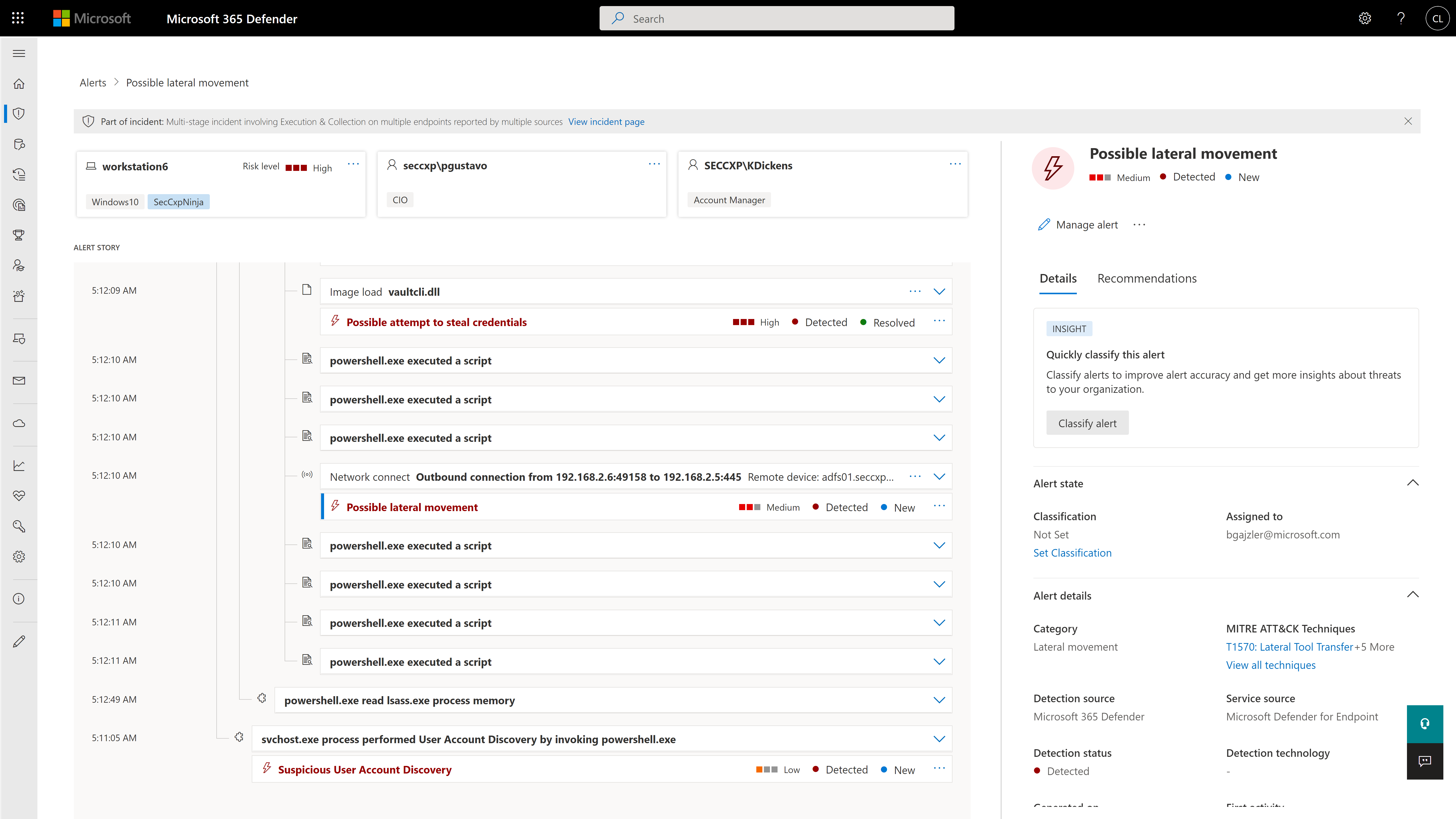
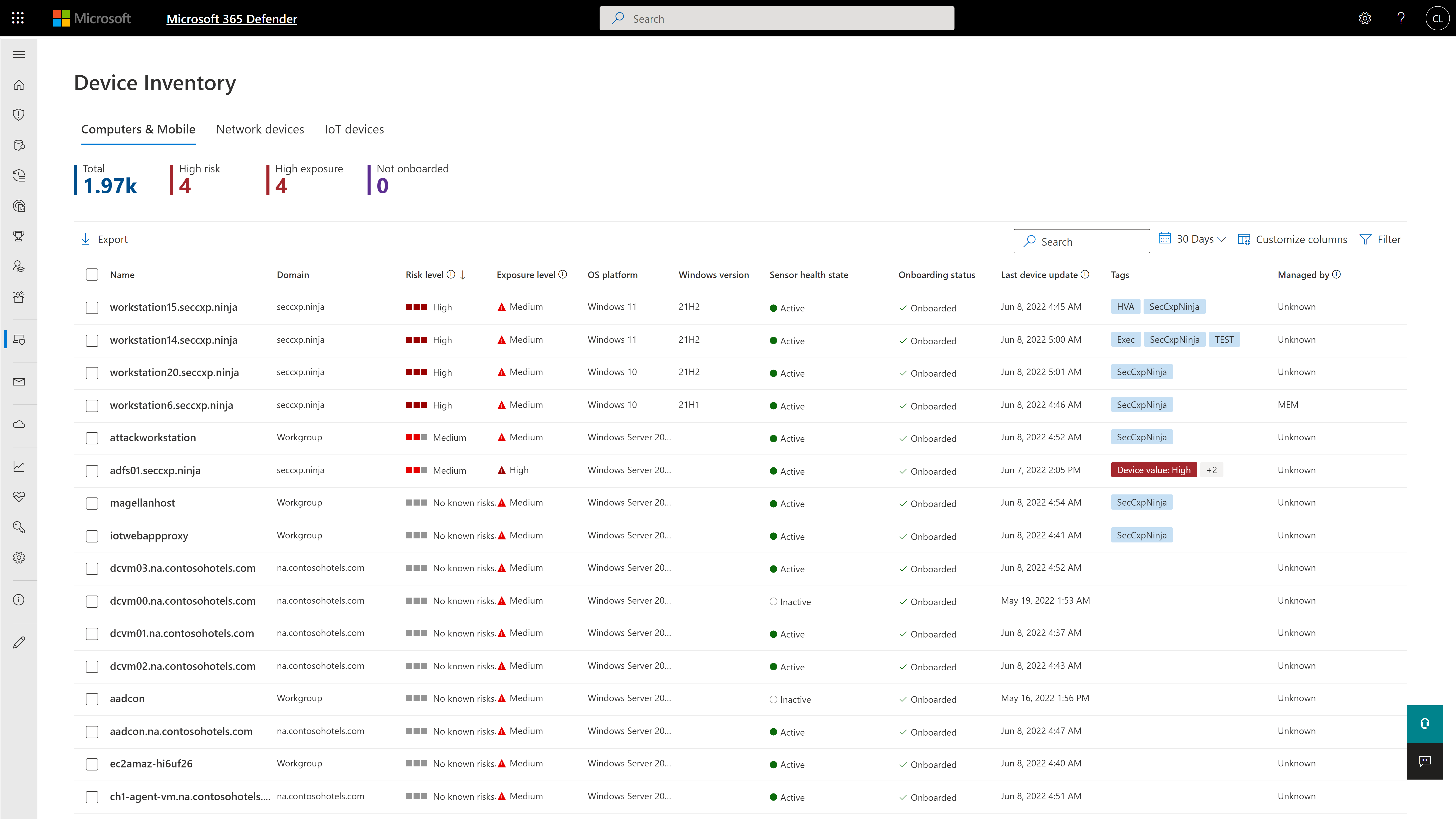
Microsoft Defender for Endpoint (formerly Microsoft Defender ATP) is a holistic, cloud delivered endpoint security solution that includes risk-based vulnerability management and assessment, attack surface reduction, behavioral based and cloud-powered next generation protection, endpoint detection and response (EDR), automatic investigation and remediation, managed hunting services, rich APIs, and unified security management.
There are many ITSM platforms available - but only a very select few are true enterprise leaders. BMC Helix is one. When it comes to managing thousands of incidents daily, BMC Helix helps cut through the noise with incident correlation and predictive problem management.
It is well integrated with the Microsoft Admin center providing a quick way to find everything you're looking for. However, if there is a problem that needs addressed, you may have to click through a few more pages to find the solution. It will definitely let you know what's going on in your environment.
The Service Asset and Configuration Management capabilities of Helix ITSM are awesome. It can be used as a central repository for all SACM information and seamlessly integrated with Helix Discovery.
It has the most certified ITIL process modules of any ITSM system. These modules work seamlessly with each other and give you the power to manage any situation effectively.
As an Administrator of Helix ITSM you have many tools at your disposal to create customizations, workflows. BMC makes it easy to manage the system, leaving time to develop customizations and workflows.
One, it's crazy lightweight, so compared to some of the competitors that we also have used with our security services, it's really lightweight and so I don't have a lot of overhead on the system that it's running on.
So the fact that Defender for Endpoint still works with signatures is actually, I don't know, a little difficult for us because, I mean, since Microsoft trusts those signatures, you can easily inject code. And we've done it many times. To show that you can inject code through vulnerabilities like CV 2013, 99, and 33 but still keep the signature. So because of the trust of those signatures, the malware just kind of slides into the environment without Defender knowing. That's the first part. The second part is that the behavioral analysis is not precisely its Prime. It's not Defender's best capability for endpoints. So, Defender does not identify all behaviors considered by other EDRs in the market.
Cost add-ons for Security features is nickel and diming the process to keep pace with cybercrime. Limited Education budgets require us to be more pro-active in finding cost-effective measures to protect our devices, staff and students. Defender is a strong, well-featured product that is pricing itself out of the education market
At least Remedy is all contained in a single platform, so the interface is consistent. Also, the most heavily performed functions are generally usable. However, to use some of the more advanced modules can be a bit more cumbersome (such as Change Management and CMDB (Not Including ADDM)). So, overall BMC Remedy ITSM is better than some applications like CA SDM or HP SM, but not quite on par with ServiceNow.
It offers multiple security features and integrates well with Microsoft ecosystems. A workflow for threat detection, investigation, automated remediation, and a centralized dashboard is an added advantage. This application is mainly designed for experienced users; new users may feel challenged.
Microsoft Defender for Endpoint chugs along just fine no matter what we throw at it and what systems it's running on. It doesn't take up a lot of resources either, so that's welcomed.
Their tech support is top notch. They respond and get back to us, even on lower level incidents and issues, very quickly. It is rare that we deal with a support technician who does not know what they are doing.
The first time I tried to onboard my macOS endpoints to MDE I struggled for quite a bit. I had to reach out to Microsoft's MDE support team. The tech was very helpful in walking me through the steps during a screen share session
the trainers dont have so much practical experiences. its mostly follow up and reading existing documentation withou own input. of course experiences people are on shore or have no free time. sad truth
Deployment was handled by our team here and everything went pretty smoothly. We did have a few hiccups in our test group, but that only took a bit to get ironed out.
I did not select Remedy myself, so I am coming in from someone who is apart of the story, from somewhere in the midway. That being said: Remedy has begun a journey of understanding the problems associated with the implementation of ITIL, and indeed ITIL itself (it is a top-down process for management of an IT department). there are many alternatives out there. One, in particular, I am keen to investigate: Redmine. But in doing so, It will be evaluated via my experience with Remedy.
Defender is far easier to deploy and manage than Sophos and tends to work without as many issues. The threat assessment portal provides an in-depth view of the organization's security posture, whereas Sophos only shows the patching status of the PCs. We did need Intune to get many of the control features (disabling USB drives) that Sophos offered out of the box.
The ROI was fine initially as we got what we paid for and it served its purpose
Over time, we got behind on releases due to limitations with customizations we made to the application. The product then became out of support and completely out of date, and we had to replace
Overall ROI was minimal and once the product was out of date we found more value in other tools