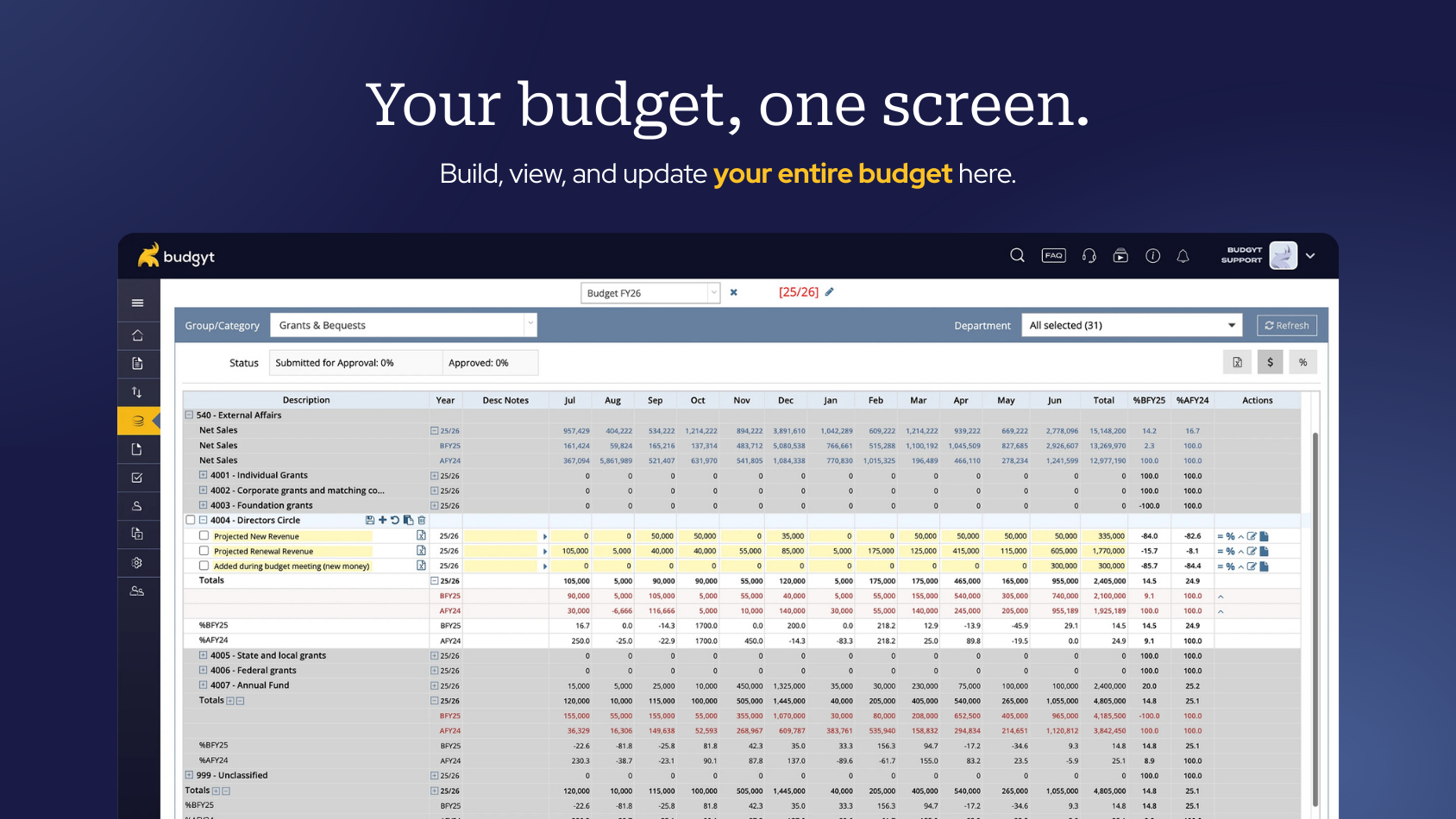
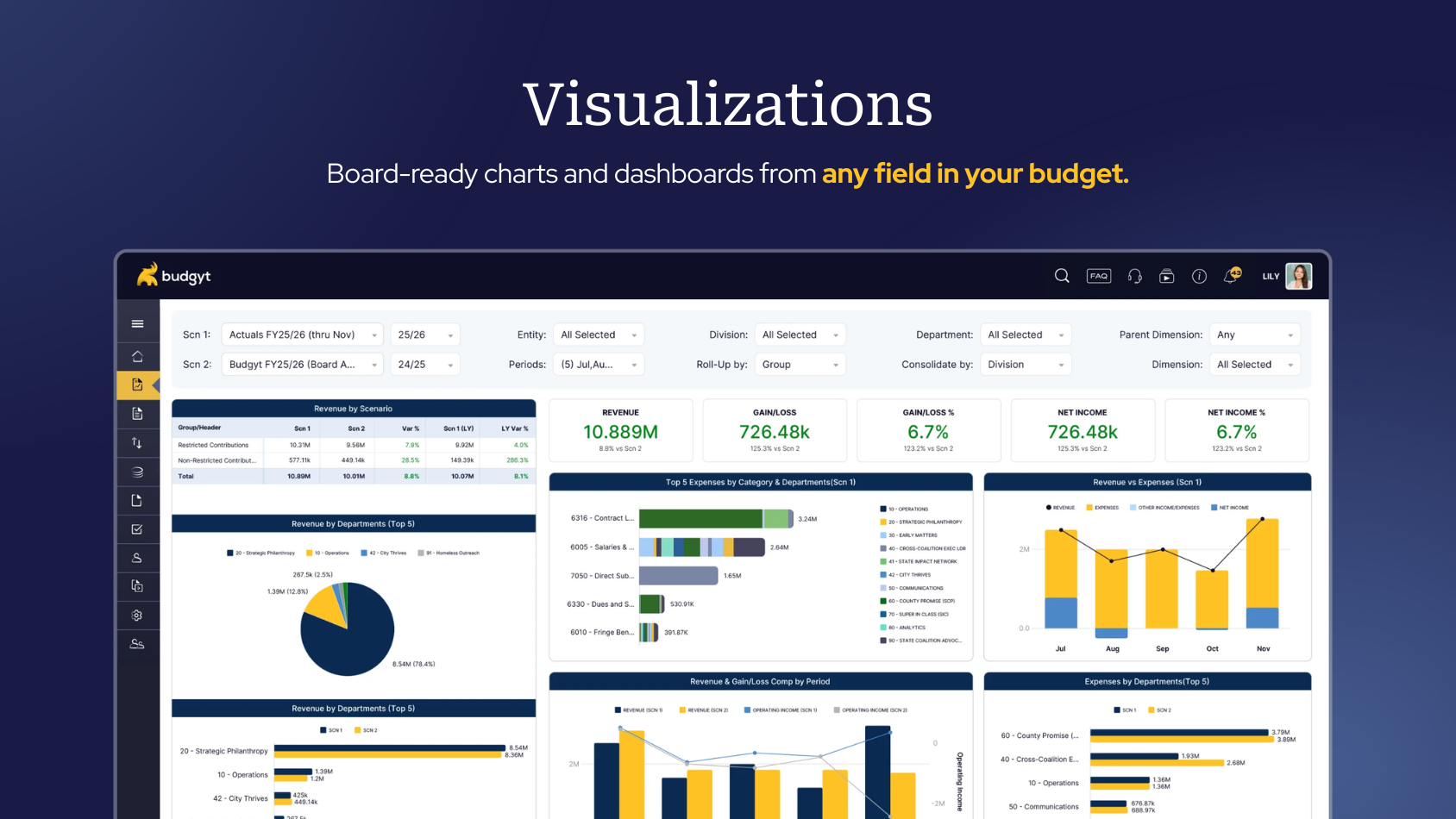
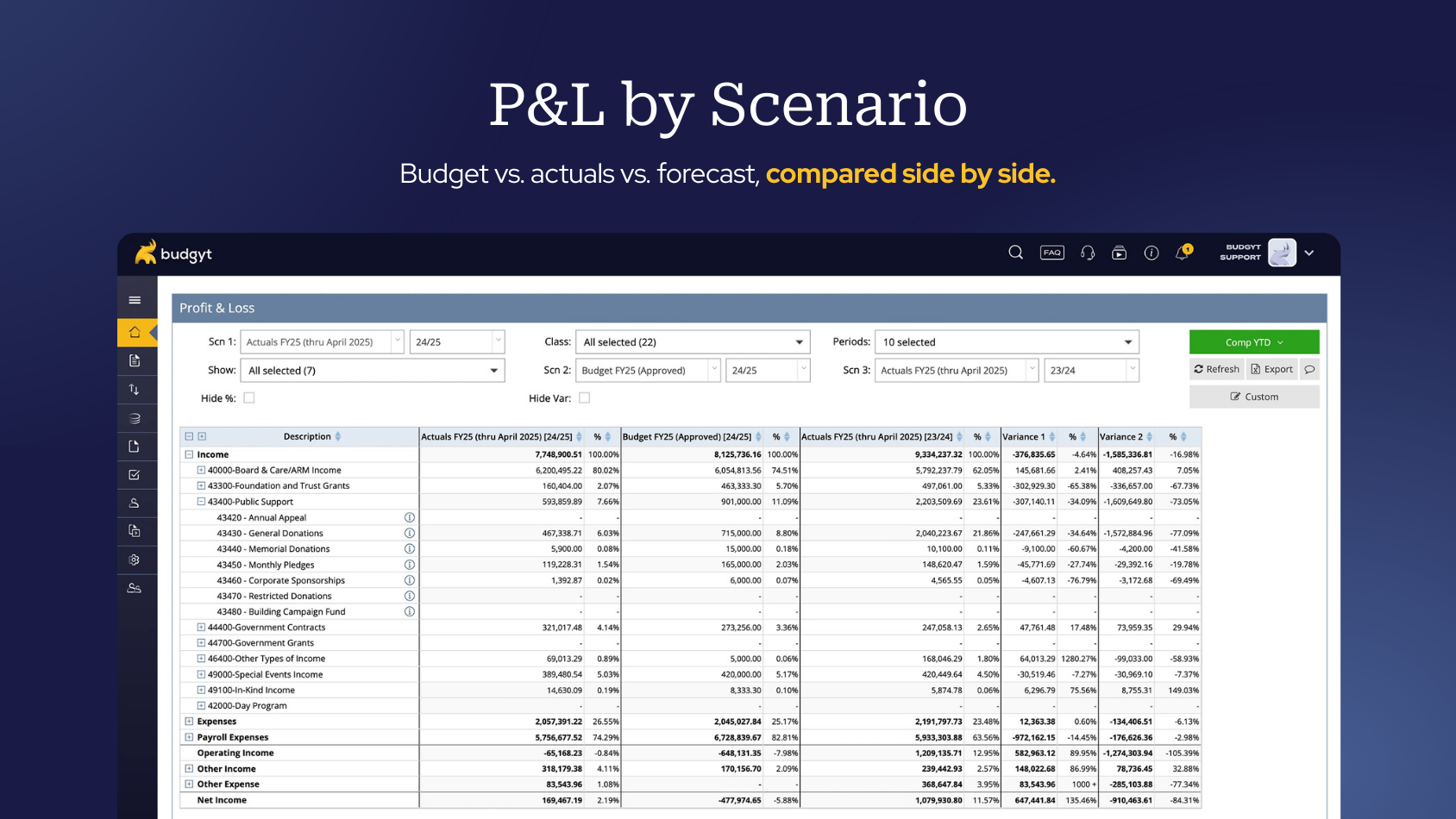
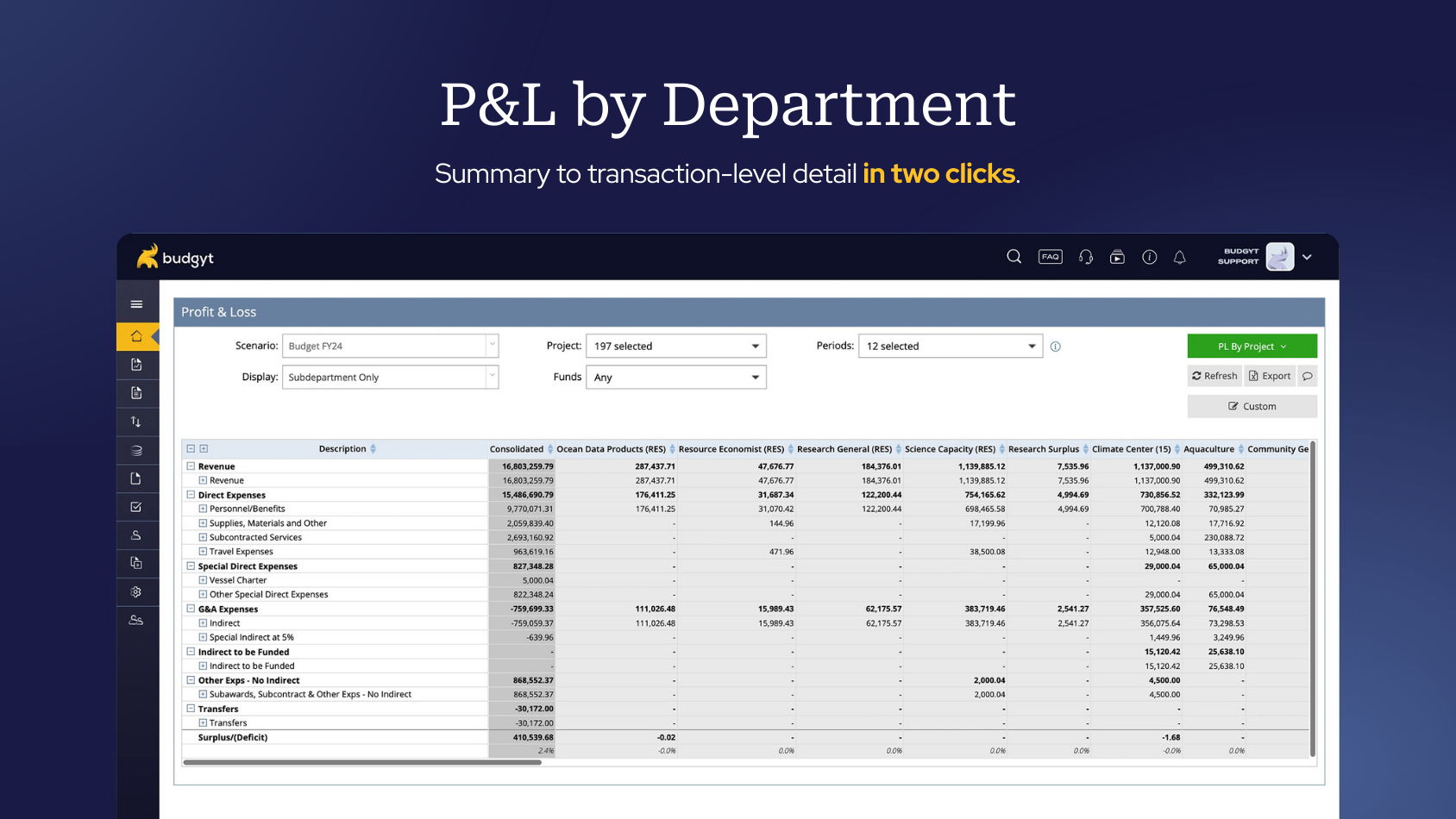
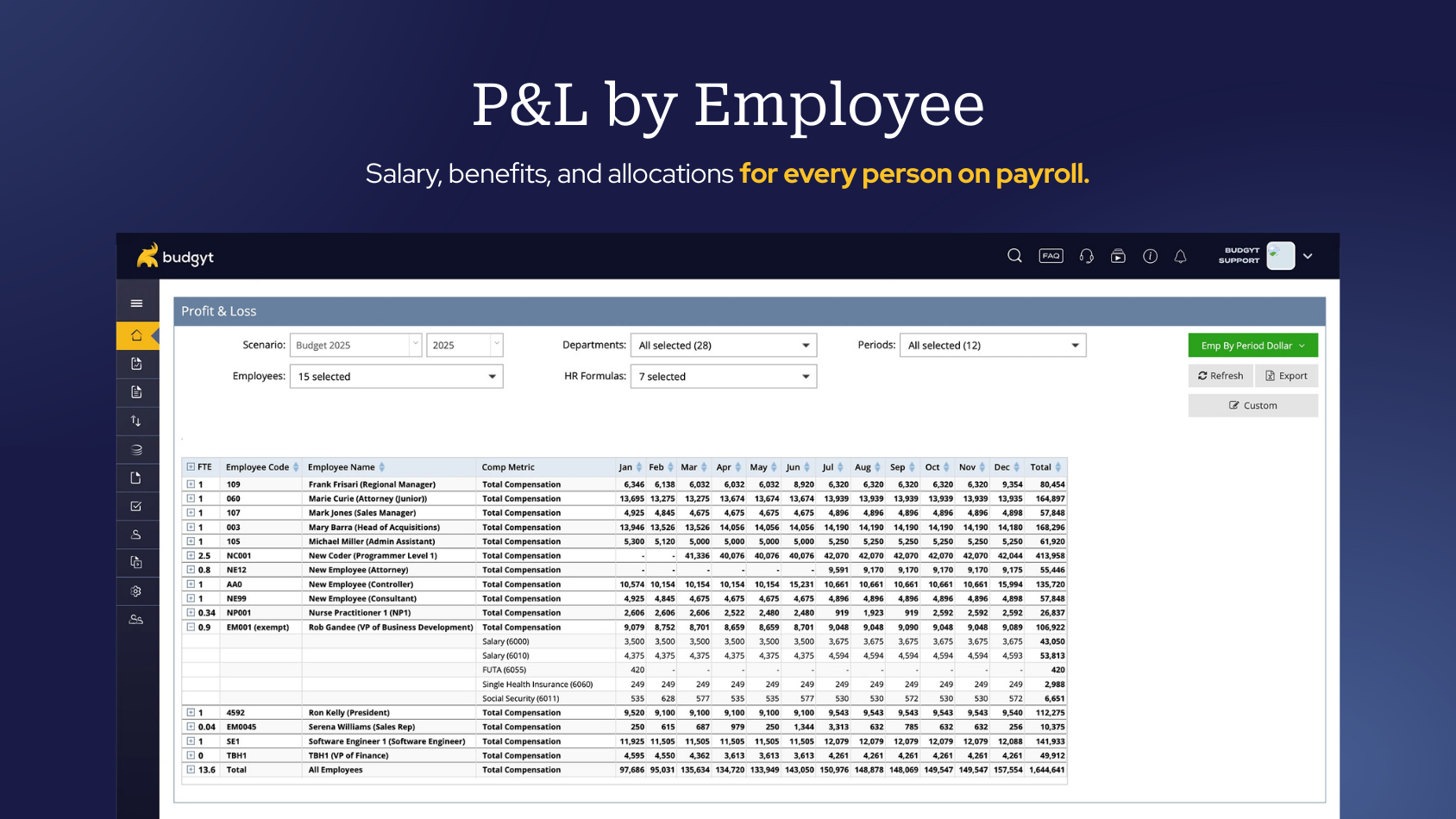
Budgyt is a dynamic FP&A platform that simplifies budgeting, forecasting, and reporting. It offers a single source of truth for CFOs and finance teams to integrate financials, streamline processes, and manage multiple departments.
$5,988
per year (up to 10 departments)
Oracle Hyperion (legacy)
Score 7.5 out of 10
N/A
Oracle's Corporate Performance Management suite was acquired from Hyperion in 2007. Hyperion customers are encouraged to migrate to Oracle Fusion Cloud EPM.
N/A
Pricing
Budgyt
Oracle Hyperion (legacy)
Editions & Modules
No answers on this topic
No answers on this topic
Offerings
Pricing Offerings
Budgyt
Oracle Hyperion (legacy)
Free Trial
Yes
No
Free/Freemium Version
No
No
Premium Consulting/Integration Services
Yes
No
Entry-level Setup Fee
Required
No setup fee
Additional Details
Multi-year and non-profit discounts are available. Contact vendor for a quote.
Other than Hyperion, which is in a different league and more suitable for much larger organizations, I would say that Budgyt compares very favorably. We moved from Great Plains to Sage Intacct, and evaluated their planning solution at the time of implementation. We were very …
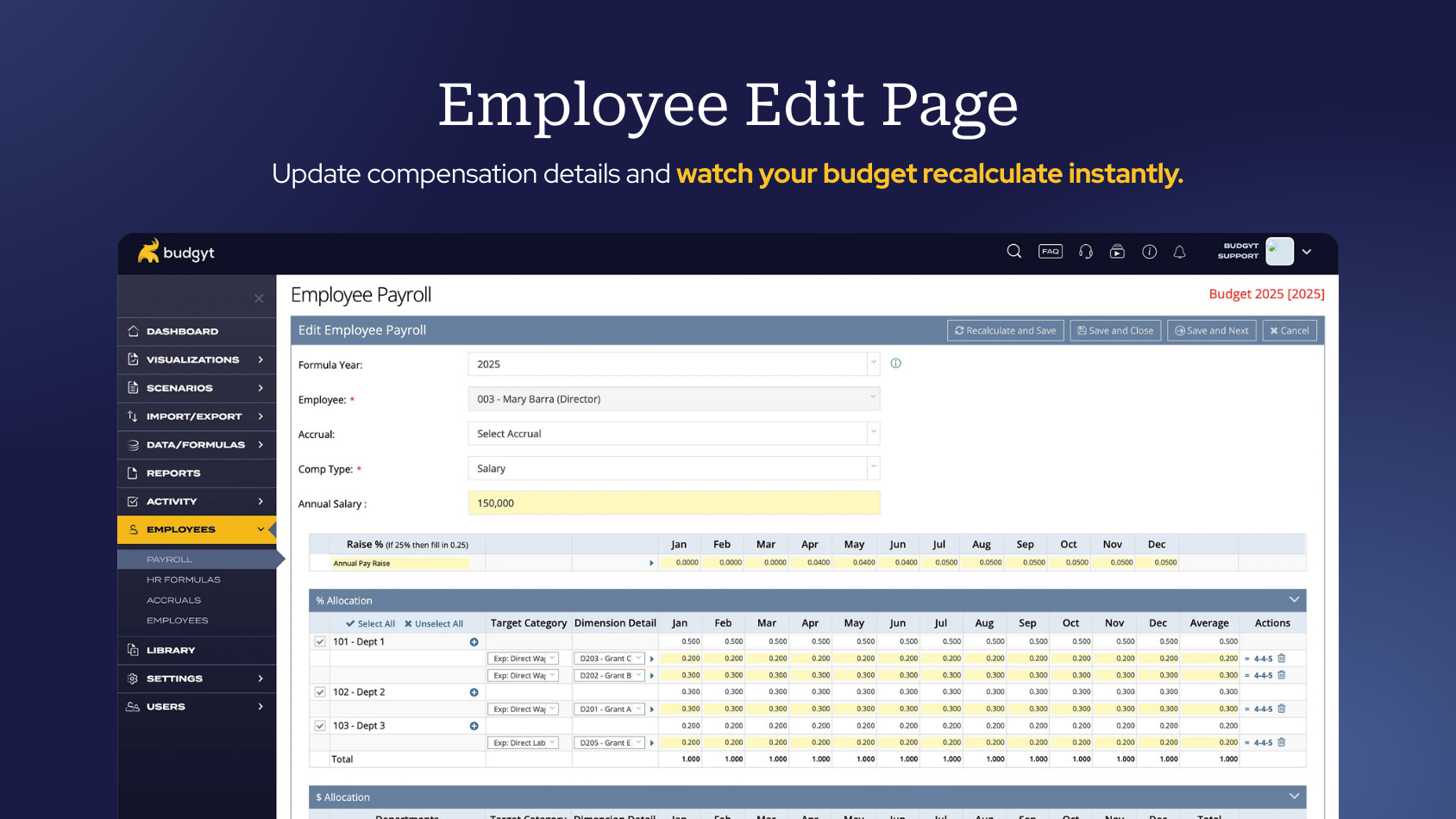
Budgyt is great for instant consolidation of a multi-department and multi-entity organization. It has strong hierarchy and roll-ups at various levels. User setup and security is straightforward, with ability to restrict data to only department heads over a project. Excellent capability in salary and benefit calculation, for instance down to each type of state and federal tax, and each type of employee health benefit with individual cost as specific as necessary. Strong export functionality.
Well suited: For use in multiple offices around the world. I was able to obtain financial reporting data from 5 foreign offices and then consolidate their data with 3 domestic USA offices to prepare a consolidated financial statement. Less Appropriate: Translating the financial value for consulting services could be a bit challenging because that required human interaction and judgement. It would have been great to be able to set up some software to be able to interpret this and let it run for all future project work revenue projection.
budgeting: building annual budgets from the ground-up
financial reporting: Budgyt includes a number of great options for navigating financial reports
analysis (& reporting): the ease and flexibility of configuring and using data tools allow for detailed analysis, and numerous options for accessing data to enable effective analysis and reporting views
This product handles budgeting by Employee and/or Position very well. It is highly flexible and allows Hyperion administrators the ability to develop a planning application that fits a variety of different business needs.
It is great at calculating benefits using business rules to automate the population of these fringe costs in the overall budget planning process. This greatly reduces user error.
It allows you to seed the operating budget based on changes to key drivers, such as percentage increases, flat dollar increases and more detailed changes using business rules.
Allows visibility into the plans for each unit across the organization, rolled up into an overall budget for the campus.
It handles the creation of budgets with multiple chartfield segments or dimensions, which most other budgeting systems cannot handle well. It can aggregate these very quickly.
The ability to remove %'s entirely from reports, instead of only partially removing %'s from a report.
The formulas C2C and FOAs can be confusing to set up. I think more explanative data ---- hovering over question marks alongside cells you must complete as a suggestion --- in this module would be useful. These formulas work great once you trial & error your way into them operating. But we find their initial set-up a time commitment. We don't want to watch how-to videos each time we set them up. The hover/clarifications of what certain cells mean would be very helpful.
One pain point for us is the consolidation and translation process. Needing to translate the data over and over again is frustrating and there is no visibility into how many users are running a translation. If multiple users attempt to translate the same data set, say goodbye to your performance but you have no way of knowing! (Unless you want to pull up a task audit which is not a very realistic expectation). It has the been the quickest way for us to bring the system to it's knees. The consolidation process performs in direct correlation to the complexity of the calculation/consolidation rules. So, while the product is extremely flexible, you still have to be careful how you design your rules and calculations to make sure that you do it on the smallest subset of data as possible to avoid large processing times. This makes sense, but requires some significant expertise that most organizations do not have in-house.
The Hyperion Financial Reporting product is ridiculously outdated and clunky to use. The interface for designing reports is not intuitive, and not easy to modify once a report is built. I think there must be a strategic decision to move away from it and go to something more like Oracle BI because I just can't understand why in the world they don't update the reporting product. It also requires a significant level of expertise to be able to use. Not a great solution at all if you want multiple end-users to create reports in something other than Excel. Nobody except the HFM admin (which I used to be) in our company even touches this module.
Another pain point is the amount of IT support that is required to run this thing, and again, specialized knowledge of Hyperion products and how they work is required for IT to adequately support it. This goes for application servers and the Oracle database that the applications are running on.
It is awesome, will never go back to the spreadsheet. Just paid for our second year. It does everything we need. Slick interface for data entry, easy to use and run reports with a few clicks to get what you want. great data comparison, flexible to be able to see monthly totals from prior year or other scenario when entering in the data sheet
We're in the middle of the road because we are not sure that other products on the market fit the bill for what we need yet. Hyperion is expensive and burdensome from an administrator and maintenance standpoint, but it still seems to be the best solution for what we need. Show us an equally capable SaaS consolidation product and we'll talk again.
We have not encountered any issues with Budgyt’s limitations, given the number of departments and the volume of data we pass to the tool. I have no reason to give it anything less than a 10; the only limitation so far is that we don’t have full API integration yet. Once that is finalized, we will be seamlessly integrated across all of our financial platforms and tools.
During my first year of working within the budget software, I had to go through some training while trying to meet deadlines for meetings. The team at Budgyt was very accommodating and made sure I was equipped with the knowledge that I needed to be successful
The premium support team provides much needed dedicated customer service which we are after for what we have paid for this service. We are satisfied with the service and support and do not have any instance where there was an issue that requires escalation to get the right support team. Though the incidence of major issues that requires the premium support are less, we prefer to keep this as a safety net.
Other than Hyperion, which is in a different league and more suitable for much larger organizations, I would say that Budgyt compares very favorably. We moved from Great Plains to Sage Intacct, and evaluated their planning solution at the time of implementation. We were very underwhelmed by the management reporter tool that we used with GP, and budgeted with Excel prior to moving to Sage. We began looking at several other products alongside Budgyt & Sage's solution, but were so impressed by Budgyt that at its price point it was a no-brainer. We liked Sage's tools plenty, but felt that Budgyt could do more and cost less, so opted to go this route despite the lack of direct integration.
I use Oracle Hyperion Enterprise Performance Mangement because the company I work at requires me to use it in the Financial Planning sector as most of their data is stored in it. I am open minded and ready to use other performance management tools created by Oracle if my work permits.
The ability to budget at multiple organizational levels is central to Budgyt's design. These levels can be regions or product lines or departments, which are all easily rolled up to a consolidated organizational view. Reporting back against these levels is also built-in to the system.
We have had the product in place for less than a year and have yet to roll it out to the full management team. I know that this will be a huge tool for managers as they are always telling me that they are approving expenses even though they do not know their budget!
Oracle Hyperion allows us to automate and consolidate financial data that used to be performed manually in spreadsheets. From that perspective the ROI is huge.
Oracle Hyperion functionality is extensive and allows us to perform most functions for planning, consolidating and reporting on our financial data.
One negative with Oracle Hyperion is that it is complicated to implement and maintain. It takes expertise at all levels (infrastructure and management) to realize the benefits from it.