TrustRadius: an HG Insights company

Sage Intacct

Score8.6 out of 10

2,968 Reviews and Ratings

What is Sage Intacct?

Sage Intacct is a cloud ERP system targeted at high-growth small and medium-sized businesses. Intacct includes applications for core financials and accounting, purchasing, order management, and financial reporting and business intelligence. It also integrates with 3rd party software like Salesforce.

Media

Screenshot of Accounts Receivable: Automate accounts receivable processes.
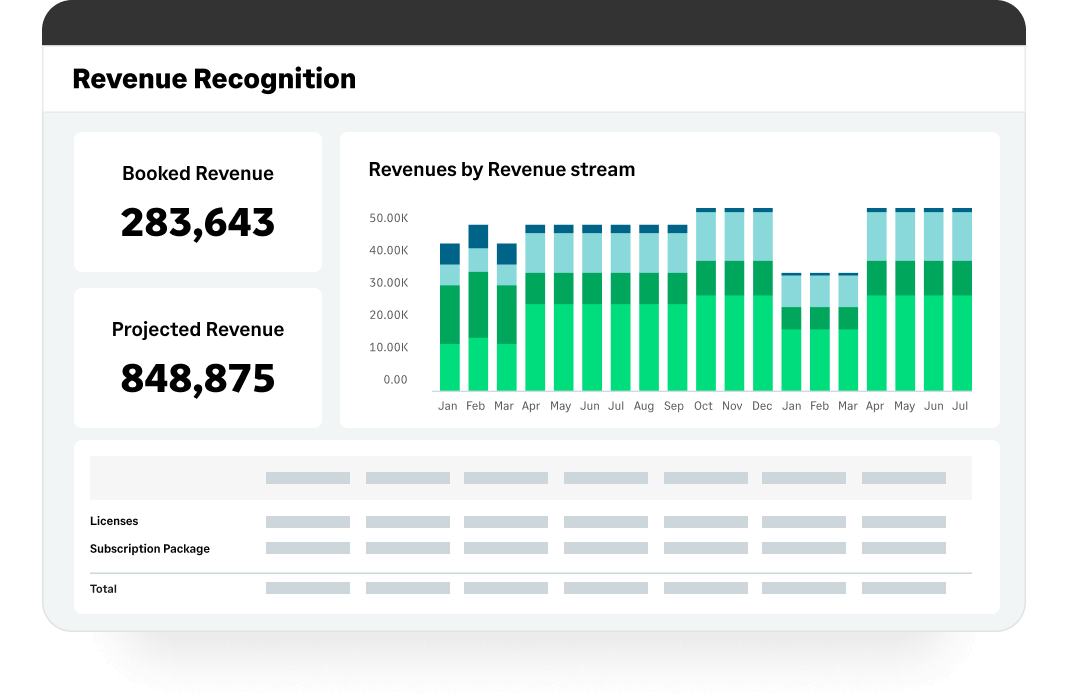
Screenshot of Revenue Recognition: Automated and compliant revenue recognition with complete support for ASC 606 and IFRS 15.
Screenshot of Real-Time Reporting: Real-time reporting with up-to-minute financials across multiple business dimensions. Show only the metrics that matter based on the user viewing the dashboard.
Screenshot of the times and expense management dashboard, which is customized to reflect the user's role, displaying relevant information that aligns with their position, thereby presenting each individual with the data most pertinent to their responsibilities.
Screenshot of the detailed company metrics used to forecast business growth.
Screenshot of the order management workflows, which are automated to accelerate quote-to-cash sales

1 / 6

Screenshot of Accounts Receivable: Automate accounts receivable processes.

Top Performing Features

  • Single sign-on capability

    The software system supports a centralized authentication mechanism allowing the user to access multiple systems with a single, centrally managed password.

    Category average: 8.5

  • Journals and Reconciliations

    Automate and synchronize ledgers and processes

    Category average: 8.7

  • Role-based user permissions

    Permissions to perform actions or access or modify data are assigned to roles, which are then assigned to users, reducing complexity of administration.

    Category average: 8.5

Areas for Improvement

  • Cost of goods sold

    The software calculates the direct costs attributable to a finished product, such as materials and labor, and includes roll-up pricing.

    Category average: 8

  • Automatic reordering

    The software can be set up to automatically reorder a good when it falls below a certain threshold.

    Category average: 7

  • Manufacturing module

    The software helps track and manage raw materials, work-in-progress items, and finished goods.

    Category average: 6.6

Small Team Big Impact.

Use Cases and Deployment Scope

We use Sage Intacct as the core financial system for our trade association, which has a diverse revenue mix including membership dues, an annual conference, government contracts, and a growing training program. Before Sage Intacct, we were on Microsoft Dynamics Great Plains, which had become increasingly unstable and wasn't keeping up with our growth. Our data was scattered across multiple systems, integrations were manual, and invoicing was handled by individual sales departments with no centralized visibility. Sage Intacct addressed all of that. We now have real integrations with our AMS, expense management, and budget tools, so data flows in automatically. We centralized invoicing under accounting, freeing our sales teams to focus on revenue rather than chasing payments. Automated reminders, recurring journal entries, and direct auditor access have significantly reduced manual work across the team. We actively use the Accounts Receivable, Order Entry, and Prepaid Expense modules, and dimensions have been a game-changer for custom reporting. The ability to answer leadership questions in real time, without digging through multiple systems, has been one of the most meaningful improvements since going live.

Pros

  • Real-time integrations with third-party tools.
  • Dimensions and reporting that allow custom reporting and drill down.
  • Role-based permissions and access controls.

Cons

  • Bank feed connectivity is limited in practice. Due to the extra security layers many banks have in place, we haven't been able to fully take advantage of the bank feed capabilities Sage Intacct offers. If they could find a way to work around those barriers, that would be a big win.
  • Building custom reports can be complex to learn.

Return on Investment

  • Centralizing invoicing under accounting reclaimed 15-20% of membership staff time and reduced event sales collections from 2-3 hours per week to about 30 minutes during peak season.
  • Automation and integrations allowed us to absorb the workload of a departing team member without backfilling the role, representing direct cost avoidance in hiring and onboarding.
  • We continue to take on more operational complexity each year without adding staff or changing systems, which is the clearest sign the investment has paid off.

Alternatives Considered

Blackbaud Financial Edge NXT and NetSuite ERP

Other Software Used

Emburse Nexonia, MineralTree, Versapay

Scalable Finance Platform That Improves Visibility Controls and Reporting.

Use Cases and Deployment Scope

We use Sage Intact as our core financial management and accounting platform to support finance operations across our different verticals. It primarily addresses business problems related to financial visibility across different verticals, accounting accuracy, reporting efficiency, and, most importantly, operational control. Our major use cases are as follows: General Ledger, Accounts payable and vendor management, AR Bank reconciliations, Month-end and period close, Budgeting, Forecasting, and variation reporting, Integration with Salesforce, Projects planning, Timesheet integration. The outputs are primarily used by leadership, operations, and business stakeholders for decision-making. It certainly gives us better visibility into our revenue expenses and profitability across different verticals.

Pros

  • Multi dimensional financial reporting.
  • Real time visibility into financial reports.
  • Entity and Intercompany management.
  • Custom dashboards and unique reporting as per roles.

Cons

  • User interface can feel dated or unintuitive.
  • Reporting a bit hard to configure.

Return on Investment

  • Faster and more reliable financial reporting.
  • Improved month-end close efficiency.
  • Better expense control and budget accountability.

Alternatives Considered

Zuora and NetSuite ERP

Other Software Used

Atlassian Jira, monday.com, Azure DevOps

Consolidation and Project Accounting Tool

Use Cases and Deployment Scope

We use Sage Intacct as our main accounting software. It allows us to easily allocate costs to our projects and create financial statements quickly. We link our bank accounts and credit cards to the software, and it imports transactions automatically. This saves us time when we need to reconcile those accounts and know where we stand in real time.

Pros

  • Job Costing
  • Intercompany & Consolidation Accounting
  • Bank Account Reconciliation

Cons

  • The import struggles with some of our credit card accounts with American Express.
  • The reporting can be frustrating if you don't have a consultant building reports for you.
  • The dashboards also require a consultant or software expert to build them for you.

Return on Investment

  • We can process invoices in less than 2 business days.
  • We can close our books and create financials within 5 business days.
  • Our accuracy and efficiency has increased significantly.

Alternatives Considered

NetSuite ERP, QuickBooks Desktop Enterprise and QuickBooks Online Advanced

Other Software Used

Stampli, Ramp, Buildertrend

Sage Intacct Benefits with Multi-Entity Setup

Use Cases and Deployment Scope

I work the accounts payable in my company, and we utilize Sage for its ability to organize multi-entity AND multi-currency organizations. Being able to process bills and invoices through various entities across the globe is highly efficient. The inter-entity automations and consolidated reporting allow us to manage multiple locations and streamline our month-end closes.

Pros

  • Inter-entity automations
  • consolidated reporting
  • AI automations integrations
  • API integrations with 3rd party providers

Cons

  • During initial setup multi-currency setup cause other applications and subscriptions to not work which took a long time for developers to fix.
  • The flow of views can be frustrating. Clicking on the payment icon in bills or invoices does not show full payment details for example.
  • Custom reporting is very hard to use, and the learning materials does not give simple steps to create.

Return on Investment

  • We are in early stages, but we are seeing areas where P&L are lacking
  • The GAAP-compliant setup shows areas where we need to correct our accruals and amortizations

Alternatives Considered

QuickBooks Desktop Enterprise

Other Software Used

Ramp, Paylocity, ADP SmartCompliance

Sage Intacct 2026

Use Cases and Deployment Scope

Sage Intacct is our primary financial accounting system. We are a mid-size non-profit in a metro area that runs multiple programs side-by-side along with a robust grant-making initiative for local agencies. Most of our programs are also grant-funded. Sage Intacct allows us to run multiple revenue streams alongside one another and provide custom reports to each program manager.

Pros

  • User friendly interface
  • Quick issue resolution
  • Integration with payroll software

Cons

  • Custom Reporting has been difficult for us to engage
  • Interface could be more aesthetically pleasing
  • Cost - we need to use more parts of this system to fully justify the cost

Return on Investment

  • Automated reporting means people have current information and don't have to ask Accounting about every expenditure
  • API with payroll software has eased our payroll processing and allowed us to keep the department small
  • Formalized Vendor accounts allow us to practice DEI in selecting which vendor to use

Other Software Used

QuickBooks Desktop Pro, Safari, Adobe Acrobat
