Caffe2 is a lightweight deep learning framework from Facebook Open Source.
N/A
OpenText Magellan
Score 9.0 out of 10
N/A
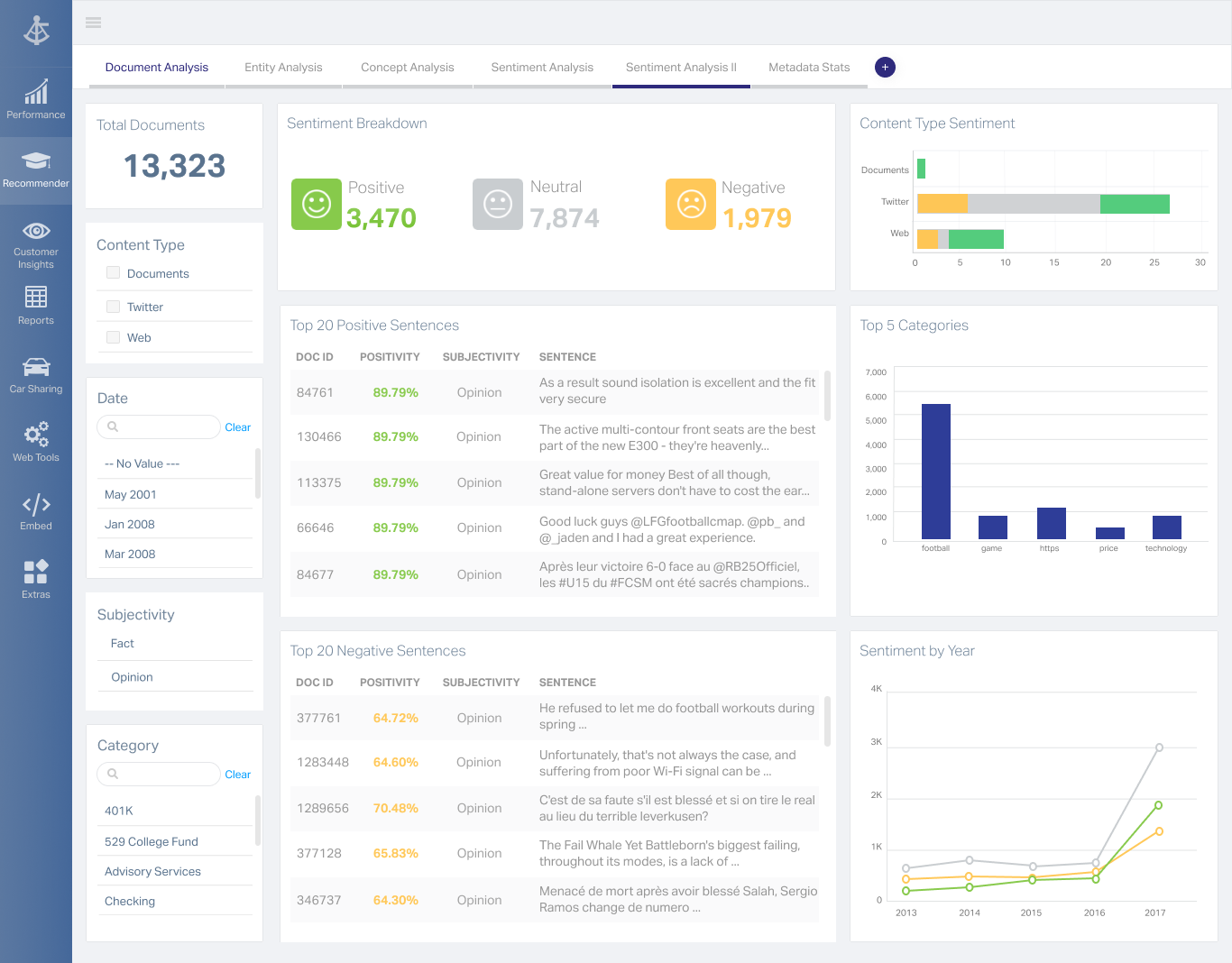
OpenText Magellan Analytics Suite leverages a comprehensive set of data analytics software to identify patterns, relationships and trends through data visualizations and interactive dashboards.
N/A
Pytorch
Score 9.3 out of 10
N/A
Pytorch is an open source machine learning (ML) framework boasting a rich ecosystem of tools and libraries that extend PyTorch and support development in computer vision, NLP and or that supports other ML goals.
N/A
Pricing
Caffe2
OpenText Magellan
Pytorch
Editions & Modules
No answers on this topic
No answers on this topic
No answers on this topic
Offerings
Pricing Offerings
Caffe2
OpenText Magellan
Pytorch
Free Trial
No
No
No
Free/Freemium Version
No
No
No
Premium Consulting/Integration Services
No
No
No
Entry-level Setup Fee
No setup fee
No setup fee
No setup fee
Additional Details
—
—
—
More Pricing Information
Community Pulse
Caffe2
OpenText Magellan
Pytorch
Considered Multiple Products
Caffe2
No answer on this topic
OpenText Magellan
No answer on this topic
Pytorch
Verified User
Engineer
Chose Pytorch
The syntax of PyTorch is much better in my opinion, and the programming style is more pythonic and easier to use. I also think PyTorch is a lot easier to debug than the competitors I've listed (Caffe2 and TensorFlow). I do like some of the examples given on tensorflows website, …
If you do not have a large budget and are a large organization, I would steer clear of Actuate. If you are looking to do very complex washboarding, I would not use them. Your developers have to be very skilled to work with this. Plan to bring in consultants if necessary to help your process. Adhoc reporting is weak. If your pricing is user based and you expand, this could be very expensive.
They have created Pytorch Lightening on top of Pytorch to make the life of Data Scientists easy so that they can use complex models they need with just a few lines of code, so it's becoming popular. As compared to TensorFlow(Keras), where we can create custom neural networks by just adding layers, it's slightly complicated in Pytorch.
I am no longer working for the company that was using Actuate but I believe they would continue to use it because the stitching costs would be to high. It would require a complete rewrite of the reports and the never version of Actuate (BIRT) even required an almost complete report rewrite
It is quite intuitive to use. It is fit specifically for doing sentiment, emotion, and intention analysis as well as text classification and text summarization. I would have given 10 if it is fit for the purpose of doing image processing and analysis as well. There is a huge market to analyze video and image data.
The big advantage of PyTorch is how close it is to the algorithm. Oftentimes, it is easier to read Pytorch code than a given paper directly. I particularly like the object-oriented approach in model definition; it makes things very clean and easy to teach to software engineers.
It is vastly superior to these in many ways, for complex reporting it is a much more sophisticated solution. Visualizations are very good. Javascript extensibility is very powerful, others don't support this or as well. Pentaho and MS are both OLAP oriented. Pentaho is moving more toward big data, which was not our primary focus. Others are stuck in the Crystal Reports Band metaphor.
Pytorch is very, very simple compared to TensorFlow. Simple to install, less dependency issues, and very small learning curve. TensorFlow is very much optimised for robust deployment but very complicated to train simple models and play around with the loss functions. It needs a lot of juggling around with the documentation. The research community also prefers PyTorch, so it becomes easy to find solutions to most of the problems. Keras is very simple and good for learning ML / DL. But when going deep into research or building some product that requires a lot of tweaks and experimentation, Keras is not suitable for that. May be good for proving some hypotheses but not good for rigorous experimentation with complex models.
Actuate can handle 50 to 60 sub reports inside a report very well.
Dynamically creating the datasource, chart, graph, reports are the main advantages. We can do any level of drilling, and can create a performance matrix dashboard efficiently.