Cisco now offers OpenDNS Umbrella Web Filtering. Cisco acquired OpenDNS in August 2015, and rebranded the product as Cisco Umbrella.
N/A
SonarQube
Score8.7 out of 10
N/A
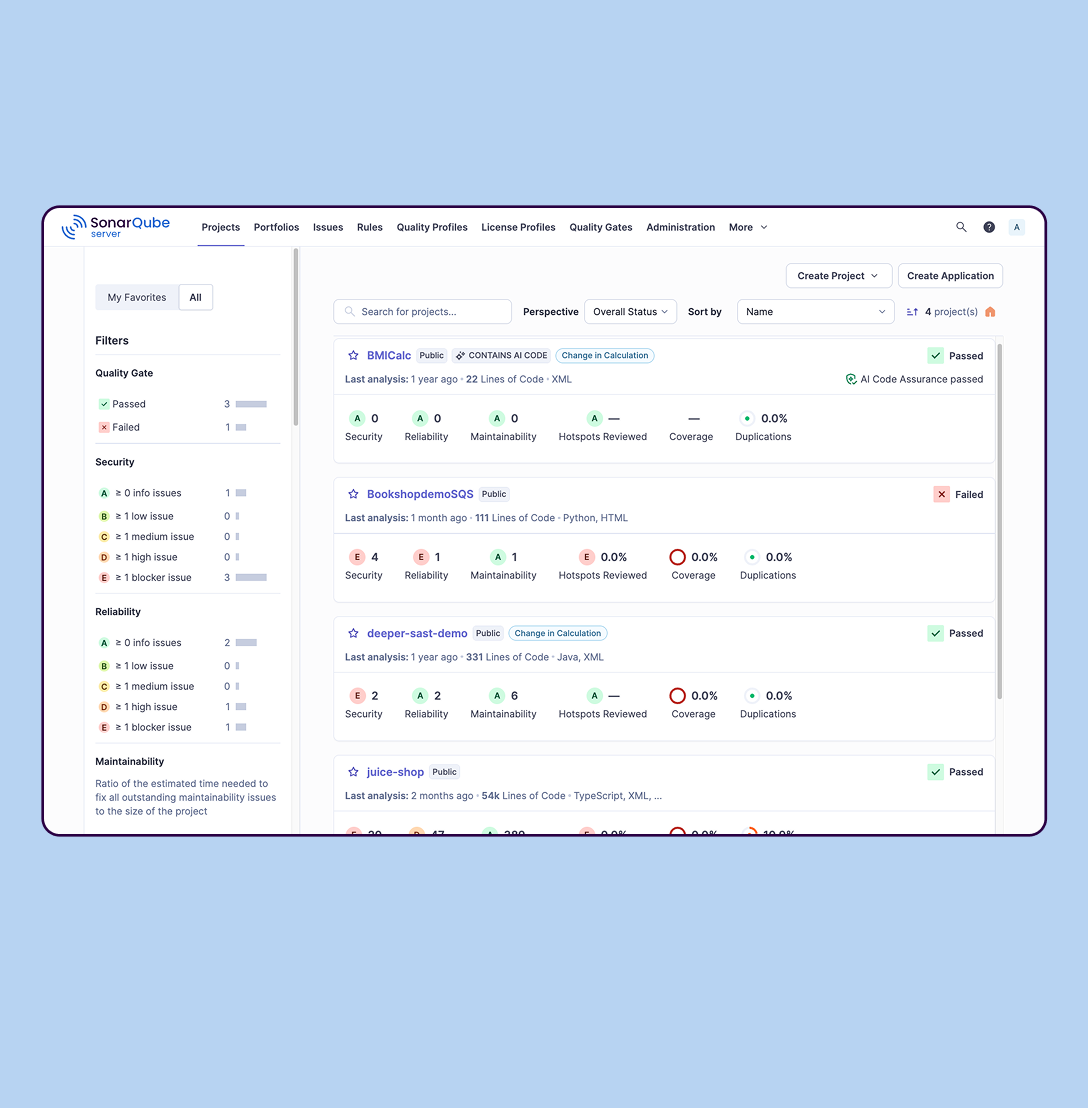
SonarQube is an automated code review solution, serving as the verification layer for code quality and SDLC security. SonarQube is used to ensure that code is secure, reliable, and maintainable. It is available through SaaS or self-managed deployment.
When a company has a distributed workforce, the produce works very well to unify a set of policies to apply against web bound traffic. Areas we have struggled with is getting value out of our cloud delivered firewall due to requirements to fully use it
A de minimis incentive was given to thank the reviewer for their time. The incentive was not used to bias or drive a particular response, nor was the incentive contingent on a positive endorsement. More Info
SonarQube is excellent if you start using it at the beginning when developing a new system, in this situation you will be able to fix things before they become spread and expensive to correct. It’s a bit less suitable to use on existing code with bad design as it’s usually too expensive to fix everything and only allows you to ensure the situation doesn’t get worse.
A de minimis incentive was given to thank the reviewer for their time. The incentive was not used to bias or drive a particular response, nor was the incentive contingent on a positive endorsement. More Info
As many companies think—they’re afraid of firewalls, but they want to keep something secure—and what it does best is it simplifies the approach from a cybersecurity perspective, especially from the user perspective. Users spend a lot of time on the web, trying to access sites, clicking links, scanning QR codes, and doing whatever. You can’t really stop them unless you have something in between that can check whether those links lead somewhere safe, or potentially run them in a sandbox if there are threats or specific use cases.
So I think one of its strongest points is that it’s very simple, and it’s not expensive compared to if you buy a firewall and licenses from other brands, where you have to configure it and spend engineer work hours or outsource the work. It’s the simplicity, and I think it just works. I had some issues five years ago, four years ago, but now it just works. I’m pretty happy.
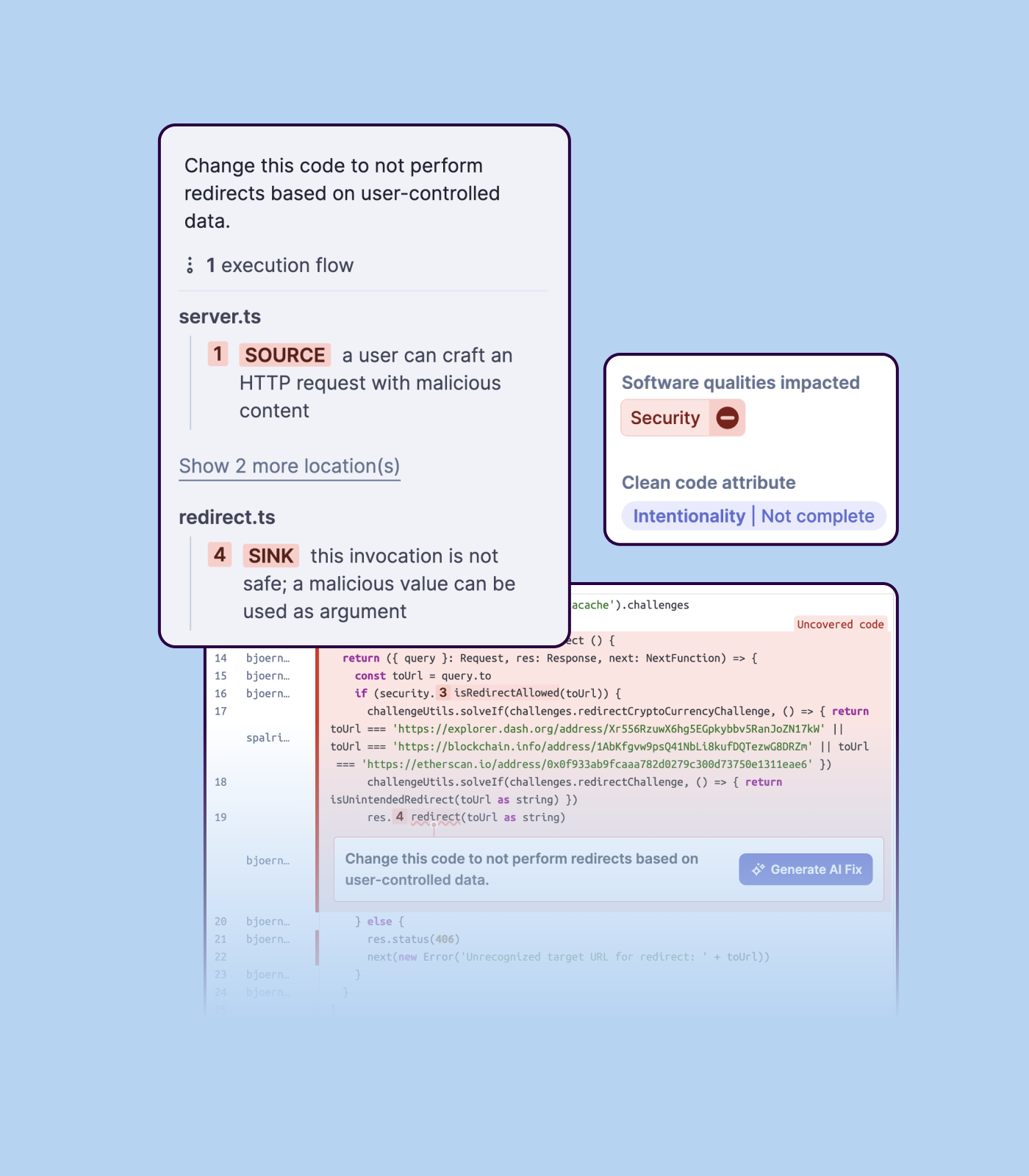
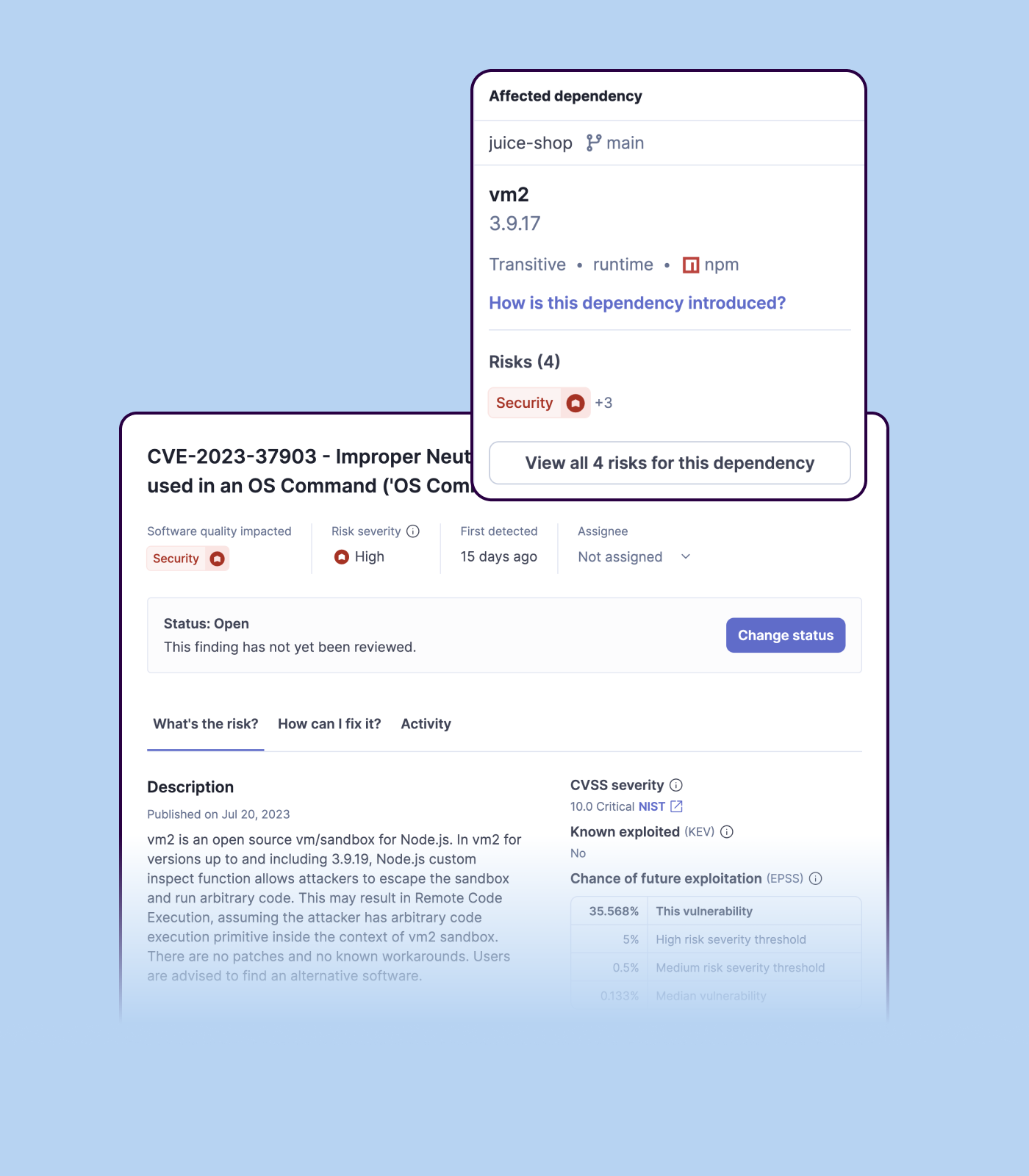
Detecting bugs and vulnerabilities: SonarQube can identify a wide range of bugs and vulnerabilities in code, such as null pointer exceptions, SQL injection, and cross-site scripting (XSS) attacks. It uses static analysis to analyze the code and identify potential issues, and it can also integrate with dynamic analysis tools to provide even more detailed analysis.
Measuring code quality: SonarQube can measure a wide range of code quality metrics, such as cyclomatic complexity, duplicated code, and code coverage. This can help teams understand the quality of their code and identify areas that need improvement.
Providing actionable insights: SonarQube provides detailed information about issues in the code, including the file and line number where the issue occurs and the severity of the issue. This makes it easy for developers to understand and address issues in the code.
Integrating with other tools: SonarQube can be integrated with a wide range of development tools and programming languages, such as Git, Maven, and Java. This allows teams to use SonarQube in their existing development workflow and take advantage of its powerful code analysis capabilities.
Managing technical debt: SonarQube provides metrics and insights on the technical debt on the codebase, enabling teams to better prioritize issues to improve the quality of the code.
Compliance with coding standards: SonarQube can check the code against industry standards like OWASP, CWE and more, making sure the code is compliant with security and coding standards.
A de minimis incentive was given to thank the reviewer for their time. The incentive was not used to bias or drive a particular response, nor was the incentive contingent on a positive endorsement. More Info
So we had in the past very general rule sets, very detailed rule sets for security rules. Like you can access this page but not this IP range and so on. So hundreds of specific rules for specific machines and the rule management in Cisco Umbrella is not that granular. So it was not possible to build up these rule sets in Cisco Umbrella, but now we see to access it's much better already. So that's why one reason why we are migrating to CQ access to have better API based possibility to manage these rule sets and synchronize them between different products that we are using and in the cloud. So yeah, we hope that with secure access it's a little bit more granular like with Cisco Umbrella currently.
A de minimis incentive was given to thank the reviewer for their time. The incentive was not used to bias or drive a particular response, nor was the incentive contingent on a positive endorsement. More Info
Importing a new custom quality profile on SonarQube is a bit tricky, it can be made easier
Every second time when we want to rerun the server, we have to restart the whole system, otherwise, the server stops and closes automatically
When we generate a new report a second time and try to access the report, it shows details of the old report only and takes a lot of time to get updated with the details of the new and fresh report generated
A de minimis incentive was given to thank the reviewer for their time. The incentive was not used to bias or drive a particular response, nor was the incentive contingent on a positive endorsement. More Info
First off I never give anything a "10" unless it's perfect. LOL - I grade on the curve. I think OpenDNS/Umbrella is a very good product. I think that fact that Cisco absorbed them is one of the proofs of that. I have used the product back when it was free for companies our size. I have not always appreciated the cost - but in the post pandemic cyber chaos, I believe the cost benefit ratio is still very high. I have honestly not looked at other products because Umbrella continues to work to my satisfaction. I consider Umbrella to be one of the key layers in my cyber security strategy.
A de minimis incentive was given to thank the reviewer for their time. The incentive was not used to bias or drive a particular response, nor was the incentive contingent on a positive endorsement. More Info
Better features and easy to manage system with great customer support and overall usability is great as it works for hybrid environment with ease as it is having features for on prem users as wells as cloud users with great customer support and great team of trained engineers to support our opeartions.
A de minimis incentive was given to thank the reviewer for their time. The incentive was not used to bias or drive a particular response, nor was the incentive contingent on a positive endorsement. More Info
A de minimis incentive was given to thank the reviewer for their time. The incentive was not used to bias or drive a particular response, nor was the incentive contingent on a positive endorsement. More Info
Cisco umbrella services in the cloud are always available. However, the weakness is the VM installed in the data center that are the first resolvers. If the VMs become unavailable for any reason or the vSphere goes down, then all DNS is affected
A de minimis incentive was given to thank the reviewer for their time. The incentive was not used to bias or drive a particular response, nor was the incentive contingent on a positive endorsement. More Info
our experience with cisco products has always been awesome and same is the case with cisco umbrella .Under umbrella cisco provides flexible and scalable software solution to use across different dept and sites . These softwares are very user friendly ,pages load quickly as these applications are designed for minimum latency and reports are also provided quickely
A de minimis incentive was given to thank the reviewer for their time. The incentive was not used to bias or drive a particular response, nor was the incentive contingent on a positive endorsement. More Info
Whilst the support is good once you get through to them, it's email only and the response is slow. This is a issue, because its a core system that needs to work. We have had issues in the past where several of our companies have gone down due to Umbrella and support is nowhere to be seen. It is very difficult to know whether Umbrella is having service issues, since they do not regularly update customers on the status of their services, such as is seen by providers such as Microsoft (status.umbrella.com just seems to show up all of the time, I'm not sure it's even updated)
A de minimis incentive was given to thank the reviewer for their time. The incentive was not used to bias or drive a particular response, nor was the incentive contingent on a positive endorsement. More Info
We we easily able to integrate the SonarQube steps into our TFS process via the Microsoft Marektplace, we didn't have the need to call SonarQube support. We've used their online documentation and community forum if we ran into any issues.
A de minimis incentive was given to thank the reviewer for their time. The incentive was not used to bias or drive a particular response, nor was the incentive contingent on a positive endorsement. More Info
Quite easy to understand training modules prepared by knowledgeable trainers. Training modules have included all the desired features of these softwares and the content delivery is very good from the respective module trainers and it explains in details the features and apart from that further training material support is also provided if needed.
A de minimis incentive was given to thank the reviewer for their time. The incentive was not used to bias or drive a particular response, nor was the incentive contingent on a positive endorsement. More Info
At the time we were forced to move from Cloud Web Security to Cisco Umbrella, Cisco Umbrella was far from being a direct replacement. It was frustrating and difficult to migrate due to the lack of functionality. This has since been addressed, however we now have legacy rulesets that were built as bandaids that cannot be removed. Hopefully the migration to Secure Access will address this.
A de minimis incentive was given to thank the reviewer for their time. The incentive was not used to bias or drive a particular response, nor was the incentive contingent on a positive endorsement. More Info
Umbrella checked all the boxes for us (at the time) because it supported multiple domains and multiple IPs to protect (we have 20+ offices), and its configuration and policies cover a lot of different options for us. We used another product prior, and it worked well, but it didn't have all the features we needed at the time.
A de minimis incentive was given to thank the reviewer for their time. The incentive was not used to bias or drive a particular response, nor was the incentive contingent on a positive endorsement. TR verified that a representative sample of customers was invited. More Info
SonarQube is an open-source. It's a scalable product. The costs for this application, for the kind of job it does, are pretty descent. Pipeline scan is more secured in SonarQube. Its a very good tool and its support multiple languages. Its main core competency is of static code analysis and that is why SonarQube exists and it does it exceedingly well. The quality of scan on code convention, best practices, coding standards, unit test coverage etc makes them one of the best competent tool in the market
A de minimis incentive was given to thank the reviewer for their time. The incentive was not used to bias or drive a particular response, nor was the incentive contingent on a positive endorsement. More Info
Cisco umbrella provides fleaxible and scalable software solutions which are easy deploy across multiple departments and sites wherever needed and this softwares are very easy to use and provides the best interface along with cisco support for other devices apart from cisco infrastructure but still there is scope for improvement on the inclusion of latest features
A de minimis incentive was given to thank the reviewer for their time. The incentive was not used to bias or drive a particular response, nor was the incentive contingent on a positive endorsement. More Info
It's a costly product and we have to admit that, but security breaches are costlier, and they can take more than we can afford so we always had positive mindset over our security purchase and Cisco Umbrella had overall positive impact.
A de minimis incentive was given to thank the reviewer for their time. The incentive was not used to bias or drive a particular response, nor was the incentive contingent on a positive endorsement. More Info
Positive ROI from the standpoint of flagging several issues that would have otherwise likely been unaddressed and caused more time to be spent closer to launch
Slightly positive ROI from time-saving perspective (it's an automated check which is nice, but depending on the issues it finds, can take developers time to investigate and resolve)