Cohesity offers AI-powered data security and management. Cohesity protects critical data workloads across on-prem, cloud-native, and SaaS with backup and recovery, threat intelligence, cyber vaulting, files and objects, and recovery orchestration.
N/A
Microsoft Defender for Cloud
Score8.6 out of 10
N/A
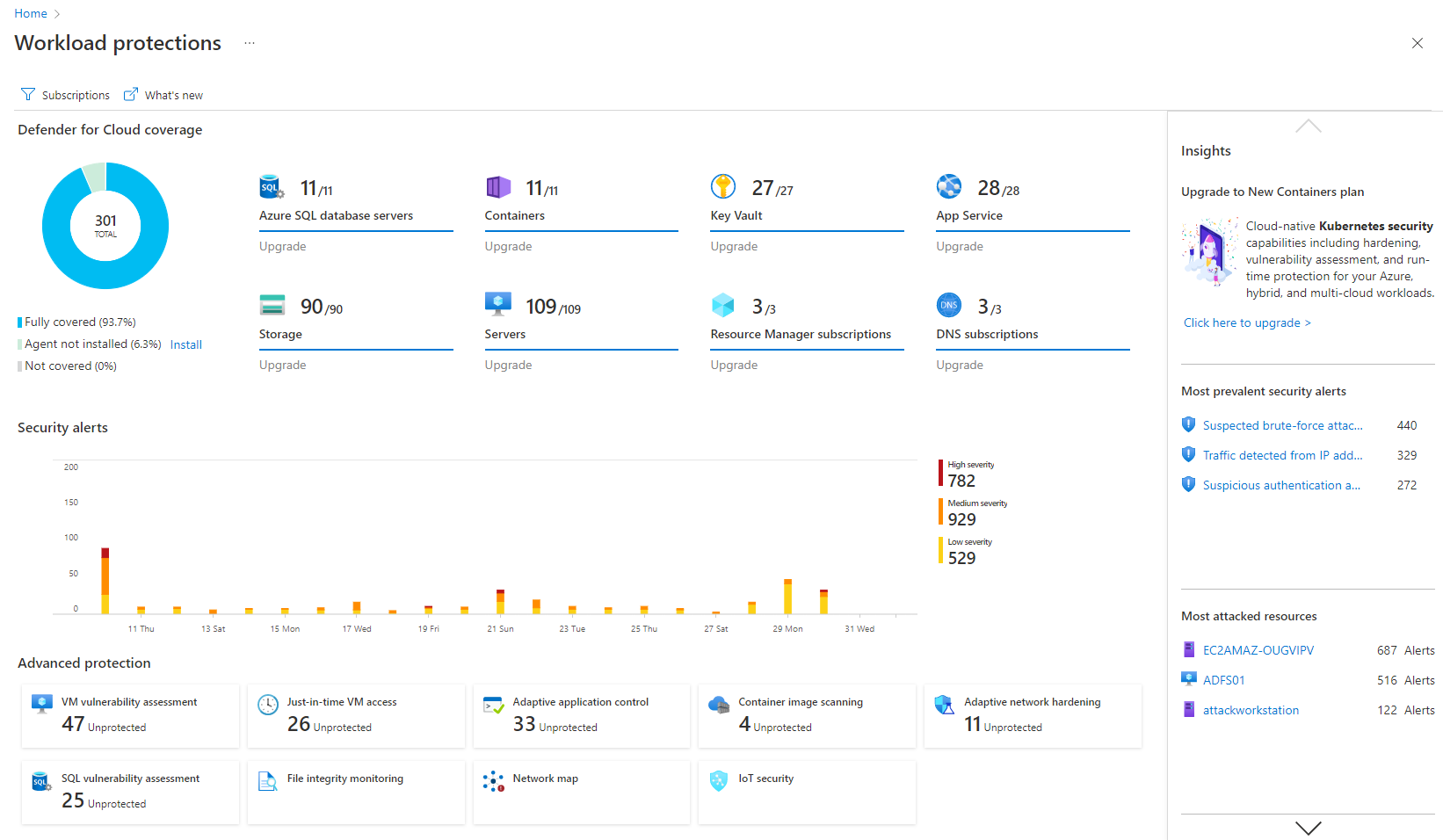
Microsoft Defender for Cloud is a Cloud Security Posture Management (CSPM) and Cloud Workload Protection Platform (CWPP) for Azure, on-premises, and multicloud (Amazon AWS and Google GCP) resources.
Cohesity has been awesome. The performance (speed) that it has been able to provide has actually given me back time every month. I have to test my backups monthly, and the Cloning process that Cohesity has available from it's backup has given me days back each month. It just a few minutes I can have VMs restored for testing and documentation. This took a couple days with the previous vendor.
A de minimis incentive was given to thank the reviewer for their time. The incentive was not used to bias or drive a particular response, nor was the incentive contingent on a positive endorsement. TR verified that a representative sample of customers was invited. More Info
I think it's good for cloud-native companies. A company that, from day zero, they're like, "We're going cloud, and this is how we're going to do it." They get it. It works well for them. Smaller organizations that are under X amount of resources- I don't know what that X might mean- but I feel like it plays well in smaller, more nimble organizations. If you're an older organization or if you're extremely large, it starts becoming a little difficult to manage at scale. And you have to sometimes throw bodies at the problem. Maybe not the most eloquent way of saying it, but that's what it feels like.
A de minimis incentive was given to thank the reviewer for their time. The incentive was not used to bias or drive a particular response, nor was the incentive contingent on a positive endorsement. More Info
It's really well laid out, with an easy-to-use, accessible UI.
With Microsoft Defender for Cloud, it has everything you need with the Safelink attachment, the Safelink emails for URL, the way it scans those URLs and attachments within the product, and you're seeing the results. And that adds an extra layer of security for the user, so you feel comfortable knowing the product monitors those. That's something I really like about that product.
A de minimis incentive was given to thank the reviewer for their time. The incentive was not used to bias or drive a particular response, nor was the incentive contingent on a positive endorsement. More Info
Reporting could always be better- executive-style reports have to be generated from data at multiple points.
Some tasks that could be brought to the UI that today we have to call support on (for example when an NFS mount is still active but we cannot see it from the UI)
Integrations with on-premise workloads can sometimes be challenging. Needs improvement and well standardised integration points
Vulnerability categories can be difficult to understand. It should allow teams to focus on critical findings and help them keep aside low-severity or suppressed vulnerabilities
Pricing can be improved as it can be over-priced for smaller businesses and would potentially affect their ROI due to the small scale
A de minimis incentive was given to thank the reviewer for their time. The incentive was not used to bias or drive a particular response, nor was the incentive contingent on a positive endorsement. More Info
We have been very pleased with this backup solution. It is fast and reliable, and supports our VMware infrastructure. The company's support has been great, including proactively replacing our nodes when the flash memory was reporting high wear. Support is offered on-shore as well. We plan on continuing to use this product for the foreseeable future.
It is a great product that integrates nicely when running an Azure platform and even multi-cloud environment. Not looking for point-solutions but a suite that answers most requirements. It is very comfortable being able to use KQL, workbooks and automation that is native to the azure platform
Cohesity Helios is very easy to use and the web up is simple to navigate and the main dashboard presents a very good and clear overview summary of protection status, capacity and other vital metrics. If you have multiple clusters you can get a single pane view of overall status which is awesome.
My visibility is limited because I'm only doing very small pieces of what the overall org does. And also, we have limitations on what we're allowed to use. It's not like we get a new product as users or leadership level users, and everything is on, and we can just do whatever we want. We're very restricted in what we can use any tooling within the org because of the different levels of regulatory constraints we have, because of just the nature of who we are inherently. So that's why. I don't think it's necessarily the product. I think it's more or less of what we're able to do with the product.
A de minimis incentive was given to thank the reviewer for their time. The incentive was not used to bias or drive a particular response, nor was the incentive contingent on a positive endorsement. More Info
Support is quick to respond but lacks that ongoing responsiveness if the issue is not simple. There will be large gaps in replies if they need to resort to escalation and when there are timezone differences between yourself and the person who picked up the ticket.
A de minimis incentive was given to thank the reviewer for their time. The incentive was not used to bias or drive a particular response, nor was the incentive contingent on a positive endorsement. TR verified that a representative sample of customers was invited. More Info
We looked at Veeam and although it's a great product when we priced out the licensing of both primary and disaster datacenters it became much too expensive. Rubrik is a great product and very similar to Cohesity. In the end, Cohesity had a secondary storage play as well as a better UI and better compatibility with lower tier cloud storage. We also like the way Cohesity did protection jobs vs Rubrik's virtual machine centric backup. CommVault is a product we still use today due to its massive features and the ability for bare metal backups. Cohesity does a much better job in the area of UI simplicity, virtual backup ease, and ease of management.
A de minimis incentive was given to thank the reviewer for their time. The incentive was not used to bias or drive a particular response, nor was the incentive contingent on a positive endorsement. More Info
I believe Microsoft Defender for Cloud stacks up well against the other tools we looked at. It is native to the Azure platform and provides the same insights as the other tools. We selected Microsoft Defender for Cloud because it integrates well with the Azure resources and gives the needed insight, security alerts and recommendations.
A de minimis incentive was given to thank the reviewer for their time. The incentive was not used to bias or drive a particular response, nor was the incentive contingent on a positive endorsement. TR verified that a representative sample of customers was invited. More Info
Overall Cohesity professional services like the rest of Cohesity are brilliant. We had some poor advice around how to carve up our Netapp protection jobs which has set us back but it has been acknowledged that a mistake was made by Cohesity and they promise for future engagements with new customers the lessons learnt with us will be integrated into their planning workshop for NAS onboarding.
A de minimis incentive was given to thank the reviewer for their time. The incentive was not used to bias or drive a particular response, nor was the incentive contingent on a positive endorsement. More Info
A de minimis incentive was given to thank the reviewer for their time. The incentive was not used to bias or drive a particular response, nor was the incentive contingent on a positive endorsement. More Info