CommonSpot is a Web platform that includes a content management system, an application development framework, marketing solutions, and social media features from PaperThin, Inc, a privately held, MA-based company. PaperThin's customers span multiple industries, including: government, healthcare, higher education, and association/non-profit sectors.
N/A
Contentful
Score 7.6 out of 10
N/A
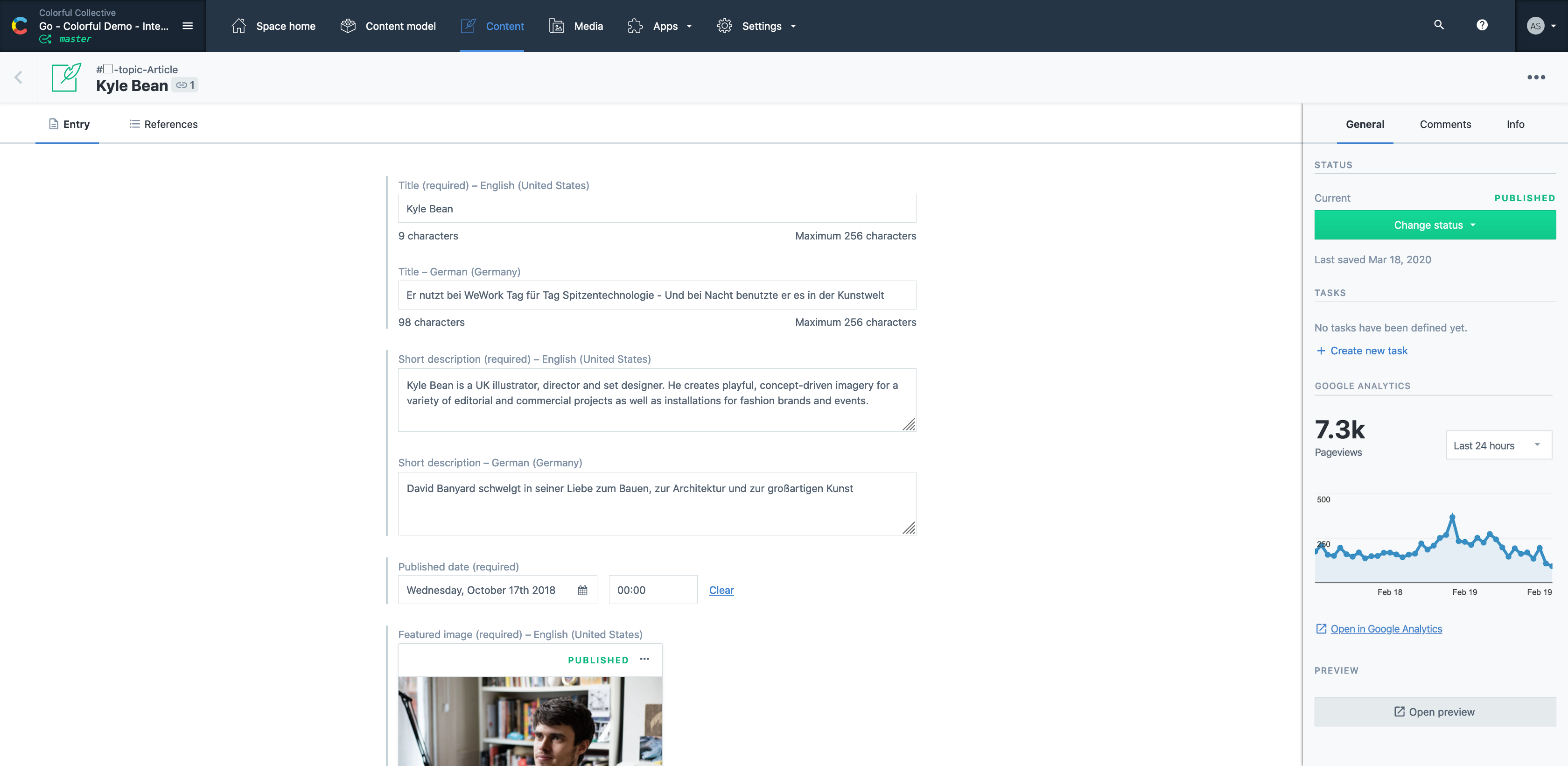
Contentful is a cloud based CMS solution that provides the ability to manage content across multiple platforms.The editing interface allows for managing content interactively and provides developers the ability to deliver the content with the programming language and template framework of their choice.
$300
per month
Pricing
CommonSpot
Contentful
Editions & Modules
No answers on this topic
Lite
$300
per month
Community
Free
Enterprise
Custom
Offerings
Pricing Offerings
CommonSpot
Contentful
Free Trial
No
Yes
Free/Freemium Version
No
Yes
Premium Consulting/Integration Services
No
No
Entry-level Setup Fee
No setup fee
Optional
Additional Details
—
—
More Pricing Information
Community Pulse
CommonSpot
Contentful
Considered Both Products
CommonSpot
Verified User
Anonymous
Chose CommonSpot
Commonspot works in tandem with Zendesk very well to accomplish tasks an an efficient manner.
Webflow is stronger in terms of being a WYSIWYG platform. Contentful however is easier for us to integrate with our many other services that need to be orchestrated by a single application, which we accomplish by creating and referencing Contentful components and entries. …
Easy to use and much more organized as a single platform versus multi. The layout is clean and easy to read and we don’t have to worry about certain users safe guarding data or content then losing it when they leave the company. It’s a one stop shop for imagery.
In the past we've used WordPress to manage documentation content. Wordpress was more flexible than Contentful but also prone to inconsistencies and we ended having a lot of hacks to accomplish various Wordpress tricks. With Contentful there's less ambiguity so content producers …
Contentful offers a great deal of features for a relatively low price. This is what ended up persuading us to purchase it. We also gathered that this was one of the more well-rated products out there, which was encouraging. It definitely stacks up well against its competitors.
For custom solutions, Contentful blows every other CMS I've used out of the water. Unlike WordPress, there's no clutter to wade through, and you can simply build the infrastructure you need. It's more secure by far, and works seamlessly with modern frontend technologies, like …
Contentful was the most user-friendly platform that everyone in our company could understand. It doesn't have the integrations that Wordpress does, but it was easier for everyone in our organization to use. We've also seen good ranking and traffic from the pages created in …
Contentful is easy and fast and cheap. I went from zero experience to loading data out of my contentful space in about an hour or more. The cost is very reasonable and compared to options like CloudCMS are a fraction of the cost. The benefit is that with a lower cost entry …
I do actually think CommonSpot is pretty well suited when the organization that you work for requires very specific parameters on site design. It was very clear what could be used and what could not in the design of individual department pages. The other thing I think CommonSpot is best suited for is website content management done by people with little or no website content management experience. It's very intuitive and easy to use and thus, easy to train people on.
It's a great all rounder for content projects. It's easy in the basics and powerful in the complex, data heavy scenarios. Extending the platform is straightforward and the SDK gives you everything you need. If you have many many varying content types , it gets expensive and perhaps not the best choice .
I think CommonSpot's greatest strength is its ease of use. It's relatively intuitive in it's usage, so it therefore makes it easy to train new people to use it.
Within my usage of it, our options were limited, which again added to it's ease of use.
Commonspot needs to improve on its authoring feature. It is impossible to author on more than one page at a time . (One must always click on "View work on all changes") before switching between pages otherwise, the changes will not be saved.
CommonSpot does not support sharing the definition of any custom element or any template layouts. Therefore, one must recreate these in each site.
In Commonspot, a user who has to manage content in multiple sites will have to log in to each site to see and act on any actions.
Contentful uses "references" to allow you to build very modular content. If I have a "slider" content type, I can create a "slide" content type which references a "button" content type, and so forth. This works well, but I occasionally wish there was a better solution for one-off content, like a settings page. Currently, this is done for creating an entire content type called "settings" with a single entry. Not a big deal, but not ideal, either.
There are a few quirks with GatsbyJS integration, etc, but these issues are being fixed and improved upon very quickly.
A minor gripe, but Contentful does not have a way to organize fields within an entry. Entries with many fields are somewhat tiresome to scroll through.
I had no previous background in content management, and found it very easy to use. If I could figure it out, I am pretty certain that just about anyone else could as well.
It is a very easy to use and configure application. I find that it is on the user to manage the content after the models have been created, yet I still do not encounter issues finding or creating new components for our site. It is easy to set up and easy to navigate.
For custom solutions, Contentful blows every other CMS I've used out of the water. Unlike WordPress, there's no clutter to wade through, and you can simply build the infrastructure you need. It's more secure by far, and works seamlessly with modern frontend technologies, like GatsbyJS. In contrast to website builders like Squarespace and Wix, Contentful gives developers (like myself) free range to create high-quality, unique, scalable frontends that aren't limited by preexisting design and layout structures.
Contentful has saved us valuable development time that was previously spent doing deploys for minor content updates.
Contentful has helped us maintain consistent documentation, reducing time needed to review for consistency.
Can't say we've really experienced any negative ROI impacts from using Contentful, but we've run into some limitations in adding too many content models and the next pricing tier is substantially more expensive.