Control-M from BMC is a platform for integrating, automating, and orchestrating application and data workflows in production across complex hybrid technology ecosystems. It provides deep operational capabilities, delivering speed, scale, security, and governance.
$29,000
per year
GitLab
Score 8.8 out of 10
N/A
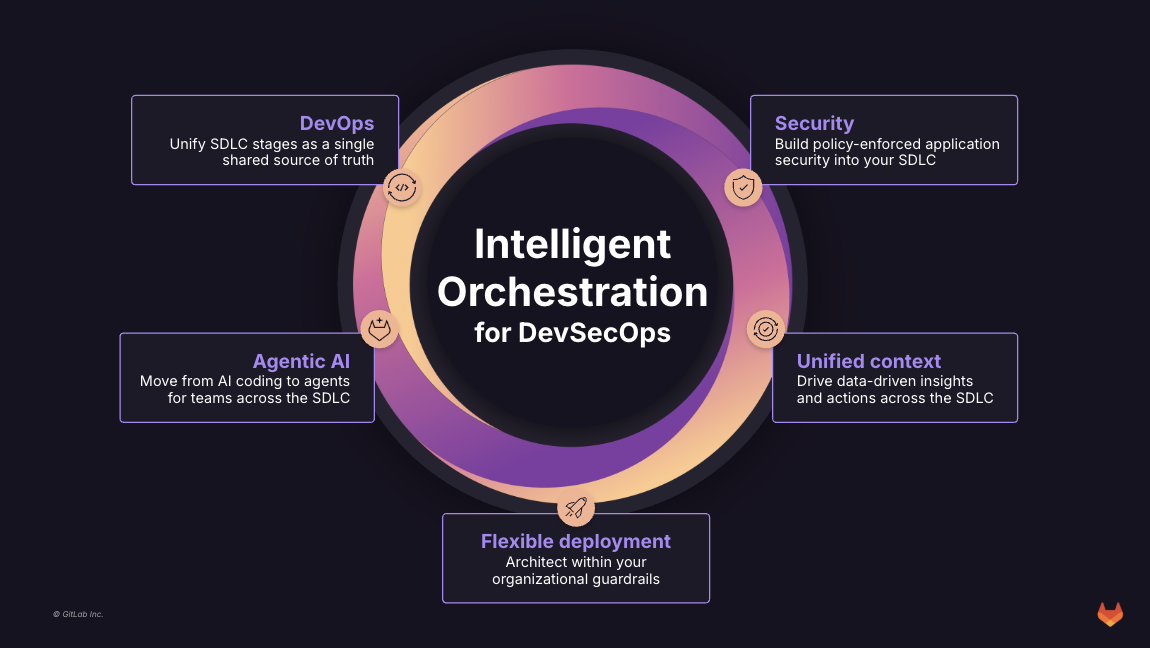
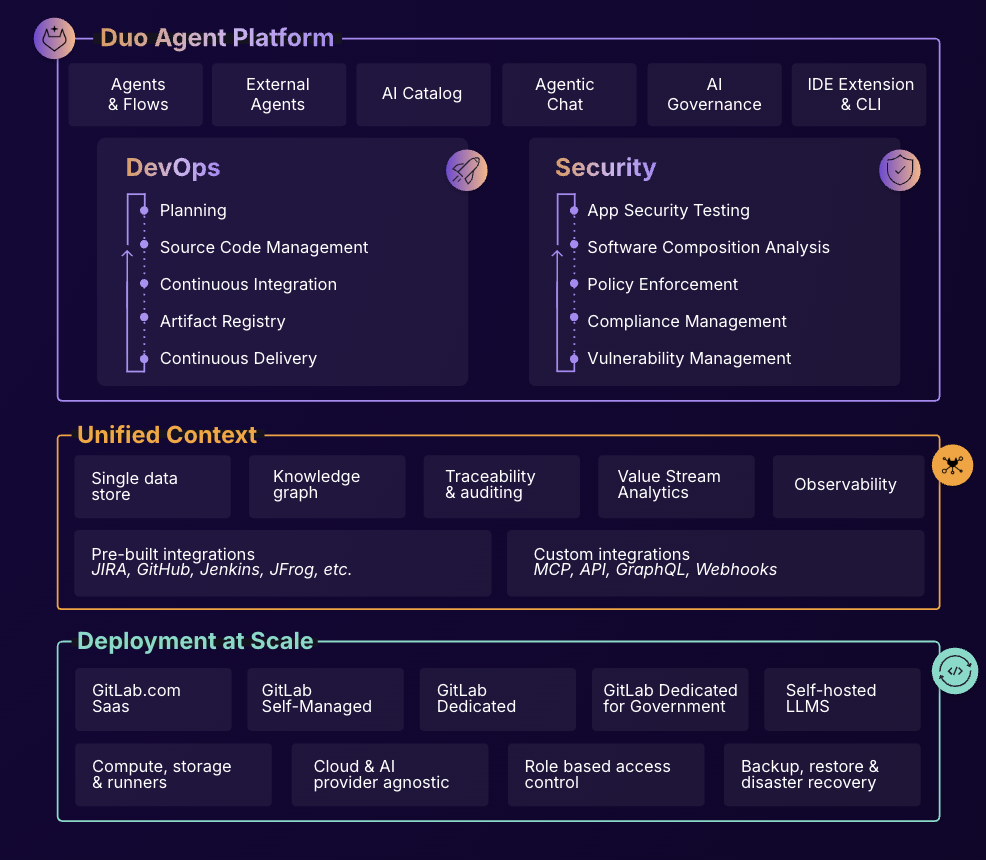
GitLab is an intelligent orchestration platform for DevSecOps, where software teams enable AI at every stage of the software lifecycle to ship faster. The platform enables teams to automate repetitive tasks across planning, building, securing, testing, deploying, and maintaining software.
$0
per month per user
GoCD
Score 8.0 out of 10
N/A
GoCD, from ThoughtWorks in Chicago, is an application lifecycle management and development tool.
N/A
Pricing
Control-M
GitLab
GoCD
Editions & Modules
On-Premise
Contact Sales
SaaS
Starting at $29,000
per year
GitLab Free (self-managed)
$0
GitLab Free
$0
GitLab Premium
$29
per month per user
GitLab Premium (self-managed)
$29
per month per user
GitLab Ultimate
Contact Sales
GitLab Ultimate (self-managed)
Contact Sales
No answers on this topic
Offerings
Pricing Offerings
Control-M
GitLab
GoCD
Free Trial
Yes
Yes
No
Free/Freemium Version
No
Yes
No
Premium Consulting/Integration Services
Yes
Yes
No
Entry-level Setup Fee
Optional
Optional
No setup fee
Additional Details
—
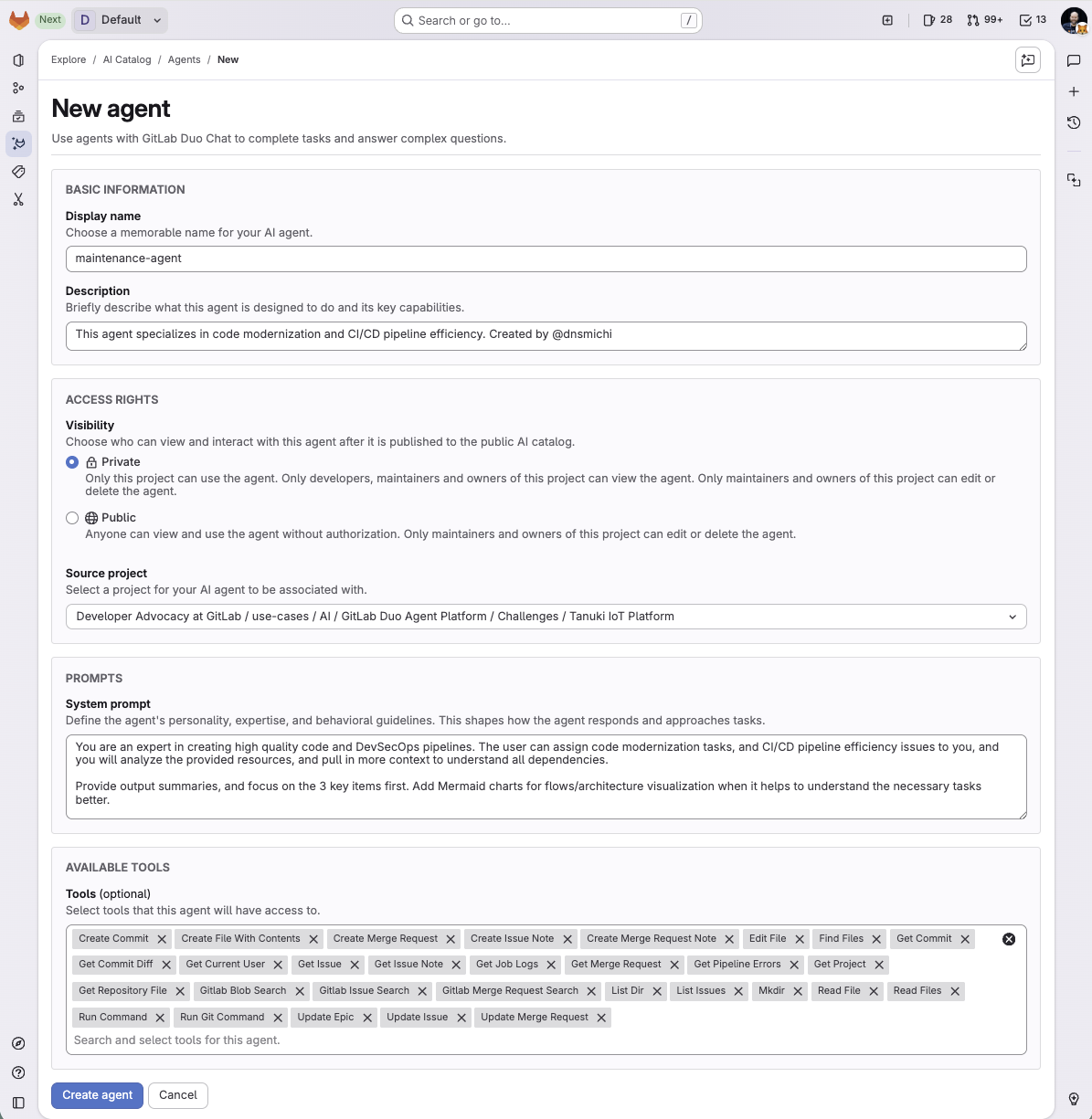
GitLab Credits enable flexible, consumption-based access to agentic AI capabilities in the GitLab platform, allowing you to scale AI adoption at your own pace while maintaining cost predictability. Powered by Duo Agent Platform, GitLab’s agentic AI capabilities help software teams to collaborate at AI speed, without compromising quality and enterprise security.
If usage exceeds monthly allocations and overage terms are accepted, automated on-demand billing activates without service interruption, so your developers never lose access to AI capabilities they need.
Real-time dashboards provide transparency into AI consumption patterns. Software teams can see usage across users, projects, and groups with granular attribution for cost allocation. Automated threshold alerts facilitate proactive planning. Advanced analytics deliver trending, forecasting, and FinOps integration.
Anytime you have a process that has to do multiple things, transfer data, interact with other systems, Control-M is critical. Not only does it provide the insight to what is going on, but it also lets you keep tight audit controls over access, reduces the need to spend large amounts of time tracking down issues, reduces the need to write custom "code" to do integrations with other systems and helps you better manage and track critical SLAs for workflows across the business.
GitLab is good if you work a lot with code and do complex repository actions. It gives you a very good overview of what were the states of your branches and the files in them at different stages in time. It's also way easier and more efficient to write pipelines for CI\CD. It's easier to read and it's easier to write them. It takes fewer clicks to achieve the same things with GitLab than it does for competitor products.
Previously, our team used Jenkins. However, since it's a shared deployment resource we don't have admin access. We tried GoCD as it's open source and we really like. We set up our deployment pipeline to run whenever codes are merged to master, run the unit test and revert back if it doesn't pass. Once it's deployed to the staging environment, we can simply do 1-click to deploy the appropriate version to production. We use this to deploy to an on-prem server and also AWS. Some deployment pipelines use custom Powershell script for.Net application, some others use Bash script to execute the docker push and cloud formation template to build elastic beanstalk.
The good thing is that there are so many connectors available. Control-M provides lots of features, and we are using almost 60 to 70% of them. Control-M is providing us with so much capability to use during our daily problem-solving.
Most of the job creation is very simple and quick and worked as per expectations.
Testing and debugging are also very easy, and you can test multiple scenarios using temporary changes during job runs.
Log and output presentations are also very good, short and detailed.
To monitor specific job net, we can create viewpoint, which can be use on daily basis.
Pipeline-as-Code works really well. All our pipelines are defined in yml files, which are checked into SCM.
The ability to link multiple pipelines together is really cool. Later pipelines can declare a dependency to pick up the build artifacts of earlier ones.
Agents definition is really great. We can define multiple different kinds of environments to best suit our diverse build systems.
I haven't come across too many spots where I'm not happy with the product. Most of the shortfalls were in my knowledge of the product as opposed to the actual product. Currently we're having a little bit of an issue with the deployment of the software to the servers, but it's more of an "us" problem than a product problem. I can't really give any good examples of shortfalls of the product that I've found so far.
It is one of the best solutions on the market, in terms of innovation, reliability and stability. Control-M provides security when used by the largest companies in Mexico such as banks, department stores and logistics. It has proven to be able to integrate with new technologies on the market and provide almost 100% availability, thanks to its automatic FailOver scheme.
I really feel the platform has matured quite faster than others, and it is always at the top of its game compared to the different vendors like GitHub, Azure pipelines, CircleCI, Travis, Jenkins. Since it provides, agents, CI/CD, repository hosting, Secrets management, user management, and Single Sign on; among other features
User experience is meeting my expectations. We had a manual checklist, which Control-M Reports has now replaced, that helped us check the jobs without any issues. So, being fair with the work, the ratings should also be fair. More to come as the AI progresses; this will not only help motivate the Control-M Developers but also lead to the development of advanced technology.
I find it easy to use, I haven't had to do the integration work, so that's why it is a 9/10, cause I can't speak to how easy that part was or the initial set up, but day to day use is great!
Secondary Instances: Control-M supports the installation of a secondary instance of the entire Control-M environment, Control-M/EM, or Control-M/Server.Automatic & Manual Failover: In case of a failure on the primary host, Control-M can automatically failover to the secondary host if using Oracle or MSSQL databases. Manual failover is also an option, enabling a controlled switch during planned maintenance.Fallback: After resolving the issue on the primary host, you can easily fall back to it, or even designate the secondary host as the new primary. Database Replication: For high availability, Control-M leverages database replication from the primary site to a disaster recovery site. While replication is essential, its implementation and maintenance are the user's responsibility.
I've never had experienced outages from GItlab itself, but regarding the code I have deployed to Gitlab, the history helps a lot to trace the cause of the issue or performing a rollback to go back to a working version
good page load times, efficient report completion, and minimal impact on integrated systems. Specifically, the well-designed GUI contributes to a positive user experience, and the platform's ability to automate various stages of the workflow, including Big Data processes, is highlighted as a key strength. Fast Page Loads: Control-M is reported to have a responsive user interface with fast page load times, allowing users to quickly navigate and manage their workflows
GItlab reponsiveness is amazing, has never left me IDLE. I've never had issues even with complex projects. I have not experienced any issues when integrating it with agents for example or SSO
Support is generally excellent. Getting lower priority ones resolved can take a while, but it's rare for something to have to be dumped in the "unfixable" bin. If you end up speaking to Houston or Tel Aviv, then you know you've got a "live one".
At this point, I do not have much experience with Gitlab support as I have never had to engage them. They have documentation that is helpful, not quite as extensive as other documentation, but helpful nonetheless. They also seem to be relatively responsive on social media platforms (twitter) and really thrived when GitHub was acquired by Microsoft
Very knowledgeable instructors provide a hands-on, collaborative learning experience and can interact directly with instructors to develop our Control-M skills. This format allows for immediate feedback, in-depth discussions, and tailored guidance, leading to a deeper understanding of Control-M concepts and practical application. Face-to-face interaction fosters higher engagement and a more dynamic learning environment.
Simple and easy to use web based, well paced. Available any time. All online courses are simple and easy to access and use. Very practical everyday use scenarios and solutions. Incorporates software simulations, learning games, and built-in assessments to enhance comprehension and engagement. Online subscriptions are regularly updated with the latest product information, ensuring users have access to the most current knowledge.
As HA we have depend on the external DB, why don't we have HA feasibility with embedded DB. As with external DB, there are performance issues and fine tuning the DB. As if its embedded DB, Control-M it self take care of the functionality.
Control-M: Known for its comprehensive workload automation capabilities, handling complex job scheduling, dependency management, and IT process automation. TWS: Traditionally strong in Batch processing and job scheduling, focusing on high-performance computing environments. TIDEL: Offers a combination of workload automation and IT process management, often used in mainframe environments.AutoSys: Provides job scheduling and workflow management with a reputation for scalability and performance.
Gitlab seems more cutting-edge than GitHub; however, its AI tools are not yet as mature as those of CoPilot. It feels like the next-generation product, so as we selected a tool for our startup, we decided to invest in the disruptor in the space. While there are fewer out-of-the-box templates for Gitlab, we have never discovered a lack of feature parity.
GoCD is easier to setup, but harder to customize at runtime. There's no way to trigger a pipeline with custom parameters.
Jenkins is more flexible at runtime. You can define multiple user-provided parameters so when user needs to trigger a build, there's a form for him/her to input the parameters.
While Control-M offers flexibility with usage-based and subscription-based pricing, some users might prefer more predictable, upfront costs, especially for large-scale deployments. A potential area for improvement could be offering more options for fixed-term contracts with predictable pricing based on factors like the number of agents or jobs, providing a clearer budget for long-term planning
awesome product.Control-M delivers advanced operational capabilities easily consumed by Dev, Ops, data teams, and lines of business.Control-M Workflow InsightsApplication and data workflow observability: Increased confidence that SLAs are being met for Control-M users and IT leadersComprehensive control and management capabilities: Enhanced dashboards and reporting with constant telemetry and intelligent analysis on executing workflowsSelf-service visibility: In-depth reporting to help teams work autonomously
Strengths: The vendor provided strong post-sales support, timely issue resolution, and effective onboarding. Their technical team was knowledgeable and responsive, ensuring smooth integration and minimal disruption. Training resources and documentation were comprehensive. Areas for Improvement: While overall service was excellent, occasional delays in advanced customization or escalations slightly impacted timelines. More proactive optimization suggestions could further enhance value.
Since centralizing all our workflows in Control-M, we've cut end to end processing time by nearly 30%
Before Control-M we were babysitting scripts, manually rerunning failed jobs, and chasing ghost errors. With automated recovery, smart notifications, and fewer failures slipping through the cracks, we have saved 3 hours a day across teams
Our workflows success rate sits at 99.95% and when things do fail, they are pinpointed immediately
Settings.xml need to be backed up periodically. It contains all the settings for your pipelines! We accidentally deleted before and we have to restore and re-create several missing pipelines
More straight forward use of API and allows filtering e.g., pull all pipelines triggered after this date