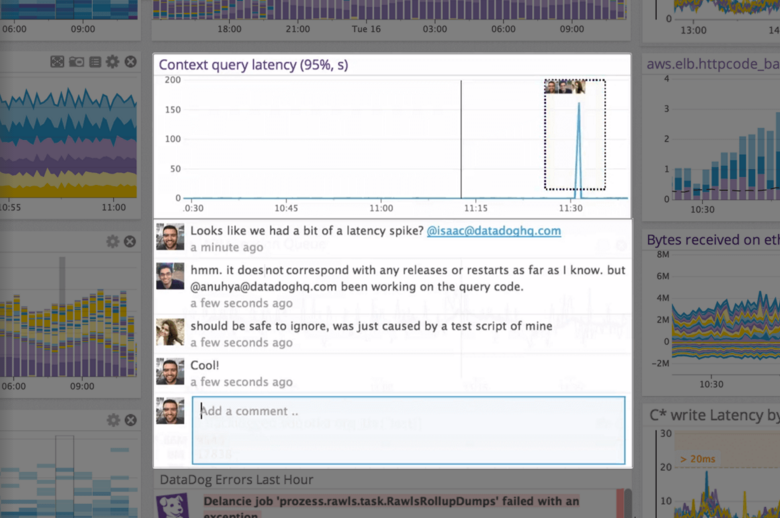
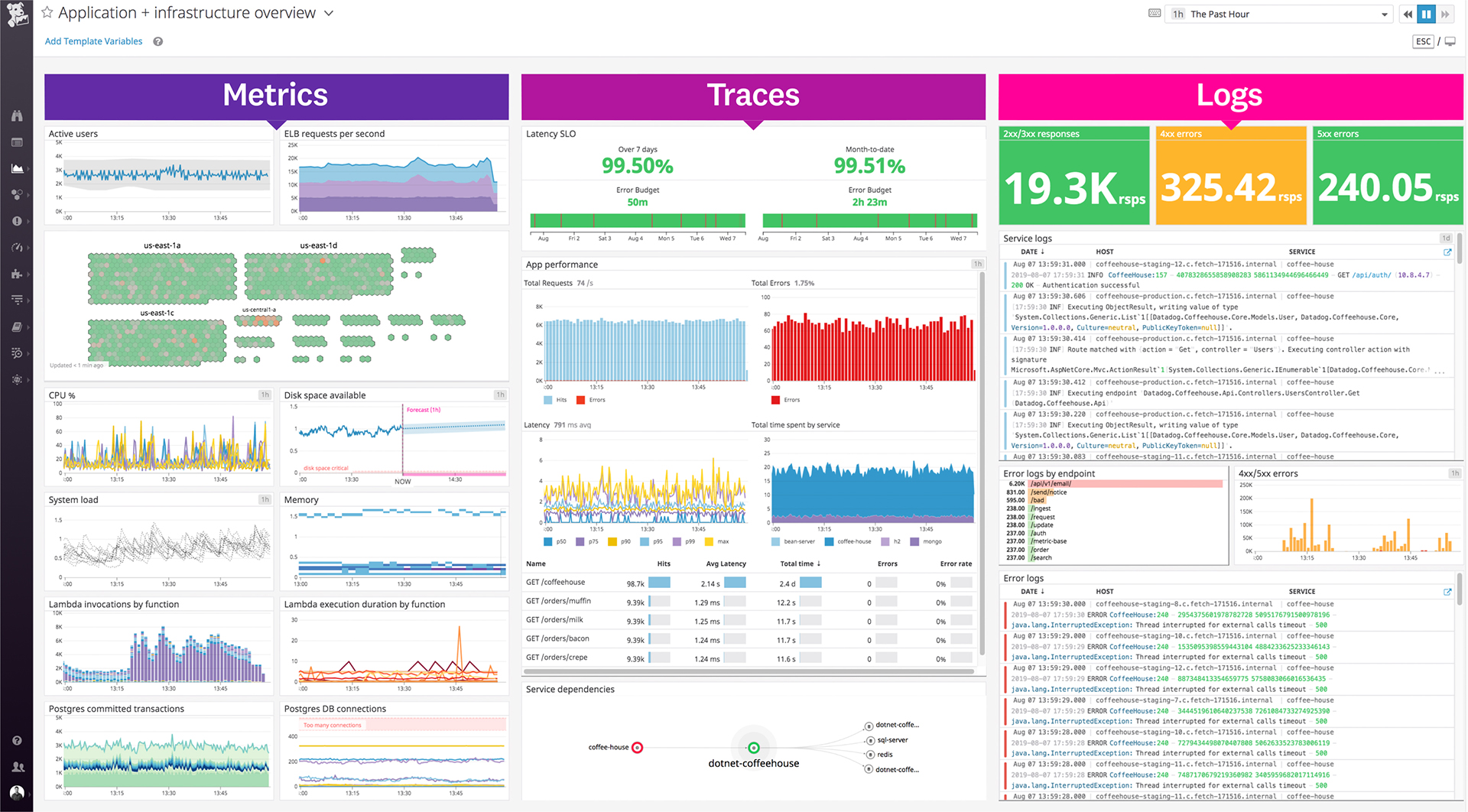
Datadog is a monitoring service for IT, Dev and Ops teams who write and run applications at scale, and want to turn the massive amounts of data produced by their apps, tools and services into actionable insight.
$18
per month per host
Microsoft Defender XDR
Score8.7 out of 10
N/A
Microsoft 365 Defender combines SIEM and XDR capabilities for Microsoft 365 environments, encompassing threat detection, post-breach detection, automated investigation, and response for endpoints. Additionally, it protects cloud apps, emails and documents, and employee identities.
N/A
Pricing
Datadog
Microsoft Defender XDR
Editions & Modules
Log Management
$1.27
per month (billed annually) per host
Infrastructure
$15.00
per month (billed annually) per host
Standard
$18
per month per host
Enterprise
$27
per month per host
DevSecOps Pro
$27
per month per host
APM
$31.00
per month (billed annually) per host
DevSecOps Enterprise
$41
per month per host
No answers on this topic
Offerings
Pricing Offerings
Datadog
Microsoft Defender XDR
Free Trial
Yes
Yes
Free/Freemium Version
Yes
No
Premium Consulting/Integration Services
No
No
Entry-level Setup Fee
Optional
No setup fee
Additional Details
Discount available for annual pricing. Multi-Year/Volume discounts available (500+ hosts/mo).
Datadog may be better suited for teams that have a more out-of-the-box infrastructure, on the primary platforms Datadog supports. You may also have better results if you have a bigger team dedicated to devops and/or a bigger budget. We found that trying to adapt it to our use case (small team, .NET on AWS Fargate) wasn't feasible. We continually ran into roadblocks that required us to dig through documentation (and at times, having to figure out some documentation was wrong), go back and forth with support, and in my opinion, waste money on excessive and unintended usages due to opaque pricing models and inaccurate usage reports, as well as broken/non-functional rate sampling controls.
A de minimis incentive was given to thank the reviewer for their time. The incentive was not used to bias or drive a particular response, nor was the incentive contingent on a positive endorsement. TR verified that a representative sample of customers was invited. More Info
In our experience, Microsoft Defender XDR has been fantastic for phishing and account compromise scenarios, Endpoint Security, Automated threat detection and response and just generally giving a great overview through their dashboard, meaning the IT team doesn't need to switch between multiple tools to understand the full scope of an incident. In mostly remote organization like ours, it really helps to keep on top of any potential threats that we don't have the opportunity to spot in person. While it works great for us in a mostly Microsoft 365 environment, I can see how it would be less appropriate in an organization that is less integrated in the Microsoft ecosystem or uses a large number of third party tools.
A de minimis incentive was given to thank the reviewer for their time. The incentive was not used to bias or drive a particular response, nor was the incentive contingent on a positive endorsement. More Info
The thing which Datadog does really well, one of them are its broad range of services integrations and features which makes it one step observability solution for all. We can monitor all types of our application, infrastructure, hosts, databases etc with Datadog.
Its custom dashboard feature which helps us to visualize the data in a better way . It supports different types of charts through those charts we can create our dashboard more attractive.
Its AI powered alerting capability though that we can easily identify the root cause and also it has a low noise alerting capability which means it correlated the similar type of issues.
A de minimis incentive was given to thank the reviewer for their time. The incentive was not used to bias or drive a particular response, nor was the incentive contingent on a positive endorsement. TR verified that a representative sample of customers was invited. More Info
One of the greatest strength of Microsoft Defender XDR has the ability to convey alert and signal in the closing point, email, identity and cloud applications in an event. Instead of obtaining isolated alert from each tool, Microsoft Defender XDR consolidates them in a full attack story, which helps the security teams to understand the scope and impact of a danger very fast.
If a user clicks on the fishing link, Microsoft Defender XDR automatically can associate malicious emails with lateral movement efforts, suspected sine-in, and endpoint activity-to protect against hours of manual probes.
The defender uses AI-powered automation for investigating and treatment of Microsoft Defender XDR events. It can separate the infected closing points, can cancel the compromised tokens, or remove malicious email - without the need for human intervention.
When malware is detected on a device, the defender can separate the device, kill malicious processes, and automatically flag the same files throughout the environment, which can spread.
Because it is integrated deeply with Microsoft 365 defender, Entra ID (Azure Ad), Intune, and PurView, the defender provides native safety in the XDR Microsoft Stack. It simplifies deployment and maintenance, offering deep visibility in user activity and cloud data.
A de minimis incentive was given to thank the reviewer for their time. The incentive was not used to bias or drive a particular response, nor was the incentive contingent on a positive endorsement. More Info
Alert windows cause lag in notifications (e.g. if the alert window is X errors in 1 hour, we won't get alerted until the end of the 1 hour range)
I would appreciate more supportive examples for how to filter and view metrics in the explorer
I would like a more clear interface for metrics that are missing in a time frame, rather than only showing tags/etc. for metrics that were collected within the currently viewed time frame
A de minimis incentive was given to thank the reviewer for their time. The incentive was not used to bias or drive a particular response, nor was the incentive contingent on a positive endorsement. More Info
Improved algorithms to minimize false positives in threat detection, reducing the impact on security teams and preventing unnecessary investigations into non-threatening incidents.
Advanced User-Friendly Interface:
Streamlined and intuitive user interface for the centralized dashboard, making it more accessible for security professionals with varying levels of expertise.
Greater Third-Party Integration:
Increased compatibility and integration capabilities with a broader range of third-party security tools
A de minimis incentive was given to thank the reviewer for their time. The incentive was not used to bias or drive a particular response, nor was the incentive contingent on a positive endorsement. More Info
A de minimis incentive was given to thank the reviewer for their time. The incentive was not used to bias or drive a particular response, nor was the incentive contingent on a positive endorsement. TR verified that a representative sample of customers was invited. More Info
We are pleased with the product and have no plans to look for alternatives. We are deeply invested in Microsoft ecosystem and Defender XDR provides seamless integration to other Microsoft products. For academic institution pricing is also quite affordable. In the contrary, we hope to extend the scope of the product for our entire environment.
A de minimis incentive was given to thank the reviewer for their time. The incentive was not used to bias or drive a particular response, nor was the incentive contingent on a positive endorsement. TR verified that a representative sample of customers was invited. More Info
There are so many features that it can be hard to figure out where you need to go for your own use case. For example, RUM monitoring us buried in a "Digital Experience" sidebar setting when this is one of our key use cases that I sometimes struggle to find in the application. It appears that ECS + Fargate monitoring was recently released which is great because we had to build a lambda reporting solution for ephemeral task monitoring. But this new feature was never on my radar until I starting clicking around the application.
A de minimis incentive was given to thank the reviewer for their time. The incentive was not used to bias or drive a particular response, nor was the incentive contingent on a positive endorsement. More Info
Once configured, it's very usable for any security team or IT Analyst. It'll give you everything you need to know in a single consolidated dashboard, and while you can certainly dive deeper with a very feature rich platform, generally it's very usable. I gave it an 8 as some of the advanced features do have a very strong learning curve, while routine tasks are quite straightforward, some of the features such as threat hunting, custom detections and automated response workflows do have a bit of a learning curve and will require some research and experience to get to grips with
A de minimis incentive was given to thank the reviewer for their time. The incentive was not used to bias or drive a particular response, nor was the incentive contingent on a positive endorsement. More Info
In our experience there has been very little downtime for Microsot Defender XDR. For us there hasn’t been any single incident where we needed the product and it was not available.
A de minimis incentive was given to thank the reviewer for their time. The incentive was not used to bias or drive a particular response, nor was the incentive contingent on a positive endorsement. TR verified that a representative sample of customers was invited. More Info
Most of the time the product is as responsive as you might expect from cloud product. Occasionly the product is little slugish, this has been at most a slight irritation. Reports generate quickly ennough for our needs. We also not have found that Defender XDR slows down systems that it is integrated with
A de minimis incentive was given to thank the reviewer for their time. The incentive was not used to bias or drive a particular response, nor was the incentive contingent on a positive endorsement. TR verified that a representative sample of customers was invited. More Info
The support team usually gets it right. We did have a rather complicate issue setting up monitoring on a domain controller. However, they are usually responsive and helpful over chat. The downside would be I don’t think they have any phone support. If that is important to you this might not be a good fit.
A de minimis incentive was given to thank the reviewer for their time. The incentive was not used to bias or drive a particular response, nor was the incentive contingent on a positive endorsement. More Info
Their support throughout our onboarding of the product was fabulous. They not only took the time to carefully explain to teams not as well equipped with the lingo but explained to the tech team how to teach the other teams to be successful. They never once seemed impatient or annoyed with basic questions and didn’t pretend to know something when they needed to research an answer
A de minimis incentive was given to thank the reviewer for their time. The incentive was not used to bias or drive a particular response, nor was the incentive contingent on a positive endorsement. TR verified that a representative sample of customers was invited. More Info
A de minimis incentive was given to thank the reviewer for their time. The incentive was not used to bias or drive a particular response, nor was the incentive contingent on a positive endorsement. More Info
Microsoft Provides a good training for the Microsoft 365 Defender and has a good learning paths to learn and take the exams and get your Certifications.
A de minimis incentive was given to thank the reviewer for their time. The incentive was not used to bias or drive a particular response, nor was the incentive contingent on a positive endorsement. More Info
A de minimis incentive was given to thank the reviewer for their time. The incentive was not used to bias or drive a particular response, nor was the incentive contingent on a positive endorsement. TR verified that a representative sample of customers was invited. More Info
seemless and almost transparent. can be deployed by script if needed so every endpoint on our system get's it. if you have intune it gets dumped on the the endpoint by policy so nothing escapes it
A de minimis incentive was given to thank the reviewer for their time. The incentive was not used to bias or drive a particular response, nor was the incentive contingent on a positive endorsement. TR verified that a representative sample of customers was invited. More Info
Our logs are very important, and Datadog manages them exceptionally well. We frequently use Datadog services for our investigations. Use case: Monitor your apps, infrastructure, APIs, and user experience.
Key features:
Logs, metrics, and APM (Application Performance Monitoring)
Real-time alerting and dashboards
Supports Kubernetes, AWS, GCP, and other integrations
RUM (Real User Monitoring) and Synthetics
✅ Best for backend, server, and distributed systems monitoring.
A de minimis incentive was given to thank the reviewer for their time. The incentive was not used to bias or drive a particular response, nor was the incentive contingent on a positive endorsement. More Info
Our product in that area, for instance as a security platform and for us it is for the moment really bad point. We started to move in that direction that there is that disconnect from the client management. So if there is some action that needs to be executed detected by security team, there is not an easy way to make that available to the team that is responsible for managing the identities as users, as the devices
A de minimis incentive was given to thank the reviewer for their time. The incentive was not used to bias or drive a particular response, nor was the incentive contingent on a positive endorsement. More Info
Azure cloud provides techical power to scale the product for whole organization. From organizational point of view scaling Defender XDR for various IT teams needs good collaboration and clear norms that all teams must agree to and follow.
A de minimis incentive was given to thank the reviewer for their time. The incentive was not used to bias or drive a particular response, nor was the incentive contingent on a positive endorsement. TR verified that a representative sample of customers was invited. More Info
A de minimis incentive was given to thank the reviewer for their time. The incentive was not used to bias or drive a particular response, nor was the incentive contingent on a positive endorsement. More Info
A de minimis incentive was given to thank the reviewer for their time. The incentive was not used to bias or drive a particular response, nor was the incentive contingent on a positive endorsement. More Info