Dell's PowerEdge R is a line of rack servers, offering a range of options from cost-efficient one-socket servers to four-socket servers designed to support intensive and critical data center workloads.
N/A
IBM Z
Score9.4 out of 10
N/A
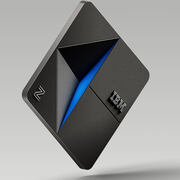
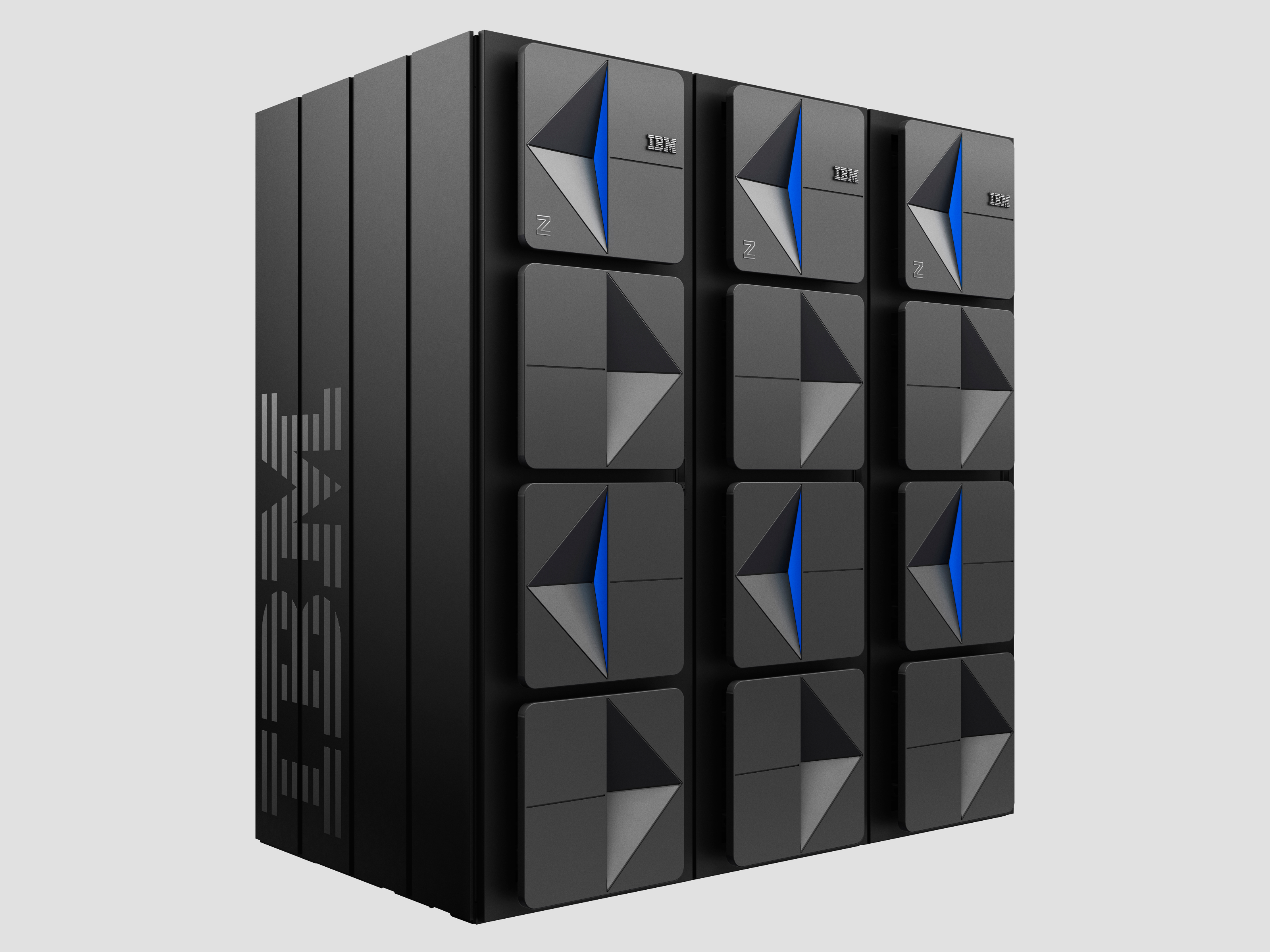
IBM Z is the company's mainframe enterprise server solution product line.
N/A
Pricing
Dell PowerEdge
IBM Z
Editions & Modules
No answers on this topic
No answers on this topic
Offerings
Pricing Offerings
Dell PowerEdge
IBM Z
Free Trial
No
No
Free/Freemium Version
No
No
Premium Consulting/Integration Services
No
No
Entry-level Setup Fee
No setup fee
Optional
Additional Details
—
—
More Pricing Information
Community Pulse
Dell PowerEdge
IBM Z
Considered Both Products
Dell Technologies
No answer on this topic
IBM
Verified User
Chose IBM Z
IBM Z is the best storage solution as it provides the best in class data protection with the cryptographic hardware keys, no loss in data while migration, and a user-friendly interface that makes it easy for develops to understand and has less of a learning curve. This makes it …
A de minimis incentive was given to thank the reviewer for their time. The incentive was not used to bias or drive a particular response, nor was the incentive contingent on a positive endorsement. More Info
Associate Director in Information Technology at UBS (Information Technology & Services, 10,001+ employees)
Chose IBM Z
IBM Z is the winner when dealing with enormous transactions In terms of security as well IBM Z is a better option compared to other alternatives Excellent is dealing with large batch processing in multiple environments.
A de minimis incentive was given to thank the reviewer for their time. The incentive was not used to bias or drive a particular response, nor was the incentive contingent on a positive endorsement. More Info
An excellent warranty and excellent technical assistance can be expected from the PowerEdge C Series, which comes from a well-known brand with a long track record in the market. Scalability, physical space optimization and performance and dependability for handling sensitive and vital data like databases and ERP systems that are fairly sophisticated are just some of the benefits we get from Dell gear, which saves us resources and energy by up to 40%.
Most of the time, server utilization is reliable and stable during peak times. Truly amazing, this product offers a lot and gets it done in no time without any confusion.It is reliable, too accurate and the performance is top-notch. It seems to be competitive in all virtual energy systems and its connectivity is also good. It's available at a low cost, but it's enough to have as many low-cost, more efficient systems as possible. It's a minor thing, but very rarely, it can cause work interruptions while it can get stuck due to more frequent use such as restless work. These power servers are very efficient and really help when things go wrong. I am using this product to retrieve data much faster.
Good price - Compared to other vendors’ server platforms. In our scenario (virtualization) we found out PowerEdge offers the best price/vCPU and RAM ratio.
Customizable - We were able to select optimal memory/disk capacity for our use case. Other platform's minimum requirements were above our needs, hence needlessly expensive.
Good warranty and service - Our project did not involve creating a big cluster with a lot of spare capacity, so the next business day warranty came handy.
A de minimis incentive was given to thank the reviewer for their time. The incentive was not used to bias or drive a particular response, nor was the incentive contingent on a positive endorsement. More Info
A de minimis incentive was given to thank the reviewer for their time. The incentive was not used to bias or drive a particular response, nor was the incentive contingent on a positive endorsement. More Info
A de minimis incentive was given to thank the reviewer for their time. The incentive was not used to bias or drive a particular response, nor was the incentive contingent on a positive endorsement. More Info
A de minimis incentive was given to thank the reviewer for their time. The incentive was not used to bias or drive a particular response, nor was the incentive contingent on a positive endorsement. More Info
The IBM Z mainframe capabilities are unmatched for cloud readiness and optimization the learning capabilities are matched perfectly with Watson and the expandability of the cloud makes it a perfect choice.
A de minimis incentive was given to thank the reviewer for their time. The incentive was not used to bias or drive a particular response, nor was the incentive contingent on a positive endorsement. More Info
The Dell PowerEdge R range is just intuitive when you have skills engineers managing them in-house, although even with new members of staff on the team, the learning curve is very low providing they have previous general service hardware management experience. From the specification through to the management of this range, the usability is excellent.
A de minimis incentive was given to thank the reviewer for their time. The incentive was not used to bias or drive a particular response, nor was the incentive contingent on a positive endorsement. More Info
A de minimis incentive was given to thank the reviewer for their time. The incentive was not used to bias or drive a particular response, nor was the incentive contingent on a positive endorsement. More Info
Performance is a major part when you configure your system. IBM has many tools to study your system and suggest the appropriate configuration. With the right contract, you can add processing power dynamically and remove it when no longer needed
A de minimis incentive was given to thank the reviewer for their time. The incentive was not used to bias or drive a particular response, nor was the incentive contingent on a positive endorsement. More Info
We consider Dell's support to be best-in-class compared to other solutions and is also reasonably priced. Their SLA targets have almost always been met, except for minor occasions that have had extenuating circumstances. The service staff is also professional and thorough. Overall, we are very satisfied with the level of support we receive.
A de minimis incentive was given to thank the reviewer for their time. The incentive was not used to bias or drive a particular response, nor was the incentive contingent on a positive endorsement. More Info
Support is usually superb, only occasionally dropping to very good. We participate in some of the CD (Continuous Delivery) aspects of z/OS, IMS, MQ, and DB2.
A de minimis incentive was given to thank the reviewer for their time. The incentive was not used to bias or drive a particular response, nor was the incentive contingent on a positive endorsement. More Info
A de minimis incentive was given to thank the reviewer for their time. The incentive was not used to bias or drive a particular response, nor was the incentive contingent on a positive endorsement. More Info
A de minimis incentive was given to thank the reviewer for their time. The incentive was not used to bias or drive a particular response, nor was the incentive contingent on a positive endorsement. More Info
A de minimis incentive was given to thank the reviewer for their time. The incentive was not used to bias or drive a particular response, nor was the incentive contingent on a positive endorsement. More Info
Against hp servers, Dell has outperformed them in terms of incidents regarding hardware memory parts. With the Dell PowerEdge R series servers we have not had any incidents regarding memory modules. On the other hand, with HP servers, we encountered a lot of failures regarding memory modules during the first year of implementation.
A de minimis incentive was given to thank the reviewer for their time. The incentive was not used to bias or drive a particular response, nor was the incentive contingent on a positive endorsement. More Info
IBM Z is the best storage solution as it provides the best in class data protection with the cryptographic hardware keys, no loss in data while migration, and a user-friendly interface that makes it easy for develops to understand and has less of a learning curve. This makes it well above the competition.
A de minimis incentive was given to thank the reviewer for their time. The incentive was not used to bias or drive a particular response, nor was the incentive contingent on a positive endorsement. More Info
If you need more processing power, just add more CPU's or memory. The largest system can have close to 200 CPU's and 40 TB of memory. If that is not enough, you can add more physical computers, and connect them using a sysplex
A de minimis incentive was given to thank the reviewer for their time. The incentive was not used to bias or drive a particular response, nor was the incentive contingent on a positive endorsement. More Info
From the perspective of physical server consolidations, when servers spread across multiple branch and remote offices are gathered into a central data center, this simplification process provides ROI in several ways. One, the configuration control, restriction of server access.
Reduce complexity and enable greater standardization of hardware purchases, which lowers costs.
Increased security of the move are important.
The costs of moves, add-ins, and changes are reduced, as well as the costs of travel time and maintenance.
Migrating legacy operating systems to a newer version via rehosting brings similar ROI benefits when it comes to server consolidation.
A de minimis incentive was given to thank the reviewer for their time. The incentive was not used to bias or drive a particular response, nor was the incentive contingent on a positive endorsement. More Info
A de minimis incentive was given to thank the reviewer for their time. The incentive was not used to bias or drive a particular response, nor was the incentive contingent on a positive endorsement. More Info