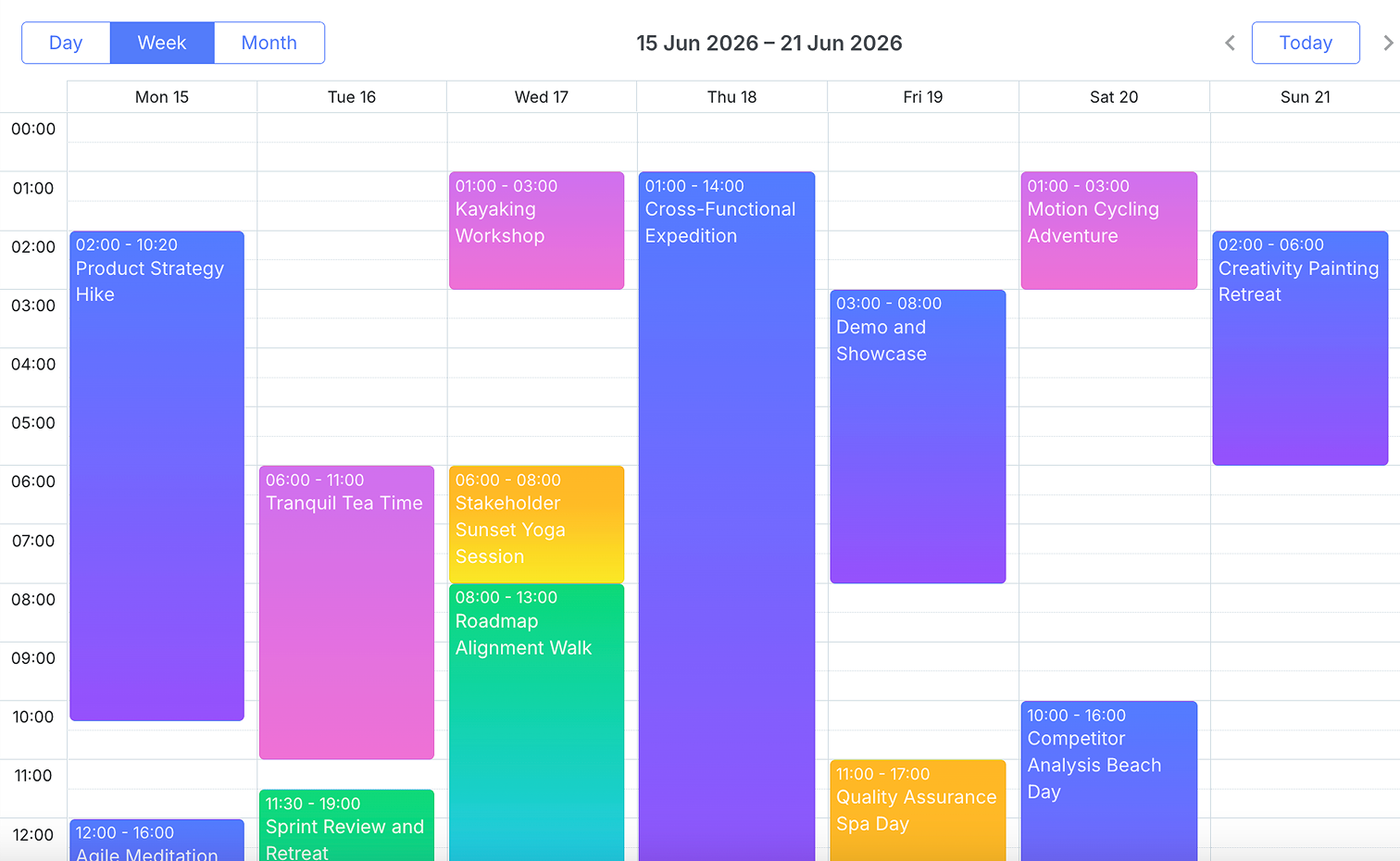
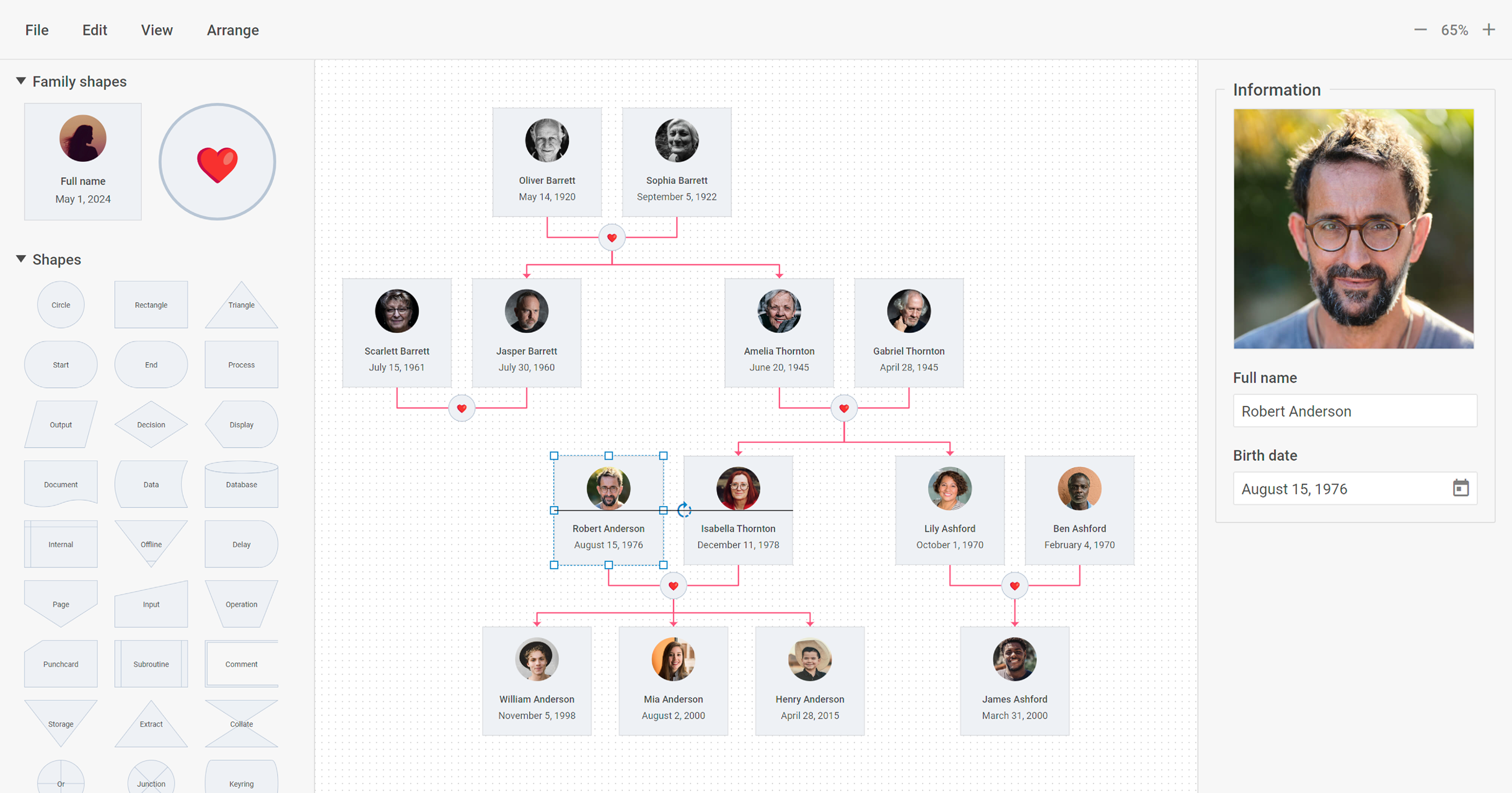
DHTMLX delivers JavaScript/HTML5 libraries and UI widgets designed for building enterprise web apps of any complexity. With these out-of-the-box components, web developers can streamline their coding processes and integrate advanced functionality, to reduce development time. The actual DHTMLX product lineup comprises a range of web-based tools that can cover most of the contemporary business needs. DHTMLX
The Salesforce Platform is designed for building and deploying scalable cloud applications with managed hardware provisioning and app stacks. Lightning Web Components are used by developers to build reusable UI components.
UI widgets are available standalone or "a la carte," or as part of bundles built around a theme (e.g. complete edition, scheduling components, planning components, etc.).
Compared with from scratch development of a graphical modeler or even a tabular representation in JS, using DHTMLX saved us a significant amount of precious time. By relying on this actively maintained product, we've been able to concentrate on the business aspects that are …
We looked at Kendo UI for ASP.Net Core as it has a Gantt chart but it was not as close a fit to our requirements as the DHTMLX Gantt Resource Management component. We'd have had to do much more work to make this fit.
DHTMLX offers a package of specialized components which is difficult to find in other libraries - specifically rich functional components like Gantt chart and scheduler
DHTMLX surpasses other solutions with its extensive features and strong maintenance support. It offers a wide range of capabilities, including advanced data manipulation, sophisticated visualizations, and intricate user interface controls. DHTMLX stands out in its commitment to …
DHTMLX library boasts lots of readily available components that can be easily integrated into web applications. Each feature is equipped with a multitude of events and methods that provide developers with complete control over data manipulation and management. DHTMLX is more …
We have tried few other options also which are not exactly tools and they are not listed here. The brief documentation along with the features samples makes DHTMLX better when compared with other options.
I've used SharePoint a lot. We've used a handful of other bespoke previous, like jula based clients for talking to customers, Jula based platform, some other open source ones, but most of the companies I work for already have a footprint in Salesforce, so it's usually the, …
This fits into the mold with the other Salesforce services. Once you get used to the suite and the nuances of each platform, things become easy. Just read any documentation first, as jumping in will only get you so far, and the more connections with the other apps, the more …
Hubspot CSM is a bit easier to use, but not as strong for bigger markets like enterprise. Also, it's a bit annoying having to log into different platforms. Being able to do everything directly in Salesforce is pretty nice.
We have always been a Salesforce shop, but have grown with the App Cloud platform as it's evolved. We eventually moved to lightning based on the streamlined interface and increased ease of use for our employees. So far we are happy with the results. Would definitely recommend …
Salesforce, while more expensive, provides faster support, higher scalability options, and an increased opportunity to change any details whether it's about user permissions management, custom field or object creation, or an integration of another application. What really sets …
We were previously using an older version prior to it becoming Salesforce Lightning Platform so we were well adverse on the advantages of using a CRM, to begin with. It made sense to convert to Salesforce Lightning Platform after we were given a free trial of the platform. …
I think Salesforce has the most powerful developer engine - I have yet to need a module that I couldn't create (maybe with help). I probably could have made the others work but Salesforce, in my opinion, made it the easiest. Salesforce is reliable and established as well so …
I would love to switch back to Service Cloud as it was much, much more intuitive and fast. I would even take Salesforce Classic over Lightning. It at least wasn't this slow.
I used a program formerly known as "CP." I considered it somewhat outdated, and it does not have any of the modern features that the Salesforce Lightning Platform (formerly Salesforce App Cloud) has. I consider the Salesforce Lightning Platform (formerly Salesforce App Cloud) …
I use both. SF is the constant through the organization and I receive leads into SF and pass on opportunities through SF. SL is better for internal processes within business dev.
Salesforce is the premeire product. Period. The others are cheaper and less capable, they may fulfill your organisation's needs but you will always be looking at Salesforce with wishful eyes. If you are a company that needs to bootstrap then spend the time to evaluate your …
Microsoft is pretty limited in functionality compared to Salesforce. Most folks coming into your organization are going to have some level of Salesforce experience but will most likely not have experience with Dynamics. Dynamics doesn't connect as well to other platforms.
I believe the only reason we didn't choose Monday.com is because we're just a bit bigger (company size- 75 people) than what Monday.com handles. We also are in San Francisco, and Salesforce pretty much owns this entire city. I was also not part of the selection process of the …
There is a reason why the Salesforce Lightning Platform is the market leader for all things related to customer relationship management. While Close is somewhat user-friendly, it pales in comparison to all the features, bells, and whistles that the Salesforce Lightning Platform …
We originally used spreadsheets when we first started. That worked fine until we started growing by over 100% year over year. We were able to upload all of our previous accounts in Salesforce Classic once it was called for. However, Salesforce Classic soon became redundant and …
We needed a product that would allow for easy and dynamic reports for potential and new clients. Account Managers use other products as well to monitor the client's success and Salesforce allows for seamless integration to other platforms. This serves as a one-stop-shop for all …
We currently use the two together, along with Hubspot sales. Salesforce is our primary CRM and where we track and manage account and contact information. Salesforce is much more flexible and intuitive - everything is where you would expect it to be. Hubspot reporting is …
I think that the Lightning platform is not as clean and doesn't integrate that well. Whenever I was logged out, it was such a treck to have to log back in and I never actually knew if my activity was being saved or actually being tracked. Personally, Lightning is not my …
Close and Salesforce are two very different beasts. Close is much more user friendly but lacks the ability to serve complex infrastructures and hierarchies provided by Salesforce. Close is much simpler and faster--great for high volume but will not provide you with rich, …
Salesforce App Cloud provides a very easy way for you to install apps as well as deploy your own apps. You are, however, limited to the Salesforce marketplace and the requirements that they have for apps to be published in their marketplace. Even so, it's still fairly easy to …
We haven't used anything exactly like Salesforce App Cloud, but in the end we decided to use our own development environment/process and deploy via Heroku. Therefore, I can't speak to how App Cloud compares to other more integrated solutions, but for our needs it was easier to …
DHTMLX is an excellent choice for incorporating complex components into your website or platform. Its versatility and customization options make it suitable for various industries and use cases. With DHTMLX, you can seamlessly integrate sophisticated data grids, interactive charts, customizable UI controls, and dynamic calendars into your existing infrastructure. These components can be tailored to match your branding and design requirements, ensuring a seamless integration with your platform's aesthetics. Additionally, DHTMLX provides comprehensive documentation and responsive support, making it easy for developers to utilize the full potential of the components. In summary, DHTMLX offers the flexibility and functionality needed to enhance your software applications with powerful and visually appealing features.
Salesforce CMS is well suited for those companies which are already using Salesforce. If you want to provide personalized content according to individual customer. If you want to share the content across multiple channels. Salesforce CMS is not typically suited for companies not using salesforce. Simple blogging does not require a Salesforce CMS.
Reporting and Dashboards are thorough and can show a wealth of important data to inform and scale processes. It's helpful in a high volume sales cycle to be able to quickly identify weak points in performance and productivity so that adjustments can be made.
Highly customizable. We are able to customize just about everything which allows us to track very specific things and in theory create better efficiency.
Parent/Child account hierarchy exists which is helpful.
Contact records can be associated with multiple accounts and opportunities. This, in theory, should minimize duplicates and mismanagement of contacts.
Console helps a lot with data nesting. Having a fairly comprehensive look at an account without searching through various tabs and sections speeds up an otherwise cumbersome platform.
With regard to the two major components we used, namely the tabular representation and the graphical modeler, we were able to effectively replace the existing building blocks of our applications by integrating them. We were able to retain existing functionalities and benefit from a significant enhancement with what DHTMLX offers natively. This made it easy for us to get our end-users to adopt the change.
It's very good, but it's still living in a little bit in an older design aspect, but I think a lot of it is about to come out, just hasn't quite gotten there yet. Still a little clunky from a you have to know it to know it or you know it to use it. It takes a little bit of training to get into it. It's not quite the, anybody can come in and start using it immediately, type feel.
Salesforce's support is top-notch. They have subject-matter experts that are accessible at all times to address needs as they come up. They let you know in advance when there are system updates and enhancements so that you are prepared for upcoming changes. I've never had an issue that wasn't addressed immediately when reaching out for support.
DHTMLX library boasts lots of readily available components that can be easily integrated into web applications. Each feature is equipped with a multitude of events and methods that provide developers with complete control over data manipulation and management. DHTMLX is more easy for building enterprise-level applications that require complex UI elements and data visualization.
This fits into the mold with the other Salesforce services. Once you get used to the suite and the nuances of each platform, things become easy. Just read any documentation first, as jumping in will only get you so far, and the more connections with the other apps, the more complex it gets.