Epicor Eclipse is an end-to-end business system for wholesale distributors, as well as electrical, HVAC, plumbing and PVF businesses. Eclipse simplifies complex distribution processes found in today’s dynamic supply chains.
N/A
IFS Applications
Score 7.6 out of 10
N/A
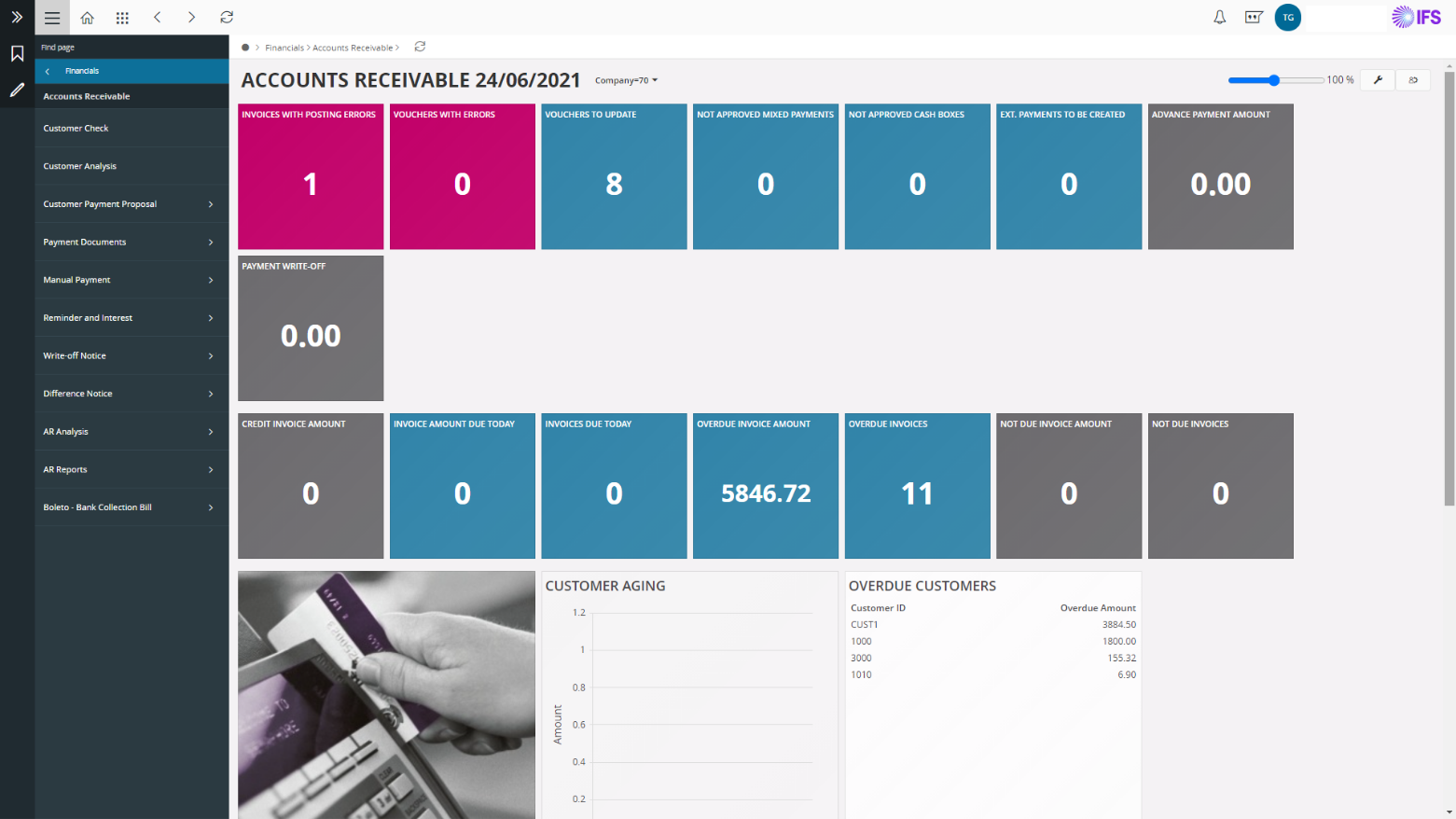
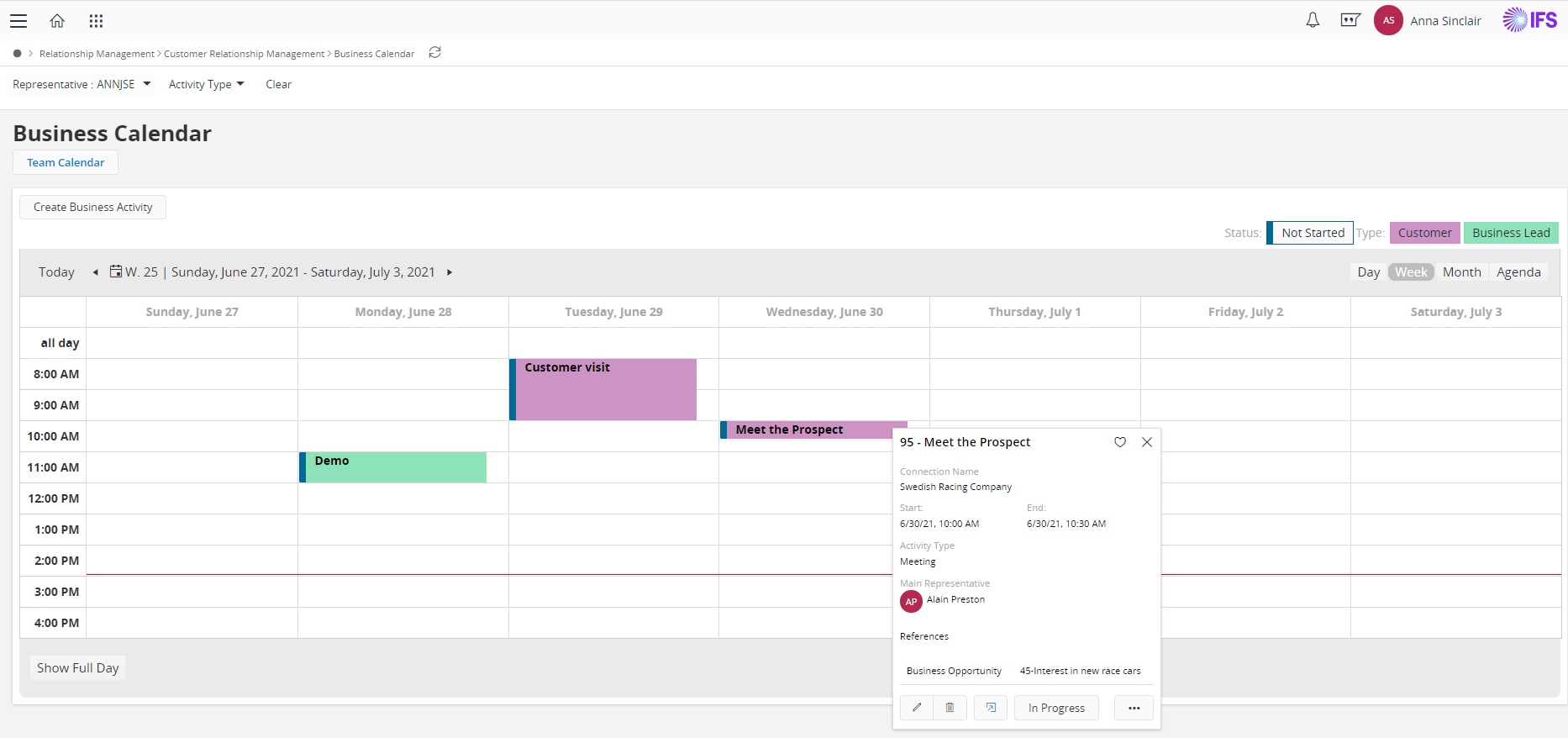
IFS Applications is presented by the vendor as an agile application suite that offers enterprise resource planning (ERP), enterprise asset management (EAM) and enterprise project management, handling 4 core processes: Service & Asset Management Full Enterprise Asset Management (EAM), Maintenance Repair and Overhaul (MRO) and Field Service Management (FSM) Manufacturing Enterprise Resource Planning (ERP) with support for process manufacturing, discrete manufacturing…
N/A
Pricing
Epicor Eclipse
IFS Applications
Editions & Modules
No answers on this topic
No answers on this topic
Offerings
Pricing Offerings
Epicor Eclipse
IFS Applications
Free Trial
No
No
Free/Freemium Version
No
No
Premium Consulting/Integration Services
No
No
Entry-level Setup Fee
No setup fee
No setup fee
Additional Details
—
—
More Pricing Information
Community Pulse
Epicor Eclipse
IFS Applications
Features
Epicor Eclipse
IFS Applications
Payroll Management
Comparison of Payroll Management features of Product A and Product B
Epicor Eclipse
7.8
7 Ratings
4% above category average
IFS Applications
4.7
3 Ratings
46% below category average
Pay calculation
8.15 Ratings
7.93 Ratings
Benefit plan administration
8.15 Ratings
7.33 Ratings
Direct deposit files
8.17 Ratings
6.33 Ratings
Customization
Comparison of Customization features of Product A and Product B
Epicor Eclipse
6.5
15 Ratings
15% below category average
IFS Applications
8.7
5 Ratings
14% above category average
API for custom integration
6.113 Ratings
8.75 Ratings
Plug-ins
6.815 Ratings
8.75 Ratings
Security
Comparison of Security features of Product A and Product B
Epicor Eclipse
6.1
21 Ratings
32% below category average
IFS Applications
9.9
5 Ratings
16% above category average
Single sign-on capability
5.614 Ratings
10.05 Ratings
Role-based user permissions
6.721 Ratings
9.75 Ratings
Reporting & Analytics
Comparison of Reporting & Analytics features of Product A and Product B
Epicor Eclipse
5.2
24 Ratings
37% below category average
IFS Applications
8.7
5 Ratings
14% above category average
Dashboards
5.418 Ratings
8.55 Ratings
Standard reports
5.424 Ratings
8.25 Ratings
Custom reports
4.824 Ratings
9.55 Ratings
General Ledger and Configurable Accounting
Comparison of General Ledger and Configurable Accounting features of Product A and Product B
Epicor Eclipse
7.2
28 Ratings
7% below category average
IFS Applications
7.5
5 Ratings
3% below category average
Accounts payable
7.328 Ratings
9.55 Ratings
Accounts receivable
7.423 Ratings
9.55 Ratings
Global Financial Support
7.313 Ratings
9.04 Ratings
Primary and Secondary Ledgers
7.413 Ratings
9.24 Ratings
Journals and Reconciliations
7.119 Ratings
9.04 Ratings
Configurable Accounting
7.017 Ratings
8.74 Ratings
Standardized Processes
7.020 Ratings
9.04 Ratings
Inventory Management
Comparison of Inventory Management features of Product A and Product B
Epicor Eclipse
6.5
25 Ratings
20% below category average
IFS Applications
9.0
5 Ratings
12% above category average
Inventory tracking
6.825 Ratings
9.25 Ratings
Automatic reordering
6.220 Ratings
9.55 Ratings
Location management
6.424 Ratings
9.55 Ratings
Order Management
Comparison of Order Management features of Product A and Product B
Epicor Eclipse
7.2
25 Ratings
10% below category average
IFS Applications
6.3
5 Ratings
23% below category average
Pricing
7.125 Ratings
9.05 Ratings
Order entry
8.425 Ratings
8.35 Ratings
Credit card processing
6.921 Ratings
8.64 Ratings
Cost of goods sold
6.824 Ratings
8.25 Ratings
Order Orchestration
7.421 Ratings
7.74 Ratings
Subledger and Financial Process
Comparison of Subledger and Financial Process features of Product A and Product B
Epicor Eclipse
7.0
21 Ratings
8% below category average
IFS Applications
3.9
4 Ratings
64% below category average
Billing Management
7.319 Ratings
8.24 Ratings
Cash and Asset Management
7.216 Ratings
8.74 Ratings
Travel & Expense Management
5.011 Ratings
8.74 Ratings
Budgetary Control & Encumbrance Accounting
5.010 Ratings
7.74 Ratings
Period Close
7.219 Ratings
9.24 Ratings
Project Financial Management
Comparison of Project Financial Management features of Product A and Product B
Epicor Eclipse
5.7
9 Ratings
28% below category average
IFS Applications
2.7
1 Ratings
95% below category average
Budgeting and Forecasting
6.86 Ratings
3.01 Ratings
Project Costing
7.26 Ratings
6.01 Ratings
Cost Capture
6.26 Ratings
5.01 Ratings
Capital Project Management
6.05 Ratings
2.01 Ratings
Customer Contract Compliance
7.75 Ratings
2.01 Ratings
Project Revenue Recognition
7.04 Ratings
2.01 Ratings
Project Execution Management
Comparison of Project Execution Management features of Product A and Product B
Epicor Eclipse
6.7
10 Ratings
6% below category average
IFS Applications
3.5
4 Ratings
68% below category average
Project Planning and Scheduling
6.66 Ratings
9.54 Ratings
Task Insight for Project Managers
7.27 Ratings
8.54 Ratings
Project Mobile Functionality
7.36 Ratings
7.54 Ratings
Definable Resource Pools
7.04 Ratings
8.54 Ratings
Grants Management
Comparison of Grants Management features of Product A and Product B
Epicor Eclipse
7.5
7 Ratings
1% above category average
IFS Applications
9.3
2 Ratings
22% above category average
Award Lifecycle Management
6.16 Ratings
9.32 Ratings
Procurement
Comparison of Procurement features of Product A and Product B
Epicor Eclipse
6.3
15 Ratings
12% below category average
IFS Applications
3.5
4 Ratings
68% below category average
Bids Analyzed and Compared
7.412 Ratings
9.33 Ratings
Contract Authoring
7.17 Ratings
8.33 Ratings
Contract Repository
6.28 Ratings
8.33 Ratings
Requisitions-to-Purchase Orders Integrated
7.19 Ratings
9.34 Ratings
Supplier Management
7.110 Ratings
9.34 Ratings
Risk Management
Comparison of Risk Management features of Product A and Product B
Epicor Eclipse
5.9
8 Ratings
14% below category average
IFS Applications
5.0
4 Ratings
30% below category average
Risk Repository
6.65 Ratings
8.54 Ratings
Control Management
7.06 Ratings
8.74 Ratings
Control Efficiency Assessments
6.64 Ratings
8.54 Ratings
Issue Detection
7.25 Ratings
7.54 Ratings
Remediation and Certification
6.76 Ratings
8.04 Ratings
Logistics
Comparison of Logistics features of Product A and Product B
Epicor Eclipse
5.3
16 Ratings
28% below category average
IFS Applications
7.7
4 Ratings
10% above category average
Transportation Planning and Optimization
5.310 Ratings
8.32 Ratings
Transportation Execution Management
6.211 Ratings
9.02 Ratings
Trade and Customs Management
6.27 Ratings
8.02 Ratings
Fulfillment Management
6.57 Ratings
7.63 Ratings
Warehouse Workforce Management
6.19 Ratings
8.54 Ratings
Manufacturing
Comparison of Manufacturing features of Product A and Product B
Epicor Eclipse
6.3
8 Ratings
17% below category average
IFS Applications
6.8
4 Ratings
10% below category average
Production Process Design
7.26 Ratings
9.23 Ratings
Production Management
7.48 Ratings
9.04 Ratings
Configuration Management
7.95 Ratings
8.74 Ratings
Work Execution
8.06 Ratings
9.24 Ratings
Manufacturing Costs
8.36 Ratings
9.54 Ratings
Supply Chain
Comparison of Supply Chain features of Product A and Product B
Epicor Eclipse
6.2
19 Ratings
17% below category average
IFS Applications
9.1
4 Ratings
21% above category average
Forecasting
7.116 Ratings
8.74 Ratings
Inventory Planning
7.017 Ratings
9.54 Ratings
Performance Monitoring
6.214 Ratings
9.03 Ratings
Product Lifecycle Management
Comparison of Product Lifecycle Management features of Product A and Product B
The capabilities, when combined with some of the integration offerings, make for a really nice platform. Coming from another company where we had several systems for processing inbound, outbound, e-commerce, sales, etc., it is nice to have everything contained in one system. makes communication within the company easier and teaching easier.
Order to cash processes and scenario are implemented natively in IFS. An HR module exists for career management also (objectives, comportments, training, mobility) but may be improved in terms of workflow validation (e.g. training to validate by a manager) or reporting.
The order entry process is very smooth, allowing users to see availability and immediately source unavailable items from vendors or other branches with single keystrokes or clicks. You can choose what columns of information display in order entry to help order writers make decisions.
A set of built-in and unlimited user-defined "queues" allow users to be pro-active - always knowing what needs to be taken care of in real time. A "Trouble" queue, for example, shows a user their orders where the available date is further out than the requested date so they can take action.
The RF warehouse system directs one or more pickers through the entire process of picking a customer's order and eliminates mistakes through scanning barcodes for both the shelf location and the product. The Carton Packing add-on can be used to verify quantities and products during packing, and product labels that indicate the order shipping information along with the package contents and quantities.
In my opinion, Epicor seems to want to sell add-on products constantly. They don't provide pricing at the beginning, but then rely on sticker shock and hidden costs (e.g. APIs)
There are times when we cannot figure out where numbers are coming from, especially costs. It would be nice if there was a way to see, in plain English, where a cost is coming from.
It seems unconscionable that we are unable to print financial statements to a pdf file.
In our experience, Support, which had been going well for a while, has become much less reliable and not very timely.
For several reasons. First, they have used this system for 20 years and to change would be costly, not only for a new system but also to try and train everyone on said new system. Second, the system is ideal for our industry and very easy to learn for any new employees that come into the organization. Third, I'm fairly certain the powers that be wouldn't want to try and learn something new and deal with the usual bugs that go with implementing a new system (the special nuances that each company has that can get overlooked when they are in the process of implementing software).
Epicor Eclipse has saved our organization from financial mismanagement, which could lead to operational inefficiencies. It has streamlined purchase orders and invoice processing, reducing instances of underpayment and overpayment. It has enhanced the segmentation of financial statements by store and by day, making it easier to track profitability.
I haven't experienced any outages in the two years I have been using the system. It is always available as long as the computer is up. The only time I have seen it not be available was on occasions where we lost internet, or power and then we lost access to everything, not just Epicor Eclipse.
Everything in this system moves fairly quickly, that may be in part because we are a small company with only 21 users on the system at a time, or it may just be a the way the Epicor Eclipse works for any size company with any number of users. I can only speak for what I know and say that it is fast for our purposes.
The tier 1 support is trying, and sometimes they are successful. Sometimes they aren't. This topic isn't as black and white as the questions might suggest. Currently their Tier 1 support team is over seas, all items automatically go to Tier 1 and then when they can't help they either escalate it or tell me they need to check with someone else and they will get back to me. If they escalate me to Tier 2, then the issue comes back to the States and the support is usually at a higher knowledge/experience level and it can get resolved fairly quickly. If they don't escalate, then it might take weeks and multiple follow ups on my part before I either get a satisfactory resolution or finally get escalated.
We have been unable to get answers to our questions, solutions to our problems, and they don't seem interested in working in the construction industry.
The training classes that I have attended have been top notch. The presenters are extremely knowledgeable on their subject matter, including real-world application of the system. They aren't just software techs training end users, they seem to be end users that have become experts in the over functionality and capabilities of the system.
The on-line training is very good, and it is taught by the same people that do the live in-person training sessions. The difficult part of it is, asking questions about your specific company's nuances or special circumstances. I don't remember if you can access the on-line training sessions after you have taken them for reminders purposes, but if so that is a great asset.
I don't really know about the implementation, it was back in 1998 and I didn't start here until 2016. By the time I started here they had been running it for a number of years and most of the people that were here when it was implemented are no longer here, and the ones that are don't really have much to say about how the implementation went either bad or good.
Most of my experience has been with Epicor's Prophet 21. For most distribution verticals, Prophet 21 is the only way to go. The comparison I've drawn is this: Prophet 21 is like a ferrari. Epicor Eclipse is like a reliable donkey. Both get you from point A to point B but Prophet 21 is going to get you there much quicker and with the kind of insight into your business that will help you thrive.
IFS Applications is based on Agile Technology which allows organizations to reconfigure user interface as per user requirements and make it user-friendly. Other applications are lagging on many fronts like User Interface, Online help document availability, Implementation methodology, and post-implementation expenses.
I don't really know about the scalability. It's the same as it was when I started, I do know that you can buy more user licenses, but I think they come in packs of 5, which can be a problem if you only need 1 and will never use the other 4. But, again I'm not sure on that.
Reporting features allow tracking items trending downward which can glut inventory space and dollars if not adjusted
GMROI reports help analyze turn ratios and adjusted dollar values and margins of product lines.
Suggested Purchase Order features allowed controlled inventory purchases which avoid lost sales while managing overall dollars invested in an acquired product with the lowest freight costs possible.
Reporting is now centralized and managed. Previously, reports were outside the information systems and there was a risk of incoherence.
Accounting controls are now in place on the overall processes, including production, which helped the company to reduce closing periods or to produce more easily official mandatory accounting files yearly.
Interfaces between the CRM forecast tool and IFS helped to keep the tools in sync, and to decrease the processing times prior to production launch.