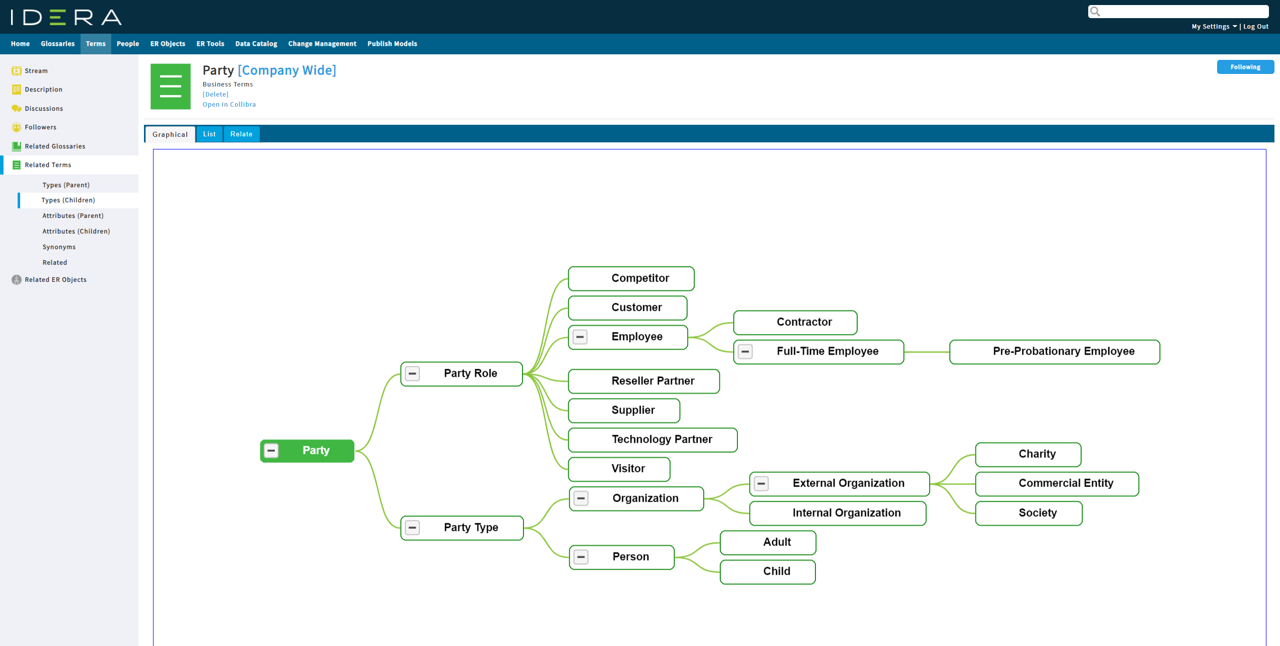
ER/Studio is a database development and management tool from Embarcadero Technologies (acquired by Idera) in California.
$2,687
per year per user
Microsoft Visio
Score 7.8 out of 10
N/A
Microsoft offers Visio, a diagramming tool for building flowcharts, diagrams (e.g. network diagrams), org charts and floor plans, available online as a subscription and also in enterprise level packages (e.g. Visio Professional).
$5
per month per user
Pricing
ER/Studio
Microsoft Visio
Editions & Modules
Standard
$2,687
per year per user
Professional
$3,693
per year per user
Enterprise
Custom
per year per user
Visio Plan 1
$5.00
per month per user
Visio Plan 2
$15.00
per month per user
Visio Standard 2024
$309.99
one-time fee On-premises diagramming solution, licensed for one PC
Visio Professional 2024
$579.99
one-time fee On-premises diagramming solution, licensed for one PC
Offerings
Pricing Offerings
ER/Studio
Microsoft Visio
Free Trial
No
No
Free/Freemium Version
No
Yes
Premium Consulting/Integration Services
Yes
No
Entry-level Setup Fee
No setup fee
No setup fee
Additional Details
Pricing for new customers only, first year maintenance included. Maintenance includes access to technical support and product updates for the defined period of the agreement.
ER Studio Data Architect is a global leader in the data modelling space and most other solutions that have support for third party data models include support for ER Studio Data Architect file formats. Many of the features are a bit more intuitive than the competitors and …
Data Architect is well suited at organizations of all sizes. It is never too early or unnecessary to enforce proper modelling and design standards on data solutions, and this tool will help that greatly by providing an industry leading data modelling tool, ability to import ETL mappings for data lineage, enforcing and managing naming conventions through the naming convention tool, and publishing of data dictionaries through the report publisher. I was successfully able to build models, provide traceability, and document source to target with lineage throughout for both the business (by providing business definitions in the descriptions), and technical teams (by documenting ETL instructions in text fields) along with field level mapping (by creating "Attachments" representing data sources, tables, and fields) providing easy search capabilities using business friendly terms
Visio is by far and away the best tool that I have used to do Value Stream Mapping sessions with the warehouse I support. It has all of the shapes needed built in to be able to represent all areas of the processes. I also like how you are able to make the drawing as big as needed and when printing it out of Visio you have the ability to use the necessary paper size. The biggest complaint that I have with the software if how it can be cumbersome for non-Visio users (that is, people without a license in the orgnaization) to interact with the Visio Map. We normally have to dedicate one Visio SME to be able to make the changes that Process SME's find since they do not have access to the software.
ER/Studio has the ability to provide consistent field names and data types through domains, which are templates. This provides a way to have consistent naming of common fields, like CreatedBy and the data types for the fields. They also have the ability to change all the fields that use that domain to a different data type.
ER/Studio provides the ability to create custom macros. These macros can be used to apply everything from standard fields based on domains to naming all constraints and indexes. I've also used a macro that comes with ER/Studio to spell check field and table names.
My favorite feature is the ability to compare your data model to databases for deployments of changes, and to other data models.
Microsoft Visio is excellent for organizing thought processes related to our more complex research.
The diagrams created with Microsoft Visio are ideal for graphically displaying the internal organization of work and research groups through flow diagrams.
Microsoft Visio is a great tool for managing our students' activities by creating flowcharts that help us graphically visualize the steps of their group work.
ER\Studio licensing can be cumbersome and upgrading from one version to another usually takes several phone calls and emails to the licensing group to get the update installed and running.
The repository can be slow when the model count gets larger. By large I mean 20 to 30 models.
A nice feature that I would like to see is table comments be displayed on the model along with the attributes. Currently you have to choose between the two.
When navigating through swim lanes, the user must be careful between switching from the point to the connection features as it can be difficult to remember which mode you’re in.
When drawing “decision points,” it can be difficult to type words like “yes” or “no” between the connection lines.
The exporting options aren’t ideal. They are hard to create in PDF format.
We use Microsoft Visio to keep our diagrams updated and to that end we will need the subscription to keep using the software. Otherwise we will be left with PDF versions of the diagrams.
I have always struggled with some basics, such as connection points, object alignment, font consistency, arranging layers and their order (bring forward, send backward), and managing overlap. I usually need to create an initial rough draft and then do a separate cleanup pass to bring the diagram up to my quality standards. If I skip that step, the result generally does not look very good. And once a diagram becomes busy or the file gets large, Visio has been unstable for me in the past, including occasional crashes that caused non-recoverable edits.
I can call or email support and both get quick turn around. The only issue is they are on the west coast (US) and have a west coast work schedule and I'm on the East coast.
Overall, I feel that Microsoft's support is weak. They are now such a behemoth that their model of putting documentation online for their users to sift through is totally outgrown. Given the amount of money you pay for these licenses, Microsoft should provide easy one-on-one support for their products via email or chat. The idea of paying their rates for support incidents is ridiculous. If you have an enormous amount of time on your hands, use their support websites and you will eventually find a solution most of the time.
Even though it’s a more expensive solution, Vizio is built for the enterprise. Therefore, it integrates perfectly with our existing Microsoft stack, and quite frankly, because it’s such a more mature product, it provides exactly the functionality we need and expect.
ER/Studio has had a positive impact on my project as we can develop the data model and have a clear understanding of business needs before we continue with the development phase.
Reduces the amount of time I need to create process flow diagrams. In the past I would use Powerpoint or Word which required a lot more effort and time and never looked as good. Visio just takes that headache away.
Only negative is that I personally believe it should always have been part and parcel of the Office suite, thus giving more users the opportunity to use it rather than specifically having to justify its separate purchase within our organisation. Different now with Office 365 of course!