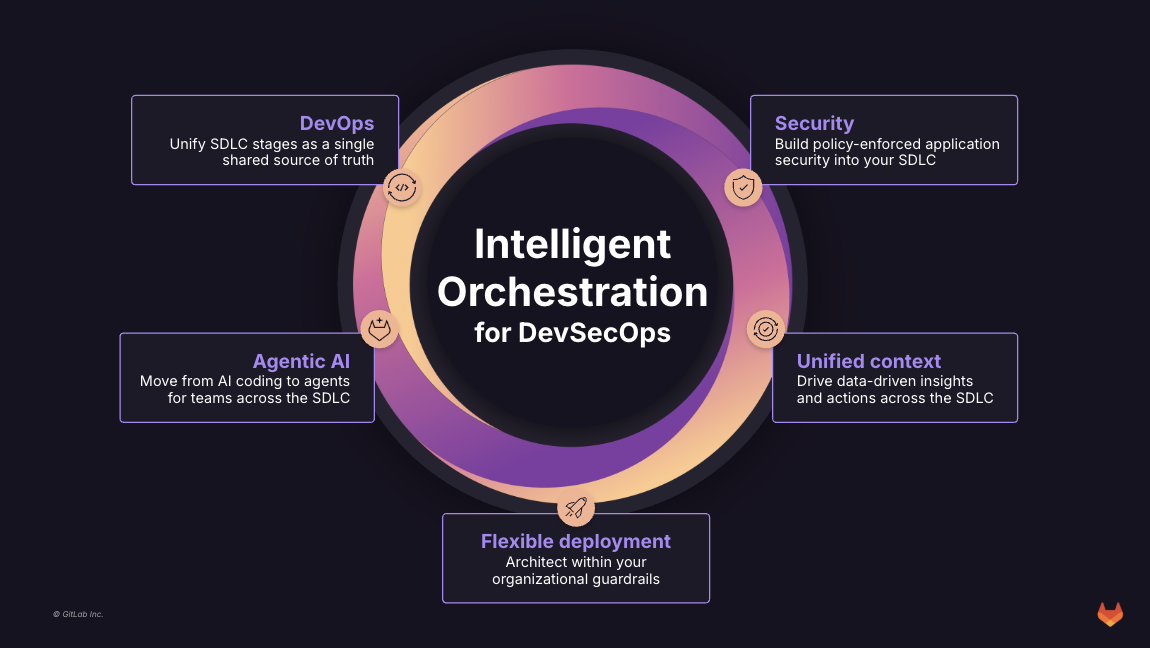
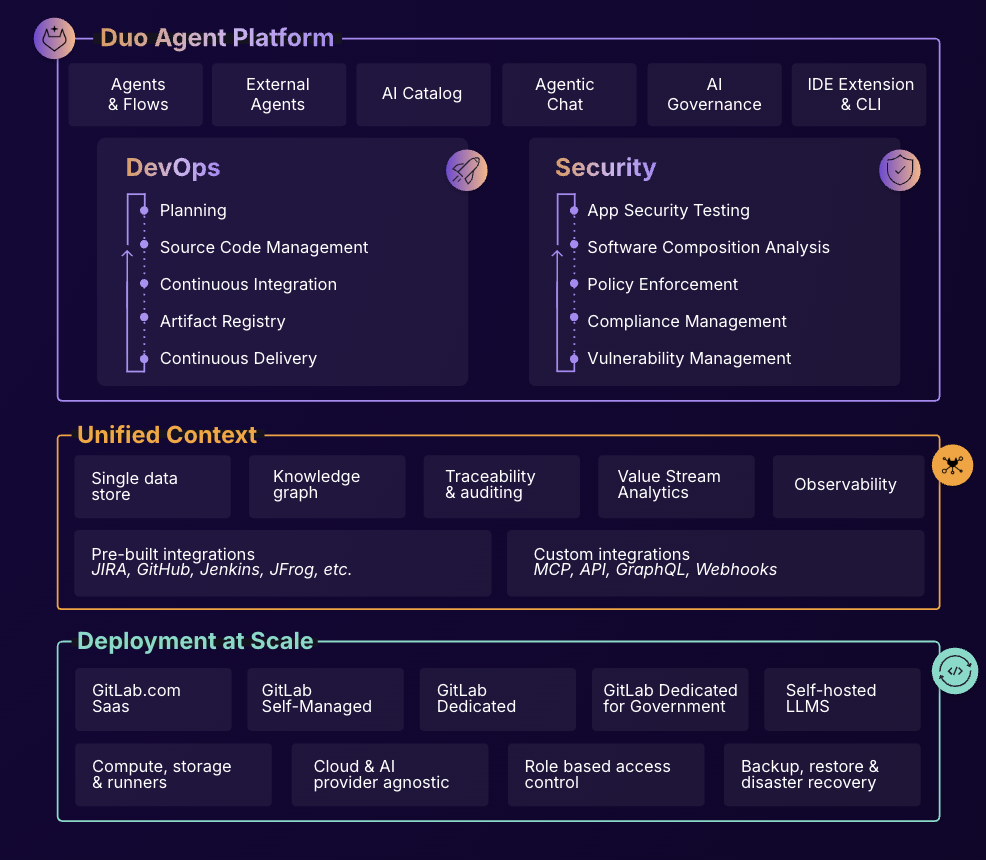
GitLab is an intelligent orchestration platform for DevSecOps, where software teams enable AI at every stage of the software lifecycle to ship faster. The platform enables teams to automate repetitive tasks across planning, building, securing, testing, deploying, and maintaining software.
$0
per month per user
IBM Storage Ceph
Score 8.0 out of 10
N/A
IBM® Storage Ceph® is a software-defined storage platform that consolidates block, file and object storage to help organizations eliminate data silos and deliver a cloud-like experience while retaining the cost benefits and data sovereignty advantages of on-premises IT.
N/A
Kubernetes
Score 9.0 out of 10
N/A
Kubernetes is an open-source container cluster manager.
N/A
Pricing
GitLab
IBM Storage Ceph
Kubernetes
Editions & Modules
GitLab Free (self-managed)
$0
GitLab Free
$0
GitLab Premium
$29
per month per user
GitLab Premium (self-managed)
$29
per month per user
GitLab Ultimate
Contact Sales
GitLab Ultimate (self-managed)
Contact Sales
No answers on this topic
No answers on this topic
Offerings
Pricing Offerings
GitLab
IBM Storage Ceph
Kubernetes
Free Trial
Yes
No
No
Free/Freemium Version
Yes
No
No
Premium Consulting/Integration Services
Yes
No
No
Entry-level Setup Fee
Optional
No setup fee
No setup fee
Additional Details
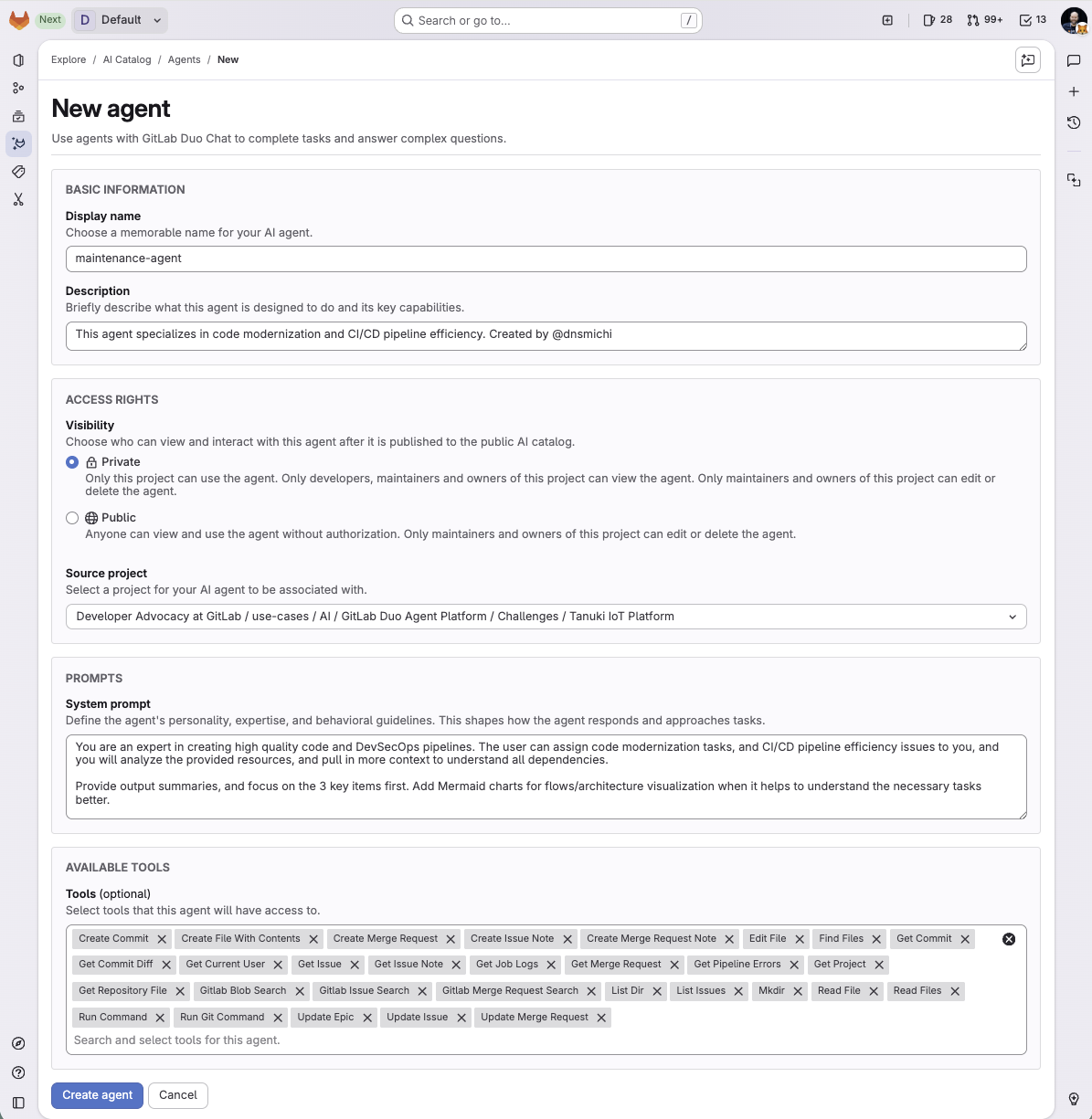
GitLab Credits enable flexible, consumption-based access to agentic AI capabilities in the GitLab platform, allowing you to scale AI adoption at your own pace while maintaining cost predictability. Powered by Duo Agent Platform, GitLab’s agentic AI capabilities help software teams to collaborate at AI speed, without compromising quality and enterprise security.
If usage exceeds monthly allocations and overage terms are accepted, automated on-demand billing activates without service interruption, so your developers never lose access to AI capabilities they need.
Real-time dashboards provide transparency into AI consumption patterns. Software teams can see usage across users, projects, and groups with granular attribution for cost allocation. Automated threshold alerts facilitate proactive planning. Advanced analytics deliver trending, forecasting, and FinOps integration.
GitHub wins the social coding battle by a longshot. Their community engagement is huge and the number of popular projects hosted there is higher than any other service. I've only ever heard of 1 serious project hosted on Bitbucket, but I would imagine it integrates very well …
GitLab stands up great to other Git hosting services. GitLab CI blows GitLab past it's competitors to take a Git server and make it a complete application management platform. Versus GitHub, GitLab does not stand up for hosting open source projects as GitHub has a much larger …
We evaluated Docker Swarm as usage of docker is very distributed in our company. But docker swarm has not as many features as kubernetes and we have large, complex architectures which require good scalability and robustness - this is a huge strength of kubernetes compared to …
GitLab is good if you work a lot with code and do complex repository actions. It gives you a very good overview of what were the states of your branches and the files in them at different stages in time. It's also way easier and more efficient to write pipelines for CI\CD. It's easier to read and it's easier to write them. It takes fewer clicks to achieve the same things with GitLab than it does for competitor products.
Large scale data storage: Red Hat Ceph Storage is designed to be highly scalable and can handle large amounts of data. It's well suited for organizations that need to store and manage large amounts of data, such as backups, images, videos, and other types of multimedia content.Cloud-based deployments: Red Hat Ceph Storage can provide object storage services for cloud-based applications such as SaaS and PaaS offerings. It is well suited for organizations that are looking to build their own cloud storage infrastructure or to use it as a storage backend for their cloud-based applications.High-performance computing: Red Hat Ceph Storage can be used to provide storage for high-performance computing (HPC) applications, such as scientific simulations and other types of compute-intensive workloads. It's well suited for organizations that need to store
K8s should be avoided - If your application works well without being converted into microservices-based architecture & fits correctly in a VM, needs less scaling, have a fixed traffic pattern then it is better to keep away from Kubernetes. Otherwise, the operational challenges & technical expertise will add a lot to the OPEX. Also, if you're the one who thinks that containers consume fewer resources as compared to VMs then this is not true. As soon as you convert your application to a microservice-based architecture, a lot of components will add up, shooting your resource consumption even higher than VMs so, please beware. Kubernetes is a good choice - When the application needs quick scaling, is already in microservice-based architecture, has no fixed traffic pattern, most of the employees already have desired skills.
Highly resilient, almost every time we attempted to destroy the cluster it was able to recover from a failure. It struggled to when the nodes where down to about 30%(3 replicas on 10 nodes)
The cache tiering feature of Ceph is especially nice. We attached solid state disks and assigned them as the cache tier. Our sio benchmarks beat the our Netapp when we benchmarked it years ago (no traffic, clean disks) by a very wide margin.
Ceph effectively allows the admin to control the entire stack from top to bottom instead of being tied to any one storage vendor. The cluster can be decentralized and replicated across data centers if necessary although we didn't try that feature ourselves, it gave us some ideas for a disaster recovery solution. We really liked the idea that since we control the hardware and the software, we have infinite upgradability with off the shelf parts which is exactly what it was built for.
Local development, Kubernetes does tend to be a bit complicated and unnecessary in environments where all development is done locally.
The need for add-ons, Helm is almost required when running Kubernetes. This brings a whole new tool to manage and learn before a developer can really start to use Kubernetes effectively.
Finicy configmap schemes. Kubernetes configmaps often have environment breaking hangups. The fail safes surrounding configmaps are sadly lacking.
I really feel the platform has matured quite faster than others, and it is always at the top of its game compared to the different vendors like GitHub, Azure pipelines, CircleCI, Travis, Jenkins. Since it provides, agents, CI/CD, repository hosting, Secrets management, user management, and Single Sign on; among other features
The Kubernetes is going to be highly likely renewed as the technologies that will be placed on top of it are long term as of planning. There shouldn't be any last minute changes in the adoption and I do not anticipate sudden change of the core underlying technology. It is just that the slow process of technology adoption that makes it hard to switch to something else.
I find it easy to use, I haven't had to do the integration work, so that's why it is a 9/10, cause I can't speak to how easy that part was or the initial set up, but day to day use is great!
It is an eminently usable platform. However, its popularity is overshadowed by its complexity. To properly leverage the capabilities and possibilities of Kubernetes as a platform, you need to have excellent understanding of your use case, even better understanding of whether you even need Kubernetes, and if yes - be ready to invest in good engineering support for the platform itself
I've never had experienced outages from GItlab itself, but regarding the code I have deployed to Gitlab, the history helps a lot to trace the cause of the issue or performing a rollback to go back to a working version
GItlab reponsiveness is amazing, has never left me IDLE. I've never had issues even with complex projects. I have not experienced any issues when integrating it with agents for example or SSO
At this point, I do not have much experience with Gitlab support as I have never had to engage them. They have documentation that is helpful, not quite as extensive as other documentation, but helpful nonetheless. They also seem to be relatively responsive on social media platforms (twitter) and really thrived when GitHub was acquired by Microsoft
Gitlab seems more cutting-edge than GitHub; however, its AI tools are not yet as mature as those of CoPilot. It feels like the next-generation product, so as we selected a tool for our startup, we decided to invest in the disruptor in the space. While there are fewer out-of-the-box templates for Gitlab, we have never discovered a lack of feature parity.
MongoDB offers better search ability compared to Red Hat Ceph Storage but it’s more optimized for large number of object while Red Hat Ceph Storage is preferred if you need to store binary data or large individual objects. To get acceptable search functionality you really need to compile Red Hat Ceph Storage with another database where the search metadata related to Red Hat Ceph Storage objects are stored.
Most of the required features for any orchestration tool or framework, which is provided by Kubernetes. After understanding all modules and features of the K8S, it is the best fit for us as compared with others out there.