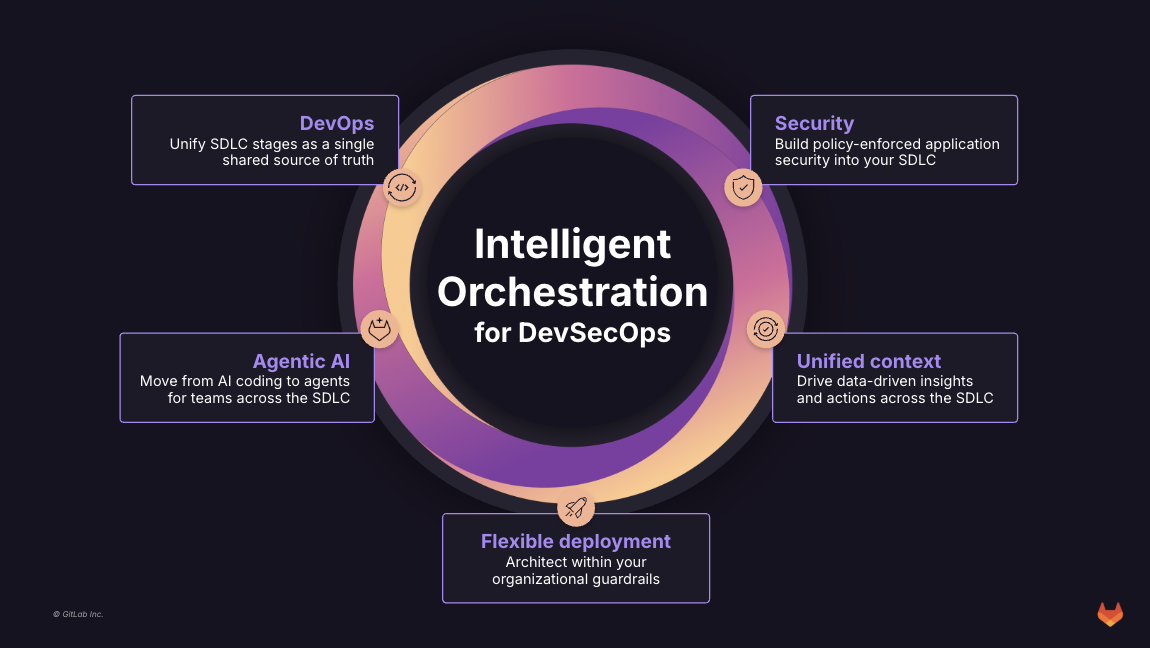
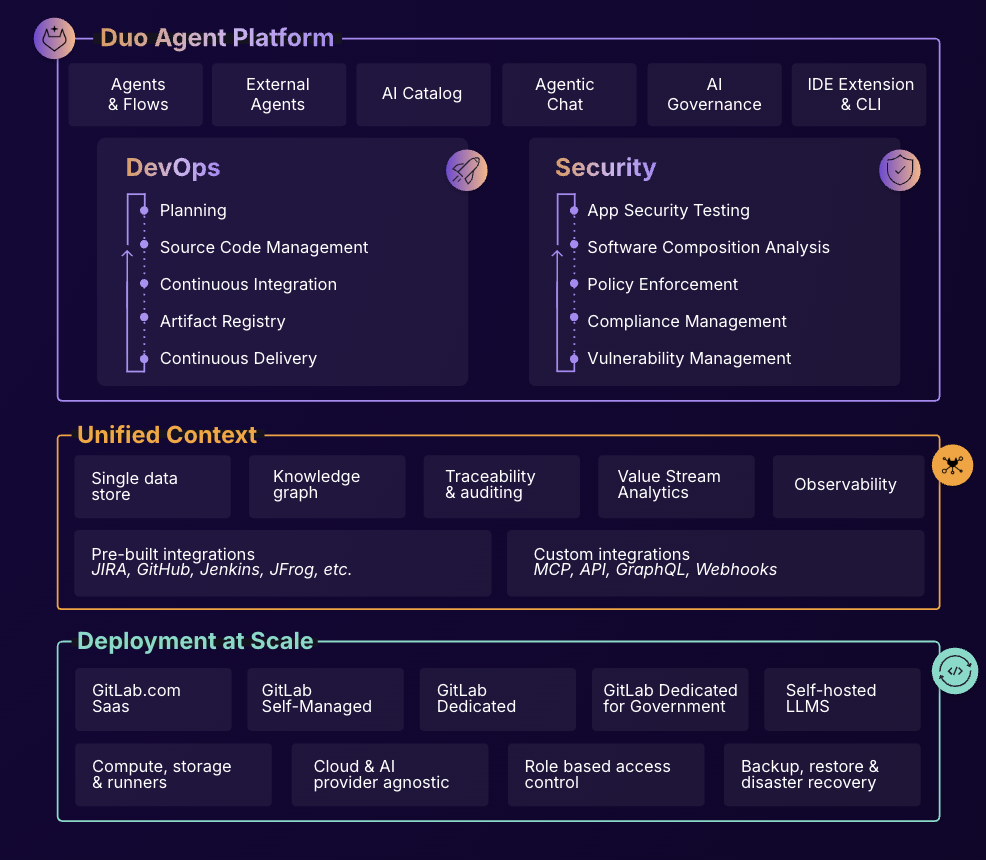
GitLab is an intelligent orchestration platform for DevSecOps, where software teams enable AI at every stage of the software lifecycle to ship faster. The platform enables teams to automate repetitive tasks across planning, building, securing, testing, deploying, and maintaining software.
$0
per month per user
Snyk
Score 8.8 out of 10
N/A
Snyk’s Developer Security Platform automatically integrates with a developer’s workflow and helps security teams to collaborate with their development teams. It boasts a developer-first approach that ensures organizations can secure all of the critical components of their applications from code to cloud, driving developer productivity, revenue growth, customer satisfaction, cost savings and an improved security posture. The vendor states Snyk is used by 1,200 customers worldwide today, including…
$0
Trend Micro Deep Security
Score 8.5 out of 10
N/A
Trend Micro™ Deep Security™ software provides comprehensive security for virtual, cloud, and container environments. Deep Security allows for consistent security regardless of the workload. It also provides a rich set of application programming interfaces (APIs) so security can be automated.
N/A
Pricing
GitLab
Snyk
Trend Micro Deep Security
Editions & Modules
GitLab Free (self-managed)
$0
GitLab Free
$0
GitLab Premium
$29
per month per user
GitLab Premium (self-managed)
$29
per month per user
GitLab Ultimate
Contact Sales
GitLab Ultimate (self-managed)
Contact Sales
Free
$0
Team (Snyk Open Source or Snyk Container or Snyk Infrastructure as Code)
$23
per month per user
Business (Snyk Open Source or Snyk Container or Snyk Infrastructure as Code)
$42
per month per user
Team (Snyk Open Source + Snyk Container + Snyk Code + Snyk Infrastructure as Code)
$98
per month per user
Business (Snyk Open Source + Snyk Container + Snyk Code + Snyk Infrastructure as Code)
$178
per month per user
Enterprise
Contact Sales
No answers on this topic
Offerings
Pricing Offerings
GitLab
Snyk
Trend Micro Deep Security
Free Trial
Yes
Yes
No
Free/Freemium Version
Yes
Yes
No
Premium Consulting/Integration Services
Yes
No
No
Entry-level Setup Fee
Optional
No setup fee
No setup fee
Additional Details
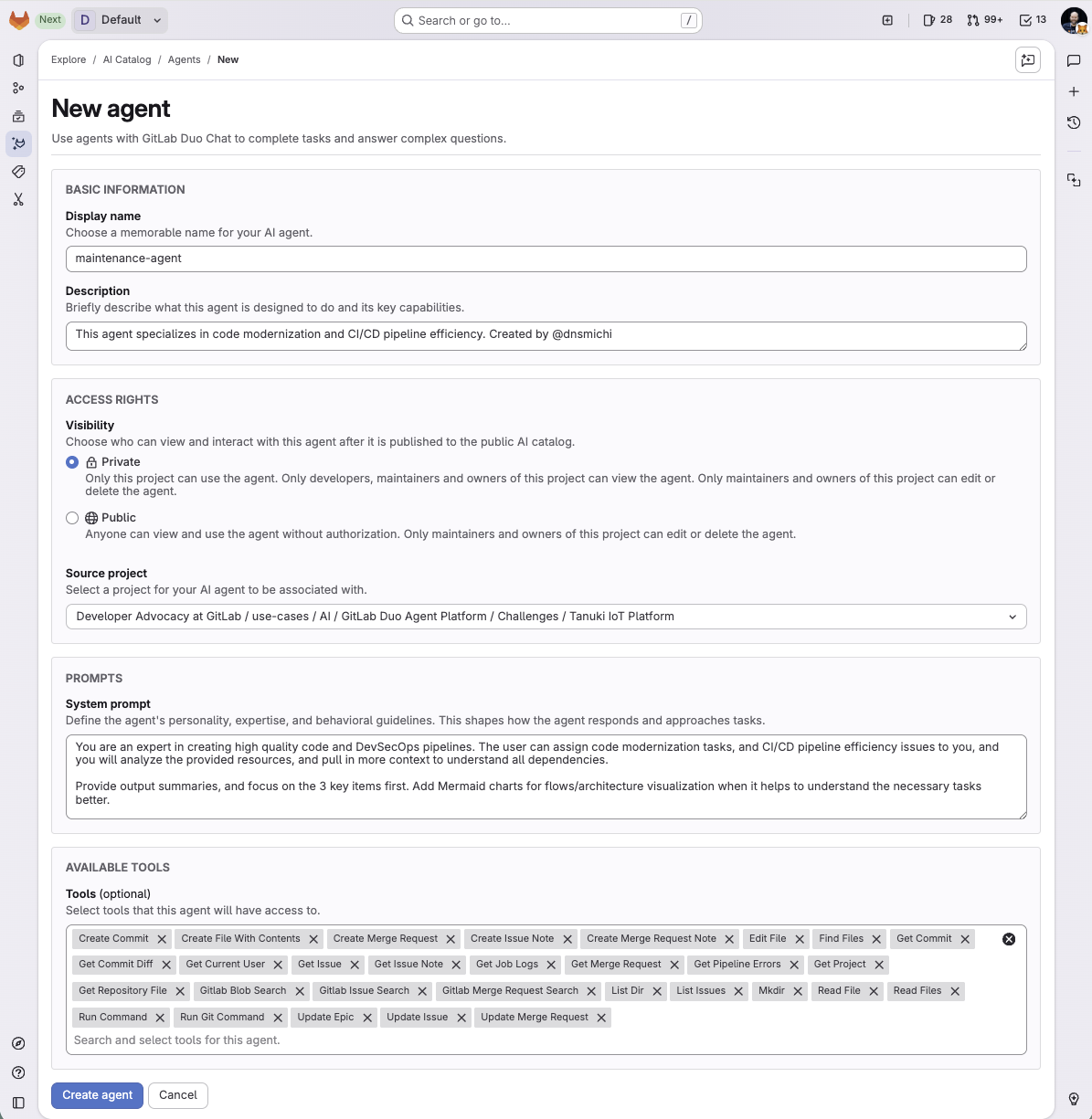
GitLab Credits enable flexible, consumption-based access to agentic AI capabilities in the GitLab platform, allowing you to scale AI adoption at your own pace while maintaining cost predictability. Powered by Duo Agent Platform, GitLab’s agentic AI capabilities help software teams to collaborate at AI speed, without compromising quality and enterprise security.
If usage exceeds monthly allocations and overage terms are accepted, automated on-demand billing activates without service interruption, so your developers never lose access to AI capabilities they need.
Real-time dashboards provide transparency into AI consumption patterns. Software teams can see usage across users, projects, and groups with granular attribution for cost allocation. Automated threshold alerts facilitate proactive planning. Advanced analytics deliver trending, forecasting, and FinOps integration.
Pricing is dependent on the number of developers selected, the number of products selected, and the payment term selected. Please visit the Snyk plans page for an interactive pricing calculator.
Gitlab offers the best support for CI/CD pipelines and the highest degree of customisation for workflows, permissions, and integrations. The integration of Bitbucket with JIRA is better than GitLab but CI/CD features are limited in comparison. GitLab's built-in Container …
We evaluated different solutions to build Application Security SAST capabilities and foster a security first (Shift Left) culture mindset for development engineering teams. Snyk was the best fit into our picture and has all the solutions in a single platform, Snyk Enterprise …
GitLab is good if you work a lot with code and do complex repository actions. It gives you a very good overview of what were the states of your branches and the files in them at different stages in time. It's also way easier and more efficient to write pipelines for CI\CD. It's easier to read and it's easier to write them. It takes fewer clicks to achieve the same things with GitLab than it does for competitor products.
Scenarios Where Snyk Is Well-Suited CI/CD Pipeline Integration (Node.js, Python, etc.) Container Security Open Source License Compliance Infrastructure as Code (IaC) SecurityScenarios Where Snyk May Be Less Appropriate Scanning Proprietary or Custom Code for Unknown Vulnerabilities Complex Monorepos with Custom Build Tools Organizations Requiring Custom Security Rules Advanced Security Teams Needing Correlation and Deep Triage.
Hypervisor based agentless security this product excels at. It provides thorough protection for your VM's. The web filtering product that comes with it also does a great job filtering out malicious websites from being accessed by users with a very user friendly prompt that they are going to a website which has been found to be malicious. This is particularly useful when it comes to VDI.
The tool itself has many capabilities but using them operationally within the platform on a day to day basis for managing vulnerabilities is not a good experience.
Our company was in desparate need of a tool to help us manage vulnerabilities so we could achieve a SOC 2 assurance report without findings.
Trend Micro has very little room for improvement. I am using version 9.6 at this time and it is extremely reliable. Some of the upgrades were not completely intuitive, but in those cases Deep Security support came through with documentation that covered all the bases.
I really feel the platform has matured quite faster than others, and it is always at the top of its game compared to the different vendors like GitHub, Azure pipelines, CircleCI, Travis, Jenkins. Since it provides, agents, CI/CD, repository hosting, Secrets management, user management, and Single Sign on; among other features
I find it easy to use, I haven't had to do the integration work, so that's why it is a 9/10, cause I can't speak to how easy that part was or the initial set up, but day to day use is great!
Developer-Centric Design - Snyk integrates directly into IDEs (like VS Code and IntelliJ), CI/CD pipelines, GitHub/GitLab, and container registries. Clear, Actionable Vulnerability report issues are categorized by severity.
Reports include fix recommendations, pull request suggestions, and links to remediation advice.
I've never had experienced outages from GItlab itself, but regarding the code I have deployed to Gitlab, the history helps a lot to trace the cause of the issue or performing a rollback to go back to a working version
GItlab reponsiveness is amazing, has never left me IDLE. I've never had issues even with complex projects. I have not experienced any issues when integrating it with agents for example or SSO
At this point, I do not have much experience with Gitlab support as I have never had to engage them. They have documentation that is helpful, not quite as extensive as other documentation, but helpful nonetheless. They also seem to be relatively responsive on social media platforms (twitter) and really thrived when GitHub was acquired by Microsoft
Trend Micro's support is pretty decent, we have had issues in the past and they have been fairly responsive to us and our complaints. Depending on how severe the issue was. Any ticket that had a high priority was handled very shortly especially when we contacted our account rep even if it was after hours, we were still able to get support within a short time period.
Gitlab seems more cutting-edge than GitHub; however, its AI tools are not yet as mature as those of CoPilot. It feels like the next-generation product, so as we selected a tool for our startup, we decided to invest in the disruptor in the space. While there are fewer out-of-the-box templates for Gitlab, we have never discovered a lack of feature parity.
Unfortunately, neither cover all of the use cases that we would like so we need to use both but they are both excellent tools as part of our vulnerability management. We find that Snyk helps us better with improving our MTTR of identified vulnerabilities when compared to inspector but that may be more based on how we have implemented both tools
We selected trend micro to take the AV scans and filtering out of the hands of the Windows and Linux vm's we have deployed and move it to the hypervisor level. This has led us to be able to deploy only a single DSVA per host and can protect all VM"s that are on that hosts. This has allowed for more time being spent on other priority security tasks.
100% positive ROI. Without Deep Security we would have to leverage and endpoint protection management solution like Sophos or SEPM (Symantec). Although both are good products, from a cost perspective it would have hit us much harder. Trend Micro Deep Security scales very nicely.
Since Deep Security actually has zero (or at least unnoticeable) resource footprint on monitored VMs, it is a huge cost benefit for us. As previously mentioned, actual antivirus clients installed on each virtual machine (VM) would have significantly affected performance. This would have cost us much more additionally in paying for additional resources to allocate over VMs in the VMware environment. Deep Security is almost completely unintrusive from a resource perspective.
Also, from a layered security perspective, it helps us meet our goals; and since the price of Trend Micro Deep Security quite reasonable, it is that much easier to get approval for this specific internal layer of security.