
Google Cloud Operations Suite vs. Splunk Observability Cloud
| Product | Rating | Most Used By | Product Summary | Starting Price |
|---|---|---|---|---|
 Google Cloud Operations Suite | Score7.2 out of 10 | N/A | The Google Cloud Operations Suite (formerly Stackdriver) is an APM platform based on three tools for error detection, tracing, and resolution. It manages cloud-based or on-premise applications in live or mid-production environments. | $0.01 per 1,000 read API calls |
 Splunk Observability Cloud | Score8.5 out of 10 | N/A | Splunk Observability Cloud aims to enable operational agility and better customer experience through real-time AI-driven streaming analytics allowing accurate alerts in seconds. It is designed to shorten MTTD and MTTR by providing real-time visibility into cloud infrastructure and services. | $180 per year per host |
| Google Cloud Operations Suite | Splunk Observability Cloud | |||||||||||||||
|---|---|---|---|---|---|---|---|---|---|---|---|---|---|---|---|---|
| Editions & Modules |
|
| ||||||||||||||
| Offerings |
| |||||||||||||||
| Entry-level Setup Fee | No setup fee | No setup fee | ||||||||||||||
| Additional Details | — | — | ||||||||||||||
| More Pricing Information | ||||||||||||||||
| Google Cloud Operations Suite | Splunk Observability Cloud | |
|---|---|---|
| Considered Both Products | No answer on this topic | No answer on this topic |
| Key User Insights | ||
| Would buy again | ||
No answers on this topic | 95% Would buy again 55 Answers | |
| Delivers good value for the price | ||
No answers on this topic | 94% Delivers good value for the price 48 Answers | |
| Happy with the feature set | ||
No answers on this topic | 98% Happy with the feature set 57 Answers | |
| Lived up to sales and marketing promises | ||
No answers on this topic | 97% Lived up to sales and marketing promises 31 Answers | |
| Implementation went as expected | ||
No answers on this topic | 98% Implementation went as expected 45 Answers | |
| Google Cloud Operations Suite | Splunk Observability Cloud | ||||||||||||||||||||||||||||||||||||||||
|---|---|---|---|---|---|---|---|---|---|---|---|---|---|---|---|---|---|---|---|---|---|---|---|---|---|---|---|---|---|---|---|---|---|---|---|---|---|---|---|---|---|
| Application Performance Management |
| ||||||||||||||||||||||||||||||||||||||||
| Google Cloud Operations Suite | Splunk Observability Cloud | |
|---|---|---|
| Small Businesses | No answers on this topic |  Amazon CloudWatch Score7.8 out of 10 |
| Medium-sized Companies |  SolarWinds AppOptics Score7.6 out of 10 |  LogicMonitor Score8.9 out of 10 |
| Enterprises |  Splunk AppDynamics Score8.5 out of 10 |  ManageEngine Site24x7 Score10 out of 10 |
| All Alternatives | View all alternatives | View all alternatives |
| Google Cloud Operations Suite | Splunk Observability Cloud | |
|---|---|---|
| Likelihood to Recommend | 8.2 | 7.9 |
| Likelihood to Renew | - | 9.0 |
| Usability | - | 7.6 |
| Support Rating | 10.0 | 10.0 |
| Implementation Rating | - | 10.0 |
| Google Cloud Operations Suite | Splunk Observability Cloud | |
|---|---|---|
| Likelihood to Recommend |
|
|
| Pros |
|
|
| Cons |
|
|
| Likelihood to Renew | No answers on this topic |
|
| Usability | No answers on this topic |
|
| Support Rating |
|
|
| Implementation Rating | No answers on this topic |
|
| Alternatives Considered | Incentivized |
|
| Return on Investment |
|
|
| ScreenShots | Splunk Observability Cloud Screenshots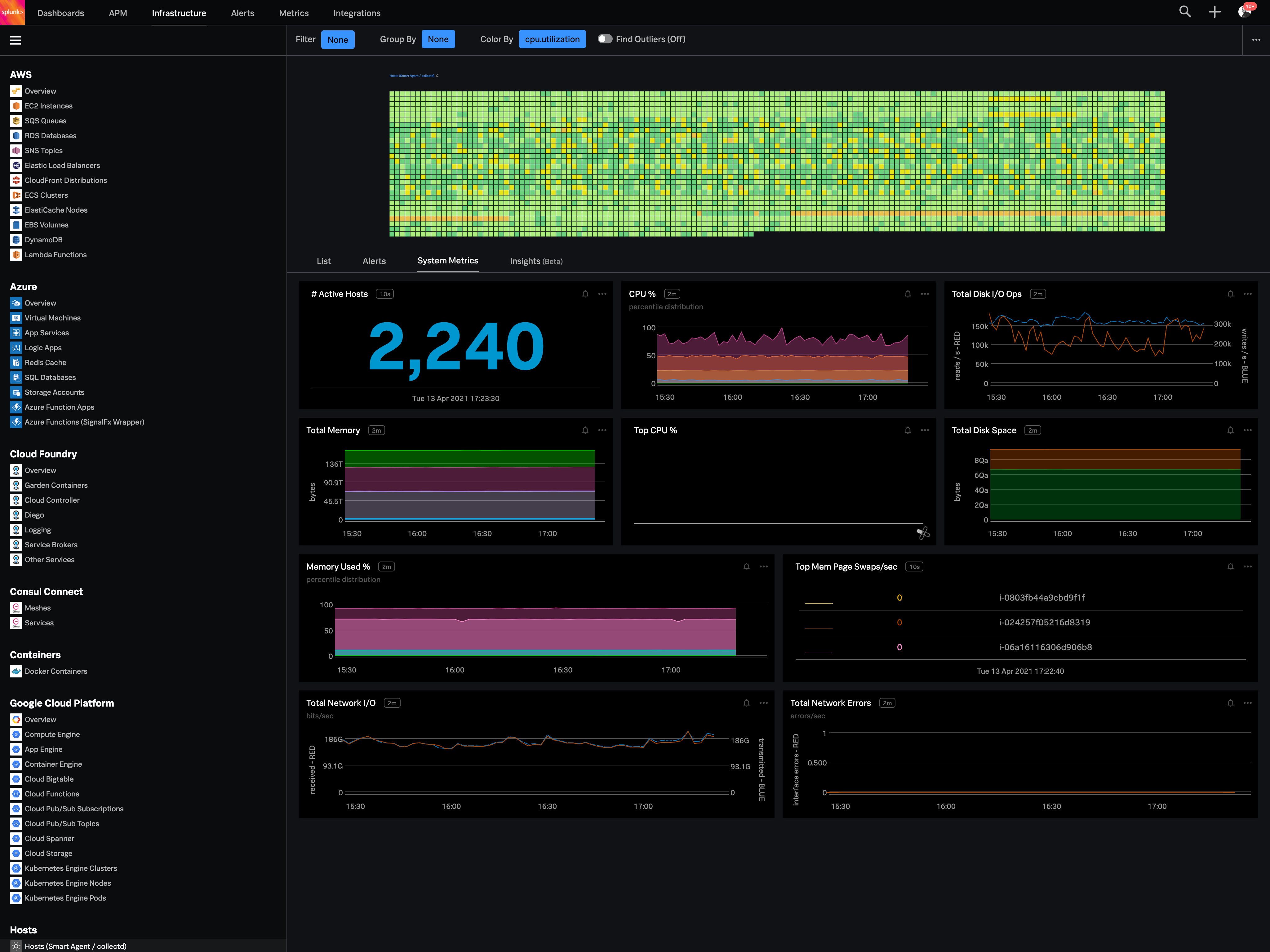 |


