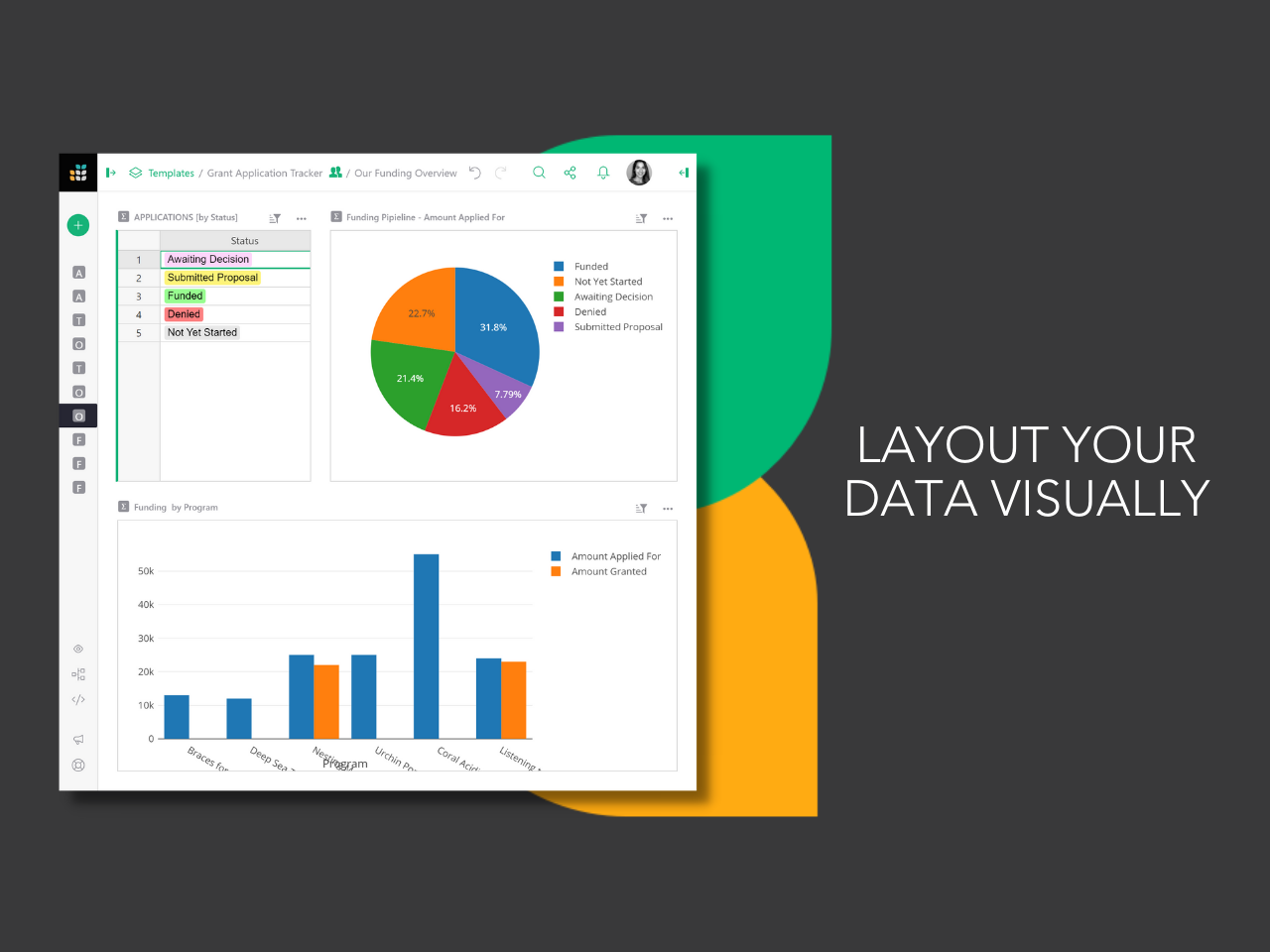
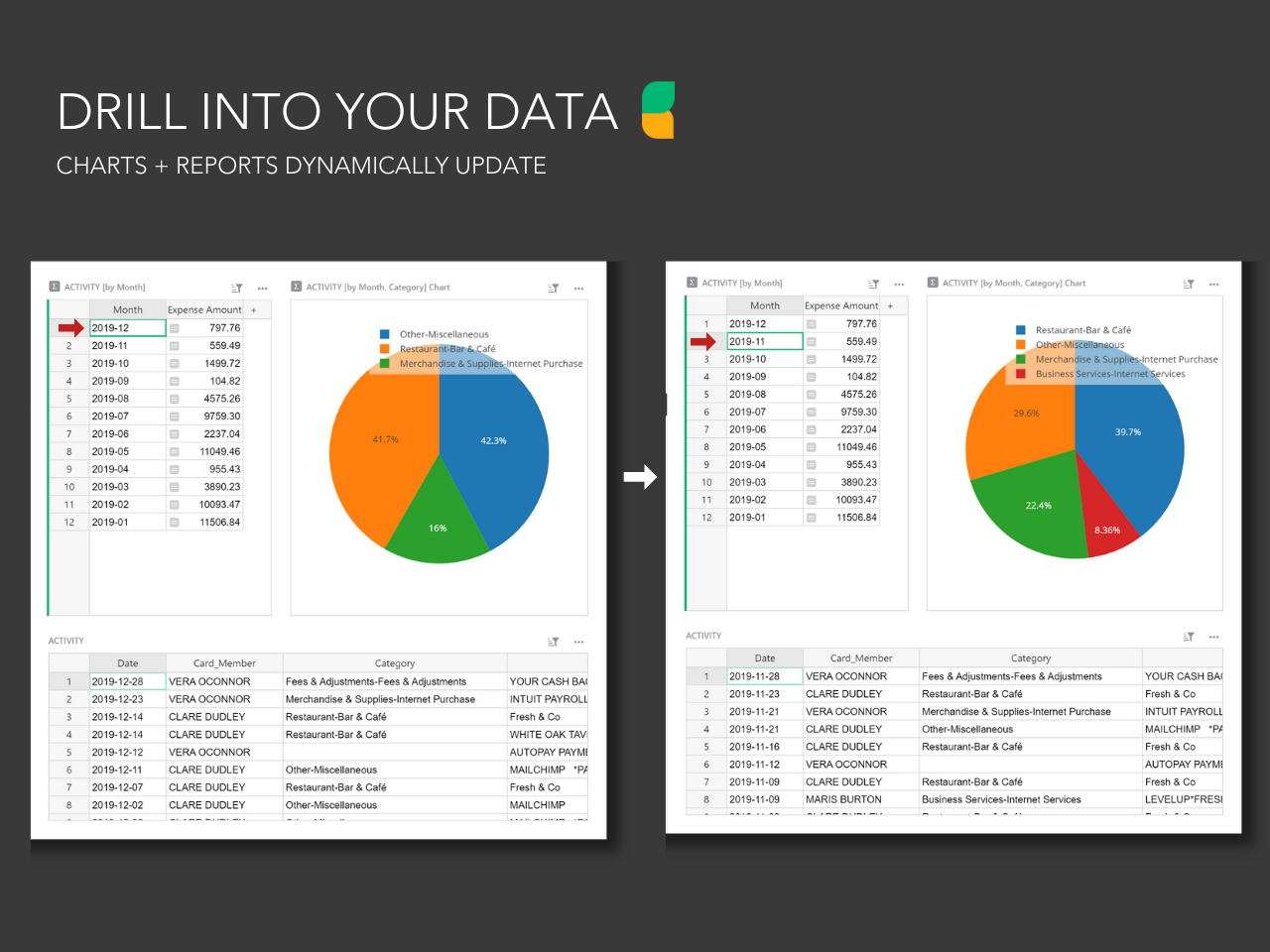
Grist combines the capabilities of spreadsheets, databases and app builders. Using a familiar spreadsheet interface, information can be organized as a relational database, and dashboards built using drag-and-drop. Solving spreadsheet problems Ensures data is well-structured and stored in one place with no duplication, no spreadsheet-wrangling, no merging documents. Collaboration on sensitive data Data is protected…
$8
per month per user
Redis Software
Score8.8 out of 10
N/A
Redis is an open source in-memory data structure server and NoSQL database.
This is well suited to someone (or a team) who are technically minded and have a dataset that they need to be able to use in many ways. It's less appropriate for a team who isn't technically minded and/or don't have the data they need to manipulate. It would be useful for things that you could use a database or spreadsheet for such as CRM, Advertising database, Business tracking, Health tracking etc.
A de minimis incentive was given to thank the reviewer for their time. The incentive was not used to bias or drive a particular response, nor was the incentive contingent on a positive endorsement. More Info
Redis has been a great investment for our organization as we needed a solution for high speed data caching. The ramp up and integration was quite easy. Redis handles automatic failover internally, so no crashes provides high availability. On the fly scaling scale to more/less cores and memory as and when needed.
A de minimis incentive was given to thank the reviewer for their time. The incentive was not used to bias or drive a particular response, nor was the incentive contingent on a positive endorsement. More Info
Easy for developers to understand. Unlike Riak, which I've used in the past, it's fast without having to worry about eventual consistency.
Reliable. With a proper multi-node configuration, it can handle failover instantly.
Configurable. We primarily still use Memcache for caching but one of the teams uses Redis for both long-term storage and temporary expiry keys without taking on another external dependency.
Fast. We process tens of thousands of RPS and it doesn't skip a beat.
A de minimis incentive was given to thank the reviewer for their time. The incentive was not used to bias or drive a particular response, nor was the incentive contingent on a positive endorsement. More Info
A de minimis incentive was given to thank the reviewer for their time. The incentive was not used to bias or drive a particular response, nor was the incentive contingent on a positive endorsement. More Info
We had some difficulty scaling Redis without it becoming prohibitively expensive.
Redis has very simple search capabilities, which means its not suitable for all use cases.
Redis doesn't have good native support for storing data in object form and many libraries built over it return data as a string, meaning you need build your own serialization layer over it.
A de minimis incentive was given to thank the reviewer for their time. The incentive was not used to bias or drive a particular response, nor was the incentive contingent on a positive endorsement. More Info
We will definitely continue using Redis because: 1. It is free and open source. 2. We already use it in so many applications, it will be hard for us to let go. 3. There isn't another competitive product that we know of that gives a better performance. 4. We never had any major issues with Redis, so no point turning our backs.
A de minimis incentive was given to thank the reviewer for their time. The incentive was not used to bias or drive a particular response, nor was the incentive contingent on a positive endorsement. More Info
It is quite simple to set up for the purpose of managing user sessions in the backend. It can be easily integrated with other products or technologies, such as Spring in Java. If you need to actually display the data stored in Redis in your application this is a bit difficult to understand initially but is possible.
A de minimis incentive was given to thank the reviewer for their time. The incentive was not used to bias or drive a particular response, nor was the incentive contingent on a positive endorsement. More Info
The support team has always been excellent in handling our mostly questions, rarely problems. They are responsive, find the solution and get us moving forward again. I have never had to escalate a case with them. They have always solved our problems in a very timely manner. I highly commend the support team.
A de minimis incentive was given to thank the reviewer for their time. The incentive was not used to bias or drive a particular response, nor was the incentive contingent on a positive endorsement. TR verified that a representative sample of customers was invited. More Info
A de minimis incentive was given to thank the reviewer for their time. The incentive was not used to bias or drive a particular response, nor was the incentive contingent on a positive endorsement. More Info
We are big users of MySQL and PostgreSQL. We were looking at replacing our aging web page caching technology and found that we could do it in SQL, but there was a NoSQL movement happening at the time. We dabbled a bit in the NoSQL scene just to get an idea of what it was about and whether it was for us. We tried a bunch, but I can only seem to remember Mongo and Couch. Mongo had big issues early on that drove us to Redis and we couldn't quite figure out how to deploy couch.
A de minimis incentive was given to thank the reviewer for their time. The incentive was not used to bias or drive a particular response, nor was the incentive contingent on a positive endorsement. More Info
It's saved a lot of time in both creating an advertising database and managing it week to week effectively. I had previously created in others that haven't worked, and this does, saving me a good 1 hour weekly, and 5 hours or more each time I had problems with the last ones
Being able to stay on track with this has meant I'm following up at the right time (advertisers) and keeping a professional manner and not losing business due to missed communication
Saving me $ from buying a program like Access (or Airtable monthly) and then the learning curve that that has. This has a much easier learning curve to say the least.
A de minimis incentive was given to thank the reviewer for their time. The incentive was not used to bias or drive a particular response, nor was the incentive contingent on a positive endorsement. More Info
Redis has helped us increase our throughput and server data to a growing amount of traffic while keeping our app fast. We couldn't have grown without the ability to easily cache data that Redis provides.
Redis has helped us decrease the load on our database. By being able to scale up and cache important data, we reduce the load on our database reducing costs and infra issues.
Running a Redis node on something like AWS can be costly, but it is often a requirement for scaling a company. If you need data quickly and your business is already a positive ROI, Redis is worth the investment.
A de minimis incentive was given to thank the reviewer for their time. The incentive was not used to bias or drive a particular response, nor was the incentive contingent on a positive endorsement. More Info