Freshservice is a cloud-based service desk and IT service management (ITSM) solution that currently serves more than 10,000 SMB, mid-market, and enterprise customers worldwide.
$29
per month per agent
HaloITSM
Score9.5 out of 10
Enterprise companies (1,001+ employees)
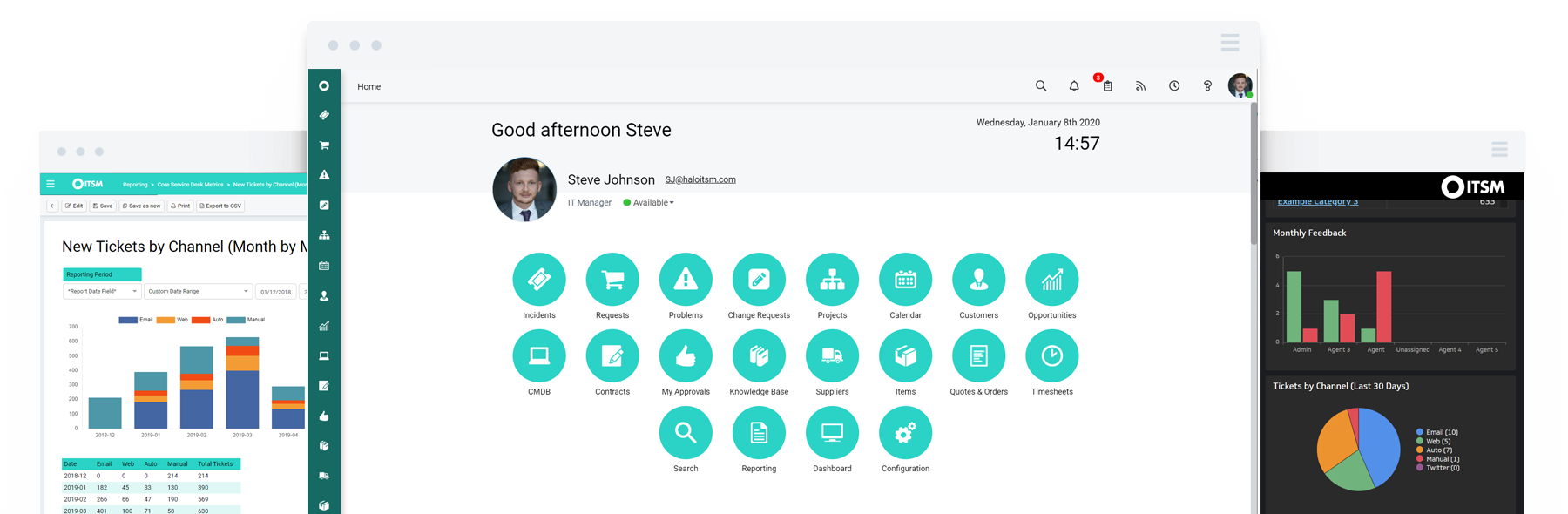
HaloITSM provides ITIL aligned help desk software that can be installed on premise or in the cloud. Boasting over 25 years of experience, HaloITSM has been developed to offer a feature rich application whilst maintaining a simple to use interface. Features include: Incident Management, Problem Management, Change Management, Asset Management, Service Catalogue, Telephony Integration, as well as the best of breed mobile apps. The vendor describes the following five differentiators: 1.…
$49
per month per user
Pricing
Freshservice
HaloITSM
Editions & Modules
Starter
$29.00
per month per agent
Growth
$59.00
per month per agent
Pro
$119.00
per month per agent
Enterprise
Custom
On Premise
$49
per month per user
Cloud
$49
per month per user
Offerings
Pricing Offerings
Freshservice
HaloITSM
Free Trial
Yes
Yes
Free/Freemium Version
No
No
Premium Consulting/Integration Services
Yes
Yes
Entry-level Setup Fee
Optional
Optional
Additional Details
Discount available for annual billing.
There is 15% discount for all charities, educational institutions and non-profit organisations.
We found Freshservice to have the best balance between pricing and features. While you don't get nearly as many possibilities as with ServiceNow (e.g., the ability to build nearly any type of workflows from end-to-end), the solution is quite user-friendly with not much of a …
A de minimis incentive was given to thank the reviewer for their time. The incentive was not used to bias or drive a particular response, nor was the incentive contingent on a positive endorsement. More Info
Halo Service Solutions
Verified User
Chose HaloITSM
Based on our requirements, this is how we scored them. Halo - 78, ServiceNow - 77, Ivanti - 67, Jira - 57, Freshservice - 41. This was based purely on our requirements and whether additional modules required additional licences.
A de minimis incentive was given to thank the reviewer for their time. The incentive was not used to bias or drive a particular response, nor was the incentive contingent on a positive endorsement. TR verified that a representative sample of customers was invited. More Info
IT Services Delivery Manager in Information Technology at Uniserve Group (Transportation/Trucking/Railroad, 501-1000 employees)
Chose HaloITSM
HaloITSM offered the highest level of functionality, available as standard, at our price level. Halo support during our trial period was second to none and unrestricted. We had a list of deciding factors covering the most important areas of functionality and HaloITSM covered …
A de minimis incentive was given to thank the reviewer for their time. The incentive was not used to bias or drive a particular response, nor was the incentive contingent on a positive endorsement. More Info
ICT Supporter in Information Technology at Berufsschule Lenzburg (Higher Education, 51-200 employees)
Chose HaloITSM
Halo just matched all our criterias like: provide knowledgebase articles with or without beeing logged in, assessing knowledgebase articles to user groups, sync users with Azure login via SSO customizable selfservice portal, disable modules which are not in use, provide …
A de minimis incentive was given to thank the reviewer for their time. The incentive was not used to bias or drive a particular response, nor was the incentive contingent on a positive endorsement. More Info
Freshservice is well suited for companies looking to implement ticketing / case management across the organization, but only if IT will be using it. Otherwise, I'd recommend Freshdesk. IT departments that don't function in the ITIL style of incident, request, change, and project management may find it overkill if they are only looking for a simple Help Desk solution.
A de minimis incentive was given to thank the reviewer for their time. The incentive was not used to bias or drive a particular response, nor was the incentive contingent on a positive endorsement. TR verified that a representative sample of customers was invited. More Info
If you want a value for money full system, which you could use out of the box then this is the one for you. If you want a system that can take care of tasks then this is the one for you. [HaloITSM] is easily scalable with very competitive pricing. New features are added regularly based on best practices and customer requirements.
A de minimis incentive was given to thank the reviewer for their time. The incentive was not used to bias or drive a particular response, nor was the incentive contingent on a positive endorsement. TR verified that a representative sample of customers was invited. More Info
A de minimis incentive was given to thank the reviewer for their time. The incentive was not used to bias or drive a particular response, nor was the incentive contingent on a positive endorsement. More Info
The Self Service Portal is very easy to configure and the end-users have commented on how easy it is to log and manage their own calls.
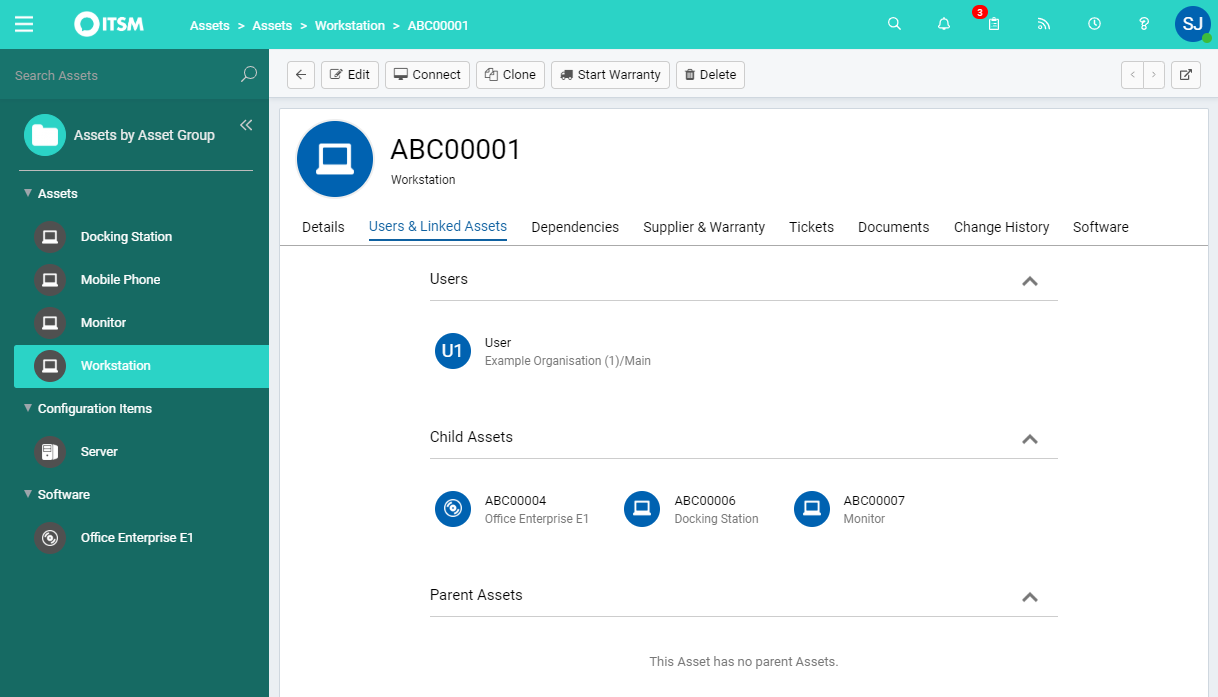
Asset and User Management works very well and it is simple to link them to tickets. Looking up ticket history for particular Users or Assets is also very useful.
The ability [to] use different ticket types and templates is fantastic. The added ability to merge and clone tickets is also a great benefit.
To have more options on what to do with the emails that arrive in the support mailbox (which goes to Freshservice), Setting some special rules or detailed filtering is not possible.
Non 3rd party tools to connect to Intune are missing. Additionally, the third-party tool available in the store is not satisfactory. It would be nice to have native support for importing devices from our Azure cloud.
The contract requires you to prolong your contract end-date by two years instead of just one year, which to us is a bit aggressive.
A de minimis incentive was given to thank the reviewer for their time. The incentive was not used to bias or drive a particular response, nor was the incentive contingent on a positive endorsement. More Info
We are pretty invested in Freshservice right now and have integrated it pretty heavily into our environment, so it would be hard to move away from it. For the most part, we are happy with Freshservice and the ease of use it gives us in managing tickets through the system. The only complaint we've had is customer service.
A de minimis incentive was given to thank the reviewer for their time. The incentive was not used to bias or drive a particular response, nor was the incentive contingent on a positive endorsement. More Info
The UI design of Freshservice is simple and intuitive. You don't have to be a technical expert to navigate your way into the different pages/modules available. There are no buttons that are hidden in plain sight. Even our HR team required little to no help when they started using Freshservice.
In our 3 years of using Freshservice, we've experienced several outages in the first 2 years. There were times where it only took minutes or hours but there are also times where it took a few days. Each time, Freshservice remained transparent and constantly communicated their progress. We haven't had one in the past year which indicates Freshservice have improved their servers.
Pages load quickly but internet connectivity can also play a big role. Integrations doesn't affect the performance but internet connectivity may be a big factor. As a company with most employees working from home, different network providers from different areas/countries can have different experiences. Search load time needs improvement.
Support from OEM is decent but needs improvement. Sometimes OEM also needs to understand the criticality of the customer and help as an Ad-hoc, which is somewhat lacking at Feshservice. Although the normal support team is well-equipped and helps according to the matrix, if something critical for the partner or customer requires immediate attention, it still goes through the L1-L2-L3 levels, which wastes a lot of time.
A de minimis incentive was given to thank the reviewer for their time. The incentive was not used to bias or drive a particular response, nor was the incentive contingent on a positive endorsement. TR verified that a representative sample of customers was invited. More Info
I've made overall positive experiences with the Halo support. The only thing to increase would be some follow ups on feature requests. If someone would reach out to me, telling me wheter or not my feature request will be considered in future updates or not.
A de minimis incentive was given to thank the reviewer for their time. The incentive was not used to bias or drive a particular response, nor was the incentive contingent on a positive endorsement. More Info
A de minimis incentive was given to thank the reviewer for their time. The incentive was not used to bias or drive a particular response, nor was the incentive contingent on a positive endorsement. More Info
Their documentation is pretty good, but only available in English. This makes it difficult for some of our users to understand. There are also some basic video courses available.
A de minimis incentive was given to thank the reviewer for their time. The incentive was not used to bias or drive a particular response, nor was the incentive contingent on a positive endorsement. TR verified that a representative sample of customers was invited. More Info
Creating the correct groups for the stakeholders and enabling the right notifications are one of the most important aspect of the implementation. Creating Change templates will also help in the long run and it's a good practice to create one, if applicable.
Easy setup and a lot of customization which can be made. They offer the full ITSM tool for 75$ per agent and all the PRO are included in the package, which makes it easy to calculate and use. There are only a few add-ins that you need to pay for, based on the number of agents or the number of executions.
A de minimis incentive was given to thank the reviewer for their time. The incentive was not used to bias or drive a particular response, nor was the incentive contingent on a positive endorsement. More Info
HaloITSM offered the highest level of functionality, available as standard, at our price level. Halo support during our trial period was second to none and unrestricted. We had a list of deciding factors covering the most important areas of functionality and HaloITSM covered all of these.
Freshservice allows flexibility with contract terms and pricing model. Monthly and annual payments are allowed. The unit pricing needs a bit of improvement. It would be great if they offer unit pricing per capability instead of one pricing for all the capabilities. Small businesses have different use cases and not every agent needs all the modules available.
We were able to scale easily across multiple departments. As our company keeps growing, we have not needed to change anything in terms of scaling since we started using Freshservice. There were no changes to the admin and end-user experience from when we were a 1,000-employee company vs to our current head count of 2,000+.
A de minimis incentive was given to thank the reviewer for their time. The incentive was not used to bias or drive a particular response, nor was the incentive contingent on a positive endorsement. More Info
A de minimis incentive was given to thank the reviewer for their time. The incentive was not used to bias or drive a particular response, nor was the incentive contingent on a positive endorsement. More Info
It enabled us to allow our Service Desk Staff to work from home during COVID and this has continued ever since.
We have halved our average resolution time.
Some of the automation processes, when implemented alongside the MS Power Platform, have saved approximately 30 hours a month. This includes times when customers were unable to access the system until they had been trained. This is now automated via Halo and they get sent to on-demand training, instead of waiting up to 3 weeks for the next scheduled session.
A de minimis incentive was given to thank the reviewer for their time. The incentive was not used to bias or drive a particular response, nor was the incentive contingent on a positive endorsement. TR verified that a representative sample of customers was invited. More Info