IBM MQ (formerly WebSphere MQ and MQSeries) is messaging middleware.
N/A
SAP Integration Suite
Score8.5 out of 10
N/A
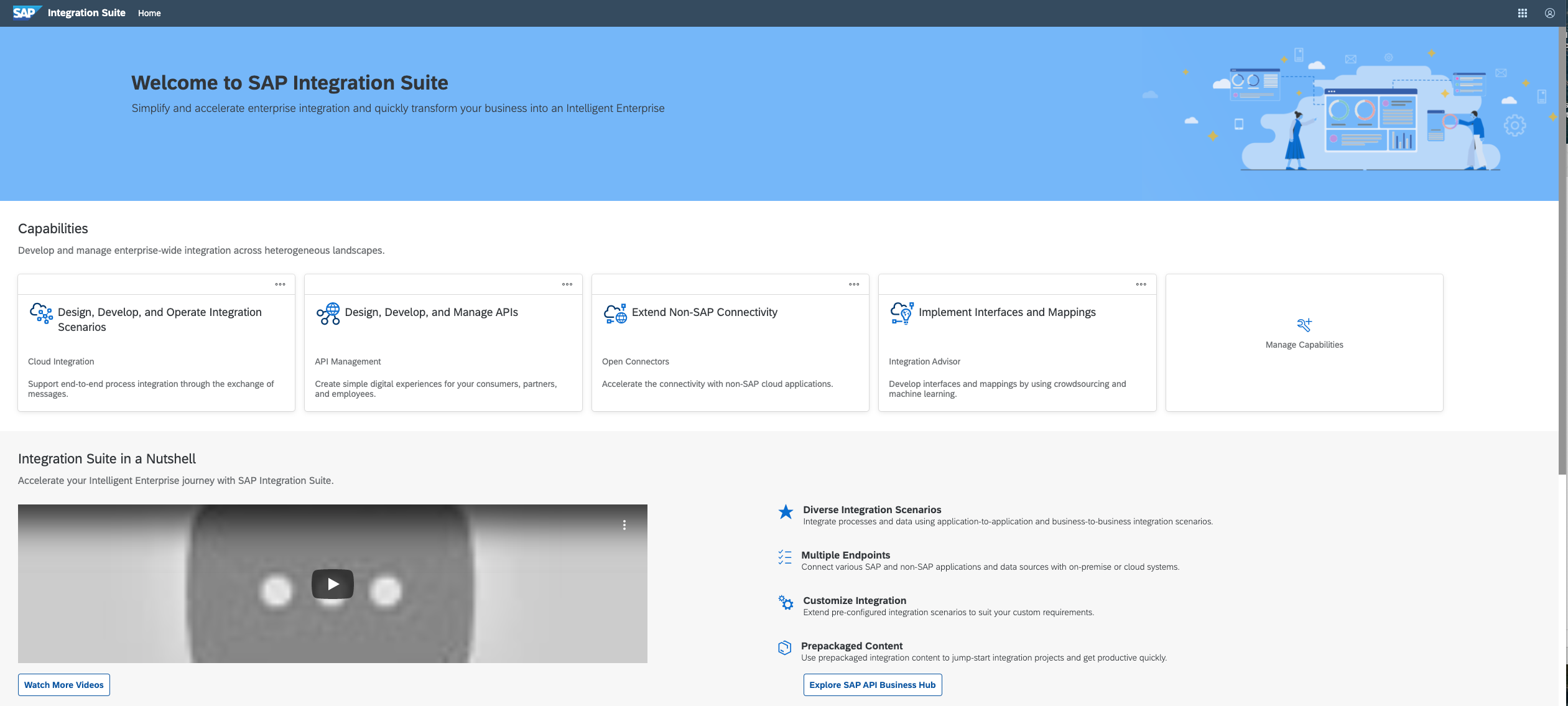
SAP Integration Suite is a modern, secure integration platform as a service (iPaaS) that connects applications, data, processes, and AI agents across SAP and non‑SAP environments.
$11,199
per year
Pricing
IBM MQ
SAP Integration Suite
Editions & Modules
No answers on this topic
No answers on this topic
Offerings
Pricing Offerings
IBM MQ
SAP Integration Suite
Free Trial
Yes
Yes
Free/Freemium Version
Yes
No
Premium Consulting/Integration Services
No
No
Entry-level Setup Fee
No setup fee
No setup fee
Additional Details
—
Access to free tier services does not expire while there is an active Pay-As-You-Go or CPEA account with SAP. Once a free tier service limit has been reached users have the option to update from a free to a paid service plan in the same account.
In the context of Internet of Things (IoT) applications, IBM MQ plays a pivotal role in managing the substantial data streams emanating from interconnected devices. Its primary function is to guarantee the dependable transmission and processing of data, catering to a diverse range of IoT use cases, including but not limited to smart city initiatives, healthcare monitoring systems, and industrial automation solutions. In the telecommunications sector, IBM MQ is employed for message routing, call detail record (CDR) processing, and network management to ensure real-time data exchange and fault tolerance. When managing the supply chain and logistics, IBM MQ is used to ensure timely and accurate communication between different entities, including suppliers, warehouses, and transportation providers. IBM MQ can be cost-prohibitive for smaller organizations due to licensing and maintenance costs. In such cases, open-source or lightweight messaging solutions may be more appropriate. For scenarios requiring extremely low-latency, real-time data exchange, and high throughput, other messaging technologies, like Apache Kafka, may be more suitable due to their specialized design for such use cases.
A de minimis incentive was given to thank the reviewer for their time. The incentive was not used to bias or drive a particular response, nor was the incentive contingent on a positive endorsement. More Info
Good at: 1. Integrations with in SAP applications, especially with event based triggers 2. Can be integrated very well with other BTP services to attain Batch processing and store credentials 3. Supports many authentication models Improvements: 1. No version history available compared to as it is available in S4HANA 2. Need a lot of improvement in git hub connections
A de minimis incentive was given to thank the reviewer for their time. The incentive was not used to bias or drive a particular response, nor was the incentive contingent on a positive endorsement. More Info
The documentation is very clear,It is understandable and the support helps to configure it in the best way.
Server guidelines make it possible to get the most out of work management. It's broad, we can work with different operating systems, I really recommend using linux.
It is highly compatible with systems, brockers, applications, and data accumulation programs, it is possible to configure everything so that after the installation of programs, they can communicate with each other and then throw data to an external program that accumulates it and represents in clear details of steps to follow and make business decisions.
A de minimis incentive was given to thank the reviewer for their time. The incentive was not used to bias or drive a particular response, nor was the incentive contingent on a positive endorsement. More Info
A de minimis incentive was given to thank the reviewer for their time. The incentive was not used to bias or drive a particular response, nor was the incentive contingent on a positive endorsement. More Info
There is limitation on number of svrconn connections you can have to MQ on the mainframe which has been an major issue for us. This has been an issue for us for over 4 years and still no fix although I am aware IBM have been working on a solution over the last year.
When upgrading to MQ V9.3 on our MQ appliances there is no fall-back option. This was the same for MQ V9.2 upgrade from MQ V9.0. For production upgrades this I believe is not acceptable.
AMS is not supplied as part of the standard mainframe MQ licence. You need an extra licence. IBM tell customers how important security and protecting data is yet they still want to charge for this software. The cost of MQ on the mainframe is not cheap so I would expect AMS to be part of the base product.
A de minimis incentive was given to thank the reviewer for their time. The incentive was not used to bias or drive a particular response, nor was the incentive contingent on a positive endorsement. More Info
Provide more pre-built integrations to use within SuccessFactors or other modules instead of everything having to be custom built
Support is unable to provide advice on custom builds so you often have to engage a 3rd party partner
Works best when you have the functional and technical teams working together. Otherwise, the system is too technical for a functional user to create integration and a technical user not always understand the functional perspective
A de minimis incentive was given to thank the reviewer for their time. The incentive was not used to bias or drive a particular response, nor was the incentive contingent on a positive endorsement. TR verified that a representative sample of customers was invited. More Info
It is in place, our system integrators are familiar with it, and it fits into the ecosystem. A better user interface, flow build and debugging experience would see it grow, many technical staff do not enjoy using it for this reason, however it is quite capable and powerful behind this one shortcoming.
A de minimis incentive was given to thank the reviewer for their time. The incentive was not used to bias or drive a particular response, nor was the incentive contingent on a positive endorsement. TR verified that a representative sample of customers was invited. More Info
I give it a nine because it has significantly improved my team's data reliability and operational efficiency. Its great security features give us peace of mind, knowing our sensitive data is well protected. While the setup might initially be complex, I believe the long-term benefits far outweigh this hurdle.
A de minimis incentive was given to thank the reviewer for their time. The incentive was not used to bias or drive a particular response, nor was the incentive contingent on a positive endorsement. More Info
The user interface is messy and not intuitive. It has a steep learning curve, and flows developed around are easy to make a mess with layout and can be difficult to follow. The debugging is also quite difficult, it takes some time to figure out how to follow the flow and examine data. Error handling is also difficult and not intuitive, it is better to let some errors leak and monitor through ALM.
A de minimis incentive was given to thank the reviewer for their time. The incentive was not used to bias or drive a particular response, nor was the incentive contingent on a positive endorsement. TR verified that a representative sample of customers was invited. More Info
The messages are delivered instantly with this software and it integrates with our technology stack, in terms of availability we only had one failure when we were doing some testing and integration with third parties, the features of this software make it always available and its deployment is easy for the company, it does not generate expenses due to failures
A de minimis incentive was given to thank the reviewer for their time. The incentive was not used to bias or drive a particular response, nor was the incentive contingent on a positive endorsement. More Info
There are very specific things that must be elevated to more specialized areas of support, but the common support is very agile when receiving questions or when we leave concerns in real time. I recommend the support of the program in this regard.
A de minimis incentive was given to thank the reviewer for their time. The incentive was not used to bias or drive a particular response, nor was the incentive contingent on a positive endorsement. More Info
The support for SAP Integration Suite is satisfactory. We leverage SAP support through our manage services partner. So far, we have not had many major issues. One concern, to make our rating a ten, would be turnaround time on high priority incidents. SAP Integration Suite drives our key business functions forward. Without a reasonable service level agreement on turnaround, we sometimes find us running into issues running pay, etc.
A de minimis incentive was given to thank the reviewer for their time. The incentive was not used to bias or drive a particular response, nor was the incentive contingent on a positive endorsement. More Info
A de minimis incentive was given to thank the reviewer for their time. The incentive was not used to bias or drive a particular response, nor was the incentive contingent on a positive endorsement. More Info
We found IBM MQ very easy to get started and quick to learn by the new users with a short learning curve and seamlessly integrates with IBM products, and quick to perform self-service analytics and make informed business decisions. IBM MQ is also very straightforward in creating simple and best reports, which are very profitable and productive.
A de minimis incentive was given to thank the reviewer for their time. The incentive was not used to bias or drive a particular response, nor was the incentive contingent on a positive endorsement. More Info
Before deploying SAP Integration Suite, we assessed Oracle Financial Services Analytics and IBM Risk Analytics. While Oracle had proved its mettle in the exceptional database support and IBM in presenting risk model tools, SAP Integration Suite overwhelmed others by being effortlessly integrated with our existing banking framework.
A de minimis incentive was given to thank the reviewer for their time. The incentive was not used to bias or drive a particular response, nor was the incentive contingent on a positive endorsement. TR verified that a representative sample of customers was invited. More Info
A de minimis incentive was given to thank the reviewer for their time. The incentive was not used to bias or drive a particular response, nor was the incentive contingent on a positive endorsement. TR verified that a representative sample of customers was invited. More Info