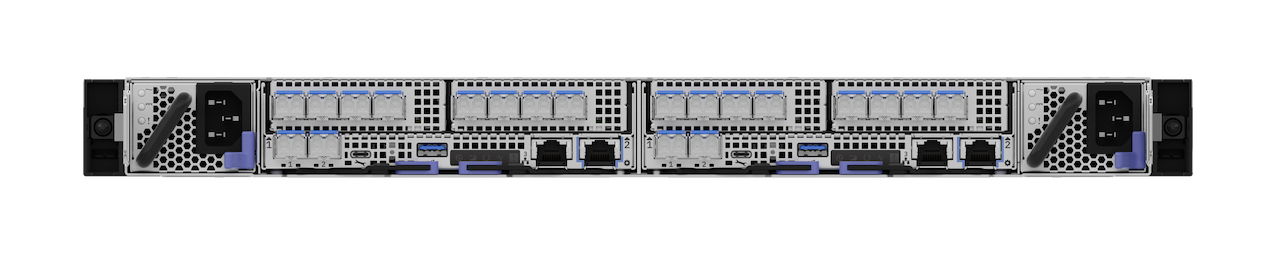
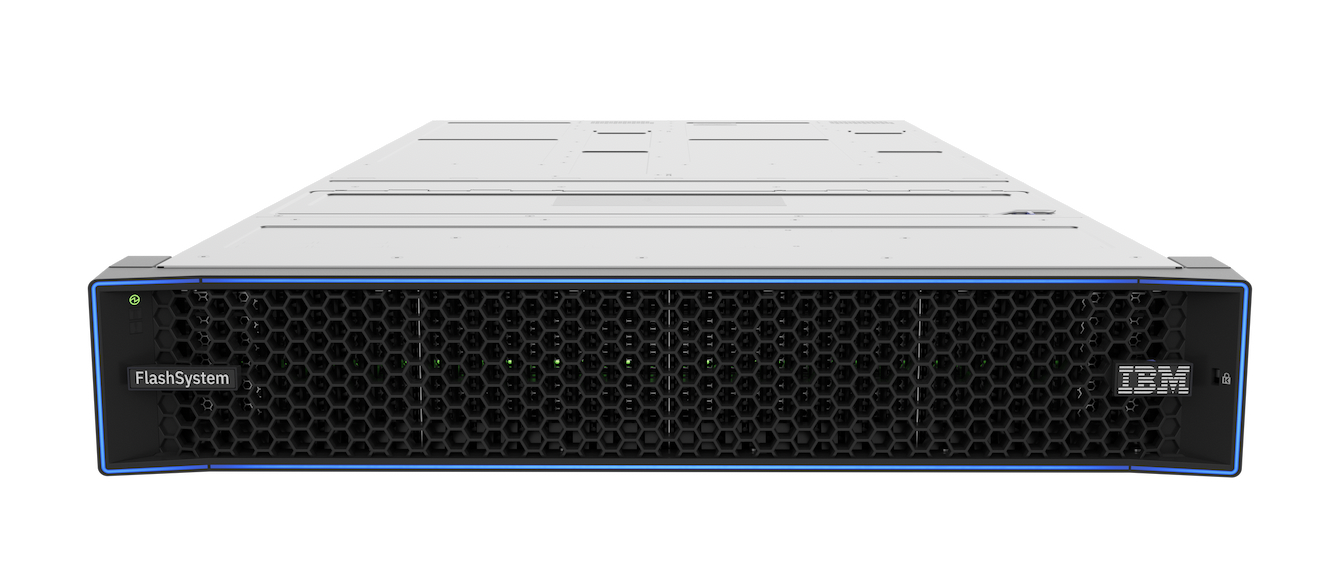
IBM Storage FlashSystem, an all-flash storage array, delivers ~2 PB of effective capacity per single rack unit. Engineered with unique FlashCore Modules, it offloads data services including compression, encryption, deduplication, and ransomware threat detection ensuring optimum performance and resiliency.
N/A
Nasuni
Score10 out of 10
N/A
The Nasuni File Data Platform is a cloud-native suite of services offering user productivity, business continuity, data intelligence, cloud choice, and simplified global infrastructure. The platform and its add-on services replace traditional file infrastructure, including network attached storage (NAS), back-up, and DR, with a cloud-scale solution. By consolidating file data in easily expandable cloud object storage from Azure, AWS, Google Cloud, and others, Nasuni aims to become a cloud-native…
IBM Storage FlashSystem is the only good option. It is possible to do with other brands but not with the same compatibility and support. So in the IBM i world, there is not that much options if you want reliable products, performance and compatibility with overall system: IBM Storage FlashSystem product is the one. You may need to adjust performance to your needs and IBM has a complete range of systems for entry (FS5X00), mid-range (FS7X00) or high-end (FS9X00). In IBM i world, IBM Storage FlashSystem is the best, but knowing the product, I would probably recommend it for other platforms. And many of my customers are using it as a cross-technology platform (mainly virtualization on x86 like VMWare).
A de minimis incentive was given to thank the reviewer for their time. The incentive was not used to bias or drive a particular response, nor was the incentive contingent on a positive endorsement. More Info
Well suited if you have a lot of data that doesn't need to be stored and read right away. I think even if you don't have much data, you can still use it for it's intended purpose to great effect, but think of it as the more data you have, the even better it will work. I don't think it would be particularly useful if you already have a slick file restore system in place and you don't need to store your data elsewhere with redundancy.
A de minimis incentive was given to thank the reviewer for their time. The incentive was not used to bias or drive a particular response, nor was the incentive contingent on a positive endorsement. More Info
A de minimis incentive was given to thank the reviewer for their time. The incentive was not used to bias or drive a particular response, nor was the incentive contingent on a positive endorsement. More Info
The management console is extremely simple and easy to navigate, making common tasks easy to do.
Our storage appliance is configured to snapshot data several times an hour, making the risk of data loss very low.
Data restores are very intuitive, and take seconds to initiate regardless of whether it is one file or 300GB of data. We have successfully restored many Gigs of data in minutes.
A de minimis incentive was given to thank the reviewer for their time. The incentive was not used to bias or drive a particular response, nor was the incentive contingent on a positive endorsement. More Info
Definitely we need to be able to extend a volume that is part of a mirror pair or Policy-Based Replication(PBO) on the fly.
Expansion of mirrored volumes/volume groups should resynchronise only the changed data (Almost like making use of change-volumes) and not trigger a full resync.
Please allow us to select downloading drive microcode also from Fix Central directly onto the flashsystem like with updates.
A de minimis incentive was given to thank the reviewer for their time. The incentive was not used to bias or drive a particular response, nor was the incentive contingent on a positive endorsement. More Info
A de minimis incentive was given to thank the reviewer for their time. The incentive was not used to bias or drive a particular response, nor was the incentive contingent on a positive endorsement. More Info
As flash technology evolves rapidly, vendors should [adapt] to the changes and onboard them in their products. IBM is a bit slow in adopting advanced technology in [its] portfolio. Even though the current product is good, my decision is purely based on how the transformation of the product [is] being produced and supplied to [the] end-user.
A de minimis incentive was given to thank the reviewer for their time. The incentive was not used to bias or drive a particular response, nor was the incentive contingent on a positive endorsement. TR verified that a representative sample of customers was invited. More Info
The integration into our SVC and the midrange systems are very well working. We do use cross site replication and global mirror which in turn is easy setup and the consistency groups are well maintained. The storage does global mirroring but also internal cross room replication as well. The integration of cloud object storage also helps in tiering the overall system.
A de minimis incentive was given to thank the reviewer for their time. The incentive was not used to bias or drive a particular response, nor was the incentive contingent on a positive endorsement. TR verified that a representative sample of customers was invited. More Info
As I mentioned, the user interface is amazing and straight forward. It's very easy to learn how to configure and restore files. I would like a bit more reporting, especially in terms of live reporting and monitoring. The support is great when you have a question on how to do something, which helps with usability.
A de minimis incentive was given to thank the reviewer for their time. The incentive was not used to bias or drive a particular response, nor was the incentive contingent on a positive endorsement. More Info
Yes. The last really issues I've seen in the environments of my customers were back in the "Storwize" era of systems. Issues with code updates or sometimes rarely failing critical components. BUT: since every component is at least dual redundant even back in that day real outages were very rare. And today in the "FlashSystem Era" the systems are so reliable and available even during code updates there are no complaints. I think the 5 or 6 9s are completely achieved.
A de minimis incentive was given to thank the reviewer for their time. The incentive was not used to bias or drive a particular response, nor was the incentive contingent on a positive endorsement. More Info
Latency and throughput have been excellent. The compression is done natively on the NVME modules so we do not see an impact there. the distributed parity does not seem to impact write speeds at all. We have found database performace has increased quite a bit over our old hybrid storage solution.
Having a single tier of performance makes it easy to set up SLAs for workloads.
A de minimis incentive was given to thank the reviewer for their time. The incentive was not used to bias or drive a particular response, nor was the incentive contingent on a positive endorsement. TR verified that a representative sample of customers was invited. More Info
Again, it may have a little to do with the size and speed of your own environment, but we've been nothing but pleased with the speed of access of the files - even pulling old files from the cloud storage. Recovery of huge and many data files is a bit slow if you don't have the specs of the filer up to snuff.
A de minimis incentive was given to thank the reviewer for their time. The incentive was not used to bias or drive a particular response, nor was the incentive contingent on a positive endorsement. More Info
I would rate the overall support for IBM Storage FlashSystem with a 10. The response times have consistently been fast, and the support engineers always come prepared with relevant questions and practical solutions. They demonstrate a deep understanding of the product and our use case, which means issues are typically resolved quickly and without unnecessary back-and-forth. This level of support has been especially valuable for our SAP environment, where uptime and quick resolution are critical.
A de minimis incentive was given to thank the reviewer for their time. The incentive was not used to bias or drive a particular response, nor was the incentive contingent on a positive endorsement. More Info
Very good traning by experienced personnel. I attend instructor led sessions on IBM TechExchange and STUs before as well as IBM workshops for FlashSystems at IBM Böblingen which I helped to prepare and improve after piloting them. Absolutely nothing to complain about FlashSystem training in Germany or USA. So: all good here!
A de minimis incentive was given to thank the reviewer for their time. The incentive was not used to bias or drive a particular response, nor was the incentive contingent on a positive endorsement. More Info
THe training is often selfpaced and easy to follow if you have worked previously with other storage products. The content is clear and contains all the information needed for an admin to learn. However the troubleshooting part is not always included and this is dependent on forums or other sources where the information is not accessible very easily.
A de minimis incentive was given to thank the reviewer for their time. The incentive was not used to bias or drive a particular response, nor was the incentive contingent on a positive endorsement. TR verified that a representative sample of customers was invited. More Info
I was amazed by the way IBM Flash storage provides a huge amount of storage within the limited footprint, it helped us to replace big fat storage arrays, which aided in the process of moving towards lower hardware, carbon, and energy consumption footprint. We can comfortably say that Flash helped us to host applications fast with a blazing speed and user transactions are quite quick.
A de minimis incentive was given to thank the reviewer for their time. The incentive was not used to bias or drive a particular response, nor was the incentive contingent on a positive endorsement. TR verified that a representative sample of customers was invited. More Info
For the past six months, we have been utilizing this technology in our projects to manage a massive workload and produce swift business outcomes on a crucial production database. The IBM FlashSystem 7200, which offers high performance and compression, has so far been a great experience for us. The results and functionality of this product have delighted our consumers.
A de minimis incentive was given to thank the reviewer for their time. The incentive was not used to bias or drive a particular response, nor was the incentive contingent on a positive endorsement. More Info
The technical support and escalation path for Nasuni is much more reliable and efficient. No getting transferred to various teams. Often times, the person who answers your call is able to resolve your issue. If they cannot, they get the case assigned to the appropriate engineer right away. Time to close has always been very good.
A de minimis incentive was given to thank the reviewer for their time. The incentive was not used to bias or drive a particular response, nor was the incentive contingent on a positive endorsement. More Info
I'm using cognos - especially cognos reports - as a part of IBMs Storage Intelligence software to manage datacenters and report storage and overall resource consumption to my customers. The software is reliable and - my customers who are using cognos in their businesses - say that they are very satisfied about the scalability of cognos. I can give it only an 8 rating because of the quite heavy resource footprint...
A de minimis incentive was given to thank the reviewer for their time. The incentive was not used to bias or drive a particular response, nor was the incentive contingent on a positive endorsement. More Info
A de minimis incentive was given to thank the reviewer for their time. The incentive was not used to bias or drive a particular response, nor was the incentive contingent on a positive endorsement. TR verified that a representative sample of customers was invited. More Info
Dramatically reduced time spent managing our storage platform. Quotas and reporting tools take all the guesswork out of data growth. Updates are easy to deploy. Time freed up can be used for more user-facing activities that we consider more valuable to the organization.
The overall stability of the platform has been very good. We have been running on the same hardware for the past four years without any performance issues.
A de minimis incentive was given to thank the reviewer for their time. The incentive was not used to bias or drive a particular response, nor was the incentive contingent on a positive endorsement. More Info