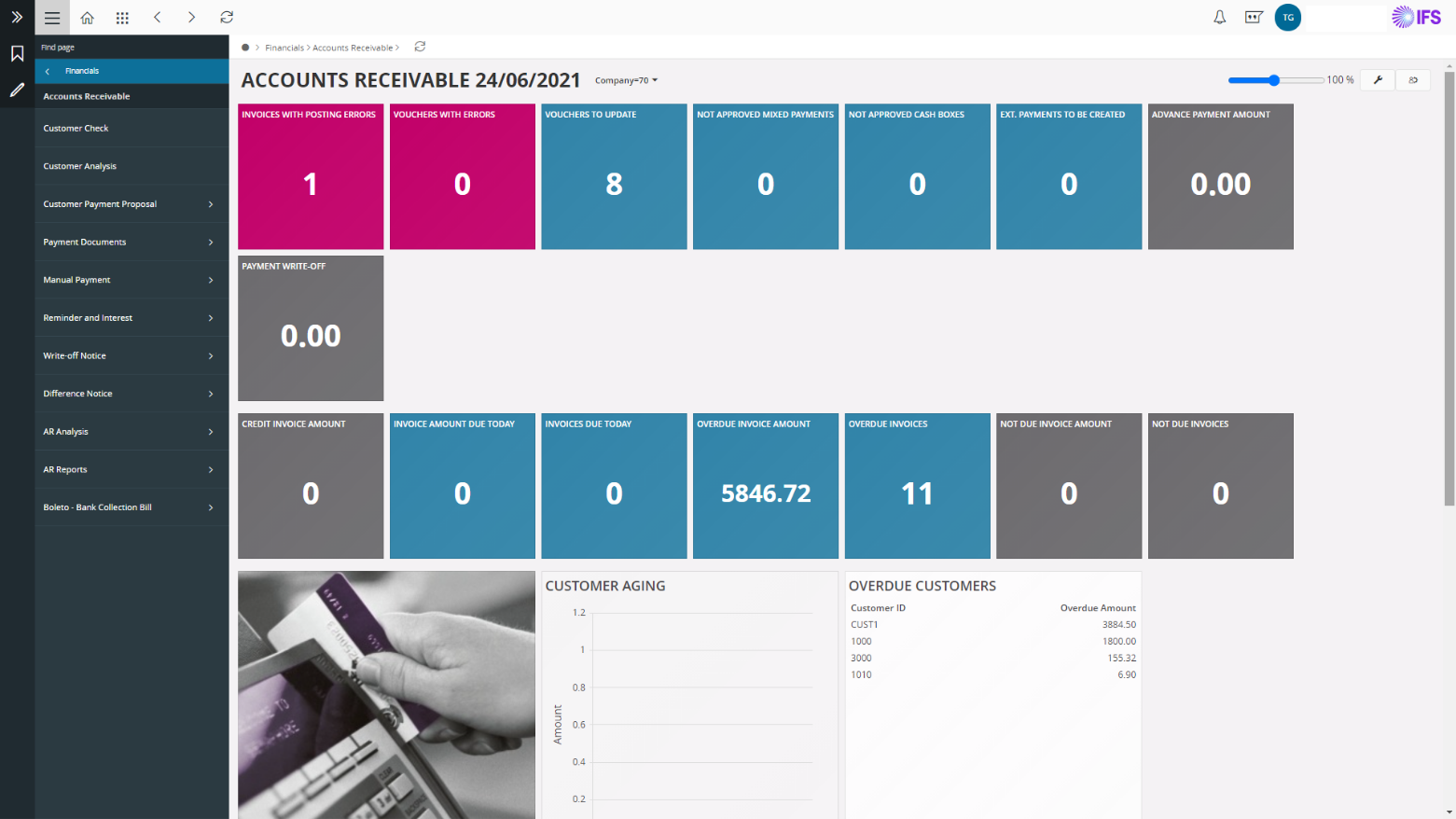
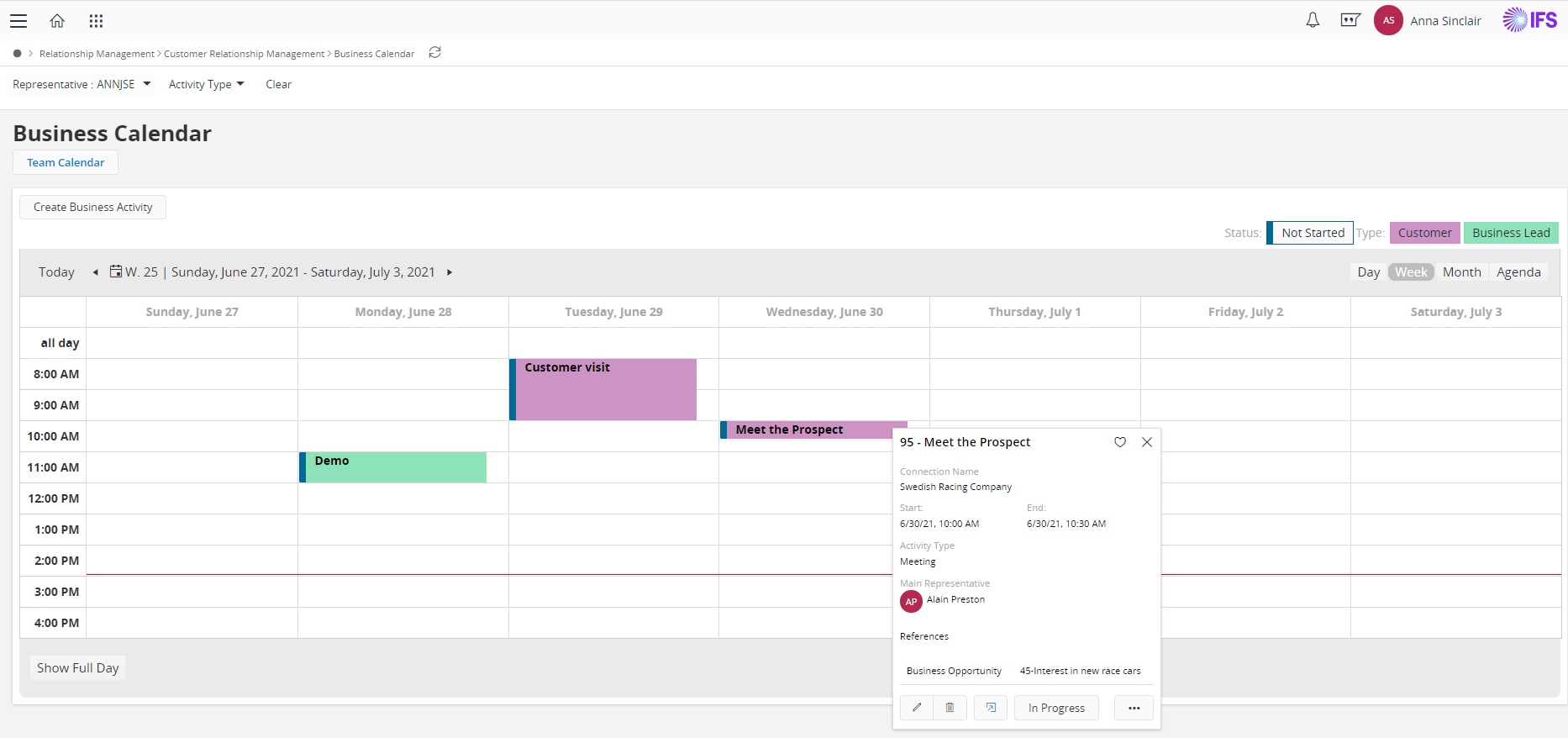
IFS Applications is presented by the vendor as an agile application suite that offers enterprise resource planning (ERP), enterprise asset management (EAM) and enterprise project management, handling 4 core processes: Service & Asset Management Full Enterprise Asset Management (EAM), Maintenance Repair and Overhaul (MRO) and Field Service Management (FSM) Manufacturing Enterprise Resource Planning (ERP) with support for process manufacturing, discrete manufacturing…
N/A
Oracle APEX
Score 8.8 out of 10
N/A
Oracle APEX (or Oracle Application Express) is an online low-code application builder that allows users to develop a database-drive application, customize the application's UI, and then give their users access to the application via URL. Oracle APEX includes a suite of pre-built productivity applications and examples, such as a Survey Builder, Bug Tracking, P-Track project management, etc
$0.32
OCPU per hour
Oracle E-Business Suite
Score 7.3 out of 10
N/A
Oracle E-Business Suite is a comprehensive suite of integrated, global business applications. The suite includes cross-industry capabilities spanning ERP, CRM and supply chain planning.
Easy integration with other Oracle products and oracle database makes it a great fit. UI is clean and aesthetically pleasing compared to similar applications I have used.
Oracle EBS works great on top of the Oracle Database, we selected Oracle EBS as our institutional solution because it really is an integrated solution in which payroll, accounting, fixed assets, and time and labor can interact with each other to deliver the kind of solution …
Order to cash processes and scenario are implemented natively in IFS. An HR module exists for career management also (objectives, comportments, training, mobility) but may be improved in terms of workflow validation (e.g. training to validate by a manager) or reporting.
If you need to develop an application very quickly, without unnecessary lengthy specifications or business requirements, something you need right away, while utilizing all the capabilities of the Oracle database, APEX is the right choice. Thanks to the many components you use from the vast Oracle APEX library, working with this tool is exceptionally pleasant, fast, and effective.
Oracle Cash and Treasury Management fill the gaps in treasury management with features that are very helpful in building the modern financial system that we so desperately need. It may not be the most intuitive tool on the treasury market, but with a little more practice time, important expense analysis can be achieved. I am confident in this treasury tool for this year 2022 and I would like to recommend it to other companies so that they can also have a better administration.
The EBS Oracle Order Management and Shipping Execution solution allows the creation of an integrated, seamless order-to-cash process and accurately capture of customer orders across multiple channels.
Orchestration of order details for seamless fulfillment execution.
Efficient shipment planning and confirmation.
Communication of order status information to customers throughout the order lifecycle.
Can't think of any - the Application Express development team does a fantastic job adopting and supporting emerging trends with each new release.
Requires Oracle RDBMS; i.e., is not portable to other RDBMS platforms. On the surface this may seem like a con but it is as it should be - Oracle database is best RDBMS available and tight integration with Oracle RDBMS promotes creation of reliable performant apps.
I felt very comfortable using Oracle Application Express from the start. I designed my data model and quickly developed the basic CRUD pages for master tables. Then I designed the main functionality and was able to test and deploy it in a couple of days work. I will probably share the app with other members of the team and continue adding some features in the short term.
After almost 5 years, we have a full control of this ERP System. We are able to implement new functionalities and modules without any major "consulting" expenses. As of today we are making almost 90% of the personalization/customization and implementation all in house. Once [it] is tuned, [it] keeps running very well with no major issues.
Oracle APEX is an ultra flexible, low code platform having a great easy of use, superior customization capabilities, scalable and provides a very good application and data security. It also has lot of AI capabilities as well as modern features such as GeoLocation maps, Automation capabilities, Workflow approval features and Mobile application capabilities using PWA like features.
The various forms - like order entry forms that allow the uses to enter sales orders and the ability to personalize the views based on end user needs - are easy to use and follow standard business processes. The new release has a big focus on usability and forms now have a familiar web look and feel which has increased usability considerably.
Because of the transactional nature of the system this software is available 24 X 7, and IT is responsible for making sure the system is available during normal business hours.
The performance of the product is very good. Given the transactional nature of the system one of the key focus areas for IT is to make sure performance is not affected for internal reasons. This can also depend on the server configuration and setup. For example, performance on Exadata machine is far superior to other Linux custom systems that companies choose to deploy. In general though, as already pointed out, the platform is now very stable and has few bugs. Whenever there are any issues, the cause is usually customizations that we have made to the platform, rather than out-of-the-box standard functionality.
We have been unable to get answers to our questions, solutions to our problems, and they don't seem interested in working in the construction industry.
Very active and knowledgeable community support includes quick and helpful responses from the Oracle employees on the product development team. I've never had to raise an official support request - everything is dealt with via forums and user groups - or via direct emails. The supposrt commuinty is one of the great things about Apex.
In general, support has not been great - particularly standard (non premium) support . The main issue is that our IT staff has been using this platform for years and is very knowledgeable Whenever something goes wrong, we usually have a very precise idea of what the problem is. We are skilled at problem diagnosis. But the Oracle support process is very rigid and slow. Typically, we are required to go through a lengthy diagnosis process where they ask us multiple questions sometimes over several days and we are obliged to talk to different people with differing levels of knowledge. Since we already know what the problem is, we really just want a patch or a bug fix, but it takes days to get there instead of minutes. This can be very frustrating. This is a big part of the reason why we pay for premium support. But it's still a bit disappointing.
Using it on the cloud is really simple, the entire process of configuring and provisioning an Oracle Database takes only a few minutes (less than 10) and then Oracle APEX is already deployed on the database, so you just have to start using it. I would strongly recommend using APEX on Oracle Cloud Free Tier.
The key success factors for the implementation was project management, in-house expertise in IT and time. The implementation process started with the initial evaluation with the initial upgrade on a test system and mapping out the gaps and requirements. We did work with Oracle to understand the new functionality R12 had to offer and did another upgrade and researched solutions. With the use of software development cycle procedures there were conference room pilots with IT, business users. We then refined the project plan to the core key details, performed mock go-live implementations and finally upgraded the software. Overall, this was a very successful process.
IFS Applications is based on Agile Technology which allows organizations to reconfigure user interface as per user requirements and make it user-friendly. Other applications are lagging on many fronts like User Interface, Online help document availability, Implementation methodology, and post-implementation expenses.
If you are expert in SQL and PLSQL and use Oracle Database, then the best choice is Oracle Application Express. The functionality is already complete and very easy to use, so it's useless to find another tool if you are using Oracle. You don't use Oracle APEX only if: (1) you are using other database than Oracle, and (2) your application load is unpredictable.
Oracle e-business suite is better than any other ERP because it is more user-friendly and can be operated by anyone even those who don't know how to run it. Also it has better APS, allowing you to better track costs and allocate resources more efficiently. Also, it has better event management, tracking, and Reporting.
Reporting is now centralized and managed. Previously, reports were outside the information systems and there was a risk of incoherence.
Accounting controls are now in place on the overall processes, including production, which helped the company to reduce closing periods or to produce more easily official mandatory accounting files yearly.
Interfaces between the CRM forecast tool and IFS helped to keep the tools in sync, and to decrease the processing times prior to production launch.
In the mid-size organization, we had a BI tool that had a significant license cost involved. With Oracle back-end we were able to switch to APEX and move all reporting at literally zero cost.
For Oracle PL/SQL users the learning curve is very quick and easy, there are ready templates that you can start with and eventually create complex reports.
You can track authorization and authentication on data editing and usage. High performance as it is native oracle sql codes.
Centralized data capturing, makes your datawarehouse writable for lookup tables or reference tables.
We recently implemented Supplier Portal and Invoice Imaging Solution. This has reduced manual effort and increased speed and accuracy. There is no need for people to key in invoices manually now. Suppliers can flip a purchase order into invoice and Oracle will do all the validations and put the invoice on hold in case of any discrepancy.
Suppliers are very happy with the supplier portal as they can track the entire lifecycle of the invoice online.
With automation, we could bill all our customers on time. Oracle collects all the possible costs like payroll and expenses, adds markup, and bills our customers. We could track profitability and margins by project.
The period close and reporting has become easier and faster with this software. 3 people can close the periods now as opposed to 10 before.